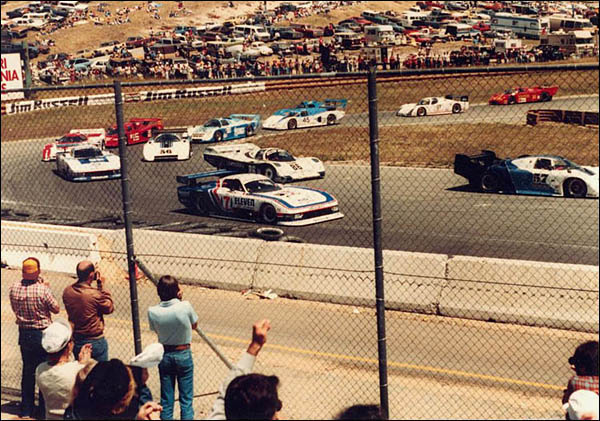
It’s May and it’s time for the sportscars to return again to compete at Mazda Raceway Laguna Seca.
Back in the GTP days of IMSA, Laguna Seca was a staple of the schedule in May, often running a week or two after the race at the now long-gone Riverside International Raceway.
Typically Riverside was a longer race, usually around six hours, while the short track at Laguna was also a short race. From 1981-1984, the race at Laguna was a 100 mile all-out sprint, typically lasting under an hour. In 1984, the main event became a prototype-only race. This prototype-only entry continued through 1987, but the race distance was stretched to 300 kilometers, meaning a race length of roughly 100 minutes, or comparable to what we’ve typically seen at Long beach in the past few years.
When the races were prototype-only, the GT-based cars had their own races, where the then GTO and GTU cars had the opportunity to shine. Fast forward to 2014 and again IMSA has opted to change to split format races, only now the divisions are different. Just like at Long Beach, the “Pro” classes will combine, while the “Pro-Am” – PC and GTD – will combine for their own race. These races are similar, but slightly longer than we saw at Long Beach, being of two hours each.
In the build up for this race, there appears to have been an artificial line in the sand drawn by the P2 competitors, meaning they expect to be competitive here. If they’re not, well, we’ll see – actually, hopefully we won’t see.
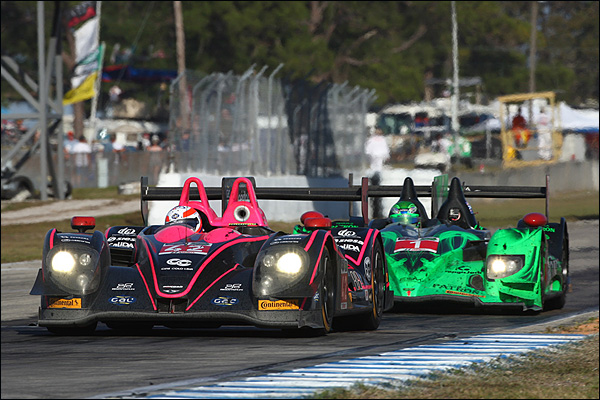
Both OAK and ESM have expressed qualified support of the series, but they expect to be thrown a bone here soon. Otherwise it may be a very condensed P class later on this season.
IMSA responded by changing restrictor sizes on the DPs category cars – 1mm smaller for the Corvettes and 0.9mm smaller for the Ford entries, which received a slight boost reduction also. On paper, this appears to be a roughly 15hp reduction for them, which seems to be rather insignificant, but how it affects torque may be the key. The P2 type cars lose coming out of the turns, as well as down the straights – if the DPs don’t get a big jump out of the corners, maybe things will even out a bit.
As far as the prototype class, the entry looks identical to what we had at Long Beach, with the addition of the Delta Wing. It may sound like a broken record, but what we see at this race as far as competition is likely down to how the BOP works out. When competition is micro-managed, as has become so common in current day racing, the slightest adjustment can make a huge difference. You better get used to it – it isn’t likely to be changing anytime soon.
As at Long Beach, the prototypes will be joined by the GTLM class. Unlike the P class, there were no changes made to the BOP for Laguna, so what we saw is what we’ll get. Thus far, we’ve seen Corvette Racing strong at all of the tracks, so don’t expect any change for them.
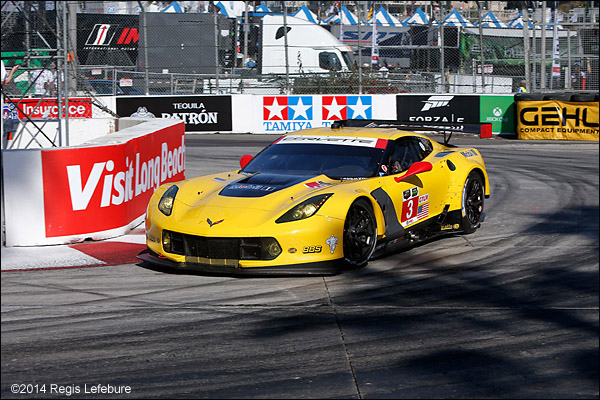
Long Beach saw a disappointing run for the Porsche efforts – can they bounce back to their competitive norm at Laguna? That will be key in the GTLM battle.
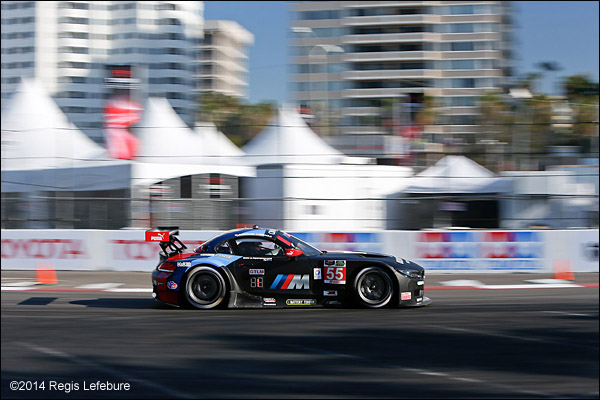
One car that should be good again is the BMW. They were very strong at Long Beach and should be strong here also. BMW was able to snag a competitive second-place finish here last season (after the Falken Tire Porsche was disqualified for failing a post-race stall test), so we know the car is capable.
On paper, Laguna is a track that should be friendly to the Risi Ferrari team, having won there in the past as well as qualifying on pole last year, but you just don’t know what to expect. It’s not that the team itself is struggling, it just seems like a dark cloud has been permanently overhead of Giuseppe Risi and his team. This time, Pierre Kaffer returns to the team, to partner full-season driver Giancarlo Fisichella.
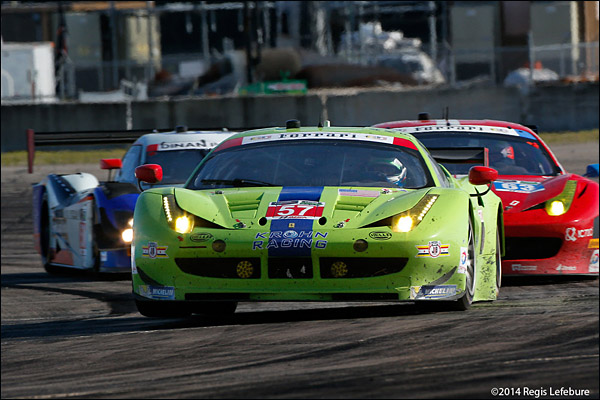
This time, though, Risi will not be the only Ferrari entered. Krohn Racing returns, and with support by Risi. Tracy Krohn, who will have his usual driving partner Nic Jönsson driving with him, is focusing his racing effort this season on an abbreviated six-race schedule, due to both business interests as well as a desire to investigate future race programs.
Viper too has struggled, although it appeared as if they found some of their balance back at Long Beach. Whether that will translate into success at Laguna remains a big question. That Viper is a big brutal beast and Laguna might be a tough race for them.
Another question for this race will be strategy. With the 2-hour format, what exactly will the teams come up with for strategy? If the race is green all the way, two stops will likely be necessary, although one may simply be a splash; but entirely green races at Laguna are pretty uncommon. This race may well be won on strategy…
It is the Pro-Am race that is such a big question mark. The PC class appears to have a constant rotation of drivers coming and going – even a week before the race there were still a number of TBA’s listed. Based upon continuity and form, you have to think that CORE will be in the mix somewhere, and typically RSR is very strong in this class. The pairing of Sean Rayhall and Luis Diaz looks good for 8Star, as does Frankie Montecalvo and Gunnar Jeannette for PR1-Mathiasen.
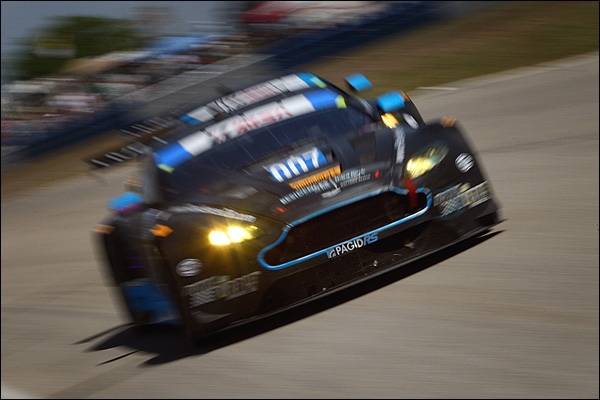
Then comes GTD, with an entry of 24 cars at time of press. Maybe the best bet for all would have been to run them separately from the rest. Entering Laguna, the dreaded BOP changes came down on both BMW and Porsche, which will have restrictors fitted for the first time, while Ferrari will see a max RPM reduction to 8000. Also, Aston Martin will see a smaller restrictor in place here for TRG.
As far as competition, we again have that BOP to worry about. That will go a long ways in deciding who has the advantage. Also, as in the pro race, strategy will be crucial, especially in the crucial driver swap-out time. But given the slick nature of Laguna, coupled with cool temperatures expected, this might be a race where just having a clean race will result in a good finish.
While both of the races will take place on Sunday, all four classes will practice together on Saturday. The sessions are an hour long; one in the morning and again one in the afternoon, followed immediately by qualifying. That’s it as far as track time for TUSCC entries. With over 50 cars due to be on track for the practice sessions, red may just be the color flying during practice…
Gary Horrocks