More of the same please….
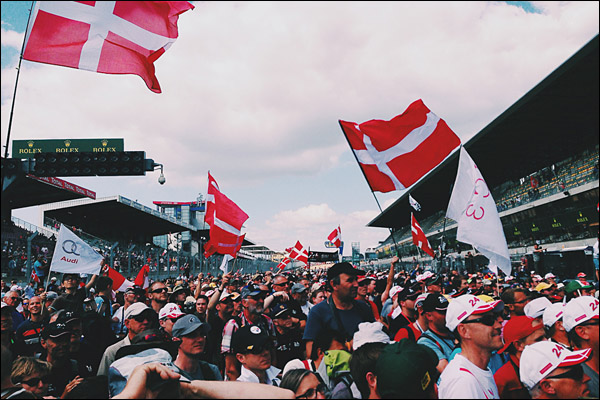
What a difference a year makes – the 82nd edition of the world’s greatest race hit the ground running this year, with the race in the balance right until the final hour, with the Porsche (and Mark Webber) effect bringing in the crowds like never before. The ACO’s official spectator figure is 263,300, up 18,300 on 2013.
For British Eurosport’s 11th year of live coverage of the race – showing 42 hours over five days of race week – we had a stellar driver line-up in the commentary box in Stuart Hall, Damien Faulkner and Sam Hancock and Liz Halliday, joining anchors Martin Haven, Jeremy Shaw and myself, plus veterans Neville Hay and Chris Parsons. We were truly global again, our English-language service reaching 33 million households, not only in the UK and Europe, but in the Asia-Pacific region, and in Australia and New Zealand on Eurosport International.
From time to time we handed over the keys of the cabin to the first three drivers – risky perhaps, but a gamble which paid off as they put a different but brilliant spin on what was going on. We reasoned that in the same way that as 1990 Norbert Haug had entrusted his precious Mercedes Group C cars to young guns Michael Schumacher, Karl Wendlinger and Heinz-Harald Frentzen, there was no reason for us not to do the same – noting that their collective initials made HHF…
Autosport’s Revved Up TV column picked up on this, adding our tactic was “definitely more advisable than leaving a group of commentators to fend for themselves in LMP1 cars.” Liz, who did sterling work in the pitlane throughout qualifying and the race, somehow escaped censure.
Perhaps mindful that it had won 12 of the 14 races of the 21st century, Audi did all it could to lose this one. It started Thursday afternoon with Loic Duval’s frightening airborne crash in the #1 R18 E-Tron Quattro, which just had to happen while we had Audi UK’s David Ingram in the commentary box talking about his WRC and Le Mans years.

There was a stunned silence on air as we waited to see if Loic was going to walk away from what looked like an aircraft crash; happily he did, but not before warning marshals to stay away from his Audi’s fully-charged hybrid systems.
That and the later accidents at the same spot in the remodelled Porsche Curves – the most serious to Fernando Rees’s Bamboo Aston Martin, which put the car out and Rees into the same hospital as Duval with concussion – called an early end to the first evening, leaving the ACO with an all-nighter to rebuild the barriers and debris fencing. Audi meanwhile got down to rebuilding the #1 car around a spare tub, although Duval’s raceweek was over and supersub Marc Gene was snatched from his Jota LMP2 seat to fill the void. Instantly the back of the British team’s garage became a job centre, populated by unemployed drivers, helmets expectantly held in hand; but it was a phone call back to England from Sam Hignett that summonsed Olivier Turvey to fill Marc’s place.
Thursday followed a similar pattern, with more red flags – seven by the time the two practice and qualifying nights came to an end – interrupting the flow for everyone, drivers and broadcasters alike. Briton James Calado joined the injury list with a head-banger in the #71 AF Corse Ferrari severe enough to give him a brain haemorrhage (and for a new car to be brought from Italy), and Bert Curtis (Prospeed Porsche), Alavaro Parente (Ram Ferrari), Frankie Montecalvo (8 Star Ferrari) and Karun Chanhok (Murphy Oreca) all binned their cars, but survived to make the race.
Again we had one of those OMG moments on air as Lucas di Grassi crashed the #1 Audi at Indianapolis, then put rookie Leo Roussel’s Pegasus Morgan into the wall as he changed direction without warning just before the pits (shades of Mike Hawthorn in 1955); we held our collective breaths as the blue LMP2 car cannoned down the road, happily without harm to Roussel but leaving the Schell family with a 24-hour rebuild.
Much analysis followed in our cabin on why Porsche Curves were claiming so many victims. Was it the ACO remodelling which was luring drivers into a faster exit, or had cornering speeds increased exponentially this year as tyres and grip improved?
The entry was already down as the global recession claimed a large number of entries, from Viper to Millennium, and now many of those that had made it to La Sarthe seemed intent on self-destruction.

We had plenty of studio guests coming and going: as well as David Ingram, who takes early retirement from Audi next month (and recalled first going to La Sarthe as a refueller for Richard Lloyd’s Canon Porsche squad), we talked to Hugh Chamberlain, Group C legends Jacky Ickx and Kerry Morse, Dario Franchitti (congratulating him on his MBE) and many other characters who make up the wonderful global sportscar racing family.
I asked Jacky if he would have enjoyed racing a hybrid prototype? “No,” he responded. “There are so many buttons and with your engineer in your head you are now a robot. Group C was no better – we could never drive flat-out because of the fuel restrictions, which is not natural for anyone who is competitive. The sportscar days before 1982 were the best, the driver was in control and could race hard.
“But sportscar racing is still the highest level; Formula 1 should be, but there are so many restrictions, so controlled, that it is no longer the peak of motorsport.”
After qualifying, the race was surely going to be anti-climax? But how could it be with Toyota on pole and Porsche alongside at the head of the 56-car grid, relegating Audi to 5th, 6th and 7th, only the Bamboo Aston failing to make the start. Fernando Alonso dropped the Tricolour amidst rumours that Ferrari would be announcing its return to prototype racing, something which proved a little wide of the mark. But how long can Maranello stay away, with Nissan joining the top of the field in 2015, we pondered on air, with other manufacturers also starting to take an interest?

It was Nissan which posted the first race retirement this year, its whacky ZEOD RC (which we had christened Zedric in honour of Nissan’s 1970s road car) having proved its point with a 300km/h run down the Mulsanne under electric power on Thursday night, then a full lap under the same during the warm-up. The gearbox had been the Ray Mallock-run hybrid’s Achilles’ heel all week, and it let it down again just five laps into the race.
Once the factory LMP1 cars had sorted themselves out, we settled down for what would prove to be an enthralling event, with all three marques destined to change the lead several times. Pre-event questions such as why hadn’t Toyota entered a third car to provide a hare, and would the fragile Porsche 919s make the distance would all now be answered, but not quite in the way we had anticipated.

Only at Le Mans could a week-long high pressure zone decide to break two hours into the race. We heard Lena Gade tell her #2 car that showers would be arriving at 4.30pm, with a follow up at 5.30pm, but nobody knew just how heavy the ‘showers’ would be.
British Rookie Sam Bird found out the hard way; having put his AF Corse Ferrari on the GTE-Am pole (and second overall in GTE) he was running his own race at the head of the AM field when he was confronted by a wall of spray behind which was a track full of crashing cars midway down the Mulsanne chute. As Marco Bonanomi’s Audi and Nic Lapierre’s Toyota bounced off each other, Sam slammed into the back of the slowing #3 Audi, ending both cars’ races, all seen from on-board Fred Makowiecki’s AF factory Porsche, which was itself sliding along the barriers. Everyone was blameless; it was an act of the weather gods, but it meant Audi was now down to two cars. Lapierre got his #8 car back to the pits and lost 5 laps before Toyota Racing could launch him back out into the fray.
From there on the #7 Toyota, the #1 and #2 Audis and the #20 and #14 Porsches (in deference to Mission 20-14) started their cat and mouse journey through the evening and into Sunday, in a race which nobody appeared to want to lead. It was a question of who blinked first. That happened even before sunrise, when the lead Toyota melted a data transmission wiring loom which stranded it out on the circuit just before the 14-hour mark.

It should have been Toyota’s year; I reminded viewers of Tom Walkinshaw’s maxim that it takes three years to win Le Mans, and this was the its third year in the WEC.
We saw the #2 Audi of Lotterer, Fassler and Treluyer put two laps over the best #20 Porsche of Webber, Hartley and Bernhard, before a blown turbo cost it 23 minutes in the pits. Kristensen, di Grassi and Gene, delayed by fuel-injector problem, had already leapfrogged the Porsche and now led – until it too had a turbo fail, propelling the 919 into the lead despite a severe vibration which was trying to shake the teeth out of its antipodean crew, not to mention those of our TV audience!
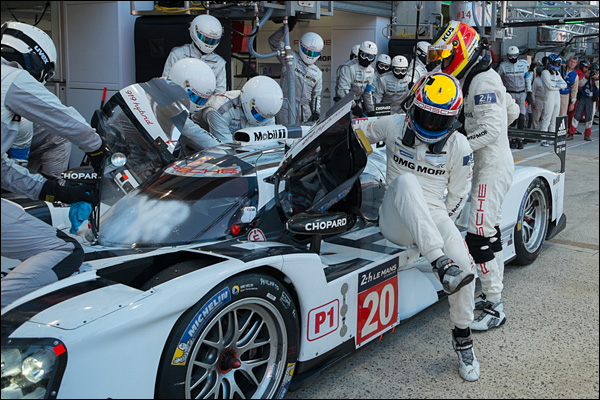
Porsche had planned its first prototype assault on La Sarthe in 17 years (when it won with the TWR Porsche in 1997) with meticulous detail, running in Le Mans trim at both Silverstone and Spa, and it looked as it was beginning to pay off. But an engine failure at five minutes past 1pm, with less than two hours remaining, ended Mark Webber’s dream of making the leap from grand prix winner to Le Mans winner, although he told Liz with remarkable cheerfulness, “We’ll be back”. The sister car had been suffering from brake then fuel-pressure problems, and Marc Lieb parked up in the garage 1h 22m before the finish, intending to complete the final lap.
That left Audi with a clear run to a 13th victory from 15 starts, and a 1-2 at that, the #2 crew of Lotterer/Fassler/Treluyer making it three wins from four starts along with the talented Ms Gade, with three laps in hand over the #1 ‘Lazarus’ car of Kristensen, di Grassi and Gene, who had driven superbly despite having tried the car only in tests at Paul Ricard and Aragon earlier in the year.

Normally we are lost for words when Audi wins yet again, but this year Ingolstadt had to work so hard for it for so long that we had plenty to talk about – the consensus for next year was “more of the same please!”
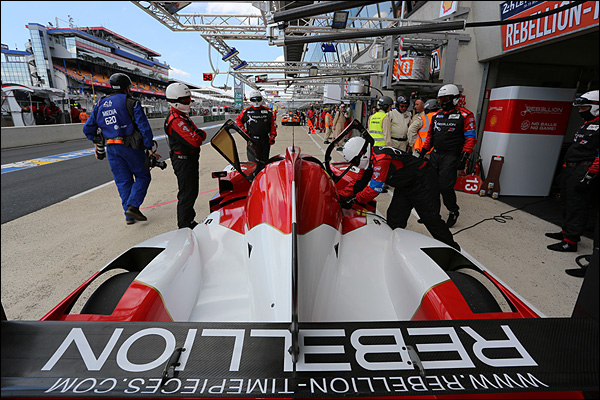
A chastened Lapierre brought the #8 Toyota home to the final podium place with Ant Davidson and Seb Buemi another two laps down, while Rebellion won the LMP Lights division bringing its new R-One coupe home 4th overall in only its second race.
As exciting as LMP1 might have been, there was just as much going on throughout LMP2 and GTE-Pro. LMP2’s 17 starters were a dramatic improvement on Spa’s five, and provided a thrilling race from start to finish, led for many hours by the new Ligier-Nissan Coupe of OAK racing, crewed by young Brits Jann Mardenborough and Alex Brundle along with Russian Mark Shulzhitskiy, after deposing the pole TDS Ligier.
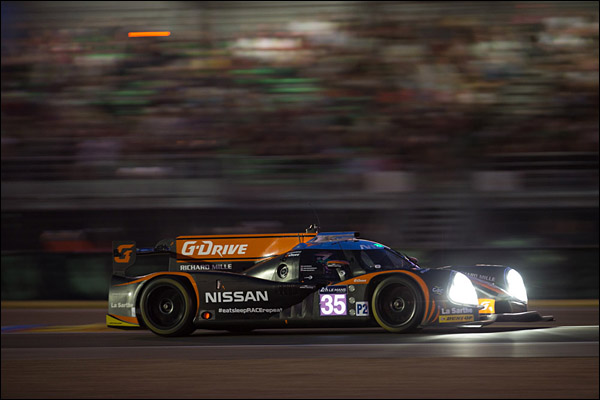
But come Sunday morning the OAK car lost power, which was rectified with a coil and plugs change, but not before the TDS crew of Pierre Thiret, Ludovic Badey and Tristan Gommendy, and the Jota Sport Zytek-Nissan of team owner Simon Dolan, Harry Tincknell and draftee Oliver Turvey had gone through. Turvey waited until the TDS car’s final stop, then pounced, taking the Zytek to the win, with the Signatech Alpine-Nissan of another Brit Oliver Webb, Paul-Loup Chatin and Nelson Panciatici third.

It was a fairy-tale finish for Jota on its eighth Le Mans start; not only had it handed back its star driver to Audi, but Dolan and Tincknell were here off the back of their ELMS Imola victory a month ago, together with another Audi ‘academy’ driver Filipe Albuquerque (who remains a Le Mans rookie after the #3 Audi’s demise). Substitute Oliver Turvey had not sat in the car since last September, and it was a great win for Zytek too, along with its Zytek-tuned Nissan V8. Its 5th place overall matched the best-ever LMP2 finish of Strakka in 2010, while the OAK Ligier eventually made it home in LMP2 5th.
GTE-Pro also lived up to expectation, in past years providing the best action, action matched this year by the two prototype categories, but taking nothing from the ‘tin-top’ race. This should have been Aston Martin’s win on its 10th anniversary in the hands of Prodrive, but a power-steering hose failure (not for the first time, as our resident expert world champion Stu Hall reminded viewers) after Darren Turner, Stefan Mucke and Bruno Senna had led throughout the night dropped the Gulf Vantage to 6th.

The untroubled AF Corse Ferrari 458 Italia of Gimi Bruni, Tony Vilander and Giancarlo Fisichella, the latter back from the desert after being dropped since the 2013 WEC finale, was left to take its second win in three years.

In the absence of Viper, US honours were again in the hands of Corvette, and a strong performance by both factory C7s saw Jan Magnussen, Antonio Garcia and Jordan Taylor finish 2nd ahead of the 2013 winning factory Porsche team car of Marco Holzer, Richard Lietz and Makowiecki.

AMR did at least have the consolation of the 18-strong GTE-Am category win for its Danish Vantage, Kristian Poulsen, David Heinemeier Hansson and rookie Nicki Thiim beating the Proton Porsche of Christian Reid, Klaus Bachler and Khaled al Qubaisi by two laps. Poulsen was even able to stop for two laps for a full valet service such was his lead, reminiscent of the days when Corvette would rub in their domination with a pit-lane carwash, booed on by the fans!

Next year will be my 33th time at Le Mans as a broadcaster or journalist; I mentioned this to Henri Pescarolo, who was commentating in our neighbouring booth for Eurosport France along with superheroes Olivier Panis and Franck Lagorce, aware that he remains the start record-holder with 33 participations. “Le Mans is an addiction for which is there no rehab,” he replied. “None of us can keep away.”

As always, our ratings from the Eurosport commentary box:
Driver of the Race:
Jann Mardenborough: for the second year running, the young Welshman drove mighty night shifts, together with Alex Brundle, keeping the Oak Ligier out front in LMP2 until the engine lost power. The 22-year old Playstation Academy graduate deserved better than his eventual fifth place.

Team of the Race:
Audi, despite its domination of 13 of the past 15 races.

Dr Wolfgang Ulrich, christened Ernst Blofeld by the British Eurosport commentary team for his attempt to seize world domination, brought his team through three crashes and two turbo changes to take the win. The fairy-story would have been the rebuilt #1 car winning, but a 1-2 was already good enough.
Car of the Race:
The beautiful little Oak-built Ligier Coupes raced for the first time at Le Mans, and all three finished in the top 11 places overall.
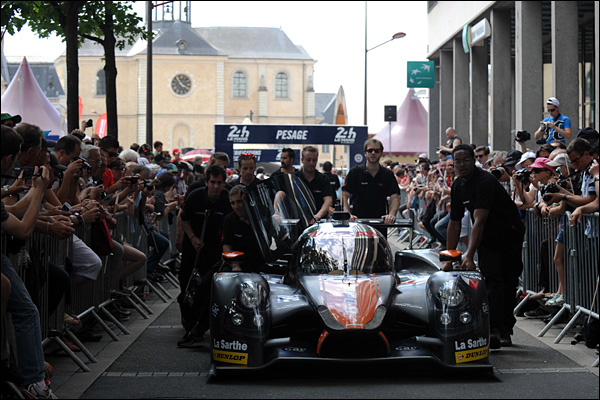
Former French rugby international and 1970s Le Mans entrant Guy Ligier was on hand to see their successful debut, two powered by Nissan and the third by HPD, running to 2nd, 5th and 7th.
Newcomer of the Race:
Zedric, the Nissan ZEOD RC.
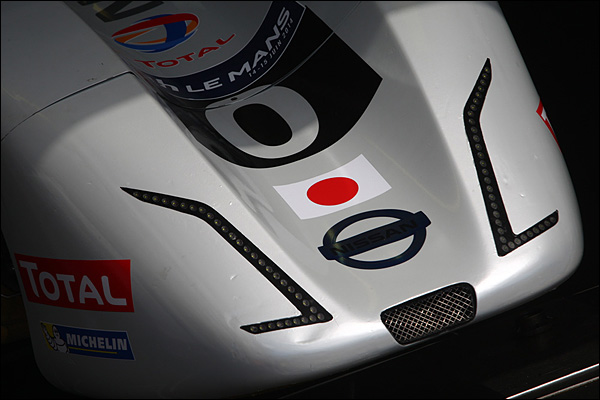
The Garage 56 entry (despite there being only 55 cars this year after withdrawals) looked space-age, and ran like an Exocet under its electric power, hitting 300km/h in qualifying and then completing a full battery-powered lap during the Saturday warm-up. A gearbox failure ended in an early bath for the RML team, which had put so much work into the project.
Looker of the Race:
Along with Ligier, another name from the past, Alpine was back with Fred Signault’s Signatech Team in LMP2, benefitting from its ORECA aero upgrade.

It looked wonderful in its metallic blue livery, and made the podium. A Renault-powered Alpine won the 1978 24 Hours after three years of trying, so there is still time to get there.
Moment of the Race:
The Mulsanne rainstorm pile-up seen from Fred Makowiecki’s Porsche as it clattered along the rails – Lapierre’s Toyota spinning into the barriers, followed a split-second later by an explosion of bodywork as Sam Bird’s Ferrari ran hard into the back of Bonanomi’s slowing Audi. It’s already a YouTube classic.
Emotion of the Race:
Sam Hancock: in at the ground floor with Jota Sport, our newest driver commentator was moved to tears by the little British team’s victory with the man he mentored in his Aston Martin days, Simon Dolan.

Allan McNish no doubt felt the same way about his charge Harry Tincknell sharing the same car.
Mark Cole