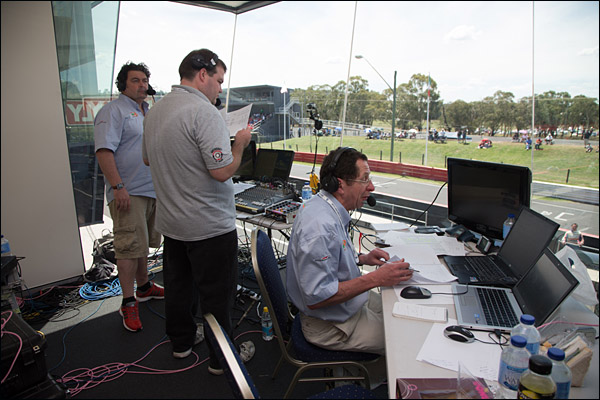
Here’s the first of an occasional series of opinion columns written not by DSC regulars, or people earning their living from the sport, but by fans!
The subject matter will be theirs to decide and will expose, you can be sure, their passions and their pet peeves will be pretty close to the surface
First up is 30 year old Minnesota resident Paul Marquardt whose sportscar racing memory banks started topping up at the Minneapolis street races held from 1996-98 featuring the fire breathing Trans-Am monsters and the pre ALMS/ Grand-Am loveliness of the USRRC including such luminaries as the Panoz Esperante GTR-1, Dyson Racing’ Riley & Scott, the Champion Racing Porsche 911 GT1 and err the Mosler Raptor!
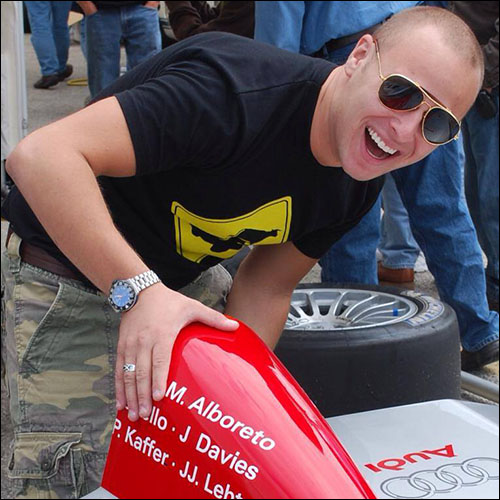
Being the impressionable sort he tried to follow the sport, and found it fairly tricky. Read on to find out how it changed forever for him some time later!
I’ll never forget the first time I heard that collection of voices.
I know what I was wearing that day, I know what had taken place earlier that day. It was Le Mans 2005, and I quite literally stumbled upon something that would that would change my life forever. I was a subscriber to SPEED Channel, and that’s how I watched the 24 Hours of Le Mans. During my local evening hours, SPEED Channel’s broadcast team went off the air, but continued to broadcast the pictures.
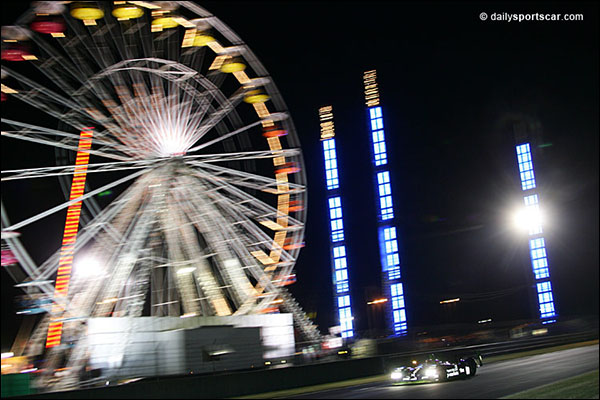
I had sat down with dinner in hand and suddenly was completely confused: there were British people talking on my TV! SPEED Channel had donated their audio channel to a British broadcast team at the Le Mans 24 Hours. What I was listening to was called Radio Le Mans, and I was hooked from the very beginning. From that moment on, Radio Le Mans has been an integral part of my enjoyment of the 24 Hours of Le Mans.
Now 10 years on from 2005, Radio Le Mans continues to not only be an integral part of my enjoyment of the 24 Hours of Le Mans every June, but also a part of my daily life. And, that raised an interesting question for me:
How did a British based specialist radio station become a huge part of a mid-20’s somebody who lives in the United States of America?
The question has huge importance, because the answer is worth it’s weight in gold to motorsport worldwide.
Radio Le Mans, has made an impression on my life that started right from the beginning. They came and went in 2005; I wasn’t recording the race so when those overnight hours on American TV ended, my newly-made British friends left my life just as fast as they entered.
Something stuck with me however from those six hours of borrowed American TV time: I continued to watch motor racing throughout the year and found myself constantly comparing the commentary and insight provided by other racing series against the short 6 hours of Radio Le Mans coverage I heard. Fox Sports, SPEED Channel, NBC Sports, BBC, ITV – I compared all of these large broadcasting superpowers to Radio Le Mans.
The heavy-hitters were of course polished. They were of course prepared, but something still was missing in comparison to RLM, and this is the first of defining differences about RLM to other motorsport journalism: the RLM team is passionate like their fans are. The RLM team, while always professional, still captured the unbridled energy and passion that fans have for racing.
In the middle of the night while watching the race in 2005, John Hindhaugh handed off the radio to one of the pit lane journalists who was reporting on the Champion Racing Audi R8 coming in for a pitstop.
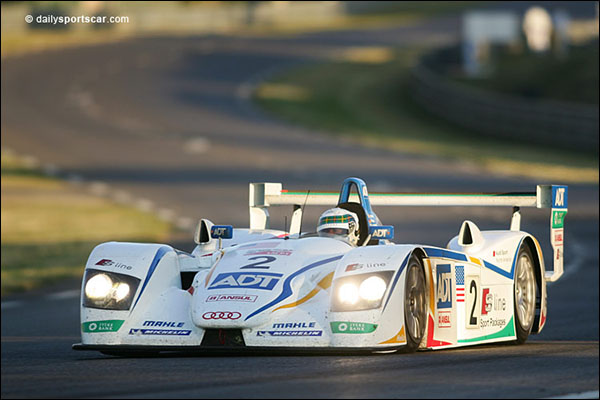
After the play-by-play of the pitstop, you could hear the car leave its pit box and then, as though I was standing in the pub with my friends, the pit lane reporter did a PERFECT impression of what the Audi R8 sounded like on it’s rev-limiter. Across international air waves, a professional journalist did a ‘car sound’ for all of us fans to hear. It was incredible. It was incredible because it was what I was thinking at that moment, the ever-recognizable ‘burble’ the R8 had on it’s pit lane speed limiter.
This perfectly sums up why the contributors, reporters and journalists at Radio Le Mans continue to set the standard: they are fans first. Of course most of them have been involved in broadcasting and even motorsports, but first and foremost, they are fans just like you and I.
You can hear their excitement when reporting. You can truly hear the smile in their voice when their favorite car races past them on the main-straight, or burbles past their feet in the pit lane.
Listening to RLM is akin to listening to a conversation any one of us fans could have at a dinner table, bar high-top or local breakfast bakery. But, it’s the best version of that dinner conversation, because in addition to being true racing fans, they are true professionals.
It provides the listener with a different experience. So many of the “regular journalists” in motorsports broadcasting are retired drivers, retired individuals that once took an active part in motorsport. And their perspective, while hugely interesting and valuable, is fundamentally different from that of a fan.
By having a blend of industry professionals and true fans reporting on the racing, RLM has built a bridge for fans to walk over, bringing them ever closer to the true experience of being at the race.
Having the opportunity to watch the 24 Hours of Le Mans has not always been easy in the USA over the past 10 years. SPEED Channel, a subscription cable TV channel from 2002-2013, annually broadcasted the race. However, there was a caveat to this:
SPEED Channel wasn’t offered to customers by every cable TV company in the United States. So watching the race was by no means a guarantee for many of us in the USA. Myself a young college student at the time, and then a young college graduate shortly after, paying for ultra-premium sports cable channels wasn’t in the cards, sadly that money went to resumé workshops and business suits for job interviews.
So what does one do? Le Mans race week started in 2006 and as of that Wednesday’s first practice session, I still had no solution to watch the Le Mans 24 Hours. On a whim, I typed in “www.radiolemans.com” into my web browser. I figured I could maybe find a way to listen to RLM, for which I assumed would not be for free, but would be worth it.
Oh how wrong was I. The website loaded, and a large button in the upper-left hand corner of the website was calling to me: “Listen Live.”
I clicked on it, my laptop paused for a moment and then in an instant, I was transported to Circuit de la Sarthe. The effects microphones picking up the cars blasting down the main/straight, the sounds of Hindhaugh and Truswell bantering back and forth about pit strategy, it was all there. I couldn’t believe it. I was at Le Mans and hadn’t spent a dime.
I stared at my screen thinking, “there is no way this is free?” I waited for what seemed like an eternity for a pop-up window to announce: “Nice try, stuff in life isn’t free. Pay the piper.” Well friends, as we know all to well, free it was and free it still is.
Looking back, I was as glued to that radio broadcast as my grandparents probably were during the now infamous Orson Welle’s “War of the Worlds” broadcast in 1938. I frantically copied down the broadcast schedule, did my time-zone conversion and then made sure I was sitting in front of that laptop for each broadcast.
“Free-to-air” is Radio Le Mans secret weapon in the world of motorsport journalism. RLM doesn’t cost anything for you to enjoy. If you have an internet connection, with a device that has a speaker, then you have earned yourself the right to listen to John and the team. That simple.
And, not only is RLM free to anyone, it’s free to anyone everywhere. There is no geo-blocking. The powers-that-be at Radio Le Mans don’t see any advantage in preventing anyone in the world from accessing their product. For those not familiar with the term, geo-blocking is the communications practice of the race organizers selling the rights to broadcast their production to the highest bidder. The highest bidder then in turn says, “Okay great, but I’m paying premium dollar for these broadcast rights, so I want to ensure that my proprietary broadcast is the only way for anyone in my region to watch it.”
That’s another way Radio Le Mans collects new listeners in droves and strengthens it’s listenership every time they broadcast.
During this past weekend, the Rolex 24 Hours of Daytona took place. My current cable TV provider doesn’t offer Fox Sports 1 or Fox Sports 2, so I had no way to watch the race. Cue Radio Le Mans to yet again demonstrate the power of accessibility: I caught the whole race, for free, from my home.
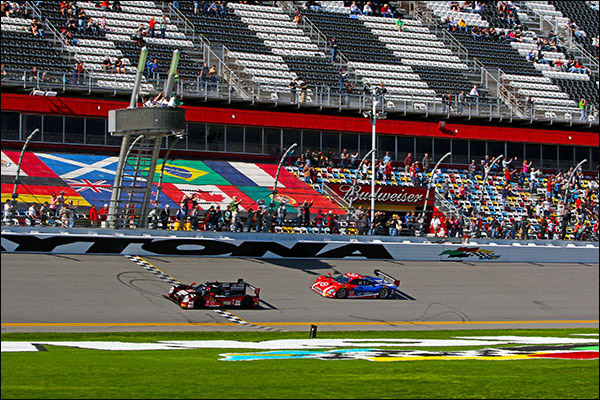
Having Radio Le Mans free and open to anyone in the world is hugely powerful. Hugely powerful because Radio Show Limited adopted this model a decade ago and have stuck to it. Internet radio was nowhere near it’s current popularity in 2006. Radio Show Limited saw the potential in streamed radio when Facebook, Twitter and YouTube were in their infancy.
Knowing that I could tune into Radio Le Mans at any time, my annual anxieties of the how, when and where of watching Le Mans subsided. I had moved to Philadelphia, PA and was living just across the street from where Benjamin Franklin was buried. Walking down to a coffee shop, I purchased a ‘bottomless” cup of coffee, set up my laptop and headphones, and tuned in for the start of the 2007 24 Hours of Le Mans.
For nearly 2 years now I had been listening to RLM. Periodically, John would receive emails from fans asking the team questions and requesting ‘shout-outs’ from the broadcasters. I had always figured “what were the chances that my email would get picked” and never bothered. But, I felt courageous that day and fired off an email to John saying I was up early, coffee in hand, and was loving the race coverage, and also wished him a happy 1-year wedding anniversary.
Just enough time went by for me to forget I had even submitted the email and then it happened: The RLM team, John Hindhaugh specifically, read my email to the world. I fist-pumped the air amongst a crowd of coffee drinking strangers. But, I could care less, I was just mentioned on a Radio Le Mans broadcast!
This experience that crisp June morning in 2007 is what cemented me in being a true sports car racing fan. I’ve followed countless forms of sports, like so many of us, and no other sport in the world heralds it’s focus on community as much as sports car racing. If sports wore their emotions, sports car racing would wear its heart on it’s sleeve. Sports car racing is diverse, rich in dynamism, raw, electric. Because of this unique transparency and community-based enthusiasm, Radio Le Mans never lets the fans forget that they are integral in what we they do. They strive to have the listener be a truly active and necessary ingredient in their recipe for success. The listener is directly part of the broadcast process.
Once a week, Radio Show Limited puts on a motorsports news show called “Midweek Motorsport.” Fans are constantly feeding the RLM staff their comments and opinions. The fans collective voice legitimately aids in shaping and molding the direction the show takes week after week. Sure other race series have a ticker on the bottom of your screen showing tweets that are trending, but how often does one of those tweets spark conversation that molds/shapes the broadcast?
This utilization of the fan is Radio Le Mans at its most forward thinking. How many of us listeners have been mentioned during a broadcast and had the same thrill I had in the coffee shop?
Who’s submitted questions and stumped the RLM team during their annual hilariously-festive Radio Le Mans Christmas Quiz?
Radio Le Mans truly values it’s fans and reminds us constantly. Social media has changed the way racing fans interact with their sport. Gone are the “Letters to the editor” features in Road & Track, Autosport and Motorsport, having had to move over for comment sections on Facebook, private forums, Twitter and blogs. Radio Le Mans saw this potential and harnessed it. The Midweek Motorsports Listeners Collective on Facebook, the countless tweets to the team in the booth during races, it all adds up to this cocktail of true fan-oriented brilliance.
Radio Le Mans has been huge in my life. RLM has filled the waning hours when working an overnight shift. RLM has provided endless amounts of laughter and humor. But most importantly, Radio Le Mans is continuously demonstrating that you have to listen to the fans.