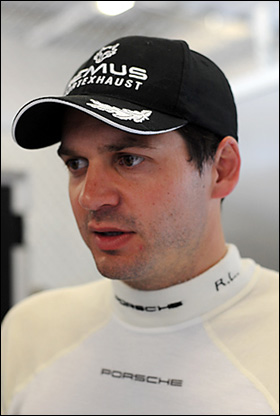
While the Porsche LMP1 boys are grabbing the headlines with lightning-fast qualifying times, Weissach’s GT programme continues unabated, although it looks like the #91 and #92 crews have a mountain to climb in the race after failing to get on terms with the Astons and Ferraris. DSC caught up with some of the driving squad on Thursday to get their view…

Richard Lietz (#91 911)
“The conditions we saw Wednesday night would be the same for everybody and as we know it’ll be wet during the race, we took it as an opportunity to prepare and try a few things. Normally, if you know the race will be dry you save the car in conditions like last night: a rain tyre can be destroyed in one or two laps, or you could go for a time on slicks and risk damaging the car. We tried to find the right window for when we should put on the slick tyre and the same exercise for the change from slick to wet. So whereas in one respect last night’s situation was frustrating, we were able to do some things that maybe we would not have been able to do in perfect conditions. It was interesting learning.”
 “We’re a bit off pace, but we have 24 hours to come to the front. I don’t think the starting position is that important at all. We looked at what we could do with different fuel, with new tyres and a clear lap, but after all that we were two seconds off, so it opens your eyes. We hope for a better race pace: we’re quite happy with the car set up with fuel, but with low fuel we need to work a little harder.”
“We share information from each side of the garage. However, things are a little different at the moment with the GT cars and the continuity of the driver crews. Unfortunately, I had not driven with Michael [Christensen] before; he was at Laguna Seca while we were at Spa. And there’s been some movement of drivers from one car to another.”
“It’s different to the way it was before, when it was me and Marc [Lieb] at every race. That was a very good situation, but to be honest we have lost some of our drivers to the LMP programme and we’re still trying to work out the best solutions. It’s better than it would have been in the past, because the Porsche Juniors programme is so good and the guys arrive here and they’re ready. Also, the 991 is completely different to the 997; it’s more race-ready. A good driver pairing will always help each other and I’m there for Michael, but to be honest there are many times here with the new runoff areas for example where I look at his data and ask him to help me, because he’s Danish and so quick!”
Michael Christensen (#91 911)
“I was in the US last year doing TUSCC, but coming into the WEC this year it’s a different team. Some are known faces as I’ve been with the company for four years, but there are new people to work with and learn with as well.”
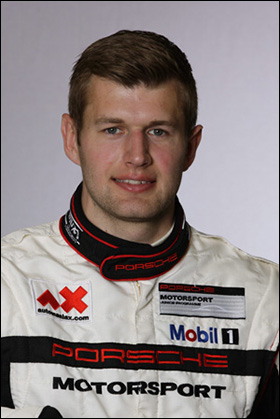 “This is my first time at this circuit as a driver and it’s a good experience. Really, I don’t approach a lap in any other way to any other circuit, other than it’s a long lap. There’s never going to be a car that’s perfect over that distance at every point, so you have to explore the possibilities and make the most of where the car does suit the track conditions. There are some for our car like the Corvette corner or the banked corner at Indianapolis where the car feels really good, but on others like the high-speed corners we perhaps lose a little.”
“Tyre wear plays a big part and can change the feel of the car from corner to corner. Our car is always good on brakes and I think we’ll be good in the wet. As Richard said, we’re running on new tyres and low fuel and the car was not as good as we would like, but over a 24-hour race maybe these situations are in the minority and the bias towards the used tyres and higher, more normal, fuel loads is where we should be.”
Frederic Makowiecki (#92 911)
“Wolf [Henzler] is joing Patrick [Pilet] and I here for Le Mans. We’re lucky to have him, he’s a very experienced driver, especially on the Nordschleife, where you have to be particularly good in tricky conditions. We did go for a qualifying time on Wednesday night to see what we needed to do. We did have some traffic so it’s not really our pace, but we’re definitely not able to match the Corvette, Aston and Ferrari right now. We can be closer but we won’t do a 3:54.9! We’ll just have to stay focused on our race, do no mistakes and a good strategy. Reliability is always important here and the weather forecast looks unstable, so we’ll see how it goes.”

“We’ve seen drivers like Romain [Dumas], Marc [Lieb] and Timo [Bernhard] who’ve done GT racing move up to the LMP1s, so they know how it is for use getting lapped. The only thing that’s not easy for us is that the philosophy of LMP1 has changed. In the past they had faster but still ‘normal’ acceleration, but now their acceleration is really quick and then they start to slow down when they’re ‘sailing’ and this changes our approach a little, we need to be careful and keep looking in the mirror, as I think it’s easier for their to be an accident than before.”
Joerg Bergmeister (#91 911)
“Unfortunately we were going for a time on Wednesday, so that was our pace! We always struggle a bit when the grip level is low and. It wasn’t a perfect lap but we certainly tried. We’re going to make some changes to the car tonight and see where we are. The gap is pretty substantial! For today, we hope for some dry running, but in the race wet conditions can be good for us. Personally I like driving in wet or mixed conditions. I think in the race we’ll have to be completely flat out to even stay in the game and hope for rain. We’re in no position to cruise around and take it easy on the equipment like some of our competition.”
“I think it’s good that there’s going to be more room for development, especially in GTE, it should be interesting. In the Tudor series the GT3s are slowed down a bit compared to Europe but obviously they’re still plenty quick on the straights, especially as we run more downforce on the TUSCC car, so it’s tough to get by sometimes, especially on the straights. To pass you have to do pretty late moves in the braking zones!”
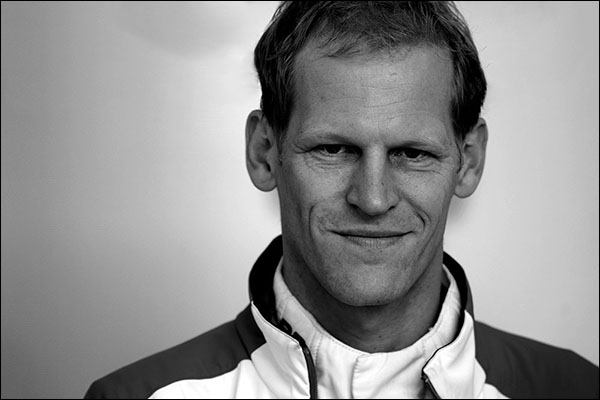
“There’s definitely a different atmosphere and culture around racing in the US compared to Europe. Esepcially with the tracks, Le Mans aside, I generally prefer racing in the States, because there are still greater consequences if you make a mistake and go off. Usually if you’re lucky you’re stuck in the gravel, if you’re unlucky, the car’s damaged, so I prefer that kind of racing, where you can’t just go outside the track limits over and over again until eventually you get it right. I think if you make a mistake there needs to be a consequence, that’s how it used to be in the past, of course safety is important and in something like F1 the speeds are much higher and the runoffs make sense there, but for slower cars I prefer the old style!”
“The P1s getting quicker in a straight line actiually makes our job easier, okay they approach you quicker, but they’re more likely to pass on the straight than into the corner now. I don’t really need to talk to our P1 guys about it, they’re professionals, they know what to do!”