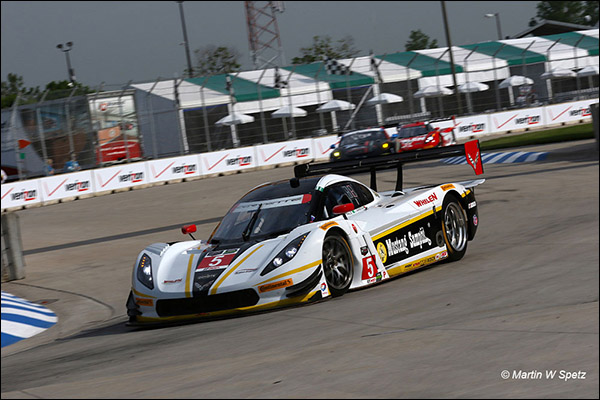
IMSA finds itself in an arranged marriage with the ACO that’s getting messier by the day.
The American sports car sanctioning body has been collaborating for more than a year with France’s ACO on new P2 rules for 2017, and at a time when the two sides should be finding matrimonial bliss, signs point to a relationship at the crossroads.
Before taking a deep dive into what’s going wrong with the present-day situation, it’s worth delving into how optimism for IMSA’s 2017 P2 rules has turned into growing dysfunction that’s clouding the final stages of the rule-making process.
Courtship and Combining
The mashup between the ACO-sanctioned American Le Mans Series and the NASCAR-sanctioned Grand-Am Rolex Series started in 2012 when NASCAR purchased the ALMS and its sanctioning body IMSA. Combined under the TUDOR United SportsCar Championship flag for 2014, and sanctioned under NASCAR’s IMSA banner, IMSA chose to delete the top international P1 class from its offerings in favor of the slower P2s and Daytona Prototypes. The headlining P2s and DPs now live in the catch-all “Prototype” class.
With P2, the ALMS had a category that mirrored the ACO’s P2 class where direct auto manufacturer participation was prohibited. At the opposite end of the spectrum, Grand-Am had a DP class with serious involvement from a number of auto manufacturers. With the TUDOR Championship’s Prototype class, a general friendliness toward auto manufacturers was carried forward, and Chevy, Ford, Honda, and Mazda continue to serve as the lifeblood keeping IMSA’s premier category afloat.
Even the conforms-to-no-known-class DeltaWing competes in Prototype, giving IMSA three distinct chassis types to manage. Of the eight Prototype cars racing at this weekend’s Sahlen’s Six Hours at the Glen, four DPs carry support from General Motors, one DP is entered by Ford’s factory team, one P2 is fielded by Mazda’s factory team, one Honda-powered P2 receives support from the Japanese brand, and the DeltaWing is, in theory, an offshoot of a soon-to-be road car company.
Minus manufacturer involvement, IMSA’s Prototype category would be empty at Watkins Glen.
Different Needs
The absence of a manufacturer-only prototype class like P1 has created a situation that leads IMSA to straddle the lines of necessity and comfort with the ACO.
With its Formula 1-level P1 cars on display at Le Mans, and in the ACO/FIA-led World Endurance Championship, the ACO has been firm in a position that says manufacturers can only play in P1. Unlike IMSA, zero percent of the European P2 cars are funded by manufacturers because they aren’t allowed to participate.
In America, manufacturers don’t the option of P1, and have embraced Prototype as the place to produce cars and fund DP and P2 teams. Different continents, different needs.
The ACO, which has an agreement with IMSA to sanction America’s P2 and the manufacturer-based GT Le Mans class, went along with IMSA’s alternate take on P2 when the TUDOR Championship was launched. There was also an understanding it wouldn’t last for long – the blended P2+DP situation would be cleaned up in favor of a single spec when the next round of P2 rules were drafted.

IMSA then entered into a union with the ACO to use their 2017 P2 structure as the new framework for its Prototype class, and were invited to take part in the conceptual formation of whatever rules would emerge.
IMSA’s reasoning behind moving to a more modern, simplified Prototype category made sense when it was first announced, get rid of aging DPs, end the painful struggle to balance DP performance with P2s, and give the DP teams a chance to finally race at Le Mans in ACO-approved P2 cars.
With its your-P1-is-our P2 dynamic in North America, IMSA went into the 2017 P2 rules process with clearly stated requirements. Auto manufacturers needed to remain, those manufacturers would be able to create their own DP-style custom bodywork to dress the new P2s, and the use of P2 engines supplied by a variety of manufacturers would continue. Long before the 2017 P2 rules process got underway, IMSA left no doubt as to what they wanted.
What IMSA Got
The ACO, as recently as June 11, confirmed a set of global P2 rules that call for four chassis manufacturers, a single engine supplier, and no special exceptions for teams racing at Le Mans or the WEC. WEC teams cannot have custom bodywork, and they all must use whatever spec engine is supplied.
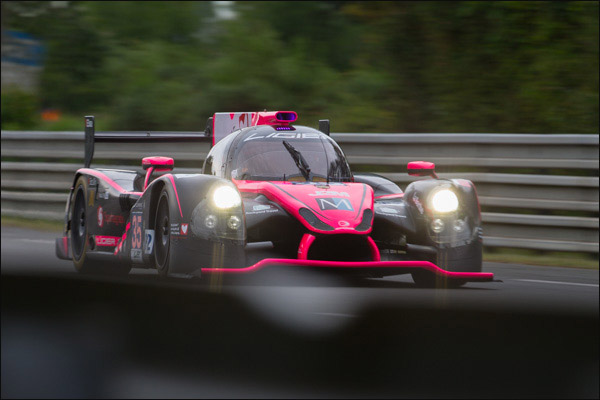
For America, the ACO confirmed the allowance of multiple engine manufacturers, manufacturer-specific bodywork, and their willingness to apply the necessary Balance of Performance adjustments to any IMSA P2s that are granted entries at Le Mans.
On paper, and during their annual pre-race press conference at Le Mans, the ACO gave the impression it understood and accepted IMSA’s fundamentally different requirements for its P2-based Prototype class in 2017.
Making Matters Worse
IMSA knew the ACO would shape its P2 rules to exclude auto manufacturers in Europe, but was caught off guard in the final chassis supplier tender that went out which banned manufacturers like Honda (that make and sell P2 cars) from submitting bids to become one of the four approved chassis builders.

That clause alone caused an uproar on both sides of the Atlantic when it was revealed, and closed the door on Honda’s ability to continue as a chassis supplier. As the only current P2 chassis and engine supplier in North America (Canada’s Multimatic independently produces a P2 chassis without manufacturer affiliation), the ACO drove away one of IMSA’s four P2 manufacturers with one sentence in a PDF document!
Honda is having more than its fair share of struggles this year, starting with aerodynamic issues that sidelined its new ARX-04b P2 chassis, but racing aside, Honda continues to serve as one of the biggest advertisers and supporters in any series where it maintains a factory presence. Thanks to the ACO, IMSA can kiss that factory funding and those promotional dollars goodbye in 2017.
Words vs Actions
Moving from the process side of the story to where things stand today, there have been suggestions that the friendly words spoken in public by the ACO regarding IMSA’s unique rules might differ from their actions behind the scenes.
What if the ACO isn’t sure it wants to let IMSA have the bodywork freedom it’s been promised? What if the P2 2017 rules finalization process has become a duel between differing philosophies? What if the ACO, now that they’re almost at the 2017 finish line, isn’t particularly interested in IMSA and its manufacturers having a special set of rules?
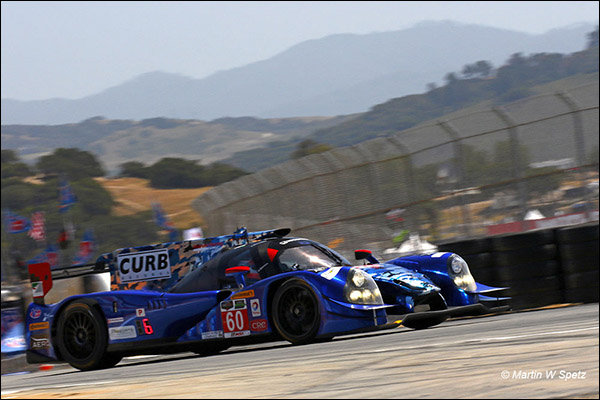
And what if that friction is pushing IMSA toward taking greater control over its future Prototype rules? Some of the backroom tensions were unknowingly revealed two weeks ago in France.
IMSA was originally expected to play a role in the ACO’s Le Mans press conference where the 2017 P2 plans were reconfirmed. Earlier in the week, we were told a big contingent of American sports car brass would be coming to Le Mans and would be featured in the press conference, but once the presentation got underway, the IMSA dignitaries in attendance, including IMSA and Grand-Am founder Jim France, did not speak. Of all the cues to take from the press conference, the muting of France, IMSA CEO Ed Bennett, and IMSA president Scott Atherton, all of whom sat silently, spoke volumes about their relationship status.
For a proud organization like NASCAR, and the proud son of NASCAR founder Bill France, flying to Le Mans only to end up being benched at the ACO’s big show was a game changer. Jim France was spotted having what appeared to be terse words with ACO president Pierre Fillon at the gathering,
I’ve heard France said something regarding IMSA doing its own thing with bodywork and engines… whether the ACO likes it or not. Interesting times are on the horizon, and as history has shown, Jim can accomplish anything when he’s angry and motivated.
We might not be talking about a divorce but, after being dismissed at Le Mans, it could point to IMSA reclaiming its power in what has become a parent-child relationship.
A Clarification
At this point, it’s worth restating that while the ACO and FIA have taken a lot of flak for the four chassis/one engine/no manufacturers decision, it was IMSA’s choice to sign up for the rules that have since been ratified. No one forced IMSA to follow the ACO’s lead.
It’s also worth stating that IMSA went into the 2017 P2 rules process with the ACO in good faith, and has had that faith put to the test more than once.
America’s lone sports car championship needs its top class to thrive, and if the ACO’s vision of P2 2017 is causing problems for IMSA, it’s time for IMSA to push away from that table. What we have now is a bastardized set of American rules the ACO would like to kill, IMSA doesn’t need, and most IMSA Prototype teams don’t want.
Marshall Pruett