The second “Fête de l’ACO” took place from July 3rd to 5th, three years after the first event. Most of the different kinds of vehicles that race at Le Mans were represented at the event : cars, karting, bikes, even trucks.
In 2012, it took place at the end of September, with the FFSA GT and the 24 heures Karting as the main events. The FFSA GT had already come to race on the Bugatti two months ago, but the move to july gave the possibility to include LM Story, the historical event that takes place during the years without Le Mans Classic. The 24 heures Karting was also moved from September to early July. In LM Story, the cars the more related to sportscars were entered in “Saloon cars” and “GT/Tourisme” grids.
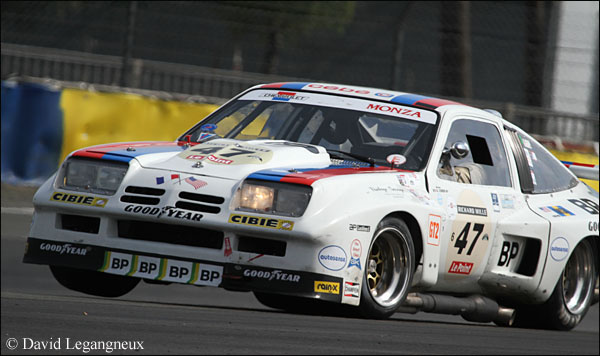
Race 1 for Saloon cars was won by the impressive Chevrolet Monza prepared and driven by Gilles Ceron. Powered by a 5,7 L V8 engine, this type of car raced at Le Mans for the first time in 1976. It was quick, driven by Michael Keyser and Eddie Wachs to 6th place at the beginning of the race, before retiring after only 12 laps because of a broken driveshaft. 1976 was the year Bill France came to give the start of the 24 hours and five cars were entered by US teams. The next and the last time a Chevrolet Monza was seen at Le Mans was in 1978 with a very different bodywork. It raced a little longer, but retired during the 4th hour with engine trouble.
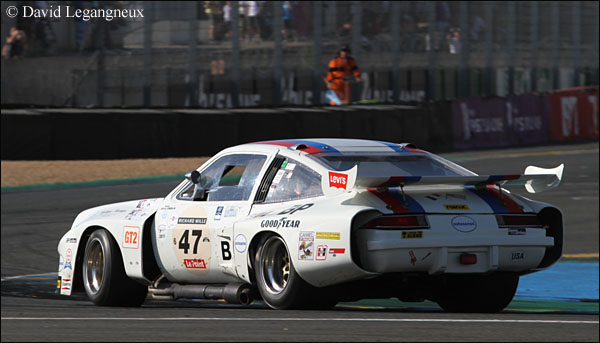
The car seen the past week-end wasn’t one of the chassis that raced in the 70’s, but a replica, built to be identical to the car entered in 1976, so it can receive the technical passport needed to be able to race in events such as Le Mans Classic. From the Chevrolet Monza used, Gilles Ceron kept the central cell, weld to a tubular chassis. After Saturday’s win, unfortunately the car was only able to cover one lap on Sunday. Another Chevrolet Monza was entered, but a version closer to the road car, less impressive than the IMSA version.

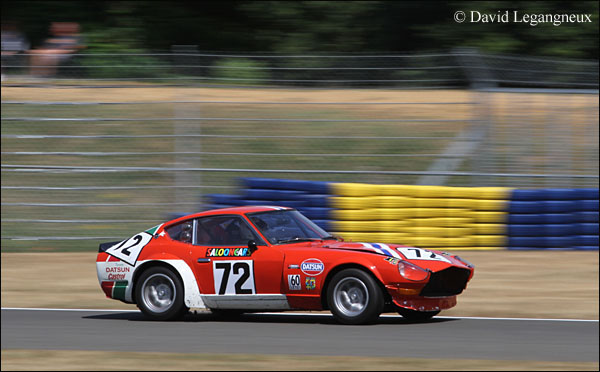
A Datsun 240Z was entered with a livery close to the car that won the 2001/2500 cm3 class in 1975, driven by André Haller, Hans Schuller & Benoit Mächler. This type of car is powered by a 2394 cm3 in-line 6 cylinder engine. A Datsun 240Z was also entered the following year, again with André Haller at the wheel (this time with Claude Buchet and Luc Favresse), but unfortunately Haller was killed in an accident during the race.
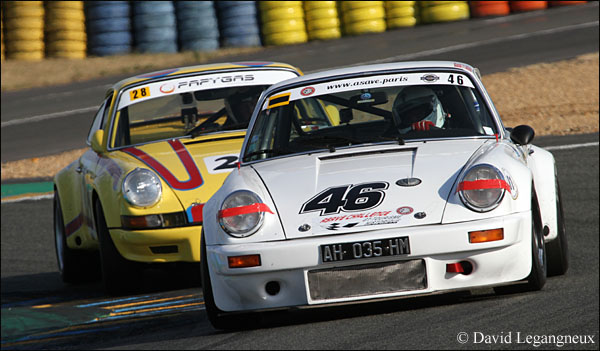
In GT-Tourisme, both races gave the same result : a 1-2 of Porsche 911 RSR, Patrick Andreoli ahead of Ghislain Gaubert. The two cars stayed close together during both races.
Before having two Porsches in the lead, race 1 was dominated by the De Tomaso Pantera driven by Jean-Claude & Denis Allemang, until it stopped on the track on the last lap. Powered by a 5763 cm3 V8, four cars were entered in 1972, the best result being a 16th place, thanks to Jean-Marie Jacquemin & Yves Deprez. A single car was entered in 1974 and 1975, with the race ending on a retirement. Then after a gap of four years, the last Pantera is entered in 1979. It is disqualified during the 13th hour, for not having covered enough distance then.

An Alpine A310 finished at 3rd place in both races with Randall Lawson at the wheel. With an in-line 4 cylinder engine, then a V6, it was produced from 1971 to 1984. The V6 powered version was entered once in the 24 hours, in 1977, driven by Bernard Decure, Jean-Luc Thérier and Jacky Cauchy. It retired in the 17th hour because of a water leak.
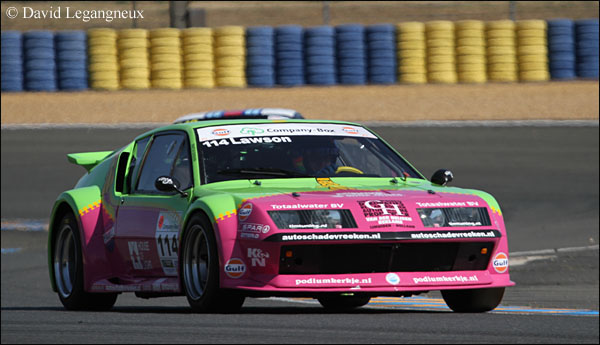
There was the usual mixed bag of other entries – some very sporty

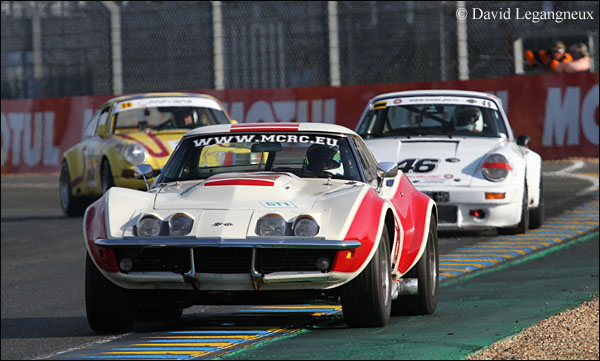
and some rather less so!
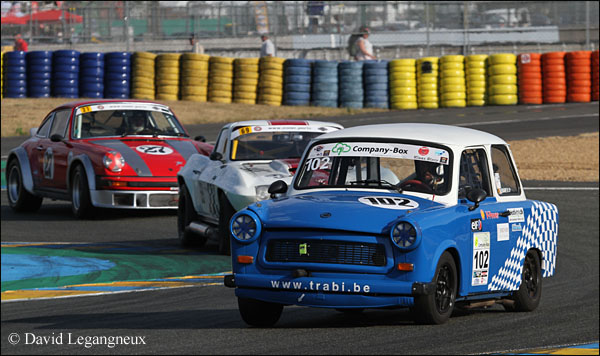
The public present had a lot of other races to look at. The Trophy Porsche Endurance RS Magazine was mainly for 996, 997 & 991 Cup cars. The race was won by Nourry father and daughter. Michel Nourry did the 24 hours twice: in 1998 with a 911 GT2 and in 1999 with a 993 RSR. Each time, he drove the car with Thierry Perrier and Jean-Louis Ricci.
A handful of CN prototypes were entered in the second grid of “Inter Ecuries”. The race was won by Louis Bureau with a Norma M20.
The main racing event of the Fête de l’ACO was again the 24h Karting. This race was created in 1986 and won by several well known drivers like Christophe Tinseau (1988) and Sébastien Bourdais (1996).
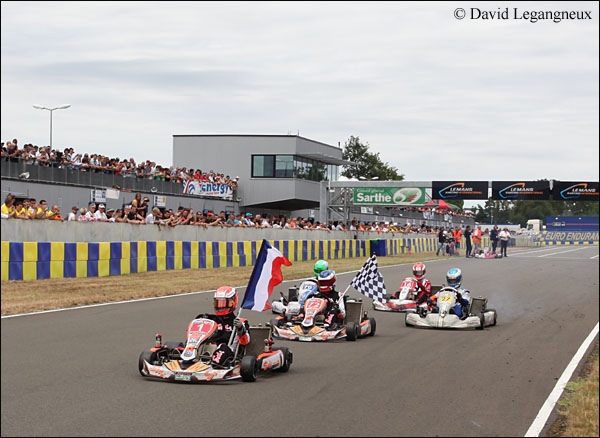
This karting version of the Le Mans 24 hours has its own Tom Kristensen : Wilfried Lecarpentier won it eight times!
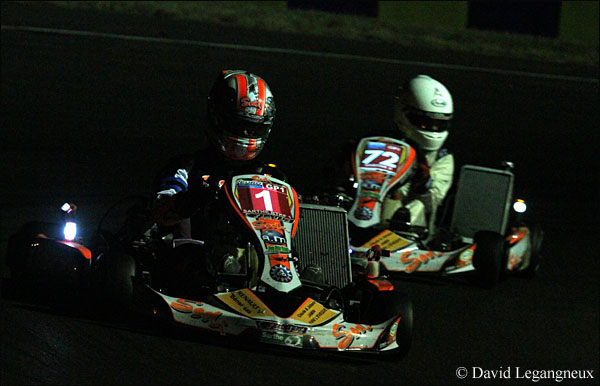
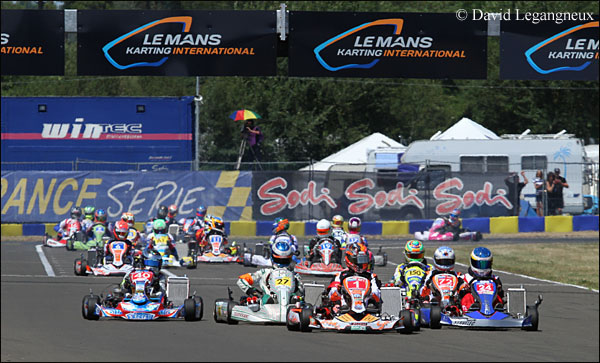
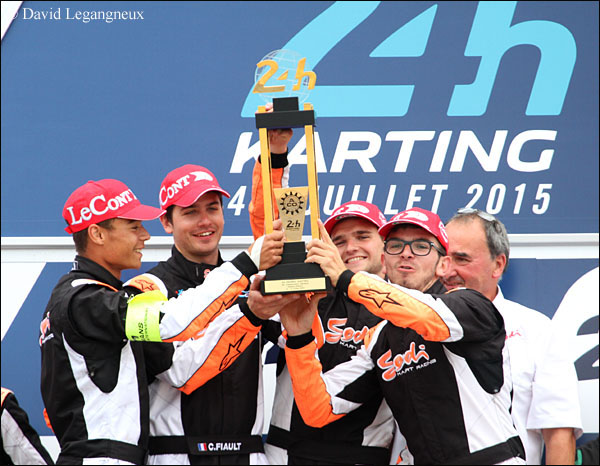
If Audi’s domination was broken this year, in Karting the local team Sarthe-RTKF continues to rule : it added the past week-end its 7th straight win, taking the lead before the night to keep it until the checkered flag and even signing a 1-2!
The race was started by another star who has taken part in the race, Romain Dumas took part in ’95 and ’96.
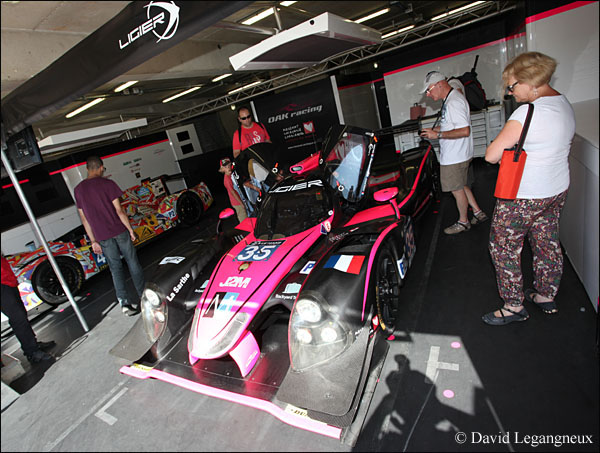
The spectators present had also several things to look at around the track. Some pits were opened to the public so spectators were able to have a close look at two Oak Racing prototypes : the Ligier JS P2 #35 (chassis OR02 #10, 2014) from this year’s race and the Morgan LMP2 #43 (chassis Pescarolo 01 #12, 2011) from 2013’s race. Another pit showed the Suzuki GSX-R 1000 #30 that won this year’s 24h Moto.


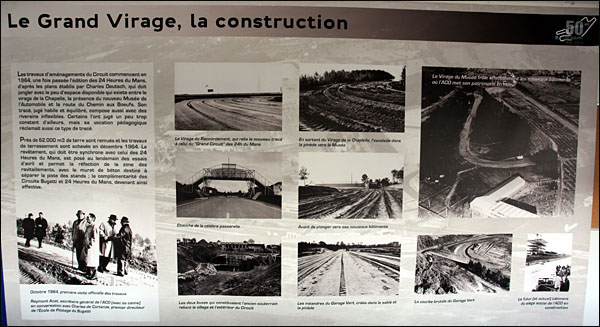
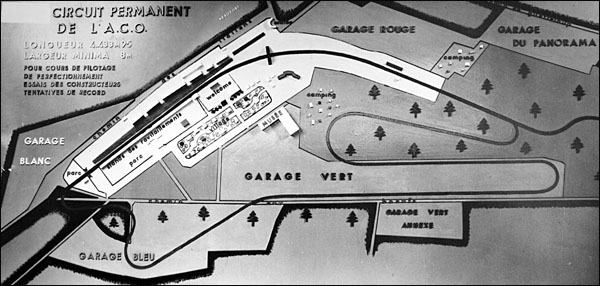
A part of the press room was also opened to the public to show an exhibition about the history of the Bugatti circuit, 50 years old this year.


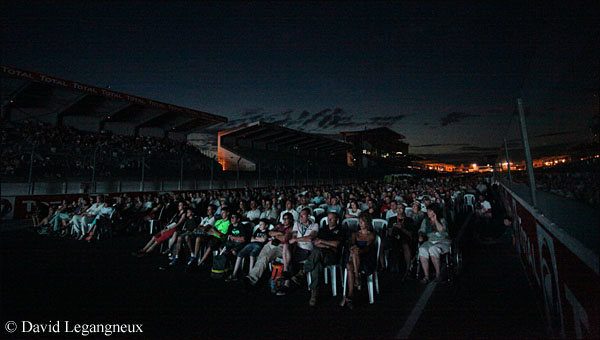
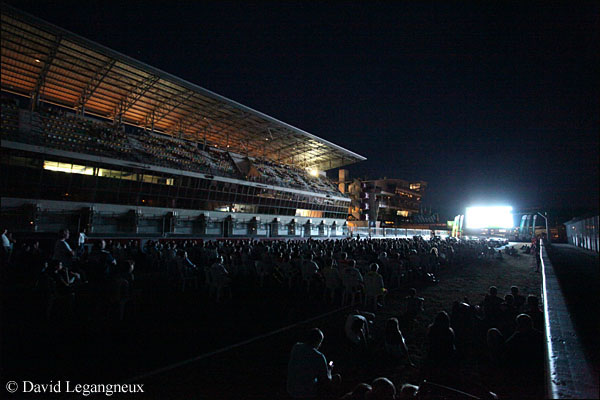
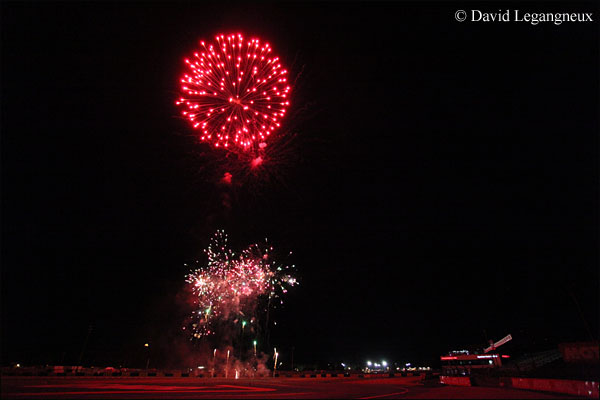
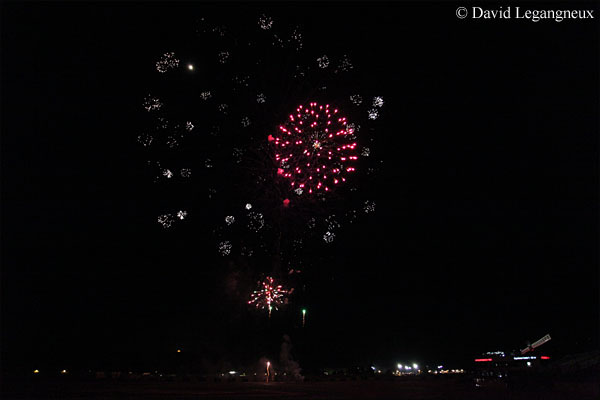
On Saturday evening, the start/finish straight was opened for spectators wanting to watch the Michel Vaillant film, partially shot in 2002 during the 24h, then fireworks over the raccordement corner.
David Legangneux