Last season we saw a drastic drop off in entries in the GS class of the Continental Tire Sports Challenge, but nothing that would have led us to believe that we’d only see eight cars entered at Daytona. Is it all doom and gloom? Is there a future for this class?
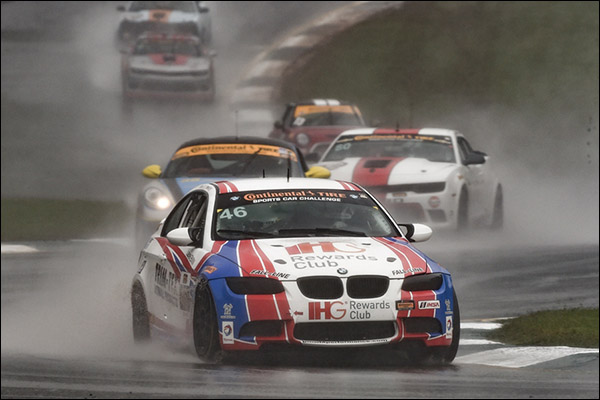
Back in 2014, the typical GS class entry was in the high 20’s to low 30’s to start the year, dropping to the low 20’s by the end of the year. Attrition perhaps, but nothing to cause a huge concern.
But storm clouds were brewing. There were rumors that IMSA was considering driver Pro-Am regulations for the 2015 season and that, coupled with the increased cost to compete made the series a difficult proposition for those involved. As expected the numbers dropped. Daytona kicked off the season with 22 GS cars starting the race and with again normal attrition that number dropped to 18 by the May race at Mazda Raceway Laguna Seca and down to 14 for the season finale at Road Atlanta. In the course of two seasons that was a 50% drop in the class, while the ST class stayed relatively the same.
To be honest, if there was a series that could use a reduction in entries, it was the Continental series. So many times the races turned into yellow flag processions because in part of the large grid size. In 2014 at Mazda Raceway Laguna Seca, the standard 2:30 race was run and of the 75 lap race, 30 laps were run under the yellow. That is roughly half of the race that was run under caution. That is not a way to race and neither is it a way to attract fans, so not all of the class attrition is a negative. But dropping down to eight cars here at Daytona was a bit too much.
So what gives? It appears that this is somewhat a perfect storm, in that there are a combination of factions at work here. One factor is that many of the cars that used to be eligible in the class are no longer current and are awaiting replacements to cycle in. The Porsche is a prime example. The factory has announced a GT4 Cayman that is eligible for the class, but not all of the orders have been filled.
Senior Technical Manager of the CTSC, Jeff Mishtawy, stated “the BMW M3, the Boss Mustang and the Porsche 997 are old cars that are no longer supported. The model year changeover has caught us out, but we expect things to improve later this season. We know that there will be six factory built cars in addition to the CJ Wilson entry (below) as well as one or possibly two more customer built Caymans coming into the series at some point. We also know that there are teams looking at purchasing the Mustang GT-350. We have a new team entering one here (Compass 360) and fully expect more of these too once the cars are available.”

“We were quite pleased with the process of working with Ford to approve the GT-350 for competition. It was a good illustration of partnering together for the good of the series and coming up with a package perfectly fit in the series regulations.” That said, the negotiation process did push out the debut of the Mustang much longer last season than any had anticipated.
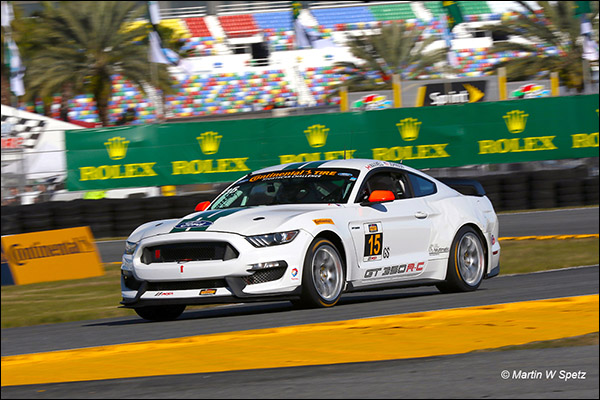
Larry Holt of Multimatic stated, “I have faith in what IMSA is trying to accomplish here. It isn’t an easy task, but I believe the right people are in place to help move this series forward and we will be supportive of what they are doing.”
According to Jeff, the series move forward and will be loosely following GT4 regulations, but only for production volume road cars – there is no desire to go to the built for racing only low volume cars commonly seen in Europe.
But unfortunately things could get worse before they get better. Out of the seven cars entered, only four of them are what should be considered full season entries. And one of those, The Multimatic GT-350 was a last minute decision, as it wasn’t decided until the ROAR that this would be a full season entry. Whether that is at the behest of Ford or IMSA or any combination of the two is unknown at this point.
Another factor is the cost. And that are multiple reasons for this. The cost to compete is multi-faceted. It includes not only the cost to have the team and equipment at the track, but also to have the equipment to compete.
First the cost to be at the track, everybody sees the cost to travel. It isn’t just the airfare that is high, hotel cost are through the roof. One competitor said that “the cost to travel for the full season has skyrocketed for them. It is common now for the hotels to all gouge when it is a race weekend as in some cases race weekend is when they can make a large portion of their profits for the year. But that in turn makes it more difficult for us to compete. I don’t see why the series can’t help out the competitors by offering discount packages. Then there is items like golf carts. Us, who are putting on the show have to pay premium prices for these items. Then there are the mandated items for racing. The tires, the fuel and the like, none of these are offered to us at a break. Everybody is making a dollar off of us competitors.”
Then there is the cost of the equipment to compete, as in the car and the spares. Nobody will say anything on the record, but many feel that they were Z-28’ed when the Camaro was allowed in as it was. They feel that the car was simply too far advanced as a street car to be allowed to compete in the series as is, and then the series had a difficult time in balancing the Camaro to the rest of the GS field.
GM was proud of the fact that this Camaro was very similar to the street version when it was released in 2014. Mark Kent, Chevrolet Racing Director stated in 2014 when the car was debuted, that “apart from series-mandated equipment and the specialized suspension components needed for endurance racing, the Z/28.R is as close to a production-spec race car as you’ll find.” And the series management of that time agreed. Unfortunately not many others agreed and many believe that this car and it’s rumored to be $350,000 price tag is quite heavily responsible for the situation in the GS class right now.

It is telling that the Z-28 has been moved to “conditionally approved” by IMSA in their current regulations.
As far as moving forward, “the series is looking at all aspects of controlling costs. We have a new mission statement for the series and it is our full intention to make this class healthy and sustainable for the competitors.” In the pre-race drivers meeting, Scott Atherton confirmed that IMSA has made course corrections for the series and fully committed and focused on the growth of the Continental Tire Sportscar Challenge.
Matt Plumb of the Rum Bum team is upbeat that this is headed in the right direction. “Because we have been a long time partner, we have seen how successful this series can be. I truly believe that the right people are in place to correct this hiccough and that we’ll see this series and class moving in the right direction soon.”

Gary Horrocks