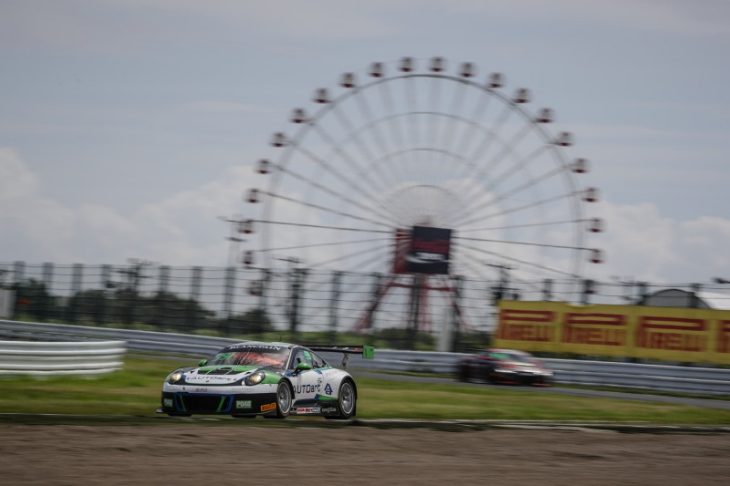
In 1966, Suzuka Circuit held its first 1000 kilometer endurance sports car race around its now fabled figure-eight circuit. Over the next half-century, as sports car racing evolved, as the race moved to its now-traditional late August date, and changed hands through multiple series, the Suzuka 1000km continued to ascend to the point that it became Japan’s great endurance race.
That tradition of the Suzuka 1000km as the country’s biggest national endurance race was solidified during the era of the All-Japan Sports Prototype Championship, then again during its 12 years as the centerpiece of the Autobacs Super GT Series calendar. Between the eras, the race was a true international showcase. From 1994 to 1998, the Suzuka 1000km became a landmark event of the BPR Global GT Series, and later, the FIA GT Championship, then the pinnacle of international GT racing.
In 2018, the Suzuka 1000km now becomes the Suzuka 10 Hours, and the race returns to the international stage as the third leg of the SRO Intercontinental GT Challenge. It’s an evolution that is now nearly a year and a half in the making, the change of hands from the crown jewel in Super GT to another showcase of the best GT3 teams from Japan and around the world – with the caveat that cars of Super GT’s unique JAF-GT300 formula will compete, on equal footing, against those GT3 teams and machines.
The prizes that attract some of the most prolific GT3 manufacturers to the Suzuka 10 Hours include the titles up for grabs in the four-stage IGTC calendar. They include the winner’s share of a 100 million Japanese yen prize purse, valued at over £700,000 GBP. And the drivers attracted include two overall winners of the 24 Hours of Le Mans, ten winners of the Nürburgring 24 Hours, and seven winners of this race’s predecessor, the Suzuka 1000km.
But for the teams, and the drivers involved, whether they represent Japan or have traveled from abroad, it is about adding their names to a legacy of a race with a history of over fifty years. While one amazing era of the race has now ended, this weekend begins what may be the start of something new, perhaps, if executed to perfection, something to expand upon its initial legacy.
This is part two of DSC’s Suzuka 10 Hours preview, profiling the 22 All-Pro teams and their drivers who will headline the 47th running of Japan’s great race.
Mercedes-AMG
Mercedes-AMG bring the most cars of any manufacturer involved in this year’s Suzuka 10 Hours. Seven in total, four in the Pro Cup. Mercedes won the 1997 and 1998 Suzuka 1000km outright with their legendary CLK-GTR.
They also won the GT300 class in the final running of the 1000km race at Suzuka last year. The team, K2 R&D LEON Racing, and drivers, Haruki Kurosawa and Naoya Gamou, will not take part in this year’s fight for the overall victory. But the four Silver Arrows in the Pro Cup are mighty, mighty strong.

The team with the most international star power is the #888 Mercedes-AMG Team GruppeM Racing entry, hailing from Hong Kong with the all-star cast of Raffaele Marciello, Maro Engel, and Tristan Vautier.
Marciello and Vautier are second in the IGTC’s Drivers’ Championship with a chance to pounce on an absent championship leader, having finished 2nd in the Bathurst 12 Hour and 3rd in the Spa 24 Hours. Engel, the 2016 Nürburgring 24 Hours champion, complete a trio that may be, on paper at least, Mercedes’ number one challenger for the overall victory.
There’s also the finer details of this challenge from GruppeM. Their white, blue, red and gold colour scheme evokes the mega-popular Mobile Suit Gundam animated franchise. For young ace Marciello, a win at Suzuka would brim with emotion, the place where his long-time friend, Jules Bianchi, drove his final F1 race.
From their base at Silverstone Circuit in Northamptonshire, Great Britain, Strakka Racing have two Pro cars as part of a three-car total entry, the 2010 LMP2 winners at Le Mans adding more firepower to Mercedes’ arsenal.

Car #43 boasts German Maximillian Götz, Portuguese Alvaro Parente, and Lewis Williamson of Scotland. Parente won the 2016 Bathurst 12 Hours while affiliated with McLaren. Götz won the 2014 Blancpain GT Sprint Cup, and Williamson has found new racing life in sports cars with Strakka.
While car #44 has a younger lineup still: Second-generation French driver Adrien Tambay, former top Formula 1 prospect Oliver Rowland of Great Britain, and Maximillian Buhk, the 2016 Blancpain GT Series Drivers’ Champion with Mercedes-AMG.
Successful in prototypes and in single-seaters up to this point in the team’s existence, winning this Suzuka 10 Hour Race would be, by far, this Northamptonshire team’s greatest GT racing triumph.
But no team has a stronger following than Mercedes-AMG Team Goodsmile, known to Super GT fans as Goodsmile Racing & Team Ukyo. GSR, with their car adorning the popular Vocaloid character Hatsune Miku, have a strong following at home and abroad, and under Ukyo Katayama’s leadership, they’ve turned into a dynasty of GT racing in Japan.

They enter this Suzuka 10 Hours as the defending champions of Super GT’s GT300 class, their third title in seven years. The #00 car is adorned in the livery they were meant to race with last July at Spa-Francorchamps, if not for the write-off of their primary car necessitating rolling out a backup.
In their fourteenth starts in the Suzuka Summer Endurance Race, Nobuteru Taniguchi and Tatsuya Kataoka have been an awesome tandem in Super GT since 2012. Kataoka won the GT300 class in 2003, but Taniguchi hasn’t won this race, overall or in class, in thirteen previous tries, nothing would crown his improbable rags-to-riches career like winning this Suzuka 10 Hours.
The third man of the trio isn’t a stranger to heroics in endurance racing or at Suzuka Circuit: Toyota LMP1 star Kamui Kobayashi, making his 2nd start in the race, finishing 4th last year on his GT500 debut. The memories of Kobayashi’s only F1 podium at Suzuka in 2012 are still vivid, as is his fastest-ever lap around the Circuit de la Sarthe in 2017.
Any one of these four Silver Arrows could easily dominate this Suzuka 10 Hours en route to victory.
Audi
Audi enter the Suzuka 10 Hours as the leaders of the IGTC Manufacturers’ Championship, seven points ahead of Mercedes in 2nd.. Audi are also entering Suzuka while leaving behind IGTC Drivers’ Championship leader Robin Frijns, who’s priorities in the Deutsche Tourenwagen Masters mean he’ll race under the lights at Misano while his GT racing colleagues are in Suzuka – as will the likes of Nico Müller and Réne Rast.
Audi are in search of their first Suzuka Summer Endurance Race victory, a race they should have dominated with Team Goh’s customer R8 LMP900 in 2002, a race they’ve entered but failed to win in the GT300 sub-class in recent years.
Audi customer racing just wouldn’t seem like itself without Team WRT, the Belgian outfit seen by many as the top GT3 racing squad on earth. They’re “only” bringing two cars, but Audi Sport Team WRT once again brings a formidable challenge.
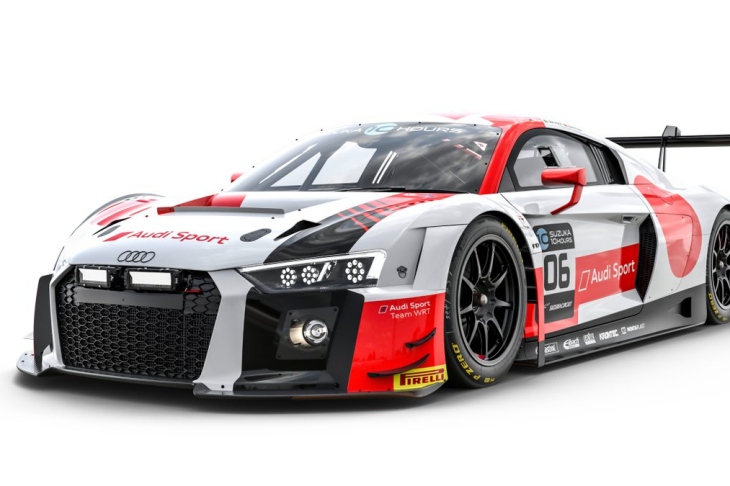
What was car number 1 now changes to #06, with a special one-off livery themed after the Japanese flag.
And to fill in for the absent Frijns, who won the Bathurst 12 Hour for WRT in February, Frédéric Vervisch is shuffled in to join his Belgian compatriot, Dries Vanthoor, Frijns’ teammate and co-driver at Bathurst this year, and the youngest of two racing brothers who’ve scored class wins at Le Mans.
Christopher Mies, the 2015 and 2017 N24 overall winner, completes WRT’s first entry with three outstanding Audi factory aces.

The other driver alongside Frijns and Vanthoor was Stuart Leonard, who anchors WRT’s #17 lineup with Briton Jake Dennis, a title contender in Formula 3 and GP3 prior to his sports car switch, and 19-year-old Sheldon van der Linde, the youngest driver in the Suzuka 10 Hours field, who was immensely quick at Spa.
W Racing Team have won just about every major sports car race they’ve tackled. They’ve won the 24 Hours of Spa, they’ve won the Nürburgring 24 Hours, they’ve won the Bathurst 12 Hour just this year. And they’ve won back-to-back Blancpain GT Series outright titles. The Suzuka 10 Hours would be yet another prize to add to the WRT dynasty.
But they may have to get through the other two Audi Sport teams to get there.
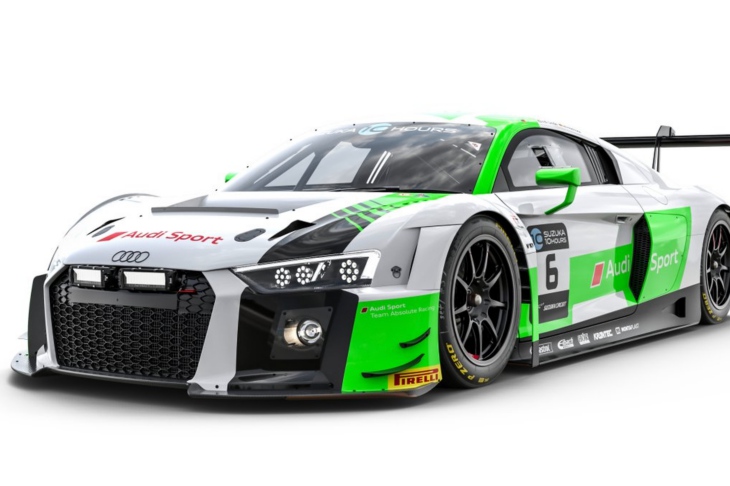
Absolute Racing, the top VW/Audi customer GT team from China, has a car blessed with Audi Sport factory support and three awesome drivers for their car number 6.
Leading the way is the unbreakable “Winkelrock” reigning IGTC Drivers’ Champion, Markus Winkelhock, a three-time winner of the Nürburgring 24 Hours. Christopher Haase, a two-time N24 champion, ran the Suzuka 1000km as a wildcard in 2014. And Kelvin van der Linde, eldest of the South African racing brothers, is yet another previous N24 champion, he won it in 2017 with Winkelhock.
Absolute Racing also won a Blancpain GT Series Asia sprint race at Suzuka this June, giving them a little bit of an edge going into the 10 Hours.
And completing Audi’s pro challenge is Audi Team Hitotsuyama, who have their roots as a privateer team founded in 1990 and are now the factory-blessed Audi Sport Super GT team.

The last man to win both the Japanese Super Formula and GT500 Drivers’ Championships in the same year was Richard Lyons, the Ulsterman now competing in his 14th Suzuka Summer Endurance. Lyons has four overall podiums, three third-places, and a career-best 2nd in 2006 for NISMO. Can this be his year to finally win overall at Suzuka?
Ryuichiro Tomita, in his fourth start, won the 2015 Suzuka 1000km in GT300 class for Gainer and Nissan, having risen from relative obscurity as a two-time GT-R Prestige Cup one-make champion. And it’ll be the first start for Belgian Alessio Picariello, the reigning Audi R8 LMS Cup champion and former single-seater standout.
The Suzuka 10 Hours now remains the only big endurance race that the Audi R8 LMS GT3 has, so far, yet to win. That could change this weekend.
Porsche
When it comes to the Suzuka 1000km, no manufacturer has enjoyed more success than Porsche. From their first win in 1967, to their last overall win in 1994, and a run of six wins in seven years from 1984 to 1989 during the peak of the JSPC in Japan, 12 wins are the most for a single manufacturer in Suzuka Summer Endurance Race history.
Porsche are a distant third in the IGTC Manufacturers’ Championship, hoping to close the gap to Audi and Mercedes with three outstanding 911 GT3-Rs, representing their European, Asia-Pacific, and Japanese customer racing efforts.
And by far the favorite is a little car affectionately known as “Grello,” the #911 Manthey Racing Porsche, with the only all-Platinum driver lineup in the field: Romain Dumas, Frédéric Makowiecki, and Dirk Werner.

Lead driver Dumas has done it all. Two-time Le Mans winner. Four-time N24 winner. Two-time Spa 24H winner. World Endurance Drivers’ Champion. Pikes Peak Hill Climb record holder. Even a brief stint in GT500 at the start of his amazing sports car career. Believe it or not, he even has an N-GT class win in the 2002 Suzuka 1000km, Dumas’ most recent start in the event prior to this year!
Makowiecki, meanwhile, is one of the previous overall winners of the Suzuka 1000km, taking the victory in his first start in 2013 for Dome/Honda Racing and their HSV-010 GT500 car. But 2018 os the year that the “Mako Shark” is finally starting to hit his stride with Porsche, winning the Nürburgring 24H with Manthey this May, and setting a blistering GTE-Pro pace at Le Mans.
And Werner, who’s won numerous North American GT titles and finished on the podium in so many great endurance races, is Suzuka set to be the venue where he finally stands on the top step of a major endurance race podium?
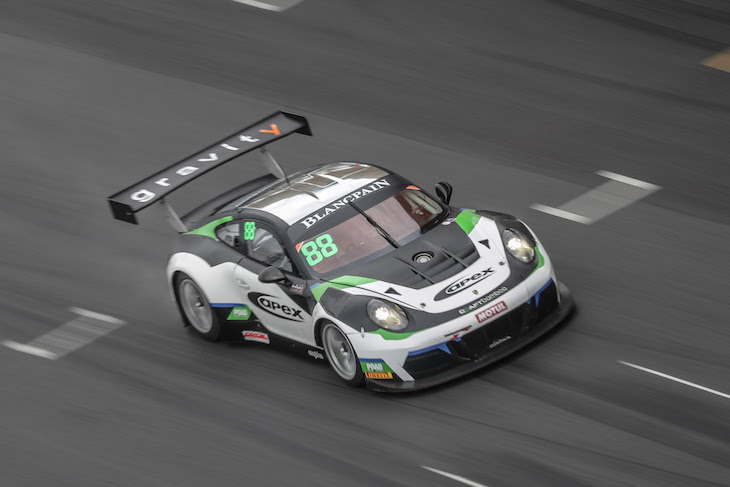
Impressive as “Grello’s” Triple Platinum trio is on paper, one team that could easily match or surpass them in pace is that of Craft-Bamboo Racing, the top Porsche customer team from the Asia-Pacific.
Headlining the Craft-Bamboo team efforts in their #991 car are two of the three drivers who scored a popular 70th Anniversary Porsche victory in the GTE-Pro class at Le Mans: Laurens Vanthoor, and Kévin Estre. Vanthoor’s GT racing credentials need little exposition, between his tenure with Audi, and his current run with Porsche, he may be the finest of his generation, and he’s only 27.
Estre was every bit as quick as Vanthoor in helping to secure their Le Mans victory, another outstanding Porsche factory ace. Fellow Frenchman, Mathieu Jaminet, is one of Porsche’s top “young professionals” brimming with talent, Suzuka could be Jaminet’s breakout party in GT3 racing.
And from Japan, comes Porsche’s top team in the GT300 class of Super GT, D’station Racing.

They had the advantage of being the fastest in a mid-summer test at Suzuka to gear up for the race, thanks to veteran Tomonobu Fujii, taking part in his thirteenth Suzuka 1000km/10h, his best finish was 2nd in the GT300 class in 2011.
When Fujii is paired with Porsche factory ace and 2016 Carrera Cup “double champion” Sven Müller for the 2018 Super GT season, they are one of Super GT’s most formidable tag teams in the GT300 class.
But then they added another Porsche racing superstar for Suzuka: Two-time Le Mans winner, and reigning World Endurance Drivers’ Champion, Earl Bamber of New Zealand. Suzuka is a track that Bamber’s never driven in real life, but a track that he looks set to get to grips with very quickly as his prior track record indicates.
Add to all these lineups a car that seems very capable of navigating Suzuka’s high-speed corners, and the wet conditions should they arrive – and Porsche might have the winning formula to capture their thirteenth victory.
Nissan
Nissan are the first manufacturer we get to that is not racing for anything in the Intercontinental GT Challenge. This is strictly about pride for their trio of second-generation Nissan GT-R NISMO GT3s.
Nissan have seven previous overall wins at Suzuka, including two in 2008 and 2012 with the GT500-spec GT-R. This year, there won’t be a NISMO “Red Car” or a Team Impul “Blue Car” to represent them, but the customer teams they’ve assembled for the Suzuka 10 Hours are deep in speed and experience.
The head of the pack is the two-car assault from Hong Kong’s KC Motorsport Group, or KCMG for short, with not one, but two active GT500 drivers in their leading car number 018: Tsugio Matsuda and Katsumasa Chiyo.
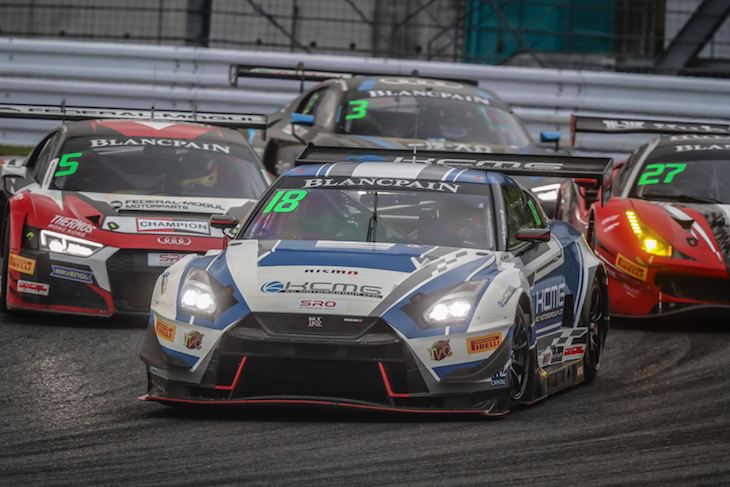
Matsuda is Super GT’s winningest GT500 driver ever, a two-time drivers’ champion in GT500, and in Super Formula. The 39-year-old legend is once again contending for the GT500 title in 2018 with NISMO and co-driver Ronnie Quintarelli. Matsuda won this race outright in 2008 with Calsonic Team Impul. He’s also had a winning rapport with KCMG, winning the LMP2 class at the 2014 6 Hours of CoTA!
Chiyo’s breakout moment, his last-minutes’ charge to victory in the 2015 Bathurst 12 Hours for Nissan, made him an international household name in GT racing. Arguably, his GT300 win at Suzuka that year for Nissan and Gainer, might have been even more impressive still. He’s made the move up to GT500, and things haven’t worked out in the years since, but an overall win at Suzuka would put Chiyo’s career right back on track in spite of recent GT500 struggles.
Alexandre Imperatori, another known KCMG commodity and GT300 race winner, returns for his third start at Suzuka. For Matsuda it’s his 13th, for Chiyo his 5th.

There is also, fittingly for Nissan, a #23 car, with Italian Edoardo Liberati, the 2016 GT Asia champion, and two British standouts of endurance racing. Richard Bradley won the LMP2 class at Le Mans for KCMG in 2015. He’s also got a bit of Japanese experience in Formula 3, Super Formula, and this year GT300.
And another overall Suzuka 1000km winner, Oliver Jarvis, who won in 2007 as the third driver at Lexus Team TOM’s. Jarvis nearly won it again with SARD in 2014 before a mechanical failure late in the race. Now in his third start, the four-time Le Mans podium finisher and 2016 World Endurance Drivers’ Championship runner-up wants to add his second Suzuka win to his CV.
GT300 stalwarts Gainer complete Nissan’s Suzuka 10H challenge. They won the GT300 class at the 2015 Suzuka 1000km with André Couto and the aforementioned Chiyo and Tomita, carrying a whopping 88 kg Success Ballast handicap along the way through a wild race with changing conditions.

The regular-season lineup of Gainer’s #11 car, that won at Buriram in July, is Katsuyuki Hiranaka, and Hironobu Yasuda. Both are in their thirteenth appearance in this event, and Yasuda, who spent nine seasons in GT500 prior to this year, won the GT300 class in 2008. Hiranaka, on the other hand, has yet to podium here.
They are joined, from their #10 car, by a second-generation driver and one of this race’s better performers in recent memory: Kazuki Hoshino, who won the race outright for his father’s team in 2006, then added GT300 sub-class victories in 2008, 2009, and 2012.
A combined 38 previous Suzuka 1000km starts are in this car, the most of any all-Pro team at Suzuka.
Honda
For Honda, success at Suzuka Circuit, the race track built by Honda, owned by Honda, coloured with victories for Honda, is imperative. Winning the Suzuka 10 Hours with the new Honda NSX GT3 would mean everything to everyone involved at Honda.
Last year, with Epson Nakajima Racing and drivers Bertrand Baguette and Kosuke Matsuura’s upset victory in the final Suzuka 1000km, Honda won their eighth Suzuka Summer Endurance Race in total. That team and driver duo won’t be back to defend their title. Instead, it’s two all-Japanese squads brimming with prior experience in Suzuka 1000kms past.
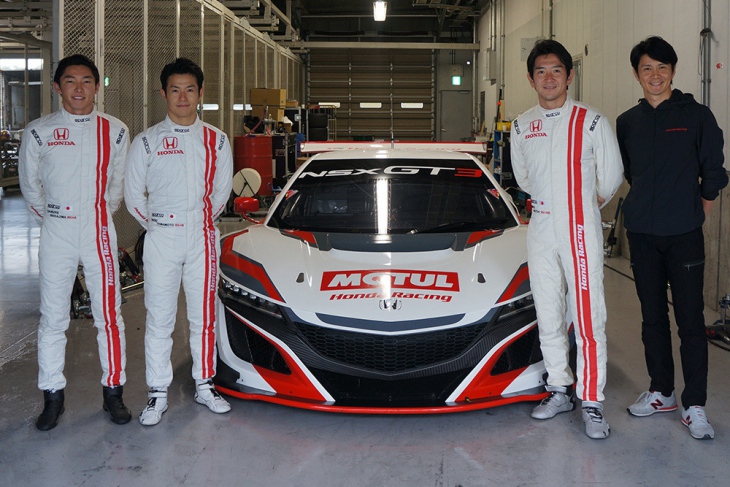
Honda Team Motul is a one-off “dream team” led by team director Shinji Nakano, and three active GT500 stars for Honda including a former overall winner at the peak of his powers in 2018.
Naoki Yamamoto, the winner of the 2013 Suzuka 1000km with co-driver Makowiecki, Dome, and Honda. Yamamoto is currently 2nd in the Super Formula Championship, a title he won with Team Mugen the same year. He’s 3rd in the GT500 Drivers’ Championship with Team Kunimitsu and co-driver Jenson Button. And he’s one of the best drivers around Suzuka Circuit in recent years, with three more Suzuka 1000km podiums including a heroic drive to 3rd in 2017.
He’s joined by Team Mugen’s regular GT500 driver lineup, who raced with Button in last year’s 1000km: Hideki Mutoh, also in his 9th start, won the pole for this event in 2016. Daisuke Nakajima, in his 7th start, is the younger brother of Le Mans winner Kazuki, and son of local F1 hero Satoru.
Modulo Drago Corse are Honda’s main challenger in the GT300 class of Super GT, but their race participation was put in real jeopardy when their car was written off in a bizarre and frightening practice crash at the Fuji 500 Miles.

But to the relief of the team and their supporters, their new car is ready to roll out for Suzuka. And Ryo Michigami, the owner and lead driver of Modulo Drago Corse, is at the head of the challenge.
This is Michigami’s 21st Suzuka Summer Endurance Race, his first since 2014. But the 45-year-old Honda racing legend stands, in this race, at the precipice of history. He’s the only three-time Suzuka 1000km winner in the field, winning in 1999, 2003, and 2004. His fourth win, would tie him with the great Kunimitsu Takahashi for the most Suzuka Summer Enduro victories.
In his 14th start, 2011 winner Takashi Kogure reunites with his long-time GT500 running mate Michigami, and will be trying to avenge a bitter defeat last year when his Keihin Real Racing team led with 25 laps to go, only to be eliminated before taking his final stint as his car suffered a catastrophic blowout.
This will also be an important race for newcomer Hiroki Otsu, a Honda-backed young driver who races full-time with Michigami in GT300 – big things are expected of the 24-year-old rookie.
Undoubtedly, Honda will have the strongest support of any manufacturer in this Suzuka 10 Hours field.
Bentley
The 2018 Suzuka 10 Hours will mark the first time that Japanese fans will get to see, in-person, the second-generation Bentley Continental GT3 on track. Two of them, from top challengers Bentley Team M-Sport.
This year has been one of transition at Bentley Motorsport. Not only do they have a new car for this season, but the retirement of Guy Smith earlier this year has given opportunities for young drivers to the carry the team into a new generation.

It’s a subtle change from number 7 to 07, for the crew that scored the Mk.II Continental GT3’s first podium finish in the 1000km race at Circuit Paul Ricard.
Steven Kane is now the veteran stalwart of the Bentley Motorsport fleet, joined by last year’s Spa 24H winner and ADAC GT Masters champion Jules Gounon, just weeks removed from his Super GT debut and 22-year-old South African Jordan Pepper, who’s seized his chance as the immediate successor to Smith.
Car number 08 is also the same from their Blancpain efforts: Spaniard Andy Soucek, Belgian Maxime Soulet, and 2015 Blancpain GT Sprint Cup Champion, Vincent Abril of Monaco. Steering problems took them out of a potential breakthrough win for the new Bentley at Spa, so they seek to avenge the loss at Suzuka.
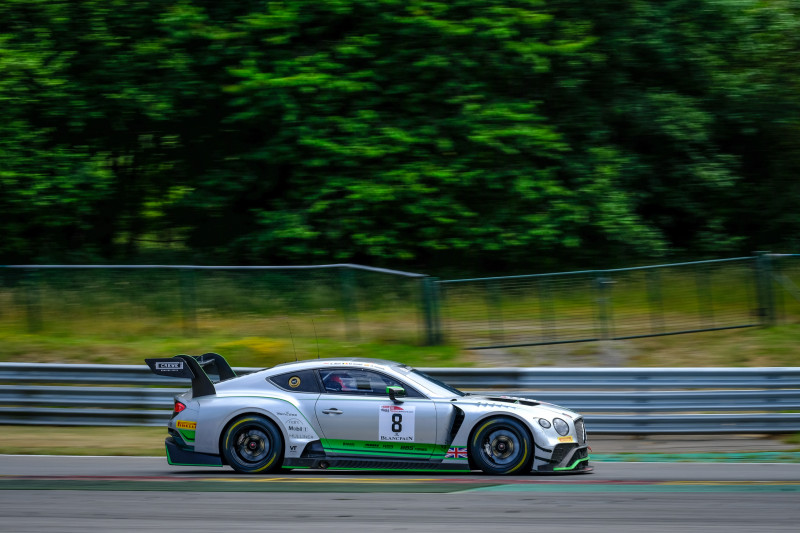
All six drivers and the car itself are new to Suzuka Circuit, but Bentley Racing are feeling confident about their chances in the 10 Hour race.
McLaren
The last of the IGTC manufacturers, McLaren, bring just one of their 650S GT3s to the race courtesy of their top customer team, Garage 59. McLaren have enjoyed success in the Suzuka 1000km before, winning this race in 1995 and 1996 during the BPR Global GT era with the mighty F1 GTR.

Since those wins and their ‘95 overall triumph at Le Mans, their biggest GT racing win since was their commanding win in the 2016 Bathurst 12 Hour race with the same 650S.
Ben Barnicoat made the transition from McLaren young driver in single-seaters to young star of the future of their GT programme. Fast Frenchman Côme Ledogar is responsible for co-authoring McLaren’s 2016 Blancpain GT Endurance Cup Championship with Rob Bell and Shane van Gisbergen, he’s been a stalwart with McLaren GT ever since.
Andrew Watson, by far the fastest amateur in the Spa 24 Hours last July, reunites with Barnicoat and Ledogar after being assigned to Garage 59’s Am Cup effort for Spa.
McLaren have big ambitions on a global stage beyond their usual domains of F1 and GT3 racing. But they haven’t had the best time of things in Japan, where their divorce with Honda is still a pain point, and where their GT300 programmes in Super GT fared poorly in years past. A Suzuka 10 Hours win could heal a sizeable portion of that falling out.
Lamborghini
Lamborghini are in the midst of their greatest year in GT racing. They won their class at the Daytona 24 Hours and the Sebring 12 Hours. But the team that won them their first Blancpain GT Series title last year, Grasser Racing Team, were a late withdrawal from the Suzuka 10 Hours.
This leaves Lamborghini’s all-Pro challenge at Suzuka squarely in the hands of Team JLOC, Isao Noritake’s long-tenured Super GT squad, one of the few teams that were around since the beginning of the series, between both GT500 and GT300 classes.
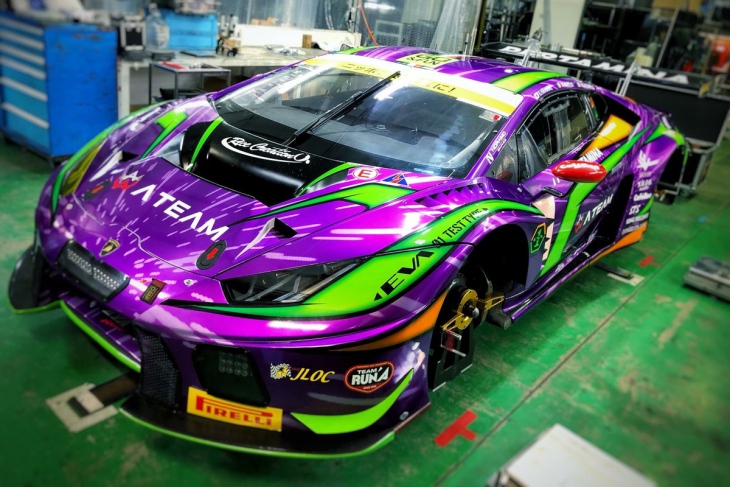
A partnership with EVA Racing means the #88 Lamborghini Huracán GT3 will carry the familiar purple, green, and orange colours of EVA Unit-01, from the groundbreaking animated series Neon Genesis Evangelion and its current cinematic reboot. This is also the highest-finishing team from last year’s GT300 race at the Suzuka 1000km, finishing 2nd.
Kazuki Hiramine, the 2016 ST-X champion of Super Taikyu, is in this race for the fifth time. He’s another underrated young Japanese talent with speed to match any of the more accomplished pros – including the two factory Lamborghini drivers he runs with.
Marco Mapelli is Hiramine’s full-time Super GT teammate, having a solid rookie campaign for JLOC. The third driver of the trio, making his seventh Suzuka start, is Andrea Caldarelli, the 2016 GT500 Championship runner-up for Lexus, and 2017 Blancpain GT Series champion with GRT. He finished a sensational 2nd overall in his first 1000km in 2012, which remains Caldarelli’s best finish to date.
If nothing else, the GT3 “giant robot fight” between the JLOC EVA-01 and the GruppeM Racing Gundam car might be worth the price of admission.