

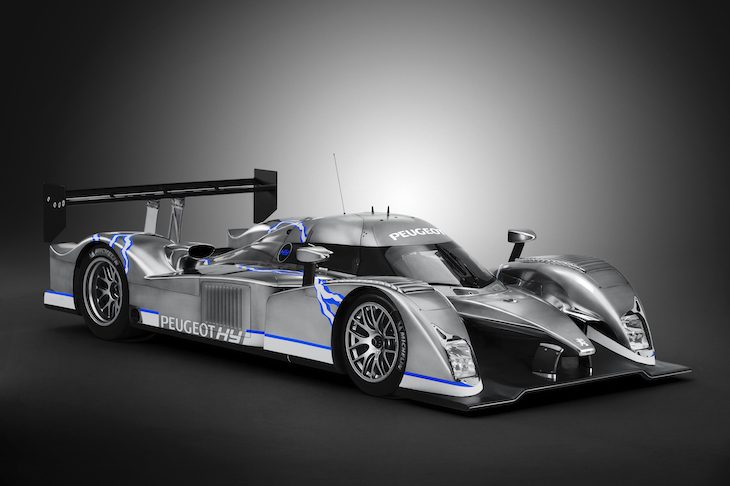
September 2008 and those assembled at Silverstone for the Le Man Series race were treated to the public debut of Peugeot’s first hybridised version of their 908 HDi FAP LMP1, the 908 HY.
The car anticipated a potential rule change that didn’t come, but was a handy indicator of the then-current state of the art of hybrid tech, to compare to the level things had achieved when the factory hybrids eventually went racing four years later in 2012.
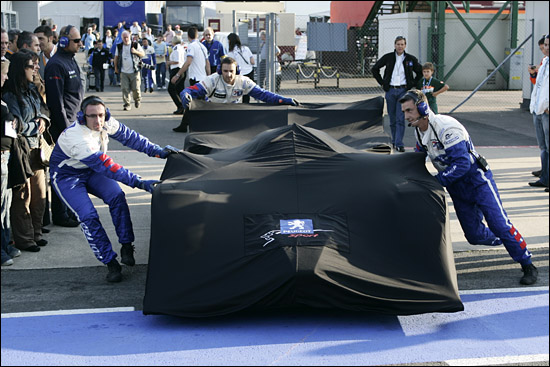
After being unveiled, the 908 HY performed a lap in the hands of Nic Minassian.

The Peugeot then purred the length of the ‘heritage’ pits on battery power alone, and rejoining the track, repeating the feast once again before being put back under it’s covers.
Nic Minassian: “The car is a fantastic technical achievement, the main thing that takes adapting to is the car under braking where the car recovers the energy. That means a very different feel and that will take a little time.”
“Using the system in the pitlane means I can preserve the correct speed very easily, it all works very well.”
After that its public career was pretty much over, but it certainly showed that Peugeot was investing in the future.
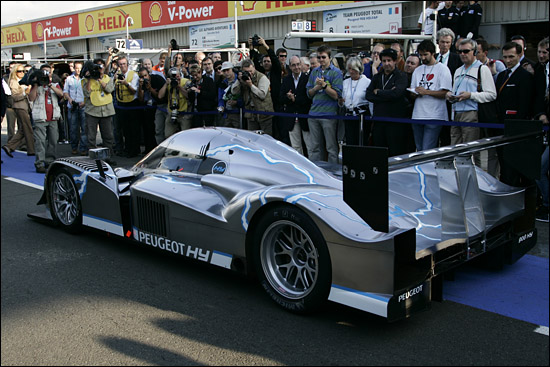
It would never race though, and sadly neither would its successor, the 908 Hybrid 4, this time based on the later, diesel V8 powered car, the 2012 car intended to contest the opening season of the FIA WEC will feature in a later edition of this series.
The additional systems on the car comprised:
1) a 60kW (c.80bhp) gear-driven electric motor-generator which took the place of the conventional starter motor,
2) batteries which permit recovered energy to be stored in 600 lithium-ion cells divided into 10 battery packs (six in the cockpit instead of the conventional battery and four on the left-hand side of the flat bottom).
3) a power electronic converter (located in the rear part of the front left wing) which controls the flow of energy between the batteries and the motor-generator.
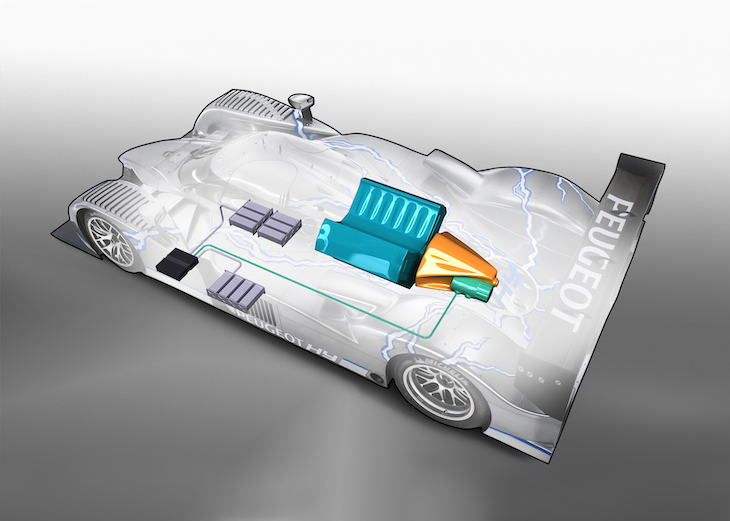
The systems would permit the 908 HY, in the course of a lap of Le Mans, for example, to recuperate energy for between 20 and 30 seconds. This energy could be used:
1) either to deliver extra power thanks to an additional boost of 60kW (80hp) for approximately 20 seconds per lap, either automatically when re-accelerating, or when the driver chooses to make use of it (‘push to pass’).
2) or to reduce fuel consumption for the equivalent level of performance thanks to the mechanical energy recovered (between three and five per cent).
As demonstrated the cars hybrid systems added 45 kg to the base weight of the 908 HDi FAP.
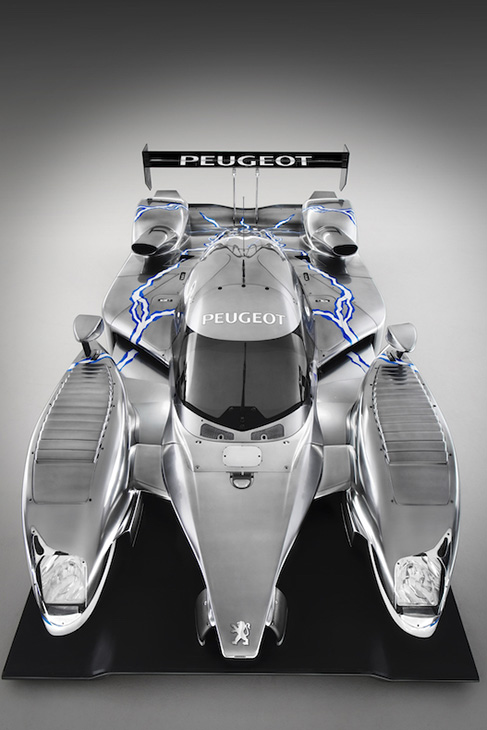
At the time of the demonstration, it was clear that there were not even tentative plans to run the car in a race (with or without the opportunity to score points in the Le Mans Series) until after the 2009 Le Mans 24 Hours, Peugeot was fully focused on taking the win – which, of course, they did!
Then the head of Peugeot Sport Bruno Famin: “We are particularly interested in the application of this technology in the LMP1 class from 2011 with the lower capacity engines that will be used then, the development we can achieve by then and the relative efficiency that could be possible with smaller capacity engines could be a major advantage.”
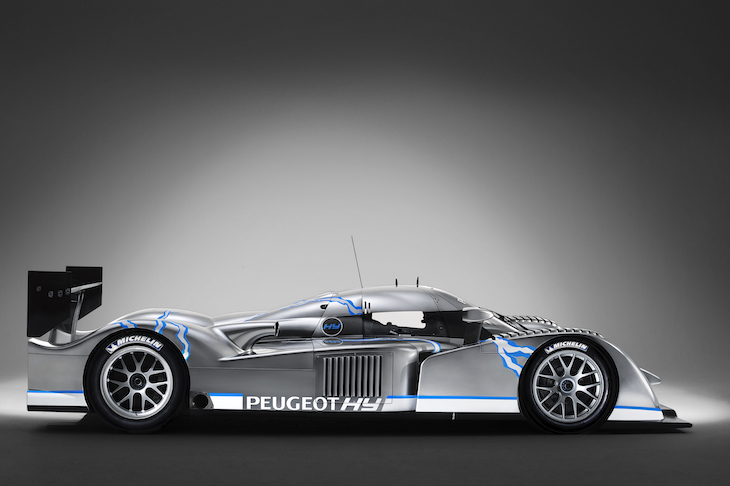
In fact it would be three more years before plans were hatched to bring a very much upgraded hybrid version of the 908 to a race programme, and even then Peugeot provided this series with another future episode with their stillborn Hybrid4!


