In part 2 of this catch-up with BBM Sport boss Bob Berridge we take a further in-depth look at the numbers involved in fielding post-historic sportscars in the Masters Endurance Legends Series.
BBM Sport has been at the forefront of the new era, in particular, but far from exclusively, via their role in bringing two groups of cars into private ownership.
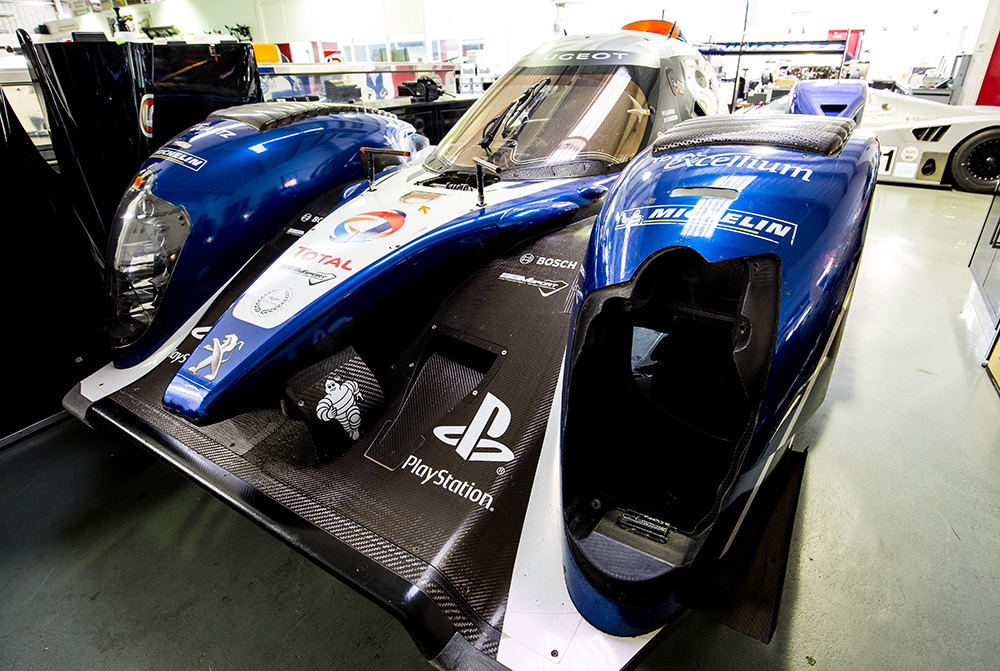
First came a batch of cars from Peugeot Sport, seven 908s in total, a mix of 908 HDi FAPs, two of which now have private owners, and the later, 2011, 908X cars. Later came the acquisition of the BR01 LMP2 project, that came with five cars, one of which has been sold, a huge parts supply and everything needed to ensure that the cars have a long life in historic racing.

Oddly the cars all have a shared heritage in designer Paolo Catone who was responsible for both cars:
“Paolo Catoni’s been great, very helpful. we’ve got all the drawings for the 908 for example.
“Peugeot Sport have been absolutely fantastic too. They get the idea of keeping their heritage alive and it being out there which culminated in us being invited to do the Grand Marshal lap at Le Mans with a 908 driven by Carlos Tavares from PSA, which caused a real stir, with Jean Todt and Pierre Fillon crowded around the car.
“But I can’t give enough thanks about Peugeot Sports’ willingness to help because it was a challenge two years ago to take on the 908.
“Here we are two years later where we have initially helped GMT in North America to run David Porter’s 908, and now they are running a 908 completely independently from us.

“We obviously were a little bit ahead of them in terms of knowledge and understanding because we’ve rebuilt three or four cars and had problems with a couple of cars and fixed them and sorted them out.
“We’ve got an ex-Peugeot Sport guy that works with us, which helps with our relationship and getting information. But essentially, we’re now in a position two years down the way, where we can completely independently run an ex-factory car.”
It’s probably the last generation that we’ll be able to see running in private hands – for now at least?
“I always thought the 908 was going to be a challenge. And we were up for that challenge. But Hybrids!! forget about it!! So I think that means that this era of factory car could be the last factory cars that sit in private hands.”
Down on your workshop floor right now, aside from the Peugeots and BR01s there are Lola, Lotus, Zytek, Creation, Nasamax. If I were to come to you tomorrow to say, Bob, I’d like to go racing in Masters Endurance Legends, what am I going to be exposed to if I want to own those cars?

“People talk about season budgets and then forget about the winter rebuild that follows.
“You could do Group C, for example, for 100 grand for a season (plus the car), but then have a £40-50k rebuild over the winter because the car’s worn out?
“The HUGE advantage of these cars are genuine 30-hour cars that can do two, maybe three seasons of racing. Yes, you’ll have to strip them to inspect them if you’re doing your job properly. But that’s basic service and basic inspection, not a major rebuild.
“If you look at the breakdown of costs, your hotels, the same, the flights, the same, the labour rates, the same, but the amount of people you need to run a car is interesting, because it looks like you can run one of these cars with 2 people – if you are running two cars, maybe five people with somebody who knows how to work a computer.
“But if you’ve got somebody who can work the computer, you can run one with to two men.
“So labour cost are cheaper, foods the same, truck costs are the same. And so on that basis, I think if you throw in a couple of long-distance races, like Paul Ricard or Barcelona, and a couple of short distance races, like Spa and Silverstone, for example, you’re going to get by quite well on 80-100 grand for a full season of racing.”
So what their customers are getting into is a better, more reliable, safer racecar than is probably available anywhere else for that budget?
“If you look at the budgets talked about in British GT, for example, you can run the season of Masters in a MEL car for about 25% of a British GT budget.
“And you’re racing at places like Barcelona, Zandvoort (which is now, by the way, a circuit that the drivers just love after the modifications), Silverstone Classic, one of the biggest historic event in Europe, if not the world, Paul Ricard, the Nurburgring, Monza all these fabulous places for 25% of a national GT budget.”
And the rebuild costs are cheaper?
“In the case of the engines, certainly those from 2011 to 2016 in LMP2, as they are production-based engines.
“Judd has taken on rebuilds of the Nissan LMP2 engines, we gave them a Nissan engine three weeks ago, and it’s sitting in the workshop now ready to go with zero hours.
“That’s a £20-25k rebuild but if you compare that to historic Formula One, or even my experience with the Porsche engine, a Jaguar V12 XJR engine, or Mercedes C11 engine It’s around half the price.
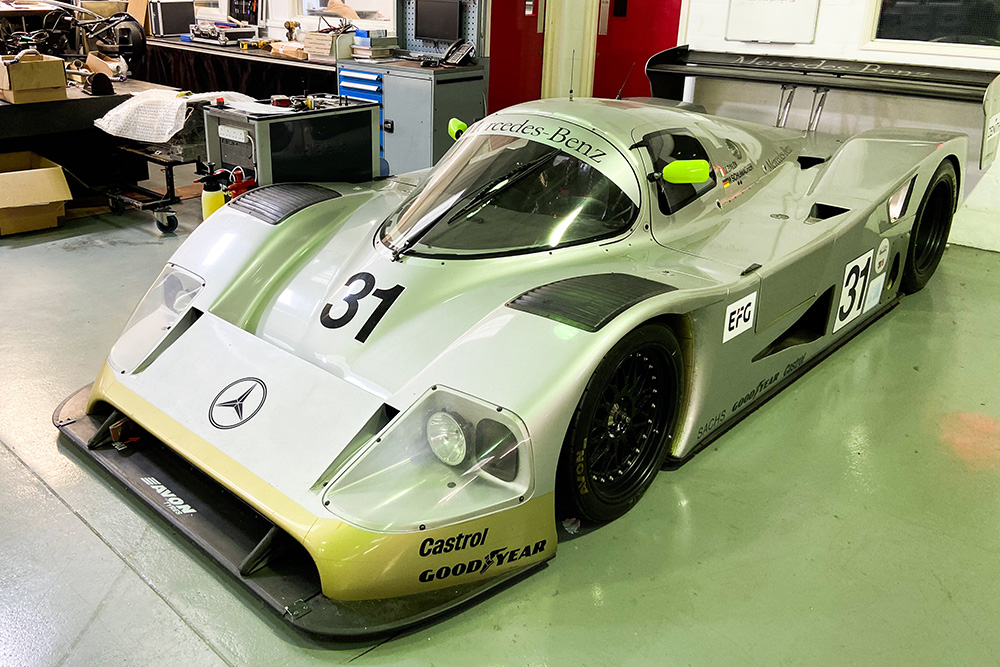
“The other aspect to it is, you’ve got an engine that will do 7000 kilometres. As opposed to an engine that’ll only do 2000 kilometres between rebuild. That’s three years, three seasons out of an engine in terms of drivability with basic maintenance and some basic servicing out the effective life of the car before rebuild. ”
What about parts and other costs?
“When you come to rebuild the cars, the cars are nearly contemporary. So you can still get all the spares from the ancillary suppliers, starter motors, gearboxes, alternators, oil pumps, all the little bits and pieces that people don’t necessarily think about.

“Usually people home in on the engine and the engine can be the least of your worries.
“In many areas of historic racing it’s the minor components that can be all but impossible to get hold of – in this case, they’re all there and available off the shelf.
“And if they’re not on the shelf, the manufacturer, say Bosch for example, can easily make one – say a starter motor or an alternator.”
And then there are the advances in materials, rapid prototyping etc?
“Carbon fibre has gone from being an exotic material to being something that everyone has to have an understanding of and a capability to work with.
“We’ve also got CadCam, 3d printing and scanning where we can come up with drawings for unique parts with proper measurements.
“That’s a huge step forward in this business and a massive saving for any customer. We can scan a component, and if it’s metal we can plug a USB into our fabricators tooling machine, set it off and by the following morning you’ve got the bit!
“You can only do that because technology trickles down.
“The example I will give you is another from historic Formula One. When we were first started running Formula One cars in 1995/ 96. It was really tough for a small team to run a Formula One car. Nowadays, the pit lane is full of teams that have the capability to run a historic Formula One car, because technology trickles down. The technology that was available in 2011 has now trickled down small teams like us. So we can do it. No problem.
“On cost, I can give you some examples. We had a shunt in the (Mercedes) C11 and a fire. And it was a disaster, we just couldn’t get the bits and we couldn’t reverse engineer from the fire because the bits were burned out. we had to recreate from photographs and 3d printers, and do many dry runs to get the bit to fit. And it took us 12 months and about £200k to get the car back.
“With the BRs, or even the Peugeots the moulds are all available and we’ve got a relationship with the original supplier. We pick the phone up and if they have got it we can have it, and it they don’t they can make it, and at contemporary cost capped prices.
“So you can have a nose for a BR01 for 10 or 15 grand where the last nose we made for the C11 cost nearly 30 grand.

“When you have a shunt the bits that are really difficult, or with a fire, all the bodywork we could do, albeit, it took a long time, which, in itself, brings cost.
“But then you come to something like the plenum, that sits on top of the injectors, and that was just a nightmare.
“To try and recreate the plenum that was completely burned out and was very expensive to reproduce. Because it’s a pressure cooker. And I think we made two or three before we got it right so that it would withstand the pressure of the turbo boost.
“So running these genuine historic cars is so much more difficult and getting more difficult by the day whereas moving up in the post historic cars, almost everything’s available.”
What about the drivers, the owners of these cars, are they moving to MEL because of their love of the sport, the performance of the cars? And is there another factor, the safety factor built into this era of racecar?
“They are all passionate about the sport and the experience they can have within it and I think that a number of them are from a generation that remembers these cars well in-period.
“These are professional people, they are doing this for pleasure, for the experience. But they’ve got to manage the risk involved. These are incredibly valuable cars. And if something goes wrong that car’s gonna look after them, because the most valuable asset in this transaction is the owner themselves.
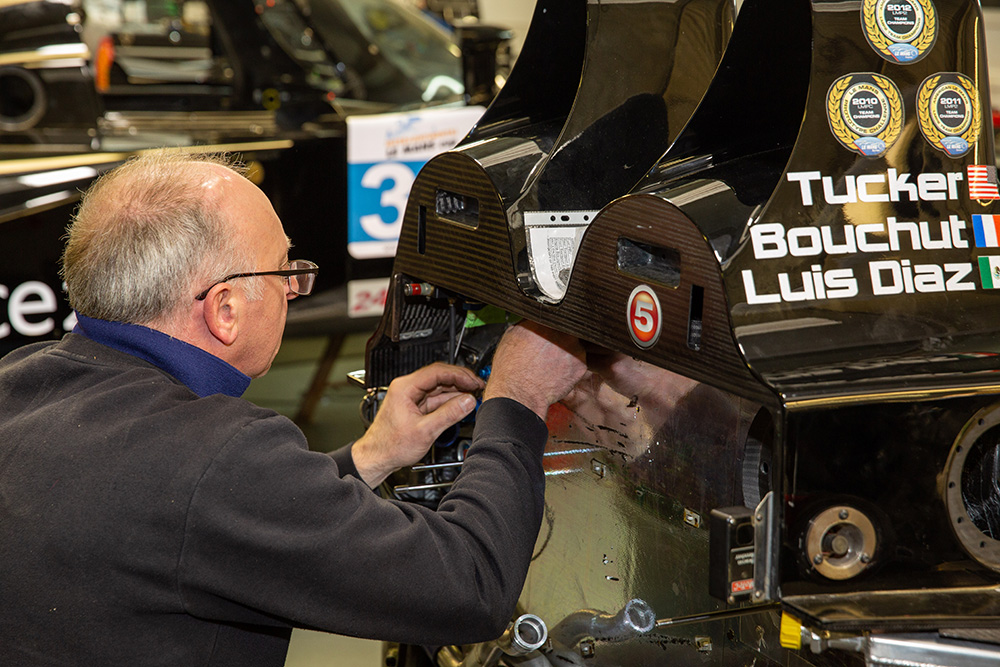
“Talking to one of the mechanics at a recent test he said something that stuck with me, that he was far happier and more confident running these cars because he had much more certainty that if he saw ‘his’ car go around the first corner, that it would be back around and passing the pits in a minute or two later, whereas with a Group C car he was always worried that something might go wrong.
“I think many people don’t appreciate what a mechanic goes through. They prepare the car, they’re responsible, therefore, they’re accountable. I used to have a mechanic that would baulk and feel sick just before the car went out. They were so nervous, have I done it right? Will the car fail? And it was the same mechanic that said they were enjoying these cars more, because they weren’t nervous about the cars.
“If you go to Monza or Le Mans, for example, it’s a heavy responsibility for a preparer who’s got a wealthy individual thundering along at 200 mph on 30-year-old uprights, think about it.
“I once had a customer that said to me, “You over-prepare cars, you’re too expensive. This is just amateur racing.”
“My answer to him was “if you can tell me the car knows the difference between doing 200 mph down the Mulsanne at Le Mans in an amateur race and doing 200 mph in a professional race then I’ll do it your way!”
On Safety
“The FIA is often criticised and sometimes abused but what I would say with our own particular history and experience in Group C, the safety that they’ve investigated and introduced has increased tenfold. God forbid, you’re ever going to have an accident. God forbid you ever have a fire at home, but it doesn’t stop you having home insurance.
“So the safety standards in a MEL car are really good insurance for that one in a million shunt.
“I do not want to be in the pit lane with a Group C car knowing my driver has a shunt at Eau Rouge at Spa for example. It’s always possible, it’s something you pray is never going to happen. But I would feel far more comfortable that the driver is going walk back with his helmet when he is in one of these MEL cars.
“What I hear more and more around the historic paddock is people becoming more and more aware of their own mortality and their own safety because they see these crashes every now and again and I think historic racers and Masters have been quite smart in spotting this, they are definitely gravitating gradually towards things that are safer to drive, as an insurance policy.”