The 2018 revival of the 24 Hours of Fuji – officially titled, the NAPAC (Nippon Auto Parts Aftermarket Committee) Fuji Super TEC 24 Hours – was an uplifting development, not just for the Super Taikyu Series, but for sportscar endurance racing in Japan.
This race embodies all that Super Taikyu strives to be, promoted as a fun-filled festival of like-minded automotive and motorsport enthusiasts. From the drivers of all skill levels racing on track, to the hearty crew members in the garages, to the passionate fans enjoying any number of auxiliary activities ranging from camping, to outdoor barbecues, to midnight fireworks displays. It’s a Japanese interpretation of similar pro-am, production-based endurance classics – namely the Nürburgring 24 Hours.
This weekend is the fourth Fuji Super TEC 24 Hours held since its revival, and the sixth in total, dating back to the 1967 and 1968 editions of the 24 Hours of Fuji. With 51 cars and over 250 registered drivers set to take part, there’s no shortage of potential stories to follow – but here are the biggest stories of the weekend’s upcoming race, which starts Saturday afternoon.
Toyota’s groundbreaking Corolla Sport H2 Concept

This year’s race has already captured the attention of the automotive industry at large, before a wheel has turned in practice. Toyota Motor Corporation will debut its first hydrogen-powered combustion engine in a special all-wheel drive Corolla Sport hatchback entered by ROOKIE Racing.
We know the basics of what makes the Corolla Sport “H2 Concept” run by now: The 1.6 litre turbo three-cylinder engine from the GR Yaris is being converted to run on hydrogen, thanks to a special Denso injection system, and four hydrogen tanks capable of holding 180 litres, using technology pioneered in the Toyota Mirai hydrogen fuel cell sedan. The tanks themselves will be stored in a carbon fibre carrier behind the cockpit, which will also be surrounded by additional carbon fibre crash structures. Additional modifications have been documented – wider wheel arches, additional vents for cooling, and a rear-view camera to offset the lack of rear cabin visibility.
We know that ROOKIE Racing have recruited five outstanding Toyota-linked drivers to drive the car: Kamui Kobayashi (2x Daytona 24h winner, reigning WEC champion), Hiroaki Ishiura (2x Super Formula champion, Super GT GT300 champion), Masahiro Sasaki (ST-3 champion), Takuto Iguchi (4x Nürburgring 24 class winner), and Takamitsu Matsui (GT300 champion). And of course, Toyota’s very own racing President Akio “Morizo” Toyoda – who is also the President of the Japan Automobile Manufacturers Association (JAMA) and the founder of ROOKIE Racing – will drive the car.
On 22 April, President Toyoda explained his decision to begin the hydrogen engine’s development in a 24-hour endurance race. “I want to take up the challenge of working with hydrogen-powered engines, which represent a hidden potential for motorsports going forward. The reason for competing in a 24-hour endurance race is that simply lasting three or five hours is not enough. You have to have done the preparation to last for 24 hours. On top of that, I’m one of the drivers. Many people in Japan associate hydrogen with explosions. So, I want to show that it is safe by driving in a race myself,” said Toyoda.
The Corolla Sport H2 Concept is not the first hydrogen-combustion engine offering from a major automaker, as those who remember similar concepts from BMW and Mazda over a decade ago can recall. There’s no concrete plans to put this engine in a production car in the foreseeable future. Hydrogen combustion technology still has its own unique set of drawbacks compared to electric and fuel cell vehicles, none of which involve the hypotheticals of a high-speed crash – rather, the challenges of production, storage, and energy efficiency.
Lap times above two minutes and a projected range under 50 kilometres don’t mean much in the context of what this car is trying to achieve – the most important goal for this car will be to try and finish the race and gather as much data as possible. Just as the TS050 and GR010 hybrid prototypes were only made possible through what Toyota learned with the Lexus GS400h and Toyota Supra HV-R of yesteryear, Toyota wants this car to be viewed as the start of a new path towards sustainable mobility and motorsport technology.
If nothing else, it is a proof of concept that in the future, we can have less harmful, more sustainable mobility without sacrificing the sounds of a petrol-burning combustion engine!
Toyota Times has published a multi-part feature about the development of the Corolla Sport H2 Concept, which you can read here – Part 1 | Part 2 | Part 3 | Part 4
Of course, this race isn’t just a 24-hour tech demo on wheels, as there’s still 50 more traditional vehicles in the race across nine classes…
ST-X: Overall honours, implications for the championship – and for Le Mans

Seven GT3 cars are entered in the top class, ST-X. For the five teams running the full season, the Fuji 24 Hours is a critical race towards the season championship – in fact, it’s a must-win race, as the last three winners of the race have gone on to win the championship the same year.
After two races, D’station Racing lead the ST-X championship tables. But this race has implications beyond Super Taikyu for the crew of the #777 Aston Martin AMR Vantage GT3. D’station Racing are approaching this race as training for their upcoming debut in the 24 Hours of Le Mans, and especially for gentleman driver Satoshi Hoshino, who wants to make a better second impression at Le Mans in 2021. Therefore, they will stick with just the three-driver lineup of Hoshino, ace driver and managing director Tomonobu Fujii, and three-time Porsche Carrera Cup Japan champion Tsubasa Kondo.
One car that won’t be present at Fuji is Porsche Center Okazaki’s 911 GT3-R. Instead, apr Racing have added their crew and drivers to the lineup of the #31 Lexus RC F GT3, consolidating all efforts into a larger one-car effort driven by the Nagai brothers, Hideki and Hiroaki, plus their pro teammates – GT300 vice-champion Koki Saga, TGR Driver Challenge prodigy Kazuto Kotaka, four-time PCCJ runner-up Yuta Kamimura, and Toyota GT500 driver Yuichi Nakayama. It was Kotaka who set the best time in the official test on 28 April.
Floral Racing with ABSSA Motorsport will look to give McLaren a 24-hour race win that has been few and far-between for the British manufacturer, their 720S GT3 featuring the usual quartet of ST-TCR champ Tadao Uematsu, GT300 and WEC veteran Keita Sawa, GT300 race winner Shintaro Kawabata, GT500/Super Formula winner Yuji Ide, and now also featuring a second amateur driver in Yuki Kawahara (president of First Garage, McLaren’s new customer racing partners in Japan).
GTNET Motor Sports, overall winners of the 2018 and 2019 Fuji 24 Hours, will aim to regain their crown with the familiar orange #81 Daishin Nissan GT-R GT3. This time, they’ve added young Natsu Sakaguchi to the lineup that features Noboyuki Oyagi and Takayuki Aoki, two past Tokachi 24 Hours winners and GT300 champions; as well as reigning GT300 Drivers’ Champion and two-time Fuji 24h winner Kiyoto Fujinami.
The second Nissan GT-R is from MP (Magic Project) Racing, also carrying six drivers – gentleman drivers Joe Shindo and Keiichi Inoue, grassroots and gymkhana legend Yusaku Shibata, past ST-X champion Yuya Motojima, Nissan racing luminary Masami Kageyama, and two-time Super Formula and GT500 Champion, the winningest GT500 driver in Super GT history, Tsugio Matsuda.

The other two are one-off entries, including Audi Team Hitotsuyama, wheeling out a pre-Evo version of the current Audi R8 LMS GT3. Of their six drivers, Toyota GT500/Super Formula star Ritomo Miyata is the only professional, the rest are amateurs of varying backgrounds. Yoshio and Akihiro Tsuzuki, the brothers who run amusement company ZENT, have GT300 experience. Motohiro Ogura and Hideo Honda have raced in Ferrari Challenge, and Tetsusaburo Tanaka’s background is in building high-end racing simulators.
The other one-off entry is a familiar name to DSC readers – it’s CarGuy Racing, now a staple in the Asian Le Mans Series, dusting off their old Honda NSX GT3 for one more ride. Just like D’station Racing, CarGuy’s Fuji 24h entry will serve as training for Le Mans. Takeshi Kimura is set to make his third Le Mans appearance in August, driving for Kessel Racing, and just like D’station they have just three drivers, with Kimura joined by his regular running mate Kei Cozzolino, and Shinya Michimi, who spent 2020 racing an NSX GT3 in IMSA.
ST-Z – Hot battle for GT4 honours
Those who’ve followed Super Taikyu in 2021 will notice that the nine-car count in the ST-Z class is smaller than the double-digit entries of the first two races. The absences include TK Racing Invitation’s Mercedes-AMG GT4 that won at Sugo, the two COMET Racing Mercedes, the Toyota GR Supra GT4 from C.S.I Racing (who consolidated all efforts into their ST-4 class Toyota 86), Techno First and their Ginetta G55 – and then just after the initial entry list dropped, Hiroshima Toyopet Racing pulled out due to a rise in COVID-19 cases back home, meaning no Ryo Hirakawa in this year’s race.

That means there’s still two more cars than in last year’s race, six manufacturers represented in total, and every one of these nine entries has a legitimate shot to take the class victory and the 45 points to go with it.
The current points leaders are Team 5Zigen with their Mercedes-AMG GT4, the winning model of the last two Fuji 24 Hours. Ryuichiro Otsuka might be Super Taikyu’s strongest gentleman driver, and the pro drivers they have aren’t too bad either: Toshihiro Kaneishi is a GT500 and Super Formula race winner, Australian Jake Parsons is a dynamic youngster, as are Honda-backed F4 prospect Kakunoshin Ohta, and single-seater specialist Yu Kanamaru.
But then there’s the two-time and defending ST-Z champions Endless Sports, going for the hat trick with an equally awesome set of drivers. Yudai Uchida, who has long been regarded as the best gentleman driver in the series, and Hideki Yamauchi, a four-time N24 class winner and GT300 star with Subaru, are joined this season by GT300 rising star Togo Suganami, and second-generation driver Ryo Ogawa, a two-time PCCJ champion.
The third Mercedes belongs to B-Max Engineering, a familiar presence at every level of Japanese motorsport. Their am drivers, Nobuhiro Imada and team president Ryuji “Dragon” Kumita, have strong foundations in single-seaters, and they also have three excellent pro drivers as well, with GT500/Super Formula race winner Yuhi Sekiguchi, joined by Nissan GT500 driver Mitsunori Takaboshi, and current Super Formula Lights points leader Teppei Natori.
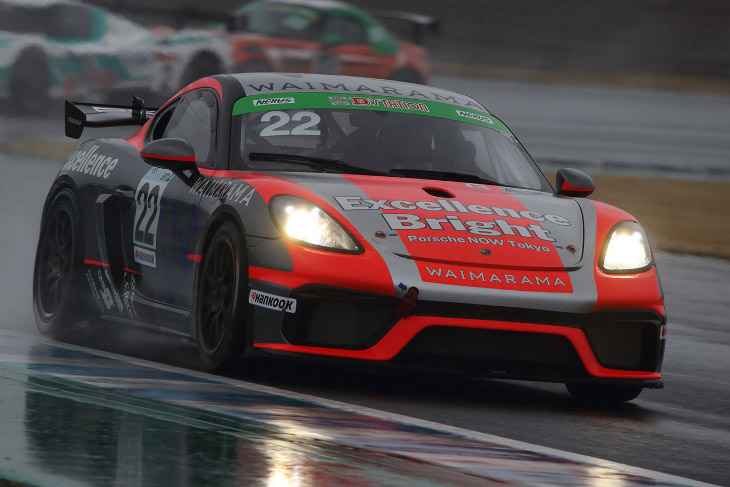
Porsche Team EBI Waimarama won ST-TCR in last year’s Fuji 24h, and are aiming at the ST-Z class victory in 2021, sparing no expense with the driving talent. They recruited GT300 triple champion Tetsuya Yamano and Super Formula’s latest race winning sensation Giuliano Alesi to join an already formidable lineup of regulars featuring mononymous gentleman driver Kizuna, Nissan GT500 ace Katsumasa Chiyo, Tetsuya’s younger brother and GT3-experienced “semi-pro” Naoya Yamano, and Porsche Japan junior driver Riki Okusa.
D’station Racing’s Aston Martin AMR Vantage GT4 features a past GT300 champion in Yuhki Nakayama who joins their regular lineup: Amateur drivers Tatsuya Hoshino and Kenji Hama, Japanese grassroots and GT racing legend Manabu Orido, and reigning TCR Japan Series champion Takuro Shinohara.
BMW Team Studie will be expanding their efforts for this race, fielding two cars including the #20 SS/YZ with Studie M4 GT4 – anchored by 2004 Le Mans overall winner Seiji Ara, versatile journeyman Yuya Sakamoto, and gentleman driver Tomohide Yamaguchi. Reigning GT300 champion João Paulo de Oliveira was also named as a last-minute addition to the driver lineup.
2020 Fuji 24h overall winner Shaun Thong is now back with Audi, leading the charge for the EVA Racing-sponsored Audi Team AS Sport R8 GT4 alongside former TCR standout Shozo Tagahara, and amateur drivers Genki Nishimura, and Yoshinari Fujiwara.
Hayashi Telempu Shade Racing’s Toyota GR Supra GT4 set the fastest time in the April test, and they’re due a strong result some time this season. Shinnosuke Yamada joins the team after winning back-to-back Fuji 24h with Endless Sports – joining gentleman racer Hiro Hayashi, veteran GT300 stalwart Katsuyuki Hiranaka, and groundbreaking female driver Ai Miura, one of six women entered in the race.
The second GR Supra is Future GPX Cyber Formula with RFC’s eclectic entry with “otaku racer” Jun Fujii, past ST-TCR champion Takeshi Matsumoto, and two legend drivers in 58-year-old Takuya Kurosawa – yet another ST-TCR champion – and 1992 Daytona 24h winner, 66-year-old Toshio Suzuki. They’ve also recruited 20-year-old Super Formula Lights sophomore Seiya Jin for his first sports car outing.
Curiosities down the running order
We’ve put together an English-language version of the full entry list. Rather than do a full field guide of the lower classes, we’ll discuss the high points across the remaining categories.
First, it’s great to see multiple ST-TCR entries for the first time this season. Honda are guaranteed a first Fuji 24h class win by virtue of being the only manufacturer present – but will it come via 2018 winners Team Noah, or the returning and restructured Racer M&K Racing?

ST-1 is quite fascinating in its own right, with three distinct models entered – the KTM Cars Japan X-Bow GTX, the Toyota GR Supra from Tracy Sports, and BMW Team Studie giving the new M2 CS Racing its Japanese debut.
The four pure production classes always deliver a great mix of JDM sports cars and skilled drivers, but out of those classes, ST-5 should see the toughest fight for class honours with twelve entries – the most of any category. Last year, ST-5 was the only class to have two cars finish on the lead lap.
Depending on the conditions, the rear-wheel drive Mazda Roadsters have the advantage in the dry, but the front-wheel drive cars have an edge if there is significant time spent racing in the wet. A pair of diesel-powered Mazda Demios from defending class champions Team NOPRO have a definitive advantage in range compared to their petrol-powered rivals. And three Honda Fits will try and end Mazda’s three-year unbeaten streak in the category.
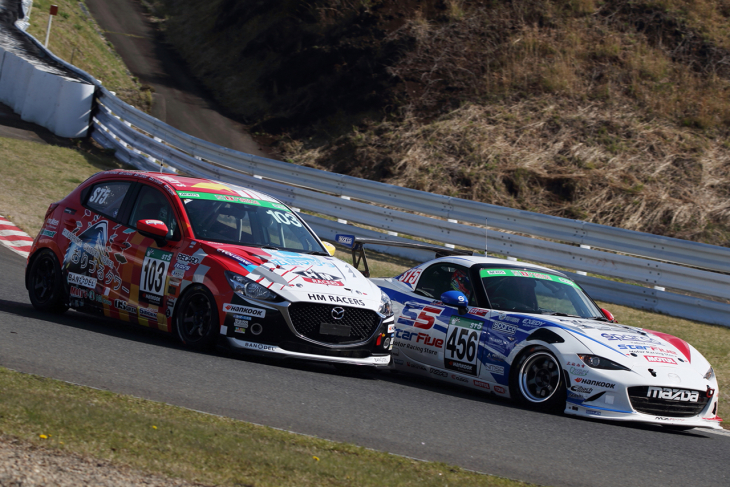
That isn’t to say we’re not due for some good battles in the ST-2 and ST-3 classes above them, or even in the “86/BRZ Race” class that is ST-4. In fact, ST-2 is looking quite fantastic this year, with the all-wheel drive Toyota GR Yaris injecting new life into the class. Three Toyotas will be up against two Mitsubishi Lancer Evolutions, a Honda Civic Type R, and a Subaru WRX STI.
Will conditions permit new records?
The current distance records for the Fuji 24 Hours were set in the 2019 race, headlined by the winning GTNET Motor Sports Nissan GT-R GT3’s outright distance record of 801 laps, or just under 3,655 kilometres at an average speed of 152.176 km/h.

As the great Naoyuki Hata wrote in his preview for the official Super Taikyu Series website, 3,655km is longer than driving from Tokachi Speedway in Hokkaido, down to Autopolis in Kyushu, then back to Fuji Speedway in Shizuoka. There were only four brief FCY interventions in 2019, and track conditions were dry all race long.
One difference from 2019 to 2021 is the new tyres from Hankook, which are built to spec for the Super Taikyu Series. Both official test days at Fuji, in February and April, saw a number of unofficial lap records in various classes on the new Hankook tyres – which should, in theory, lead to new distance records in a number of classes during the race, including a challenge at the overall record from the ST-X front-runners.
The only problem is that as of publication, there is a 40-60% chance of rain on Saturday and Sunday – the weather may not end up being as dire as it was in 2020, but it likely won’t permit a run at breaking the 801 lap barrier. That said, if changeable conditions give us a close, compelling race from Saturday to Sunday, it’ll be worth the trade-off!
Images courtesy of Toyota, Fuji Speedway, Pierre-Laurent Ribault, and the Super Taikyu Organisation (STO)