


With one race remaining in the 2021 Autobacs Super GT Series, the #61 Subaru BRZ R&D Sport of Takuto Iguchi and Hideki Yamauchi leads the GT300 Championship standings. Subaru have been competing in Super GT for nearly a quarter of a century,with cars such as the Impreza, Legacy, and BRZ all competing in the GT300 class – powered by Subaru’s enduring EJ20 boxer engine.
But this is as close as any one of their cars have come to winning a series championship – and now is as good an opportunity as ever to look back on Subaru’s history in Super GT to this point.
Cusco Racing, 1997-2008
Privateer Cusco Racing operated Subaru’s first foray into what was then known as the All-Japan GT Championship (JGTC) starting at the 1997 season finale at Sportsland Sugo. Their white, red, and grey #77 Subaru Impreza WRX STI (GC) would compete full-time beginning in 1998.

Parent company Carrosser was already an established name in Japanese rallying – their founder, Yuji Kase, was himself a successful rally driver. Cusco were already sponsoring a privateer Subaru in the World Rally Championship during the height of Subaru’s WRC success, so it was only natural that their partnership would extend into Cusco’s first sports car racing venture.
In the fifth race of the 1998 JGTC season at Motegi, Katsuo Kobayashi and Hideyuki Tamamoto gave Cusco Racing and Subaru their first GT300 class victory; winning from the pole, to break the unbeaten run of eventual champions Keiichi Suzuki and Shingo Tachi in their #25 Taisan/Tsuchiya MR2. Kobayashi was the ideal ace driver for a team that had its roots in rallying: He was a two-time national dirt trial champion and rally driver, before converting to circuit racing in the ’90s.

Cusco Racing looked to take a step forward by signing Toyota GT500 driver Tatsuya Tanigawa to partner Kobayashi in 1999. Tanigawa and Kobayashi finished 11th in the Drivers’ Championship, while Cusco Racing ranked eighth in the Teams’ Championship. They closed out the millenium by winning the non-championship JGTC All-Star Race in Autopolis, before switching to a fresh chassis in 2000.
Kobayashi and Tanigawa finished ninth in the standings in 2000, and eighth in 2001. The Cusco Impreza was a regular threat for podiums and points every weekend, but never consistently competitive enough to mount a challenge for the title.

In 2002, they became the first team to enter a four-door sedan in the JGTC, when they debuted a new Impreza WRX STI based on the new second-generation GD chassis. Cusco Racing received a waiver to run the car a year before the restriction on four-door vehicles was to be lifted in 2003.
Kobayashi and Tanigawa recorded two second-place finishes and once again ranked eighth in the Drivers’ Championship with the new “bug eye” Impreza sedan.
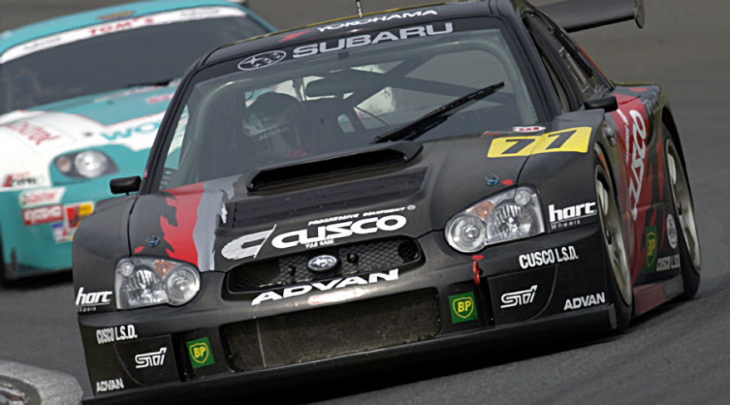
In 2003, Cusco Racing introduced a new black, red, and grey livery, restyled the Impreza to match the redesigned road car and its new “blob eye” headlights, and adopted a transaxle gearbox as part of the new vehicle regulations overhaul.
But by this stage, the team began to struggle. Due to the car’s relatively poor drag coefficient, the Impreza was at an inherent disadvantage compared to the “pure” sports cars it raced against in GT300. Cusco Racing were having a hard time keeping pace with their rivals: Between 2003 and 2005, they only finished on the podium once, and their drivers never finished in the top ten of the standings.
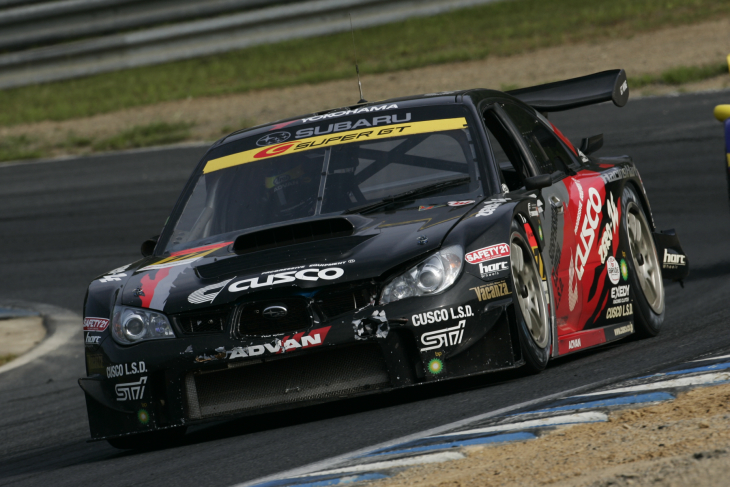
The JGTC had morphed into Super GT by 2006, the year that Cusco Racing decided to take their car in a radical direction. After sitting out the first four rounds, the black #77 Cusco Impreza returned at Sugo with a first-of-its-kind transaxle symmetrical all-wheel drive system.
Such a car had never raced in Super GT before. While 4WD had become the standard for rallying; with the exception of touring car outliers like the Nissan Skyline GT-R and Audi A4 – the added weight and complexity of an all-wheel drive layout made it impractical for most forms of circuit racing. But that was a risk that Cusco Racing were willing to take in order to take advantage of the benefits that it could provide, and they spared no expense to save weight where they could in order to make up the difference.
Kobayashi, Tanigawa, and Yasushi Kikuchi combined to enter four of the last five races in 2006, with two top-ten finishes.

2007 represented a major turning point for Cusco Racing, in anticipation of the new Impreza’s first full season they made a number of sweeping changes. They welcomed Dunlop (Sumitomo Rubber) as a new tyre partner, to develop a range of tyres specifically suited for the all-wheel drive Impreza.
They hired reigning triple GT300 Champion and gymkhana legend Tetsuya Yamano, and 2001 GT300 Champion Takayuki Aoki, to be their full-time drivers (Kobayashi would return for one last race in the Suzuka 1000km). Yamano and Aoki had a genuine shot at winning a wet race at Sportsland Sugo, before retiring after the halfway point due to a wheel hub failure. Obviously, the all-wheel drive system had its benefits in wet conditions, but the Cusco Impreza also showed potential in dry conditions, finishing fifth in Sepang.
Cusco Racing were determined to build on that potential for 2008. They refined the vehicle, making it lighter and more rigid. They now had a class-exclusive tyre partnership with Dunlop, which they bolstered by signing Kota Sasaki – Yamano’s championship team mate from 2005. Their goal was consistent results and success.

The signature moment of Cusco Racing’s 2008 season came during a brutally hot summer weekend at Sepang, on 22 June 2008. Yamano and Sasaki converted a blistering pole lap into a comfortable victory, only giving up the lead to pit for routine service. It was Subaru and Cusco Racing’s first win in nearly ten years, the first win for a four-door car in JGTC, and the first win for an all-wheel drive car since the inaugural 1994 season.
And they weren’t just one-hit wonders; Yamano and Sasaki had also finished on the podium at Okayama to end a four-year drought since Cusco Racing’s last podium finish. All-Japan F3 champion Carlo van Dam replaced Sasaki for the last two races, won the pole for the final race at Fuji, and helped the team to a third place finish in a wet race. Cusco Racing finished sixth in the GT300 Teams’ Championship, their best ever finish and Yamano was sixth in the Drivers’ Championship.
But just two months after the end of the 2008 Super GT season (and weeks after Subaru pulled out of the WRC) Carrosser announced that they would be suspending Cusco Racing’s GT300 programme to refocus on rallying.
Their withdrawal happened in the backdrop of the Lehman Shock. While Cusco Racing never cited the recession as a reason for withdrawing, it would not be far fetched to think that it influenced their decision, given that many other motorsport programmes in Japan had to either reorganise or shut down in the aftermath. And suddenly, Subaru was left without a team to represent them in the Super GT series going forward.
R&D Sport, 2009-present
From 2001 to 2008, R&D Sport – the racing division of Tokyo R&D Corporation – competed in JGTC/Super GT, and became famous as the driving force behind the Anglo-Japanese Vemac’s involvement in the series. After being spun off from their parent company in 2008, R&D Sport and their president Shinji Motojima looked towards a new challenge – and found a new partner in Subaru, who were still eager to keep their presence in Super GT.
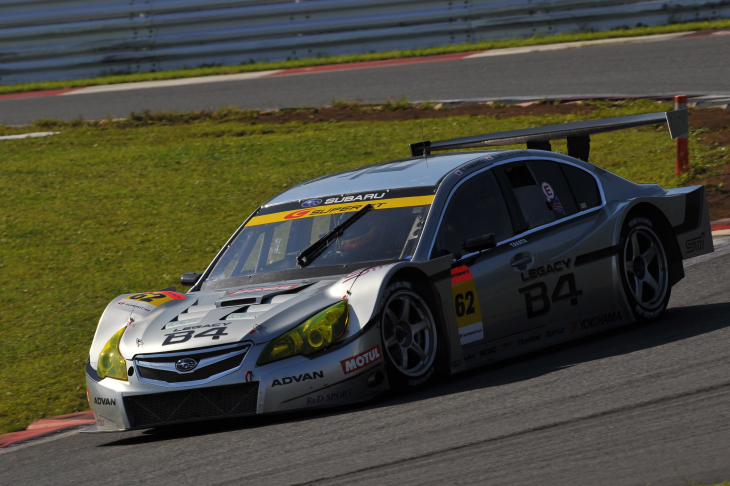
R&D Sport constructed a new GT300 car based on Subaru’s newest Legacy B4 sedan, retaining the Cusco Impreza’s all-wheel drive system. The partnership was made official in June 2009, and the silver #62 R&D Sport Legacy B4 would make its debut at the Suzuka Summer Endurance Race driven by Yamano and Shogo Mitsuyama.
Unfortunately, the Legacy B4 withdrew from Suzuka due to an issue with the front differential, and was uncompetitive in its next two appearances at Fuji and Motegi. This was a humbling start to the new partnership, to say the least.
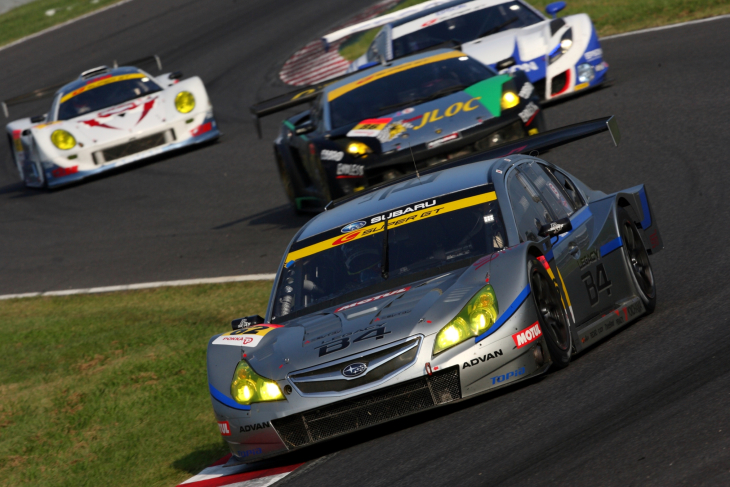
Changes were made heading into 2010, the Legacy B4’s first full season in GT300. For starters, the all-wheel drive system was abandoned, as the Legacy reverted back to a more conventional rear-wheel drive layout. Yamano and Sasaki were re-united once again as drivers. After failing to score a point in the first five rounds, they broke through at the Suzuka Summer Endurance – going from 11th on the grid to take their first win in the new partnership.
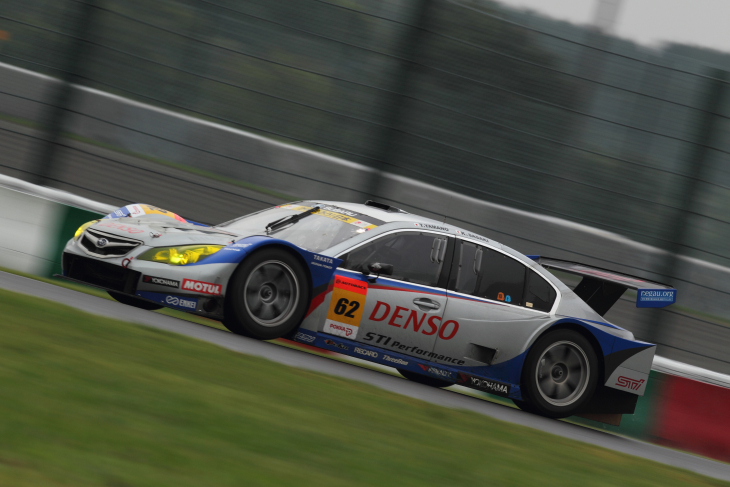
R&D Sport built on their breakthrough win towards even greater success in 2011: They not only won the Suzuka Summer Endurance for the second year in a row, but they also won the penultimate round at Autopolis – the first time that a Subaru had won multiple races in a season. They also finished in the top ten in six of the eight races, powering Yamano and Sasaki to fourth in the GT300 Drivers’ Championship.
At the non-championship Fuji Sprint Cup in November 2011, Subaru announced that the new BRZ sports car would be competing in GT300, beginning in 2012.

The introduction of the beautiful new #61 Subaru BRZ R&D Sport was a significant change: For the first time ever, Subaru Technica International (STI) would be in charge of the design and construction of their GT300 machine, while R&D Sport now focused on the management side of the operation. They kept Yamano and Sasaki as their driver lineup for 2012.
The striking new BRZ, with its massive spoilers, rear diffuser, and wide body certainly showcased flashes of potential in its first season: As FIA GT3 cars were now taking over the GT300 class, this car built to JAF-GT300 regulations was able to make up for its relative lack of horsepower with supreme handling ability. Yamano and Sasaki took five top-ten finishes, but lost out on a chance to win the Suzuka 1000km for a third straight year when they ran out of fuel at the end of a stint.

For 2013, R&D Sport struck a new class-exclusive deal with Michelin tyres, which along with annual refinements to the body and chassis unlocked the blistering speed of the BRZ. Sasaki alone took five pole positions, setting a new single-season record. And, after surviving a late emergency pit stop to repair a damaged diffuser, they avenged their 2012 retirement by winning the 2013 Suzuka 1000km – as Yamano and Sasaki were joined by a newcomer to the team, former Toyota GT500 driver Takuto Iguchi.
Yamano and Sasaki finished fourth in the GT300 standings in 2013, matching their result from 2011. This was also Tetsuya Yamano’s final season as a Super GT driver, as he elected to retire at the end of the season. Iguchi was tapped to replace Yamano for the 2014 season, and once again, the Michelin-clad BRZ was strong in qualifying as Sasaki took two more pole positions.
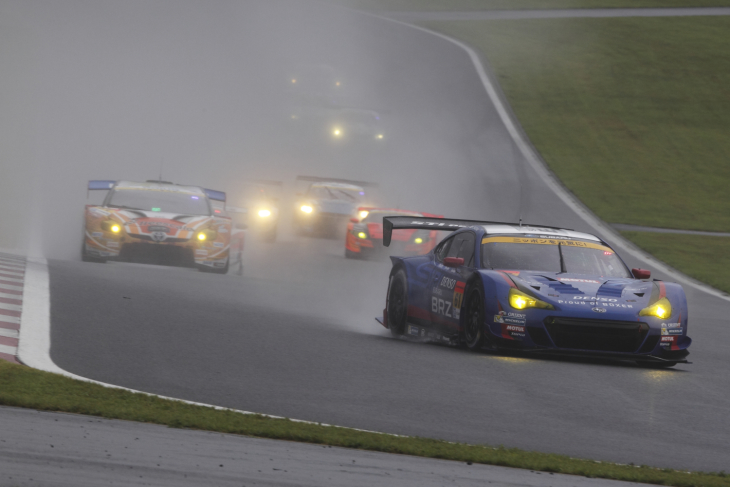
They dominated the 2014 summer race at Fuji, driving away from the field and never relinquishing the lead from lights to flag. Iguchi and Sasaki finished fifth in the GT300 championship at the end of the season. During 2013 and 2014, the Michelin-clad BRZ was fast, but could never consistently perform to its potential during races.
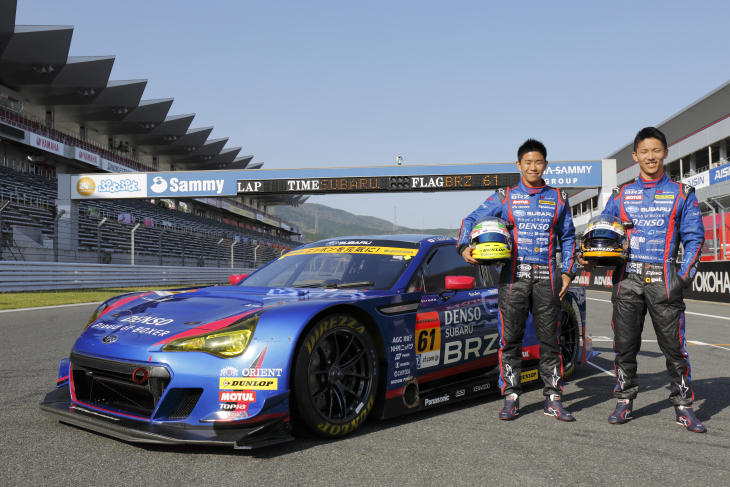
For the 2015 season, Subaru and R&D Sport changed their tyre partners and refreshed their driver lineup. Dunlop became R&D Sport’s third different tyre supplier in four seasons, but with an aim towards forging a long-term partnership and expanding on Subaru’s success with Dunlop at the Nürburgring 24 Hours. Iguchi stayed with the team, and the departing Sasaki was replaced by former All-Japan F3 National Class Champion, Hideki Yamauchi.
In their first season as Subaru team mates, Iguchi and Yamauchi finished 13th in the standings, and scored a podium at the Suzuka 1000km.
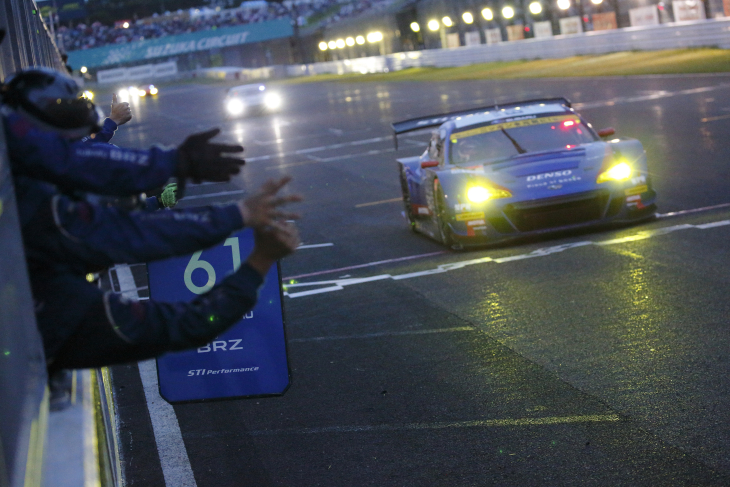
2016 would see the duo breakthrough for their first win, as Subaru and R&D Sport won the Suzuka 1000km for the fourth time in seven years. That victory capped off a string of three consecutive podium finishes that placed Iguchi and Yamauchi in contention for the GT300 Championship for the first time. But they failed to score points in the last three races, dropping them from the top of the table to a final result of sixth place.
Iguchi and Yamauchi finished ninth in the 2017 championship and got on the podium with a second place finish at Autopolis.

They got back on the top step of the podium with a commanding victory from pole at Sportsland Sugo in the sixth race of the season, and they also snatched third at the Suzuka 300km in a mad scramble for the final podium places. But poor reliability was hampering Subaru’s ability to get back into title contention: They suffered three retirements in 2017 and 2018, where Iguchi and Yamauchi finished eighth in the standings – before plummetting down to 18th in 2019, despite getting another third place finish at Suzuka.

Signs of a turnaround began to manifest in 2020, the ninth and final season for the first-generation ZC6 BRZ. It wasn’t a perfect season, of course, which started with a mechanical retirement at Fuji, and a slim chance at the title evaporated after a collision in the penultimate round at Motegi. But they finished in the points five times, and finished the season fifth in the championship standings – their best result since joining forces in 2015.

In the winter of 2021, Subaru unveiled a new BRZ GT300, based on the new ZD8, the second-generation BRZ model. Like the Impreza, Legacy, and first-generation BRZ before it, the ZD8 BRZ GT300 is powered by the same turbocharged EJ20 boxer engine that has been used, in some form, in Subaru race and rally cars for nearly thirty years.

The new BRZ has proven to be quick straight out of the box: Through the first seven races, Yamauchi has won three pole positions, and the new BRZ has started on the front row five times.

Iguchi and Yamauchi won from the pole at Sugo, ending the team’s latest three-year winless drought. They also finished second at the Fuji 500km, and third at Autopolis, despite carrying the maximum 100 kilogrammes of Success Weight.

With the input of first-year team director Masahiro Ozawa, who brings a wealth of engineering experience with him from Subaru’s World Rallying heyday, the new BRZ is still unbelievably nimble through the corners, yet more balanced, reliable, and more capable of vying for a championship.
And that’s helped unlock the full potential of their drivers, the perfect contrast of the passionate, hard-charging speed merchant Yamauchi and the soft-spoken, silky smooth and unflappable Iguchi. Their driving abilities have never been questioned, certainly not after they helped drive Subaru to back-to-back class victories in the gruelling Nürburgring 24 Hour race in 2018 and 2019.
And that leads us to today, where R&D Sport and Subaru sit at the precipice of their first championship. This story could culminate in the most joyful chapter in Subaru’s Super GT history next weekend, as thousands of loyal Subaru enthusiasts watching from the grandstands or in their homes will be watching the last round of the 2021 season in the hopes of seeing their favourite car win its first set of titles.
All photos courtesy of Subaru and the GT Association (GTA), except where otherwise listed.


