With three weeks until the start of the 2023 Autobacs SUPER GT Series, 42 teams converged upon Fuji Speedway for the first day of the second and final official pre-season test. Many of them didn’t need to venture very far, since their garages are in the nearby city of Shizuoka, or right down the road in the town of Oyama – or even, in the case of TGR Team Eneos ROOKIE, just beyond the final few corners of the circuit.
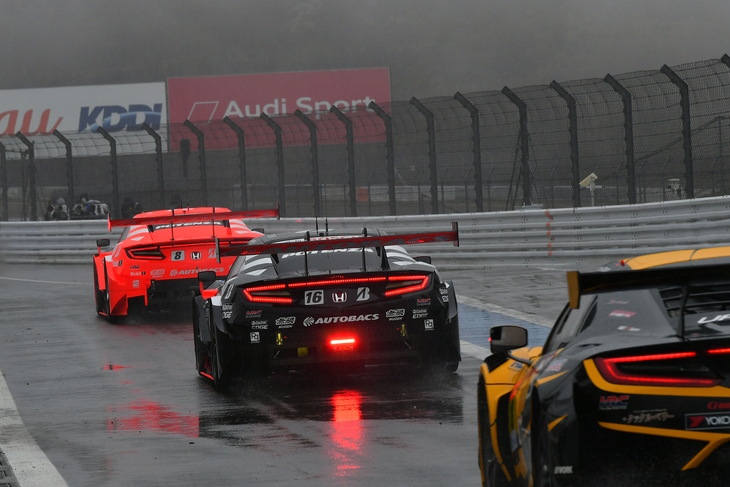
Compared to the sunny weather at the Okayama test, the first day of testing at Fuji was rainy and chilly throughout – with more of the same expected tomorrow.
Before the start of Session 1, at 10 A.M. local time, a minute’s silence was observed in honour of two recently departed luminaries of the SUPER GT Series.

1995 GT300 Drivers’ Champion, Kaoru Hoshino, passed away on 21 November 2022 at 75. He was an active racing driver in the All-Japan GT Championship. After retiring from racing, he was a driver for the JGTC/SUPER GT First Rescue Operation (FRO) team from its inception in 2002 until he retired from the post in 2015.
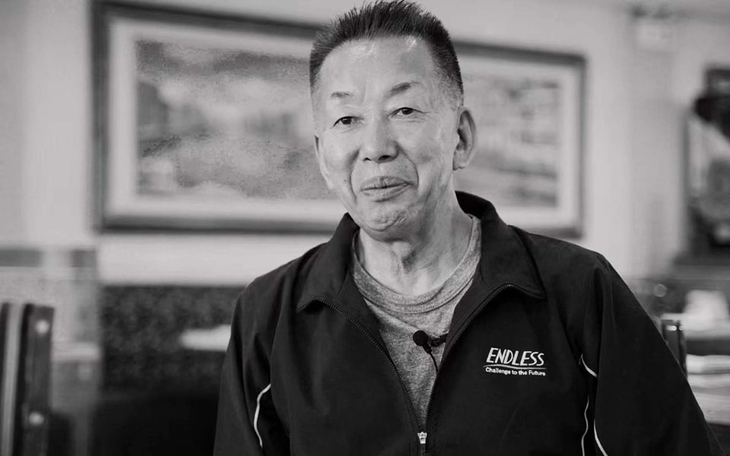
Isao Hanazato, the founder of Japanese brake manufacturer Endless, died on 3 February at 71. Hanazato’s company has been a supplier and sponsor of many domestic and international racing programmes, including the Mercedes AMG Formula One Team, Toyota Gazoo Racing and M-Sport World Rally Championship teams.
Endless competed with their own team, Endless Sports, in SUPER GT and later sponsored other GT300 teams including 2012 champions Team Taisan. They have also won championships in multiple classes in the Super Taikyu Series.
Rain fell throughout all Session 1, which was run to its completion with only one red flag.
But it was a costly one for Hoppy Team Tsuchiya: Togo Suganami was on his out-lap when he lost control of the #25 Hoppy Schatz Toyota GR Supra into the first corner and crashed into the tyre barriers at turn two.
これはひどい
今日中には直らないんじゃ?
#SUPERGT pic.twitter.com/4RY17NOrb0— とかち (@tokachiGT) March 25, 2023
Suganami was able to walk away uninjured, but the Hoppy GR Supra sustained enough damage to the front and rear that it would not return to the course for the rest of the day – and won’t be back tomorrow. Tsuchiya Engineering will try and have the car repaired in time for the opening round at Okayama on 16 April.
The rain stopped during the mid-day break and then came back during the middle of Session 2.

Under these conditions, the #3 Niterra Motul Nissan Z of Katsumasa Chiyo and Mitsunori Takaboshi was the fastest car of the day. Takaboshi set a time of 1’36.400 early in Session 2 while the rain had stopped falling.
“This year, teams and manufacturers have brought various items to the table, and it was good to be able to capture the top time in these wet conditions today and reconfirm our potential,” said Takaboshi, who combined with Chiyo to win two races and finish runner-up in the GT500 Championship last season with NDDP Racing.
One of those wins last year was a dominant victory at Sportsland Sugo, owed in part to the performance of a new asymmetrical-pattern wet-weather tyre introduced by Michelin – which has led rival tyre manufacturers Bridgestone, Yokohama, and Dunlop to introduce similar concepts of their own.
“However, we also saw that Yokohama brought a new pattern (of rain tyres) and showed its potential in the light rain. We could see that other manufacturers were also evolving, so although we were confident in our speed, we felt we had to go further ahead,” Takaboshi added. “We were able to proceed with the test smoothly today, so I hope we can do what we want to do tomorrow without any trouble.”
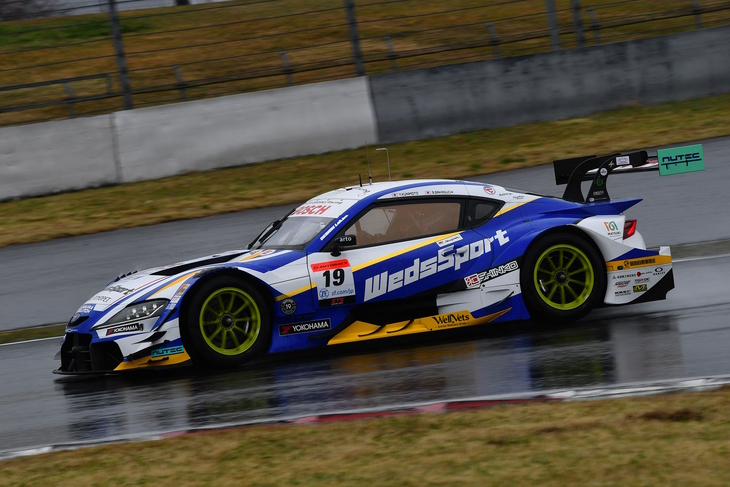
Using the aforementioned Yokohama wet-weather tyre, the #19 WedsSport Advan Toyota GR Supra (Yuji Kunimoto/Sena Sakaguchi) went second-fastest, as Sakaguchi set a 1’36.568.
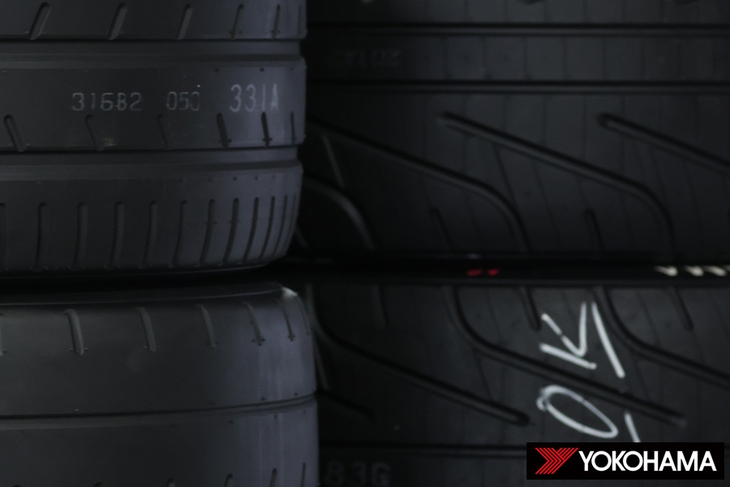
Yokohama’s new wet tyre pattern (pictured above, on the left) borrows concepts from Michelin’s groundbreaking pattern – using three longitudinal grooves around the circumference of the tyre’s surface and smaller, horizontal grooves along the inner and outer walls. But Yokohama has opted to make two of those three longitudinal grooves wider along the centre and outer portions.
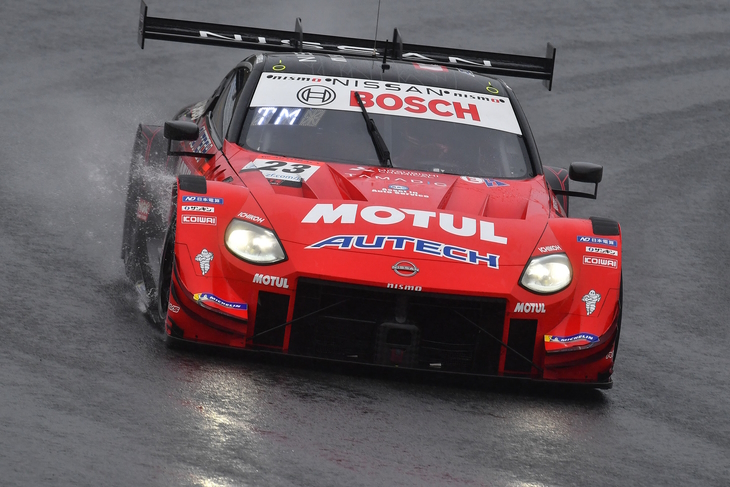
Rounding out the GT500 top three from day one of testing was the other Michelin-clad Nissan, the #23 Motul Autech Z (Tsugio Matsuda/Ronnie Quintarelli). Matsuda’s best time was 1’36.617.

The best Honda time was a 1’38.016 set by the #100 Stanley NSX-GT of Naoki Yamamoto and Tadasuke Makino. Team Kunimitsu is one of ten Bridgestone-supplied teams that had the chance to sample a new wet tyre pattern, which has diagonal grooves that curve inward from the edge to the centre of the surface, alternating longer and shorter grooves.
Bridgestone also brought their old wet tyre pattern, which has three longitudinal grooves running down the middle, for comparison and data gathering. GTA regulations now require tyre manufacturers to submit one wet-weather tyre pattern to be used for the entire season, and that decision must be made ten days before the first race.
The other big story out of the first day of testing at Fuji was seeing TGR Team Eneos ROOKIE driver Kenta Yamashita and Modulo Nakajima Racing driver Kakunoshin Ohta return to the cockpit of their respective GT500 cars. For Yamashita, this was his first time back in the cockpit of a racing car since he suffered a spinal fracture during a testing crash at Suzuka on 24 January.
Yamashita logged 29 laps aboard the #14 Eneos X Prime GR Supra in Session 1 and finished with the best time in the morning session, showing that the 2019 GT500 Champion was truly back in racing condition.
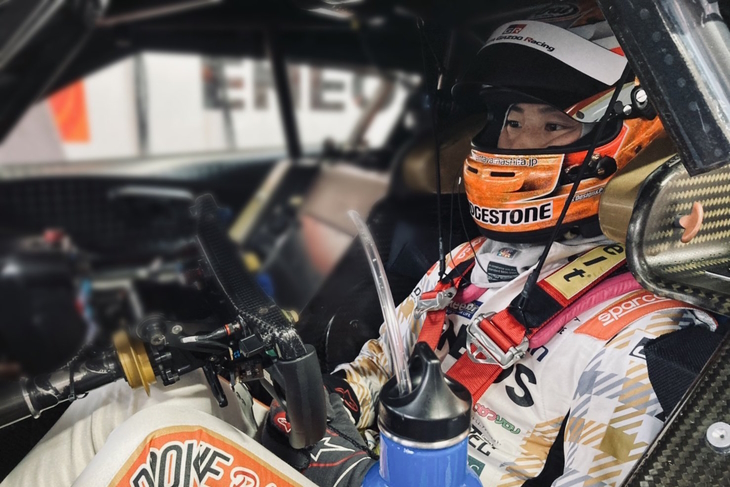
“It had been a long time since I had been on the road, but I felt no discomfort,” Yamashita said.
“I was bedridden for a month. During that period, I was frustrated by the information about the tests and so on, but the rest of the month was normal, going to test sites and doing rehabilitation. I have no sensory problems and to be honest, I am relieved,” he commented with a smile.
Ohta, who was withheld from the Okayama test as a precaution after his big crash at Suzuka on 3 March, also got much-needed seat time in the #64 Modulo NSX-GT. He completed 68 laps across both sessions.
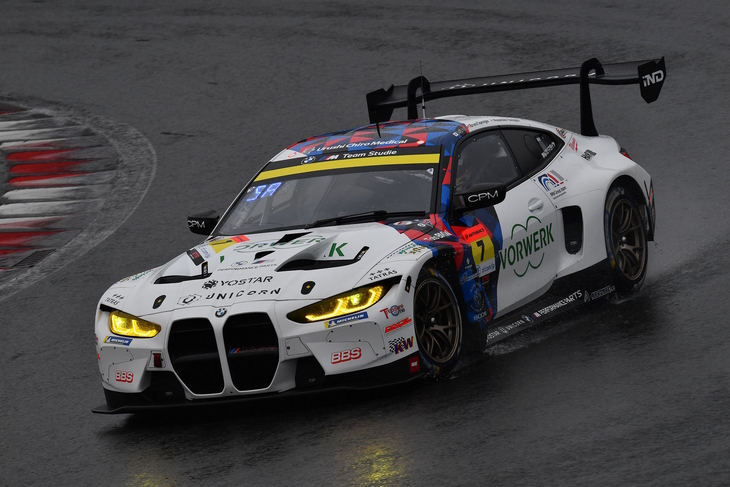
Michelin’s wet tyres also had a decent showing in the GT300 class. Their sole customer, BMW Team Studie x CRS, led the way in GT300 as the #7 Studie BMW M4 GT3 of Seiji Ara and Masataka Yanagida recorded the top time.
“Today we had wet conditions all day, but we were able to test the set-up of the car and fix the issues we were facing, and we were able to complete a solid test menu so that we can have a good race after the start of the season,” said Ara, who recorded the top time of 1’44.502. “Michelin tyres also have a very high level of performance in the wet. The BMW M4 is also easy to drive, and fast. I consider it one of the best racing cars I have ever driven.”
“The Michelin tyre engineers are members who supported me when I won the 24 Hours of Le Mans (in 2004), and I have known Masataka Yanagida since our karting days and we were team-mates in the GT500 era. I am happy to be able to fight this year with team members who are really like a family. I am really blessed to be in a good environment that stimulates me. We hope to maintain today’s trend tomorrow and prepare well for the start of the season.”
Yanagida is taking the place of Bruno Spengler, the 2012 DTM Champion, who successfully completed his Rookie Test two weeks ago in Okayama. The two-time GT500 and GT300 champion will stand in for Spengler in three rounds this season, including both races at Fuji Speedway.
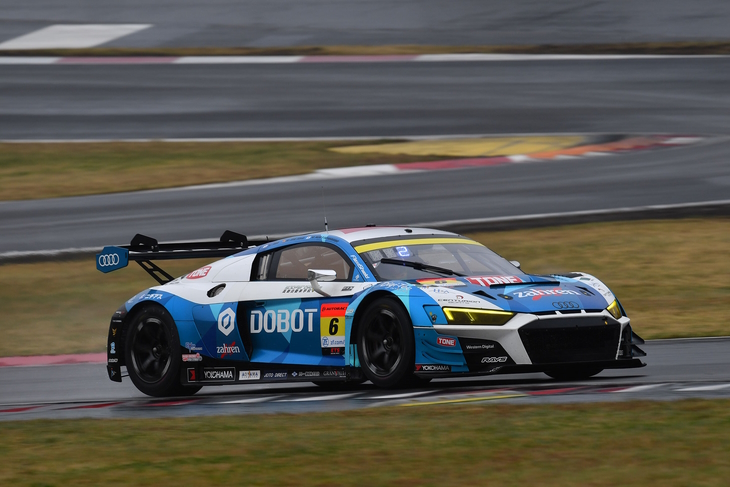
Team LeMans continue their surprising run of form in testing with the #6 Dobot Audi R8 LMS GT3 Evo II which they reluctantly kept this season – they went second-quickest out of 26 cars.
22-year-old Seiya Jin, a rookie candidate and the new third driver of Team LeMans, recorded the car’s best time, 1’44.740. Already experienced at the wheel of Audi’s R8 LMS GT4 in the Super Taikyu Series, Jin hopes to support Yoshiaki Katayama and Roberto Merhi in as many 450km rounds as he can. First, he’ll need to pass his Rookie Test, which he plans to complete this weekend.
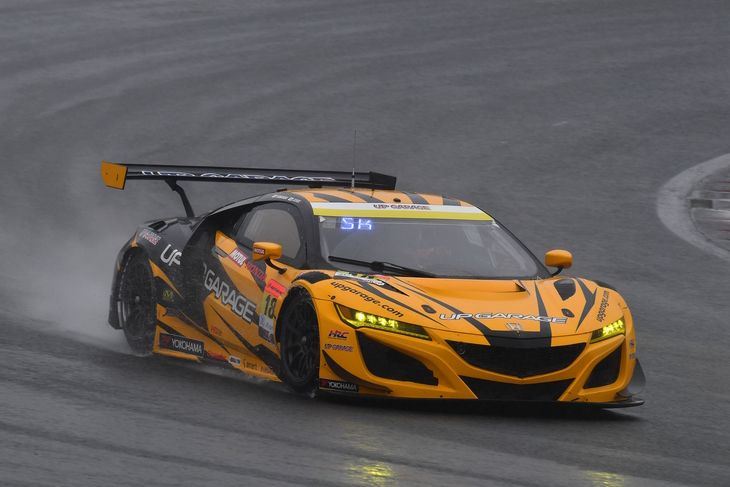
Another rookie, 2022 FIA Formula 4 Japanese Champion Syun Koide, was third-fastest in the yellow and black #18 UPGarage Honda NSX GT3.
The fastest GT300 original vehicle was the #31 apr Lexus LC500h of Kazuto Kotaka, in 12th place.
The final two sessions of the 2023 pre-season start tomorrow – Session 3 at 9:30 AM JST (local time), and Session 4 at 14:00 JST.
Images © GTA, ROOKIE Racing, Yokohama Rubber