Part two of our four-part run-down of the brands, teams and key technical partners involved in the converged Hypercar and GTP class now and into the future as well as many that have shown interest in the new top-class scene.
You can read Part 1 HERE >>>
Parts 3 and 4 will follow on DSC tomorrow and Friday.
Ferrari
Ferrari’s 499P is the first top-class sports prototype to be fielded by the factory since 1973.
An entirely in-house designed project by Ferrari – including a Ferrari-designed chassis built for the factory by Dallara.

It brings with it new global interest in the WEC from Ferrari’s loyal fans and it brings real opposition to Toyota’s dominance. That much was proven with a shock pole position for Antonio Fuoco on the car’s debut in Sebring and a run to the podium
The LMH design car has real speed and, with multi GTE title-winning squad AF Corse running the factory effort, the somewhat error-strewn debut race at Sebring is likely to be a competitive low-point.
Customer cars are under consideration but seem unlikely until 2025.
Ford
Another industry giant to have had at least two sniffs around the ruleset tree.
Ford looked at Hypercar and GTP while the plans for convergence were in their early stages, before deciding instead to focus on a GT3 platform with the forthcoming Mustang.
A more recent evaluation was shelved as the brand decided instead to fund an F1 engine programme.
Ganassi Racing
See Cadillac.
Geely
See Lotus.
Gibson
Gibson Technology’s sonorous 4.5 litre GL458 normally aspirated V8 powered the now-parked Alpine A480 and continues in the ‘Vanwall’ Vandervell 680 as a much-upgraded version of the very familiar GK428 4.2 litre engine which is the spec unit for LMP2 worldwide.
Ginetta
There was a fleeting possibility that the British outfit might register its G60 LMP1 car as a grandfathered 2021 Hypercar – the notion was not progressed.

Glickenhaus
Jim and Jesse Glickenhaus provided some early competition for Toyota (and Alpine) with their very pretty, retro-styled SCG 007 LMH Hypercar.

After being initially designed to be powered by an Alfa Romeo turbo V6 the changes to the early regulations after the addition of the Aston Martin Valkyrie saw them looking for a different engine. Ironically, the withdrawal of the Valkyrie and the later convergence process would likely have seen the Alfa unit as fit for purpose, but by then the outfit had committed to a new-build twin-turbo V8 from rally and race specialists Pipo Moteurs.
The SCG 007 has raced for two partial seasons, thus far in conjunction with Joest Racing and now enters a third campaign. The effort’s highlights to this point have been scoring pole position twice in the WEC and finishing on the podium four times, including at Le Mans in 2022 where the team’s two cars have a 100% finishing record across 2021 and 2022.
The second car, raced as #709 twice at Le Mans and in selected WEC races, is owned by Glickenhaus customer and dealer HK Motorcars.
The 2023 season opener at Sebring as a low point for the programme, the #708 car off the pace having not tested in the off-season. The longer term future for the programme depends, it seems, on a turnaround in form and fortune with Jim Glickenhaus again making it clear that the next steps forward need support from sponsors.
Green GT
Named as the powertrain supplier for the proposed, but currently delayed, Hydrogen fuel cell top-class ruleset, Green GT has been involved in hydrogen tech for several years with their prior and current projects including both a delayed Garage 56 car and involvement with the ongoing H24 technology demonstrator.

Honda
(See Acura) If the Acura ARX 06 was to race at Le Mans it would need a full-season FIA WEC entry. And that would need to be under the Honda brand (Acura is a North America-only brand).
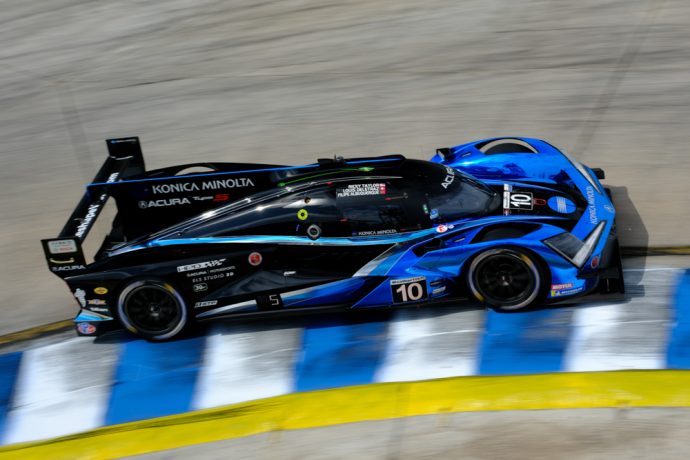
DSC is aware that more than one WEC team investigated the potential for a Honda programme for 2023 without success. As noted in Acura above, customer cars are not set to feature for some time yet.
There is though every possibility that Andretti Autosports might consider an early additional programme in the World Championship to secure a place at Le Mans. That programme though would require approval from Honda in Japan
HPD
Honda Performance Development in the USA is behind the design and build of the high-revving 2.4 litre twin-turbo V6 that powers the Acura ARX06, the engine initially designed to do double-duty in GTP and Indycar before a volte-face by the singe-seater series.
HWA
The German engineering outfit (and former DTM stalwart) was commissioned by Isotta Fraschini to produce the internal combustion engine for its forthcoming Tipo 6 Hypercar.
The 3-litre turbo V6 is understood to be based on a VAG production unit but heavily reworked for its new racing life.
Hyundai
The Korean giant is known to have evaluated developing cars for both LMDh and the currently paused Hydrogen Fuel Cell regulations, the latter looked, for some time, to be the most likely entry point for an entry into the sports prototype marketplace.
That prospect though has faded dramatically in the past 12 months or so with no immediate prospects of an entry into the fray.
Isotta Fraschini
The next new car to enter Hypercar looks set to be the Isotta Fraschini Tipo 6 LMH with the group behind the project hoping to see the car entering an FIA WEC race or two later in 2023.
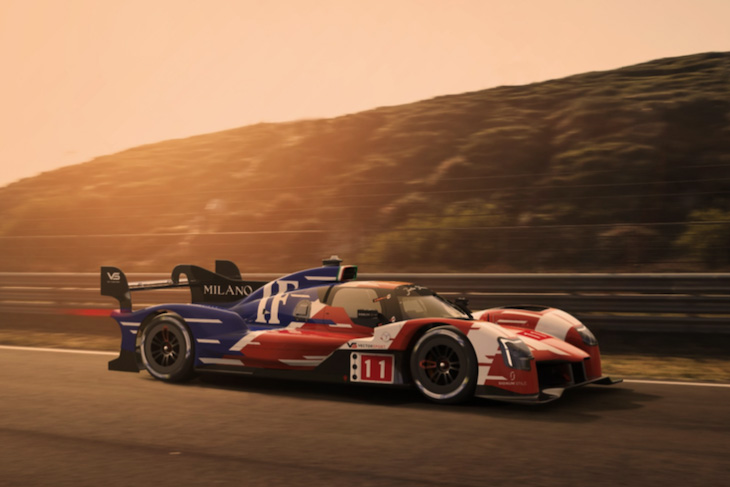
The project has quite a back story, initially conceived as part of a start-up for a bespoke EV manufacturer with a famous old brand name.
Then COVID happened and the initial plan stalled. Happily now though the plan is very much alive again with an all-Italian leadership group headed by ex-Ferrari, Maserati and Lotus motorsport boss Claudio Berro.
The car is being designed and built by Michelotto at its headquarters, to LMH regulations with an HWA-designed and built internal combustion engine and a bespoke hybrid drive system driving through the front axle.
British team Vector Sport will race help test develop and race the first car in the FIA WEC, having won the opportunity to do so against stiff opposition from JAS Motorsport, Joest Racing and Emil Frey Racing.
Jaguar
Parent company Tata was involved in the initial industry round of technical meetings to develop the Hypercar ruleset with Jaguar the most obvious brand in their portfolio to step in.
That interest though was fleeting. No programme is live across the group.
JDC Miller
See Porsche
Joest Racing
See Glickenhaus and Isotta Fraschini
JOTA
See Porsche
Koenigsegg
Christian von Koenigsegg spoke in the early days of the HyperCar regulations about the potential for his Swedish supercar company to take a look at the prospects for racing.
That has not progressed to a firm programme, but DSC did see an early road-car based LMH concept drawing from within the company.