As its headline franchises have grown in popularity and the cost of developing video games has skyrocketed in the past decade, Sony has begun to move into the cinema and TV space with its PlayStation brand.
The creation of this new revenue stream for the Japanese entertainment giant is proving to be a masterstroke, generating huge profits and increasing brand loyalty at a time when tensions between it and rival console brand Xbox (owned by Microsoft) have never been higher.
The proof is in the pudding. Action flick Uncharted made over 400 million dollars at the box office last year and The Last Of Us TV series on HBO has just been nominated for 24 Emmys. Consumers have voted with their wallets and critics have had their heads turned. After countless video game adaptations from years past have struggled to reach an acceptable quality bar, the perception is changing.

The success of its early projects since PlayStation Productions was founded in 2019 has led to the creation of a pipeline for upcoming movies and shows that are set to keep the momentum going for years to come.
Next up for PlayStation Productions is the Gran Turismo movie, which releases in cinemas across the UK today. It’s a feature-length film branded with one of Sony’s most popular and celebrated video game franchises, which has sold over 90 million copies in its lifespan and has roots dating back to the original PlayStation console generation in the 90s.
But how do you take a game – which principally involves players playing through a series of races while collecting rare and expensive cars – and mould it into a coherent narrative fit for the big screen? The answer lies within a key chapter of Gran Turismo’s history.
The movie follows the story of Jann Mardenborough, who won the Nissan GT Academy gamer-to-racer competition back in 2011 and launched a career in the sport off the back of it. The budget for the film is “huge”, the production team are highly experienced and the list of stars on the cast list is longer than you’d think.

Who is behind this push to put Gran Turismo and the Jann Mardenborough story on the big screen? The answer may surprise you.
The GT Academy formed a central part of Nissan’s motorsport strategy once it gained traction and the driving force behind it was former Nissan Motorsport boss Darren Cox.
Cox is an ideas man, he never slows down. Every time you see him, he has a new project on the go. World’s Fastest Gamer? That was Cox. Fast-growing and mould-breaking motorsport outlet ‘The Race’? He co-founded that too.
During Cox’s reign, Nissan made headlines in GT4, GT3, LMP3 and LMP2 racing, winning key races and titles and developing young talent. At its peak, the GT Academy created a conveyer belt of talent, which looking back had a significant impact on the rise of sim racing and esports.
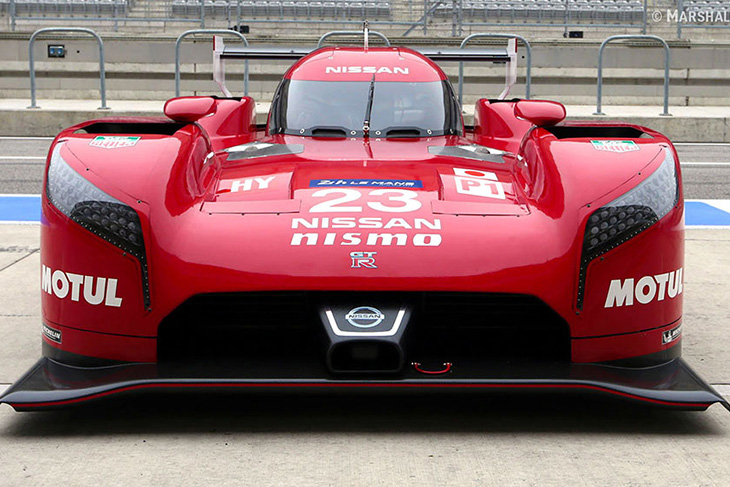
Its level of exposure reached heights rarely seen outside of Formula 1 too, when the Deltawing Garage 56 project hit the track at Le Mans and the ill-fated LMP1 programme with the GT-R LM NISMO made its debut in a commercial break during Superbowl XLIX.
This film though, was not his idea. In fact, it’s been in the works for a decade and originally wasn’t going to be based in reality.
“(Former Nissan factory driver) Alex Buncombe came to me 10 years ago, and said ‘They’re making a film about GT Academy’. I thought it was one of my drivers trying to wind me up. But that’s how long ago it was first being pursued,” Cox explained to DSC.
When I came up with the idea for GT Academy, I couldn’t foresee how it would end up
“When I came up with the idea for GT Academy, I couldn’t foresee how it would end up, I knew it was a good idea, and I knew I’d find good drivers, but it wasn’t even supposed to be a multi-year, multi-regional programme. It was supposed to be just one year. But it evolved.
“The film has evolved too. In the beginning, it was going to be a generic gamer-to-racer film about a fictional character. The first script was absolutely awful! Dana Brunetti, who is an executive producer on the film and has worked on Captain Phillips, The Social Network, House of Cards, you name it. He was the first guy I dealt with.

“I gave him my feedback on the first script because it was one of those: ‘There’s a car barrel rolling on the final corner and the team end up pushing it across the line to win the race’ type films. His response was ‘This is not a f***ing documentary!’
“Ultimately, I didn’t think it would ever happen. We did a deal with Jann’s contract with the film company maybe three or four years ago, but we didn’t expect it to actually lead to anything because it seemed like a long shot. It was a very strange journey, and very political.”
In the end, though, after much deliberation the decision was taken to change course and Mardenborough’s story became the movie’s central plot. This is something that was not easy to pull off. Neither Cox nor Mardenborough works with Nissan anymore, and the GT Academy no longer exists.
Lest we forget that multiple corporate arms are at play too, including Sony, Polyphony Digital (the developer of the Gran Turismo games) and Nissan, making the task of getting approval for key decisions arduous at times.
Yet against all odds and after much perseverance, it made it through pre-production and production and is set to hit cinemas around the world over the coming weeks.
“In some ways, a Hollywood film crew is like a race team, once they get the budget sign-off, they’re already out there testing and they won’t stop working towards the goal,” Cox joked.
Jann Mardenborough is portrayed by Archie Madekwe in the film. Cox’s character (Danny Moore) meanwhile, is being played by Orlando Bloom but is subject to a large dose of artistic licence.
Keen DSC readers will remember the role that the RJN team played in Nissan’s story with the GT Academy. David Harbour’s character Jack Salter plays an amalgamation of RJN boss and owner Bob Neville, its previous head engineer Ricardo Divila, Rob Barff and others as well as the missing ‘non-corporate’ element of Cox’s character. RJN has been involved in loaning cars and helping with the shooting, but Bob Neville’s team isn’t directly represented or referenced on screen.

So what should we expect from the final theatrical release? Nailing the content and tone of the movie, and the on-track sequences, is frankly, an impossible task. Because of the nature of the subject matter, the director and production team will not be able to please everybody.
Motorsport fanatics who are familiar with the GT Academy and remember the time period will be able to pick holes everywhere during the racing scenes. They may also struggle to engage with Mardenborough’s fictional love interest in the film. But this movie shouldn’t necessarily be viewed through an avid motorsport fan’s lens, since its goal is to engage a wider audience, including people who have never sat down to watch a race.
“If you want to make a documentary, make a documentary,” Cox responded when asked about the reception he expects the film to receive. “Based on the budget and opportunity, this is the closest to reality they could have. Having seen some of the previous scripts, the last one they produced was the closest to reality. There have been five scriptwriters on this and multiple versions of the script.
“Of course, they have thrown romance in for Jann, taken some of the edge off my character and dramatised some of the interactions Jann had with other GT Academy drivers and his parents. I’ve also spotted a private jet in the trailers when the reality is we were lucky if we got Hertz rent-a-car in those years!
I’ve spotted a private jet in the trailers when the reality is we were lucky if we got Hertz rent-a-car in those years!
“But you know, I am that guy who went to see Rush in the cinema and hated it. However, when I watched it in a relaxed environment at home, looking for entertainment, I loved it.”
What is most encouraging from Cox’s feedback on the production of Gran Turismo is the level of interest that the cast has taken in bringing the characters to life. Madekwe has spent a lot of face time with Mardenborough and pushed himself to great lengths to do his story justice.
Bloom meanwhile, kept an open dialogue with Cox throughout to help gain a better understanding of the sport. Bloom, he told DSC, was also keen from the outset to ensure that his personality came through on screen.
“During filming he would message me for advice. He’d say ‘I’m doing a scene with some Japanese executives, what would you say?’ Or ‘From a motorsport point of view, what language would you use here?’ He was asking a lot of specific questions.”
The dedication to spectacular race scenes using real cars on real circuits, shot in inventive ways, is also deserving of praise.
“Rather than setting up each shot, coordinating where all the overtakes happen, when I was there the director gave them five laps, said that Jann had to fight his way through to the front and they shot it,” Cox described.

“There was no direction, they all had onboards, there were drones all over the place and they let Jann, the principal stunt driver for his on-screen character, drive through the pack. And they got talented drivers with racing pedigree to drive the other cars.
“It was realistic, they were real race cars, they were not road cars with racing bodies.”
I think a lot of people thought when they heard about the movie that it would be a Netflix or Amazon straight-to-streaming film. Gran Turismo is not that
Mardenborough’s horror VLN crash at the Nürburgring in 2015, which claimed the life of a spectator and injured several others, forms a part of the narrative too and features in the pre-release trailers. This is notable as “the Nissan corporate machine would rather stay away from it,” Cox pointed out.
“It’s part of the story. Jann was on top of the world, had his crash which he had to get over and had an amazing career after that. Overall the effort they have made on the film and in particular the racing scenes it makes for a lovely memorial to both Ricardo (Divila, the longtime engineer who worked with RJN and passed away in 2020) and the spectator who passed away.”

When it releases, Gran Turismo is sure to garner a lot of attention, particularly in the United States, where the majority of the marketing push has been directed. And regardless of its critical reception, its very existence is a sign of the times.
Formula 1’s popularity is at a peak and many areas of the sport are seeing huge increases in interest and high-level investment. This is yet another avenue to showcase motorsport and tell one of its more remarkable stories to a new audience.
“The film company is focusing on general cinemagoers because it is a general release,” Cox concluded.
“I think a lot of people thought when they heard about the movie that it would be a Netflix or Amazon straight-to-streaming film. Gran Turismo is not that, it’s a proper cinema release, with a big budget that is going to attract attention from 13 to 25-year-olds who have played the game and are going to spend money going to see a car film.”
You can watch Gran Turismo in UK cinemas from today.
Elsewhere, the film is set to release between August 10th and 11th across continental Europe, Canada and Australia and August 25th in the USA.
Images courtesy of Liane Hentscher/HBO, Sony, Nissan