Honda supporters and SUPER GT fans recently said goodbye to the second-generation Honda NSX-GT, which completed ten years of service as Honda’s GT500 challenger after the 2023 season.
When Honda first announced its intentions to revive the iconic NSX as its flagship supercar, it was destined to return to the SUPER GT arena. That return was confirmed in August 2013 when the NSX Concept-GT, based upon the silhouette of the new Honda NSX Concept, broke cover ahead of its 2014 racing debut.
Like the original “NA2″ NSX-GTs that competed from 1997 to 2009, the second-generation”NC1” NSX-GTs would build a legacy of success: Two GT500 Championships, 22 wins, and 28 pole positions in ten years.
Yet, the NSX-GT’s constant changing and evolution will be as much of a defining legacy of this car as the on-track accolades it achieved. In those ten years, the NSX-GT has been both mid-engined and front-engined, hybrid and non-hybrid – and its shape has taken on the image of the concept, production, and final edition NSX Type S models!

Like its predecessor, the new NSX Concept-GT was the only one of the new breed of GT500 cars built with a midship engine layout. While the unified technical regulations created by SUPER GT and the Deutsche Tourenwagen Masters (DTM) were only meant to allow for front-engine vehicles, Honda was granted permission to plant the two-litre, turbocharged four-cylinder HR-414E engine behind the cockpit, true to the NSX’s midship heritage.
With Honda implementing hybrid technology into the new NSX road car, the NSX Concept-GT was also launched with a bespoke 60kW battery hybrid system developed jointly by Honda and Zytek – making it the only hybrid vehicle ever built to these new regulations. The GT Association (GTA), SUPER GT’s promoter, banned hybrid systems for competitive balance reasons in 2017 yet aims to reintroduce them as early as 2027 as part of its future sustainability plans.

The NSX Concept-GT’s three seasons were turbulent, to say the least. Overheating issues plagued the fleet early on, while the added weight of the hybrid system couldn’t offset the added battery power to the rear wheels. Honda dropped the hybrid component in 2016 citing battery supply issues, which exposed the internal combustion engine’s horsepower deficit to rivals from Lexus and Nissan.
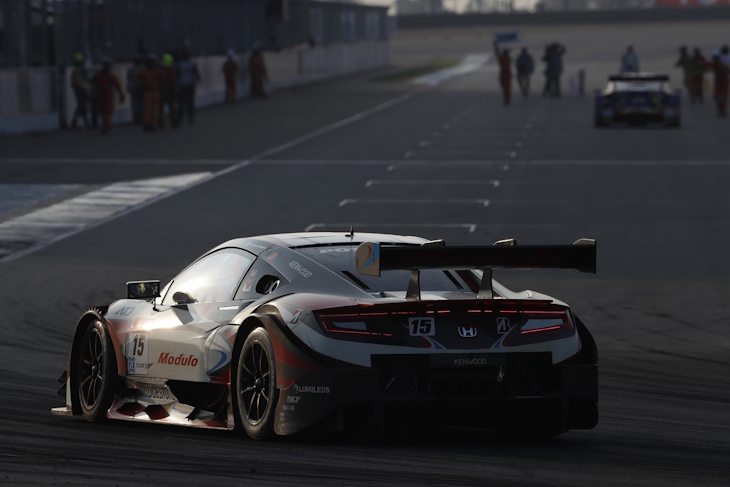
It culminated in Honda’s entire fleet going winless in 2016, punctuated with all five of its cars finishing at the bottom of the running order at Honda-owned Twin Ring Motegi to close out the season.
The launch of the 2017 NSX-GT, styled after the production model, only seemed like a continuation of the same heartache – when all five of their cars suffered the same electrical system failure during the opening race weekend at Okayama, and three of them broke down during the formation laps of the race!

Honda fans’ faith was tested, but it would soon be rewarded when the NSX-GT discovered its winning form as 2017 progressed. That great form continued through into 2018, when the five NSX-GTs combined for four wins and six poles, leading all manufacturers.
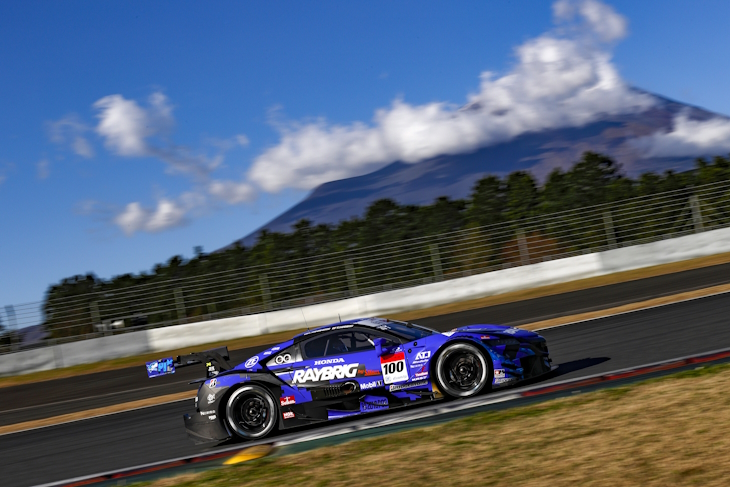
The culmination of this upswing was, of course, Team Kunimitsu’s long-awaited first GT500 Championship – led by the elite all-around skill of ace driver Naoki Yamamoto, and the most popular foreign driver ever to grace the SUPER GT Series, Jenson Button. Together they gave the famous royal blue number 100 Raybrig NSX-GT its first GT500 crown after 25 years.

Honda’s resurgence was the product of a confluence of factors – most notably, the implementation of pre-chamber ignition technology that had been used in the company’s then-forlorn Formula One power units, into its Nippon Race Engine (NRE) standard powerplants like the HR-414E, HR-417E, and HR-420E. With greater efficiency and greater power output, Honda was now able to take the fight to Nissan and Lexus more consistently.

The GTA rewrote its side of the “Class One” technical regulations in 2020 to make front-engine layouts mandatory in GT500. Honda acquiesced and introduced a front-engine version of the NSX-GT for the pandemic-affected season. The new car sacrificed none of its style and continued to perform at a high level, taking four wins in 2020 and 2021. Nearly four years after locking out the bottom five at Motegi, Honda took its first top-five sweep at the same circuit in November 2020!
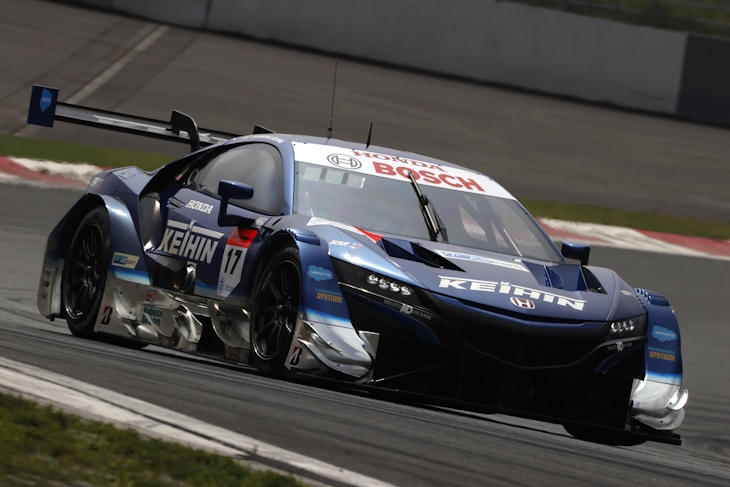
Team Kunimitsu and lead driver Yamamoto won their second championship in three years, joined by new Honda wünderkind Tadasuke Makino. In the final race at Fuji Speedway, they not only took the win but the championship as well – in one of the most stunning and dramatic finishes in the history of professional motorsport.

The limited-edition Honda NSX Type S would influence the styling of the NSX-GT in its final two seasons in 2022 and 2023, while it couldn’t capture another title, it remained competitive to the very end of its run.

Honda will replace the NSX-GT with the new Civic Type R-GT, a rear-wheel drive super silhouette version of the front-wheel drive sports sedan – though the NSX GT3 will continue to serve Honda customer teams in GT3-based categories, including SUPER GT’s GT300 class.
Honda NSX-GT (NC1) Title-Winning Cars
2018: Team Kunimitsu – Naoki Yamamoto & Jenson Button

2020: Team Kunimitsu – Naoki Yamamoto & Tadasuke Makino
Images courtesy of Honda