After accepting the Austin Hatcher Foundation’s Impact Award and revealing the 2024 IMSA Hall of Fame class on Saturday morning, IMSA President John Doonan spent time discussing the present and future of the IMSA WeatherTech SportsCar Championship with the media. It proved to be a useful window into the mind of one of the architects of modern sportscar racing.
This year’s Rolex 24 Hours at Daytona was a memorable one. Records were broken on track and off and Porsche added to its historic overall win tally.

As a curtain raiser, the Rolex 24 always does well to showcase the best of North American endurance racing and generate storylines aplenty for the season ahead. This year was no different. What is clear as Year 2 of GTP gets underway and the GTD fields come of age, is that for a long time to come, the premier sportscar championship in the USA is going to produce stunning racing and grow interest in the sport.
The crowds at Daytona were huge, with attendance records set for both the Roar and the Rolex 24. On the ground, it felt like it. The infield campsites were bursting with life and the paddock was packed day and night with enthusiasts. The drive to make IMSA accessible for fans and improve the on-site experience is paying off massively.
Engaging content away from the circuit such as the Win The Weekend Documentary series, the popular Marshall Pruett-presented YouTube content and a robust TV product both nationally and internationally, coupled with the increase in marketing spend from the 18 manufacturers involved, is proving to be a winning combination.

“If GTP was the story this past year, this is the year of GT. It’s pretty epic,” Doonan said.
What is perhaps most encouraging is that IMSA as an organisation is dead-set on using the current era as a springboard to an even more prosperous future. Doonan made it clear how much he appreciated the media attention surrounding the Rolex 24 and vowed to listen to the paddock and the wider industry to keep taking strides forward.
How do you improve the current product and capitalise on the current climate and appetite for sportscar racing? The answer, Doonan feels, lies in keeping sustainability and engagement with young fans a priority.
“The chairman’s meeting we had (on-site at Daytona in the build-up) featured senior leadership from all 18 automakers we have here. It makes me really proud and excited for our sport in general.
The sustainability message is going to continue to grow
“You will see continued growth and I think the sustainability message is going to continue to grow. We announced an 80 per cent renewable fuel in GTP last year, and they’re pushing us to get to 100 per cent. No doubt Michelin continues to bring sustainable raw material tyres to the paddock, and we announced at Laguna Seca last year a 50 per cent renewable tyre. We put it on the race track and tested it.
“When it comes to fuel, tyres, hybrid power trains and our relationship with the EPA (Environmental Protection Agency) and the DOE (Department Of Energy) and the Society of Automotive Engineers, that’s going to need to be our story.
“The second point is the next generation. It gave me a lot of energy to know that we had 4,200 youngsters (scouts) here (for the Roar weekend, camping in the infiield). And there are programmes we are going announce to focus on the next generation.”
The filming taking place at Daytona for the upcoming (untitled) racing movie starring Brad Pitt was also a clear example of the Rolex 24 and IMSA’s pull. Doonan was complimentary of the film crew’s push for authenticity and noted that being able to talk about a major motion picture featuring the 24 at Daytona as part of its storyline makes his hair stand up.

Maintaining the welcoming environment that the IMSA paddock prides itself on, to ensure the on-track product remains unmissable for years to come, is another clear goal.
Whether or not Doonan and the team around him can attract the LMH manufacturers currently in the FIA WEC and a sixth LMDh manufacturer in Alpine, remains to be seen. He did though shed some light on the wind tunnel homologation process and his desire to lure Alpine to the field if its plans to begin selling road cars in the USA come to fruition.
Was it a tease that GTP is set to grow more than currently expected, we wonder?
“We had our Steering Committee meeting just yesterday, and we 100 per cent would love to see cars that race in WEC come compete, specifically the Hypercars.
“The Le Mans-winning Ferrari, the multi-Le Mans winning and champion Toyota, the Peugeot, but through convergence we do have a process that we have to follow with wind tunnel evaluation. They need to run on the tyre sizes as per the regulation, they need to follow the homologation process like the LMDh cars. It’s a process, we’re open to the process of welcoming those partners.
“To homologate a car in GT3 and GTP, you have to sell so many road cars by regulation,” he continued. “That’s part of the sporting and technical regulations. And in our case, the manufacturer marketing agreement with IMSA is critically important. Racing is one thing, telling the story is another. So if a brand has those boxes checked, they’re eligible.
“In automotive news, Alpine has said it would like to come to North America to sell road cars. For me, that would be almost nirvana for someone in my role or my IMSA teammates. If an automotive brand wants to come and establish a retail presence in the North American market, what is the most authentic way to tell a story? Through motorsport.
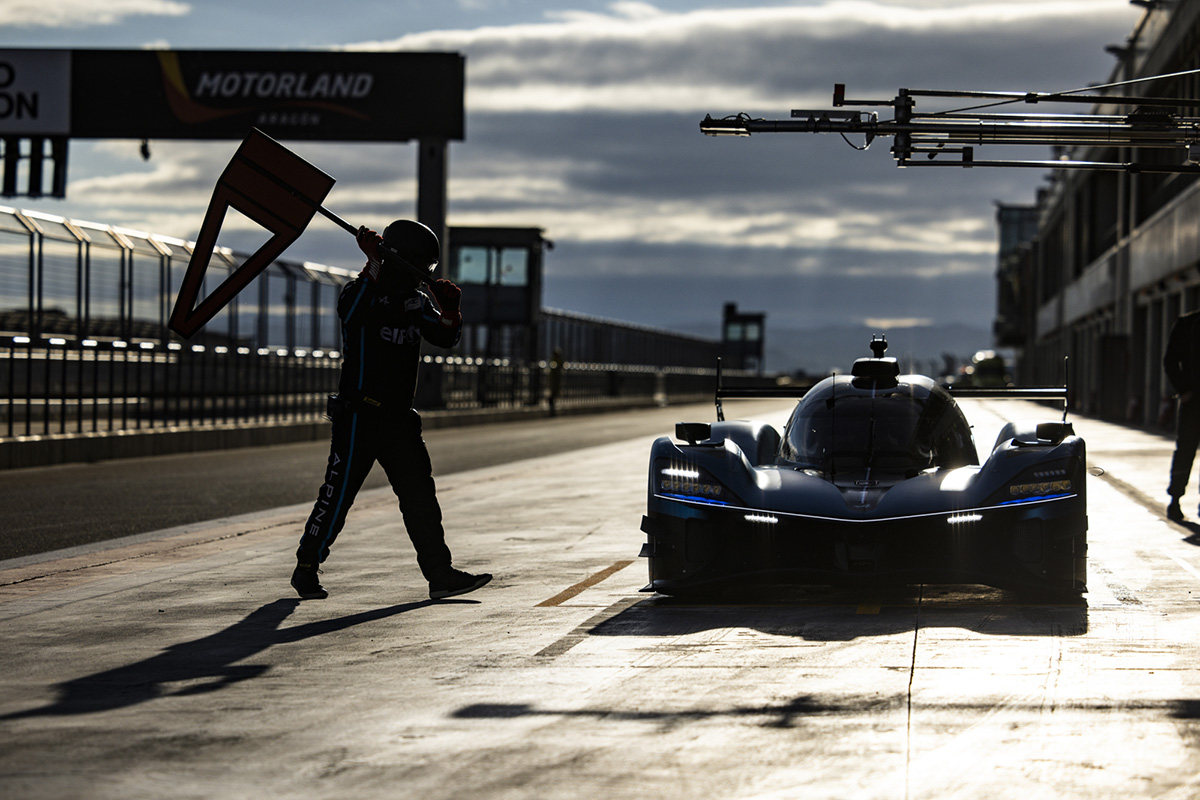
“There’s one LMDh manufacturer that hasn’t run in IMSA and that’s Alpine. But we’ve got four now and we will welcome Lamborghini with the SC63 at Sebring, and we will see who else comes from there.”
Accommodating additional manufacturers will not be easy. The IMSA field for the Rolex 24 and for the full season is oversubscribed. There is clearly a discussion to be had about building additional garages at certain circuits, but the suggestion in the IMSA office for a double-decker pitlane should not be taken seriously!
What is the most authentic way to tell a story? Through motorsport.
“It’s a nice problem to have. We found 60 (at Daytona) as the sweet spot thanks to Chip Hart Racing and Brad Pitt! We filled all the space. It could change over time here, but given the space we have in the garages, on pit lane and the amount of traffic, that’s our sweet spot.
“Most of our circuits have put us in a position where the classes are going are maxed, and we’ve used every piece of real estate. Tracks like VIR have done a tremendous job of reconfiguring their pit lane to make more space. Even the street circuits have done a great job of giving us all the space we can have.
“We’re in a good place for this year and god willing we see the same momentum with entries for years to come.”
Waxing lyrical about a championship when it is in as rude health as IMSA is right now, is easy. But there will be challenges ahead. Certain plans will fall apart and surprises lurk around every corner when you’re working with as many major stakeholders as IMSA currently does.
It has to be said though that the the journey to this moment – which began with the ALMS-Grand Am merger – while rocky at times, wouldn’t have been possible without strong leadership. It must be applauded.
The countdown to Sebring is now on, the teams that contested Daytona have packed up and the IMSA show rolls on.
Featured image courtesy of IMSA/Levitt