It’s the dawn of a new season of the Autobacs SUPER GT Series – and the celebration of the series’ 30th anniversary!
And across that period, GT500 has been the headlining category. Today’s GT500 cars are still constructed in the image of the most loved JDM machines on the market, but they share little with their road-going counterparts. Underneath the skin is a purpose-built carbon monocoque. Under the bonnet is a two-litre, turbocharged, direct-injection inline-four engine that now makes more than the nominal 500 horsepower that gives the class its name (and more than the official figure of 550 HP as well!)
In that sense, a modern GT500 car is closer to a Le Mans Hypercar or LMDh prototype than it is to anything else in GT racing. But it’s also a one-of-a-kind category in the world of professional sports car racing, and that GT500 name carries significant value across the generations who’ve grown up with this class of cars – whether they’ve watched them race in real life or drove them in video games.
And that’s not all that’s unique about SUPER GT either – because there is competition among tyre manufacturers, a relic of a bygone era in other series, but here in SUPER GT it is very much alive.
This year the tyre war in GT500 has taken a different complexion. Michelin has dropped out of the class, and Bridgestone now holds an 80 per cent share of the tyre supply in the category – versus two teams running Yokohama Advan tyres and a single team using Dunlop-branded tyres built by Sumitomo. It’s the most control Bridgestone has had since the mid-2000s, and it’s left some insiders worried for the future.
But that tyre competition is still the additive which ignites GT500’s fire, creating a class of cars that is quicker over a single lap at Fuji Speedway than the cars in the top class of the FIA World Endurance Championship – even without a hybrid element, and even after ditching conventional petrol for 100% carbon-neutral fuel!
With the added element of Success Ballast that adds up until the last race of the season, GT500 championships are often unpredictable and go down to the last round.
Yet again, 15 cars have entered featuring 30 of the best drivers from Japan and around the world, each of them in pursuit of the coveted GT500 Class Championship.
Toyota
The fifth-generation Toyota GR Supra GT500 has undergone some refinements ahead of its fifth season, as permitted by the GTA. Specifically the “lateral duct” underneath the doors has been redesigned for better aerodynamic efficiency, and there’s also been a focus on more efficient cooling in the engine compartment.
They’re subtle changes, but what Toyota Customising & Development (TCD) has done seems to be more than enough to stay sharp. The GR Supras were regularly at the top of the timesheets in private manufacturer tests and the two official pre-season tests at Okayama and Fuji.
Toyota led the way with four wins last year and will be going for its third set of GT500 titles with the Supra.
#14 – TGR Team Eneos ROOKIE: Kazuya Oshima / Nirei Fukuzumi (Bridgestone)

ROOKIE Racing enters its fifth year in SUPER GT as a favourite to win its first set of GT500 Championships – such is the expectation of the team founded by Akio Toyoda himself, based right outside the gates of Fuji Speedway in a workshop that is the envy of every other team. Nothing less than success will satisfy the demands of a team that has positioned itself to be the new flag carrier for Toyota Gazoo Racing in Japanese motorsport.
Many of the key players who were around for ROOKIE Racing’s top-flight launch in 2020 are still here this year including team principal Toranosuke Takagi and chief engineer Kazuya Abe, both of whom have won championships at this level in their respective roles.
Lead driver Kazuya Oshima is still here too. The 2019 GT500 Champion has been the dependable “tower of strength” for ROOKIE Racing ever since its formative years: Experienced, great at setups and technical feedback, steady behind the wheel – and still blindingly quick when he has to be. It’s incredible to think that this will be Oshima’s 16th season as a GT500 driver, and as time passes, he’s become an even more integral figure in the team’s entire operation.
But a new wind is blowing in the ROOKIE Racing camp, thanks to the arrival of 27-year-old Nirei Fukuzumi, one of two blockbuster transfers from Honda to Toyota this offseason. Fukuzumi, the 2019 GT300 Champion and 2021 GT500 runner-up came to Toyota seeking not only opportunities to succeed at the top levels of Japanese motorsport – he also wanted another chance to prove himself in international competition. On his best days, Fuzukumi is a rapid driver capable of extracting maximum pace from a machine. He did it last year when he contended for the GT500 title with ARTA. He’s done it throughout the winter and spring months, setting fast times in pre-season testing.
Oshima and Fukuzumi’s styles contrast perfectly and with the newcomer settling into his new machine quickly, it’s created a lot of excitement around the team heading into the 2024 season. Last year, the number 14 Eneos X Prime GR Supra was able to consistently score points but had just one podium finish – a third place in the Suzuka summer race.
If they can convert more of those top-tens to top-fives and more of those top-fives to podiums and race wins, ROOKIE Racing has a chance to finally break through this season.
#19 – TGR Team WedsSport Bandoh: Yuji Kunimoto / Sena Sakaguchi (Yokohama)

Last spring in Suzuka, TGR Team WedsSport Bandoh finally returned to the top step of the podium of a GT500 race for the first time in nearly seven years – but couldn’t properly celebrate a victory it had inherited through a post-race penalty handed down well after the chequered flag.
They’re hoping to get another chance to win a race that they can revel in completely, but it won’t be easy. From its first year in the JGTC’s GT300 class, Racing Project Bandoh has remained loyal to Yokohama tyres – but it has put the team at a disadvantage compared to its Bridgestone-backed brethren throughout its GT500 tenure under second-generation team principal Masataka Bandoh.
Bandoh-san’s team is one of three teams on “non-primary tyres” that has been granted extra testing time this off-season to try and close the gap to Bridgestone, but the blue and yellow WedsSport Supra is still the underdog of the Toyota fleet and will be fortunate to return to the top step of the podium.
Which isn’t the fault of its drivers, either. Yuji Kunimoto may still be just 33 years old but has the veteran wisdom of a driver 15 years his senior. Like Oshima at ROOKIE Racing, Kunimoto fits that “tower of strength” archetype perfectly with his smooth, consistent driving style and his ability to work with his younger co-drivers and aid their progression. Sakaguchi is a quick, hard-working driver capable of spectacular performances at the wheel. He very well could have gone to another team this season but he stays at the WedsSport camp at Bandoh’s insistence.
Last season the duo were strong in qualifying – though not quite as sharp as they were in 2022. But outside of the win at Suzuka, the WedsSport Supra never finished better than eighth in any of the other races.
#36 – TGR Team au TOM’S: Sho Tsuboi / Kenta Yamashita (Bridgestone)

Reigning and defending GT500 Champions TGR Team au TOM’S finds itself in the same position that it did two seasons ago: Trying to win another title after the departure of one of its drivers. Satisfied with winning the GT500 and Super Formula Championships in 2023, Ritomo Miyata has graduated to international competition (he’ll be racing in Barcelona this weekend!) with the hope of following in the footsteps of Nakajima, Kobayashi, and Hirakawa as an endurance world champion and Le Mans 24 Hours winner.
2024 is a significant year not just for SUPER GT, but it’s also the 50th anniversary of TOM’S Racing, one of the biggest powerhouses in Japanese motorsport. Surely, TOM’S will want to celebrate it with even more success. And after grabbing the headlines with fast times in pre-season testing, the white and orange au TOM’S GR Supra enters the season as most pundits’ favourite to win the title again.
Two-time GT500 Champion Sho Tsuboi is now the ace of Toyota Gazoo Racing and TOM’S in Japan, and has the opportunity to become the youngest three-time champion in GT500 history this year. For the sixth time in as many full-time GT500 campaigns, “Sho-time” has a new co-driver in Kenta Yamashita, the 2019 GT500 Champion who transfers in from ROOKIE Racing. They are two of the most well-rounded, naturally-gifted, adaptable drivers in major Japanese motorsports and between them, they have no weaknesses in their game.
Tsuboi and “Yamaken” have some of the best people in the sport working with them, an experienced core led by team director Daisuke Ito and chief engineer Satoshi Yoshitake, who’ve built a great rapport with Tsuboi in particular despite all the changes in the second seat.
If there is an area of opportunity, it’s the qualifying performances. Outside of a pole at Suzuka, the au TOM’S GR Supra often found ways to come back from perilous grid positions to have strong races – including a win from 12th on the grid at Autopolis. Perhaps the new qualifying format and the guarantee that both drivers will have a chance to go for pole position will help rectify this lone weakness.
Predicting a champion in SUPER GT is meant to be difficult, but the number 36 will certainly be the standard by which the rest of TGR is measured – and is worthy of being the favourite again.
#37 – TGR Team Deloitte TOM’S: Ukyo Sasahara / Giuliano Alesi (Bridgestone)

On the other side of the TOM’S stable, the number 37 Deloitte TOM’S GR Supra is simply trying to improve on a woeful 2023 season where Ukyo Sasahara and Giuliano Alesi finished second from the bottom of the points table, and was the only team that didn’t record a top-five finish last season. It wasn’t all that long ago when this car, with a different title sponsor and different drivers who’ve since moved on to WEC or Formula E, was the standard-bearer for TOM’S.
Sasahara and Alesi return for a second season together where things must improve – and all the fingers are pointed at Alesi as the key to progress. The second-generation, French-Japanese driver has left fans wanting more in his first two years of GT500 racing. And after losing his Super Formula drive in the middle of 2023 to Sasahara, Alesi surely knows that he’s under big pressure to find that next level.
There’s been a restructuring at the #37 team that could help matters. Jun Yamada was promoted to a General Manager role overseeing both TOM’S cars – and Michael Krumm has now been installed as the Team Director of the Deloitte TOM’S Supra. Krumm knows what its like to come from the West and win championships in SUPER GT: He did it with TOM’S in 1997, and then with NISMO in 2003.
For his part, Sasahara met the hype when he transferred from Honda to Toyota. The results didn’t often show it, but Sasahara was dependably and consistently fast in the Deloitte TOM’S Supra and he should do more of the same when he’s at the wheel. Chief engineer Kenta Odachi already has experience working with both drivers in GT500 and Super Formula last season.
TOM’S is at its best when both of its cars are competitive, will the #37 car return to its old standard from years past?
#38 – TGR Team KeePer Cerumo: Hiroaki Ishiura / Toshiki Oyu (Bridgestone)

So much has changed at Cerumo for 2024. Three-time Yuji Tachikawa is still with the team as he has been since 1999, but he’s traded in the white crash helmet and fire suit for a team director’s headset and a seat on the pit wall – going straight into his second stint as Cerumo team director after retiring from racing. The cherry red liveries of primary sponsor ZENT have also been replaced by the royal blue of new title sponsor KeePer.
Toyota and Cerumo had a difficult task of finding a replacement for a legend like Tachikawa, but they found a candidate in the last place anyone expected them to look. Toshiki Oyu was the other big-name signing that Toyota made this off-season, capitalising on a relationship between Oyu and Honda that had broken down throughout 2023. The fiery young driver from Hokkaido has always had game-breaking speed and is always motivated to do his best – but so far, the trouble has been finding the means to cut out the mistakes, whether it’s in GT500 or Super Formula.
When he is at his best, however, he is almost unbeatable. The hope is that Oyu’s move to Toyota and Cerumo will be a benefit to him, where he’ll work alongside Tachikawa and new co-driver Hiroaki Ishiura, now the most experienced Toyota GT500 driver in the fleet as he enters his 17th season in the category. Already, the feeling within the team seems upbeat.
2024 is a big year for Ishiura, too. He’s the most experienced GT500 driver who has never won the championship in the top category (though he has two Super Formula Championships and won the 2007 GT300 title with Oshima). Just a few days away from his 43rd birthday, Ishiura is still sharp – he still has plenty of pace, he’s consistent, and is a tough customer when it comes to battling for position. Ishiura will now be the consensus team leader and veteran presence at Cerumo, and his supporters hope that his best chances to win a championship haven’t already passed him by.
Cerumo is turning the page after some difficult seasons. It’s been almost five years since Tachikawa and Ishiura won the 2019 Fuji Golden Week race, which was the team’s last victory. Cerumo’s last podium finish was in 2021, so they’re hoping the changes made can rejuvenate the team.
Those changes also include bringing in Shintaro Okajima as the new chief engineer – coming in from the Servus Japan firm where he’d previously prepared GT300 cars for ARTA and Yogibo Racing.
#39 – TGR Team SARD: Yuhi Sekiguchi / Yuichi Nakayama (Bridgestone)

SARD Racing is the oldest team in GT500 and the only “ever-present” out of the Toyota camp that was around for the inaugural 1994 season. The red and white Denso SARD Toyota is one of the more recognizable SUPER GT cars across multiple eras and that connection still endures to this day.
Managed by three-time GT500 champion driver and 2019 championship-winning team director Juichi Wakisaka, TGR Team SARD was up there among the strongest teams in pre-season testing. The prospect of a good season would be welcome for the pairing of Yuhi Sekiguchi and Yuichi Nakayama, entering their third season together.
Sekiguchi won the 2021 GT500 Championship with TOM’S, then joined SARD in 2022 to reunite with his former co-driver Wakisaka. As he has aged, Sekiguchi has toned down his unbridled, all-out attacking style somewhat but he’s still very much a fearsome competitor behind the wheel.
Opposite him is Nakayama, who was a serial winner in GT300 but often goes overlooked in the Toyota GT500 camp. He’s had his moments, including a great defensive drive to secure the Denso Supra’s best finish of 2023, a second place at the Suzuka summer race.
It does feel like both men are under pressure to deliver results this season, but within the Toyota camp, they have relative continuity compared to all the other teams when it comes to drivers and other key personnel. This is one of only two teams that has kept the same two drivers for the last three years in a row. Plus, they were an effective combination last year when things went well: The only times they failed to finish outside the points were at Suzuka with a damaged car, and Autopolis due to a mechanical failure.
There’s real potential here for wins and multiple podiums – a chance for SARD to step out from the shadows.
Honda
It’s the beginning of a new era at Honda with the debut of the Civic Type R-GT. It’s the first GT500 car based on a front-wheel drive, five-door liftback, and the end product from an aesthetic perspective is quite good. Underneath its exterior, it’s practically an improved version of the last NSX-GT with better weight distribution and internal packaging.
How will it fare on track? We’ll have to wait and see, but in testing, the cars fared much better around the high-speed Fuji Speedway than they did at tight, technical Okayama.
The last time Honda rolled out a new GT500 car based on something other than the NSX, the Honda HSV-010 GT won the championship in its first year – something for the Civic to aim for in 2024!
#8 – ARTA: Tomoki Nojiri / Nobuharu Matsushita (Bridgestone)

ARTA joined forces with Mugen/M-TEC to create a powerful two-car operation in 2023. The results from last season were mixed: The #8 ARTA Mugen Honda did win a race last season but only off a technical disqualification, and was otherwise horribly inconsistent with both Tomoki Nojiri and Toshiki Oyu making their share of unforced errors in many races.
Led by F1 hero Aguri Suzuki, the bright orange #8 ARTA Mugen Civic will look to rebound after a season of missed opportunities – but the personnel and the resources are in place to ensure there won’t be a repeat.
Despite said errors in his 2023 GT500 campaign, Tomoki Nojiri is still highly regarded as one of this generation’s greatest drivers in Japanese motorsport. He won back-to-back Super Formula Championships and was only beaten to a third straight title by the combination of appendicitis and two outstanding young drivers (he has since started 2024 with a win in the opening race at Fuji). He’s a complete, well-rounded driver – from the blistering speed to the exceptional technical feedback and setup knowledge.
Nojiri is about to start his tenth year in the #8 ARTA machine and has won a race in each of the last seven years – but he’s still searching for a GT500 Championship to match his pair of single-seater titles. The departure of Toshiki Oyu to Toyota means that Nojiri will have another new co-driver: Nobuharu Matsushita, who has transferred in from Astemo Real Racing. Matsushita is an uncompromising and relentless pilot with lots of pace and aggression – many have known this from his time in Formula 2 – and a winner in multiple categories including GT500. ARTA hopes his influence will help steer the team out of its skid from last year.
There’s also another change along the pit wall, as Toshihiro Ichise – the engineer who has been with Nojiri during his recent run of Super Formula glory – has taken a less-involved role as a performance engineer at ARTA to prioritise his other programme. In his place, 29-year-old Kaito Tsuji steps up to the role of chief engineer of the #8 ARTA Mugen Civic. It’s a tough task but M-TEC has a deep well of engineering talent at its disposal.
Testing results were encouraging enough, Matsushita led the final day of the pre-season test at Fuji, and there’s a feeling that things will be back to normal on this side of the ARTA garage after a rough 2023.
#16 – ARTA: Hiroki Otsu / Ren Sato (Bridgestone)

The #8 car didn’t meet expectations but, to ARTA’s relief, the black #16 car stepped up quite a bit – and in fact, it was Honda’s sole title challenger at the final race at Motegi.
With Nirei Fukuzumi and Hiroki Otsu, the #16 team won at Suzuka, collected two poles and three podiums – and only slipped to fourth in the standings on the last day of the season. It was still good enough to be the best of the Honda stable.
But now this car has a problem: Fukuzumi left Honda for Toyota this off-season. How does this side of the ARTA camp move forward?
To fill the vacancy, ARTA has called up 22-year-old Ren Sato for his first season of GT500 driving. The last time we saw Sato in SUPER GT in 2021, he looked quick in the ARTA NSX GT3 – but he was also prone to some clumsy errors. One of which was the infamous “friendly fire” incident at Fuji which knocked Naoki Yamamoto out of title contention. It’s safe to say, though, that he’s a more refined driver than he was before. Sato’s now proven himself to be a competent, well-rounded driver in two seasons of Super Formula, and he still has tons of raw pace and potential that is yet to be unlocked at the top levels of the sport.
He’s now driving with his former instructor from his days in the HRS Formula academy, Hiroki Otsu – who enters his fifth season in GT500 and second with ARTA. Otsu’s smooth, swift driving should make him a fantastic foil for his rookie team-mate. Otsu thrives when his confidence is high, and last year he got his first career win and fought for a championship for the first time.
Last year the #16 ARTA team was the unexpected fleet leader, but if Sato acclimates to GT500 as quickly as some believe that he can, this time it won’t be a surprise – it’ll just be another success.
#17 – Astemo Real Racing: Koudai Tsukakoshi / Kakunoshin Ohta (Bridgestone)
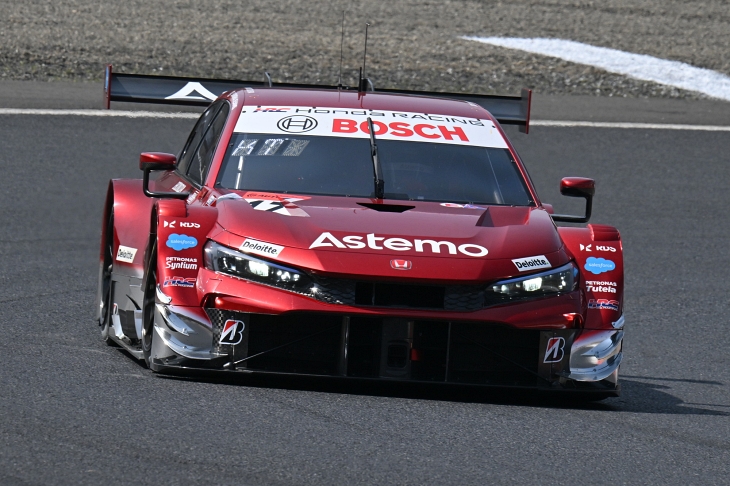
Astemo Real Racing performed well throughout 2023, but there’s a black mark on the team’s results that serves as a reminder of what could have been. Real Racing’s ace driver Koudai Tsukakoshi fought hard with ARTA’s Toshiki Oyu and won the duel at Sportsland Sugo, and would have won the race…only for the red and silver Honda to be disqualified for excessive skid block wear.
The points that Tsukakoshi and Nobuharu Matsushita lost that day were enough to be the difference in finishing sixth in the standings as they eventually did and finishing second, which they’d have done without the 20-point deduction. In the remaining seven races, this car never finished outside the top ten, and racked up two podiums – including the NSX-GT’s last podium at Motegi.
But team founder Katsutomo Kaneishi is still searching for the championship that has so far eluded his team for the last 17 years, the one he could never win as a driver in GT500. And that is a journey that is shared with Tsukakoshi – who, after the retirement of Yuji Tachikawa, is now the longest-tenured driver in GT500 with a single team as he begins his 16th full season at Real Racing. Together they’ve finished second in the standings in 2013, third in 2010 and in 2020.
Tsukakoshi, a master of wheel-to-wheel racing, will renew his quest with the only team he’s ever driven for – and he’ll do so with a new co-driver. Kakunoshin Ohta begins his second GT500 season with his second different team. Ohta now sits as one of the hottest young properties in the Honda camp after shaking off a frigid start to his top-flight career, complicated by an injury in testing last winter. He’s already got a podium to his name after his first season at Nakajima Racing and won the 2023 Super Formula finale at Suzuka to cap off an incredible second-half recovery.
Real Racing has also promoted data engineer Yu Kuwahara to the chief engineer position, replacing the tenured Yasuhiro Tasaka.
Some folks who follow SUPER GT have picked Real Racing to be the top Honda team this year and a dark horse challenger for the GT500 title. But after finishing in the top six of the standings every year for the past five years, can they be considered dark horses any more – instead of just contenders?
#64 – Modulo Nakajima Racing: Takuya Izawa / Riki Okusa (Dunlop)

Modulo Nakajima Racing is Dunlop’s only GT500 client. The advantages are, in theory, exclusive rights to confidential tyres. The disadvantage is a lack of other cars to use as reference points. It has been a struggle for Satoru Nakajima’s squad, which has only won one championship race in the last 16 years – and none since 2017.
As the sole Dunlop runner, Nakajima Racing is getting even more testing concessions – more than the two Yokohama runners – and will even get an extra set of tyres because Dunlop was the only brand that didn’t win in GT500 last year. Despite these concessions, the feeling is that it’ll be hard for this team to break out of the bottom of the table without some good fortune – and maybe a little rain.
Because as much as Dunlop has struggled at times to perform in GT500, they build one of the best wet-weather compounds for all cars in SUPER GT. It helped Takuya Izawa and Kakunoshin Ohta charge to third place at Fuji to save them from another wretched season spent completely in the doldrums. (Ironically, the team’s last win was in a dry race.)
Once again, veteran Takuya Izawa leads the way for Nakajima Racing. He’s now the oldest driver in the Honda stable, beginning his 16th full season and fifth with Nakajima Racing in SUPER GT. He’ll be a sentimental pick to do well this year, as a well-respected team leader whose technical feedback is indispensable, and whose work mentoring young drivers like Ohta and Hiroki Otsu during his stint has been commendable.
The next in the line of young drivers Izawa will work with is Riki Okusa, the surprise selection from Honda from out of the Nissan pipeline. Once upon a time, Okusa auditioned for the HRS Formula scholarship but lost out to current Honda/Red Bull prospect Ayumu Iwasa. He then took the path less travelled, through Super Taikyu and spot starts in Formula Regional, building his credentials and then arriving on the scene in GT300 two years ago. But it was a one-off Super Formula cameo that brought him into the Honda fold this year, and he’s keen to make the most of the opportunities he gets.
Thankfully, having Izawa in his corner will help, along with the racing legend Nakajima and engineer Yuki Kato – all of the personnel are in place for success, but any success hinges on the tyres. Nakajima Racing has raced in SUPER GT for 25 years now without a GT500 Championship and it’s unlikely that it’ll happen this year, but they will fight with all their strength to achieve what they can.
#100 – Team Kunimitsu: Naoki Yamamoto / Tadasuke Makino (Bridgestone)

There is one word that comes to mind for Team Kunimitsu in 2024: Relief. The relief that two-time GT500 Champion and ace driver Naoki Yamamoto has fully recovered from his horrifying accident at Sportsland Sugo in September.
Yamamoto’s high-speed barrel roll at the crest of the front stretch left him with a subluxated vertebra in his neck and damage to his spinal cord, which cost him the rest of the 2023 season. At times, he doubted if he’d ever race again. But his third-place finish at Suzuka Circuit in his Super Formula debut announced to the world that the 35-year-old from Utsunomiya is back – and as good as he’s ever been. This is his 15th season in SUPER GT, all of which has been exclusively as a Honda GT500 driver.
What’s more, Yamamoto also shouldered almost the entire load of Team Kunimitsu’s two official pre-season tests. Though out of necessity, as 2020 GT500 Champion Tadasuke Makino fell ill shortly after that same Super Formula race and missed both pre-season tests recuperating. But unlike his meningitis scare from 2021, Makino is now fit to start the season on time.
One of the GT500 teams that have been here since 1994, Team Kunimitsu is now ready to begin running on all cylinders after the promise of early season results fizzled out during the year – and ready once again to continue racing in the name of its legendary founder Kunimitsu Takahashi. Since his passing in 2022, Team Kunimitsu has been under the stewardship of Kazuhiro Kojima, who went from a background in promotion and graphic design to being the caretaker of the famous team. And he still designs all of the team’s liveries as he’s done since 1996!
Kojima designed what looks to be another slick ride in the silver and black Stanley Civic Type R-GT, but what’s most important is how it performs. Thankfully, Team Kunimitsu is also blessed with one of the strongest lineups – if not the strongest lineup – in the entire GT500 class. Both drivers have exceptional pace in all scenarios and are great at overtaking and defence, there is no weakness between them.
The team leans on Yamamoto’s knowledge and experience but critically, Makino is also turning into a well-rounded driver who is equally capable of leading a team if needed, on top of the prodigal talent he already possesses. Now that Team Kunimitsu is back to full strength, there’s no reason to believe that the Stanley Civic of Yamamoto and Makino won’t return to top form as well, so long as the Civic Type R-GT itself is up to the task.
Nissan
When Nissan revived the (Fairlady) Z, it became the basis of the company’s GT500 car in 2022. Last summer, the Nissan Z NISMO hit showrooms and inspired a redesign of that same GT500 car.
The Z NISMO GT500’s reprofiled fascia isn’t just for looks, but also for functionality and added downforce. It’s been effective throughout testing so far and should be as strong as it’s been the last two years.
Nissan’s GT500 efforts will now be led by its new executive director and Senior Vice President of Nissan Motorsport & Customising (NMC), Shinichi Kiga, who has succeeded Motohiro Matsumura in the role as of this month.
#3 – NISMO NDDP: Mitsunori Takaboshi / Atsushi Miyake (Bridgestone)
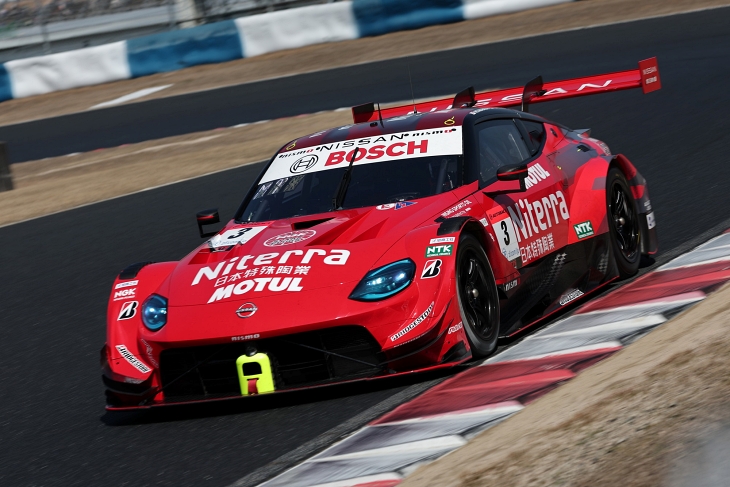
In all but name, NDDP Racing has been the second NISMO GT500 entry since it began racing in the category in 2018. That changes in 2024 with the addition of the NISMO name to the team, now known as NISMO NDDP.
The drivers of this car are younger, but there’s nothing “junior” about this team’s performance. For the past two years, the red and black #3 Nissan has competed for wins and championships with NDDP alumni Katsumasa Chiyo and Mitsunori Takaboshi behind the wheel. They got close last year, taking a win in the summer race at Fuji and three podiums. But the title eventually slipped out of reach at Motegi – even before the painful scene of Takaboshi going into the gravel during a late rain shower, which finished them off completely.
That ended up being Chiyo and Takaboshi’s last chance to win the title. The pairing has split, with Takaboshi staying at NDDP Racing and inheriting the number one driver role of the #3 car. Some would question his poise under pressure after the way last season ended for him, but Takaboshi is absolutely suited for the role of a lead driver with his outstanding speed and consistency. These skills were always within him – but didn’t often have a place to be showcased at the GT500 level until he joined the team two seasons ago.
Takaboshi will now have an even greater influence within the team in terms of steering the setup direction now that he’s paired with a first-year GT500 driver, Atsushi Miyake.
Miyake is a curious newcomer who has had dalliances with all three of the major Japanese automakers at one time or another in his career – but has signed with Nissan and NISMO to be a factory GT500 driver, turning down an intriguing offer to race in the FIA WEC this season to do so. Miyake was a GT300 race winner with Max Racing but suddenly found himself without a ride after the team folded last summer. Nissan and NISMO gave him a lifeline and he impressed enough during Nissan’s post-season GT500 auditions to go straight into the seat vacated by Chiyo.
NISMO NDDP looks as strong as ever despite the shake-up, which, just like its sister team, includes the switch to Bridgestone tyres. After two years of finishing as second best, can Takaboshi and Miyake go one better?
#23 – NISMO: Katsumasa Chiyo / Ronnie Quintarelli (Bridgestone)

NISMO has won more races and Drivers’ championships than any other GT500 team, a winning tradition that goes back to the first year of the All-Japan GT Championship (JGTC) in 1994. Much of that success has been associated with the flagship number 23 car.
For the past ten years, this was the car driven by Tsugio Matsuda and Ronnie Quintarelli, who formed one of, if not the greatest partnerships in GT500 history. Back-to-back series titles in 2014 and 2015 and 12 wins together – accolades that pushed both drivers into all-time record territory. But even this prosperous era for the NISMO team has come to an end – despite the 2023 season finishing as a pretty successful season, with a win at Okayama to start the season and three podiums to finish third in the standings.
Perhaps sparked by the impending switch to Bridgestone tyres, NISMO decided to make a change, bringing in Katsumasa Chiyo to the number 23 Motul Autech Z to drive with Quintarelli. Chiyo’s ascension to the #23 car was a long time in the making and is the reward for his role in guiding NDDP Racing to consecutive championship runner-up finishes. From that day in Bathurst where he became a household name among sports car racing fanatics around the world, everyone has known Chiyo as a fearsome, tenacious competitor. It just took more time for him to achieve that in GT500 than people expected when he debuted in 2016 – and it almost didn’t happen at all.
But now he has the GT500 victories and success to match his reputation – all Chiyo’s missing now is the championship that has twice eluded him. When it comes to winning championships in SUPER GT, though, no one is better than “Ronnie Quattro”, the only four-time GT500 Champion in history. Quintarelli is still as quick as ever even at age 44, and the expectations are still high that he can win a fifth title at NISMO. He’s the only one of the NISMO drivers across both cars that has raced on Bridgestones before – but it was back in 2010.
The driver line-up and the tyres aren’t the only changes made this year either. Takeshi Nakajima has been the team’s lead engineer for over a decade but has also had to shoulder the responsibility of being the team director after the passing of Yutaka Suzuki in 2021. This year, Nakajima has appointed his successor, new chief engineer Ken Kobori – while Nakajima continues as the team boss.
The #23 Motul Z logged more miles than any other GT500 car across both official pre-season tests and did so with some quick times in all conditions. NISMO has the experience, the resources, and the talent to rise to the top of GT500 once again, and rightfully enters the season as a title favourite.
#12 – Team Impul: Kazuki Hiramine / Bertrand Baguette (Bridgestone)
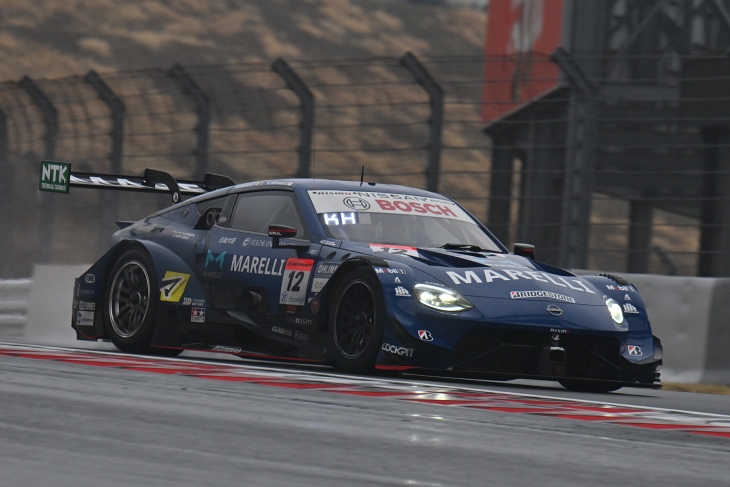
Do not adjust your screens, because for the first time in over 35 years of racing, the Impul Nissan wears a different shade of blue – and that will take a lot to get used to for many SUPER GT fans around the world. A lot has changed at Team Impul over the last few years. Calsonic Kansei became Marelli, and the legendary Kazuyoshi Hoshino passed the title of team director down to his son Kazuki.
After winning the team’s first GT500 Championship in 27 years, Team Impul tried to defend its championship and had a decent season – but while they were consistently able to pick up points in almost every round, Kazuki Hiramine and Bertrand Baguette had just one podium finish, and it wasn’t enough to hold on to the coveted number one plate.
Qualifying has been the team’s weak point recently and while they overcame it in 2022, it was more of a hindrance in 2023. They’re hoping that having both drivers get a chance to qualify with the new aggregate system will rectify these issues – because the race pace for both drivers is very good.
Hiramine’s ascension to champion after being out of racing completely about a decade ago is one of the best stories in recent GT500 history, and Baguette has now become a tenured foreign driver. In the mould of Kazuyoshi Hoshino, both drivers are rapid and aggressive, encouraged to attack, fight and give maximum effort. They’ve built a strong chemistry together – in a year where every other Nissan line-up has changed, that could be a difference maker for Impul.
In addition, Impul has also been running Bridgestone tyres since the 1994 season – and that gives them an advantage over the NISMO team which is just going back to Bridgestones after more than a decade with Michelin.
After finishing fifth in the standings last year, Team Impul should be a force to be reckoned with once more thanks to the stability within the driver line-up and the tyres.
#24 – Kondo Racing: Tsugio Matsuda / Teppei Natori (Yokohama)
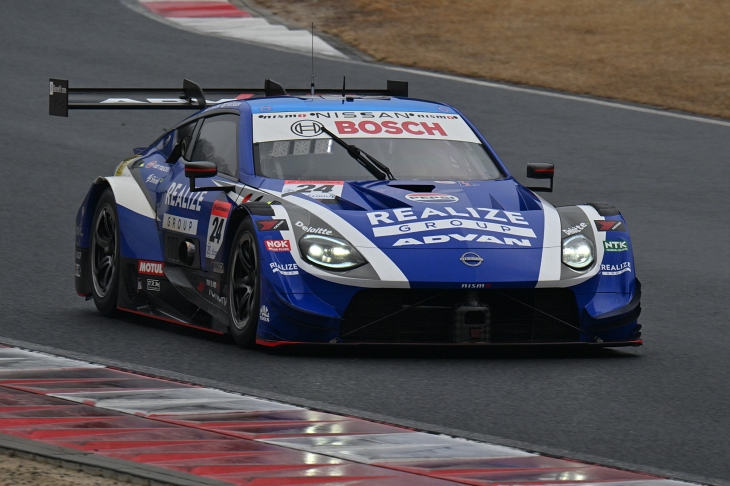
Masahiko Kondo’s team finished at the bottom of the GT500 table last season with just one top-five finish and a golden opportunity to win the Fuji summer race that vanished just as quickly as the team won the pole position.
In the offseason, Nissan made the difficult decision to replace both Daiki Sasaki and two-time GT500 Champion Kohei Hirate in its GT500 fleet, and Kondo Racing now has two new drivers to help get them out of the basement. You can’t get a much bigger contrast of experience than the new combination of Tsugio Matsuda, who is entering his 25th season as a GT500 driver, and Teppei Natori, a GT500 rookie who was born one day after Matsuda’s first SUPER GT race!
Matsuda’s 24 wins are the most of any driver in SUPER GT history, in either category and especially in GT500. He’s the oldest GT500 driver on the grid, turning 45 later in the year, and he’s still capable of vintage performances. Matsuda’s experience and feedback coming over from NISMO should be a benefit and help Kondo Racing turn its struggling GT500 programme around – and he does have some prior experience with this team in other categories. He didn’t seem phased by his awful blowover crash at Suzuka in June either.
Natori was a clever addition to the Nissan talent roster in 2022, and it stabilised his career. After a winning season with Kondo Racing’s more successful GT300 team, he now moves up to the GT500 side where he’ll be tested against the best drivers in the series. He’s a work in progress, but he does have a solid pedigree of success dating back to his days in single-seaters as a Honda prospect and is capable of doing the same here.
Kondo Racing will also hope to benefit from the extra testing concessions afforded to it as a loyal Yokohama Advan runner this year, to break a painful eight-year winless drought – the longest of all GT500 teams entering the 2024 season.
Images © GTA, Team Kunimitsu