Longtime Nissan factory driver Kenji Tohira died Thursday at the age of 83, after a lengthy illness.
A statement from his manager Takumi Ishida reads: “Tohira had been undergoing medical treatment for some time, and passed away on 25 April 2024. We would like to take this opportunity to express our deepest gratitude for your kindness and friendship during his lifetime, and to extend our sincere condolences to his family and friends.”
Tohira’s professional racing career began on two wheels, riding in motocross as early as 1962. By 1964, he’d joined the prestigious Jyohoku Riders team and won his first title in the Motorcycle Club Federation of All-Japan (MCFAJ). Tohira began his four-wheel racing career in 1965 at the wheel of a Datsun Bluebird, and while he remained active on cars and bikes for a few years, car racing became his primary focus after signing with the Nissan Omori Works team.

Not long after taking his first win in November 1967, Tohira quickly established himself as a force in the national touring car and sports car racing circuit. He won the Clubman GT support race on the morning of the 1968 Japan Grand Prix in a Fairlady 2000. This was followed by a promotion to Nissan’s premier Oppama Works team in 1969.
Tohira got his biggest break in that year’s Japan Grand Prix at Fuji Speedway when he was tapped to drive Nissan’s V12-powered R382 Group 7 prototype. Tohira teamed with Kunimitsu Takahashi in the blue #23 Nissan R382, the car that won the pole for the 720km Grand Prix – but finished tenth after mechanical problems took them out of contention for the victory.

Also in 1969, Tohira helped establish the new Nissan Skyline 2000 GT-R’s racing legacy when he took three wins and the All-Japan Drivers’ Championship in the Touring Car II category.
His prowess transferred perfectly to the world of endurance racing. Tohira and Takahashi reunited for the 1970 Suzuka 12-Hour Race and drove their Skyline 2000 GT-R to second place overall and the T-II class win, finishing just a lap behind the winning Nitra AC7 prototype of Hiroshi Tanaka and Keizo Yabuki.
Three years later, Tohira joined Takahashi once again at the wheel of a Nissan Fairlady 240ZG, taking two noteworthy results: Fourth overall in that year’s Kyalami 9 Hour Race, and the overall victory in the Suzuka 1000km, the last running of the event before the onset of the oil shock.

Tohira was certainly qualified to compete at the highest levels of Japanese motorsport – his three seasons in the Fuji Grand Champion Series from 1974 to 1976, a 1978 campaign in Formula Pacific, and cameo appearances in the All-Japan F2000 Championship were a testament to that – but he seemed to shine the brightest just off of the main stage during the ’70s and ’80s.
He was a force in the Fuji Minor Touring circuit that accompanied the Grand Champion Series, driving his Nissan Sunny touring cars to wins in 21 races and three championships in 1980, 1984, and 1986. He then went on to the Japan Supersport Sedan series and collected 16 wins and four championships (1985, 1988-1990). Many of these wins were with his own team, Limit Motor Sports, which Tohira founded in 1981.

But Tohira was always capable of competing at the biggest stages when called upon by Nissan. In 1983, Tohira drove the new Nissan Skyline Turbo C, the company’s first Group C prototype, alongside fellow Nissan legend Masahiro Hasemi. It was a brutal 1983 season across the All-Japan Endurance Championship and Fuji Long Distance Series, in which the car failed to complete a race.

The revised LM 04C in 1984 fared slightly better, managing to at least finish fourth in the All-Japan Fuji 1000km and 17th in the WEC-Japan Fuji 1000km. Two years later, Tohira drove for the privateer Renoma Alpha Cubic Racing Team in their Porsche 956 and took two more podiums at the Fuji 500 Mile and Suzuka 1000km rounds.
He ran the first five seasons in the new All-Japan Touring Car Championship (JTC) from 1985 to 1989, where he was the first winner in Division III (later JTC-1) at Sportsland Sugo, driving a Nissan Skyline RS-X Turbo 2000. Tohira and the late, great Akira Hagiwara finished the season second in the Division III standings. He’d go on to collect another four podiums in the heavyweight division, in the R30 and R31 Skylines.

In 1990, Tohira had the honour of competing in the 24 Hours of Spa-Francorchamps, driving one of the two new R32 Nissan Skyline GT-Rs entered by the Zexel-sponsored factory team alongside Takayuki Kinoshita and Dick Schoysman, who finished 13th overall and third in class. It was the last major race for Tohira outside Japan, after making one-off appearances in Singapore, Malaysia, South Africa, Macau, and Thailand throughout his career.
Even in his 50s, Tohira continued to win races as he established himself as one of the top drivers in the N1 Endurance Series – known today as the Super Taikyu Series. Tohira and co-driver Hiroyuki Kawai won the 1994 Class 1 championship in their Wise Sports Skyline GT-R, with three wins and podiums in all eight rounds.
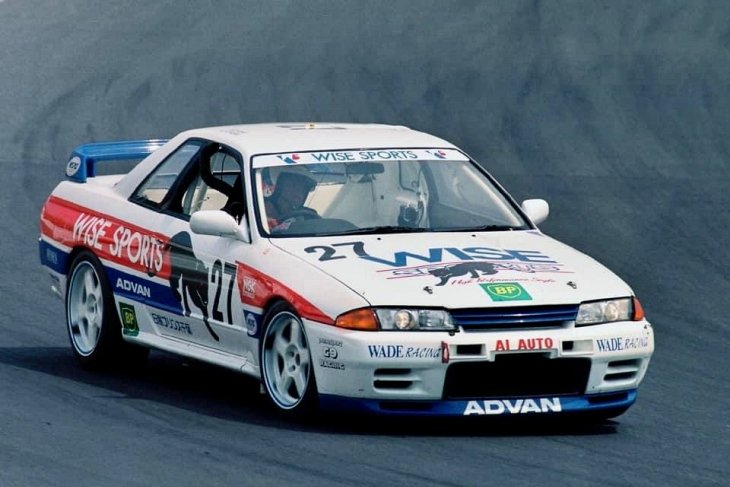
Tohira’s final professional win came at the 1995 N1 opening round at Miné – where Tohira, Kawai, and Hiroaki Suga defeated a fleet of six brand-new R33 Skyline GT-Rs and drove their R32 to the overall win.

He spent the final seasons of his career racing in N1 and in the All-Japan Grand Touring Car Championship (JGTC) from 1995-1996, driving a GT500 Nissan Skyline GT-R for Wise Sports in the series that we now know as the SUPER GT Series. He retired from driving after the 1996 season at the age of 55.
Tohira was inducted into the Motor Sport Japan Legend Racing Drivers’ Club in its inaugural class of 2013, and made several appearances at the annual NISMO Festival at Fuji Speedway.
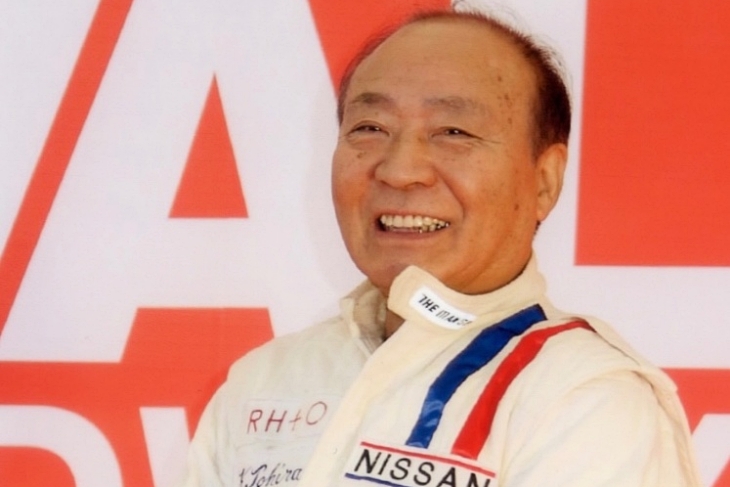
A well-respected driver within the Japanese racing community, Tohira will be missed dearly. DSC would like to extend our sympathies to Tohira’s family, friends, and colleagues.
Images courtesy of Nissan and Kenji Tohira Official Website