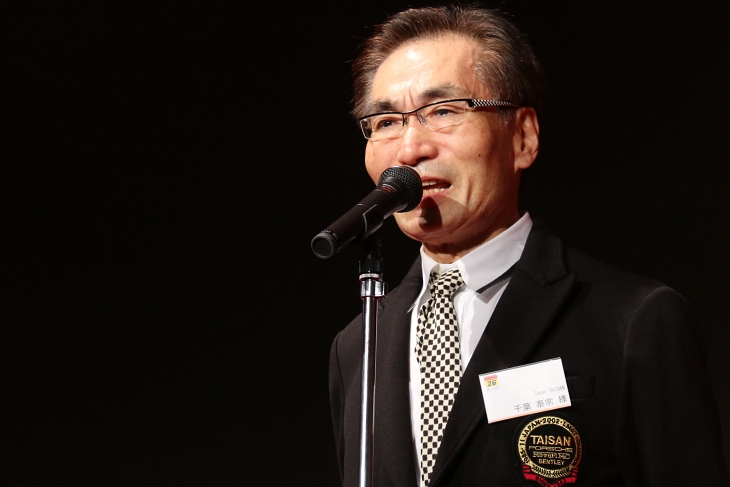
Yasutsune “Ricky” Chiba, the founder and owner of Team Taisan who grew the team into one of Japan’s most successful privateer racing sports car racing organisations, died this past Friday at the age of 79.
Warmly regarded by several former drivers and staff, as well as those in the Japanese racing media, Chiba led Team Taisan to multiple championships and significant race victories, from its inception in 1983, through the rest of the ’80s – and into the ’90s and the 21st century.
Born on 3 April 1945 in Tokyo, Chiba’s love of motor racing began as a young adult – when he worked as a security guard at Fuji Speedway, patrolling the passageway from the entrance tunnel to the garages. He rarely got to watch the races unfolding around him and his work then was often thankless. But at least one familiar face around the circuit always took time to talk on his way in and out of the circuit: The legendary Kunimitsu Takahashi, who had established himself as one of Japan’s greatest racing drivers through the ’60s and ’70s.
In time, Chiba became the second-generation president of Taisan Industrial, the solenoid pump manufacturer whose name would be bestowed to the racing team – as Chiba attended races across Japan, America, and in Europe while promoting his primary business.
The chance to run his own team came in 1983 when Team Taisan as we know it was formed. With the backing of Yokohama Rubber, Chiba rented a Porsche 956 and signed none other than his hero Kunimitsu Takahashi to drive as part of a one-off effort in the WEC-Japan Fuji 1000 Kilometres.
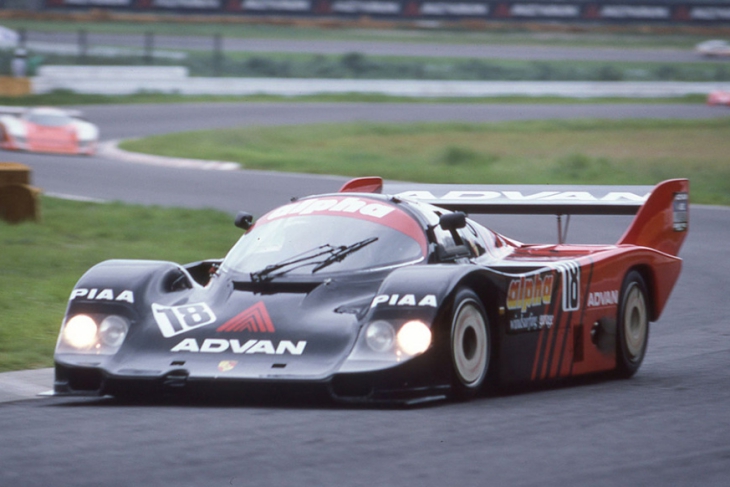
Chiba then bought a 956 of his own the following year, operated by master garage Nova Engineering – and began a dynasty in the All-Japan Endurance/Sports Prototype Championship (JSPC). Kunimitsu Takahashi won three consecutive JSPC titles in the black and red Advan Nova Porsche 956 from 1985 to 1987; he then won a fourth title in 1989 with the newer Porsche 962C.
It was in the late ’80s that Chiba’s racing footprint began to grow, first to touring cars – where Team Taisan won the 1989 All-Japan Touring Car Championship (JTC) Class 2 title via Kenji Takahashi (no relation) in a BMW M3. Team Taisan also ran an R32 Nissan Skyline GT-R for Kunimitsu Takahashi, and Keiichi Tsuchiya, who – like Chiba – also looked up to Kuni-san as his racing hero.

Most of Chiba’s career as the owner of Team Taisan was spent in the All-Japan Grand Touring Car Championship (JGTC), known today as the SUPER GT Series. From the inaugural season in 1994 to 2018 (interrupted only by a one-year hiatus to assess the changing GT3 marketplace in 2015) Team Taisan and Chiba were ever-present in the SUPER GT paddock, with success in both GT500 and GT300 classes.
Admittedly most of the success came in GT300 – Team Taisan won a class-record 24 championship races, four GT300 Drivers’ Championships (1996, 1998, 2000, 2012) and seven Teams’ Championships (’96, ’98, ’00-’03, ’12) primarily – but not exclusively – using different versions of the Porsche 911. Ironically the best of those seasons was run with a Toyota MR2 in partnership with Tsuchiya Engineering, with which Keiichi Suzuki and Shingo Tachi won a record five races in 1998.

But Team Taisan also had a successful run in JGTC’s top division in the early years. Whether it was the Porsche 962C brought over from the JSPC years, or the iconic race-modified Ferrari F40, or a trio of Porsche 911 GT2s, Team Taisan had a strong track record in GT500 that included five wins from 1994 to 1995, and the 1995 GT500 Teams’ Championship – the only one to be claimed by a privateer team. Chiba later introduced Japan to the V10-powered Dodge (Chrysler) Viper GTS-R as its GT500 entrant from 1997-2000.
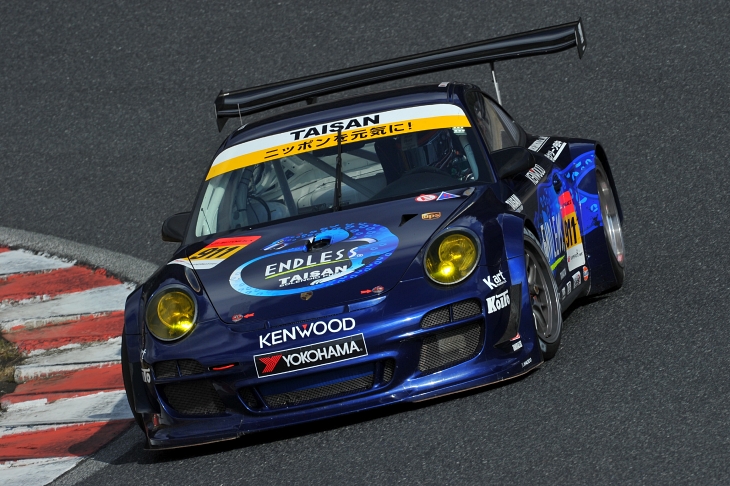
In total, Team Taisan represented seven different manufacturers in JGTC/SUPER GT – Porsche, Ferrari, BMW, Toyota, Chrysler/Dodge, Nissan, and at the end, Audi.
Nearly two decades after Chiba was taking bus tours at Le Mans as a spectator, Team Taisan’s record of success at home afforded Chiba the opportunity to participate in the big race for the first time in 2000 with the Advan-sponsored #73 Porsche 911 GT3 R – and it was an opportunity that he and his team did not let go to waste.
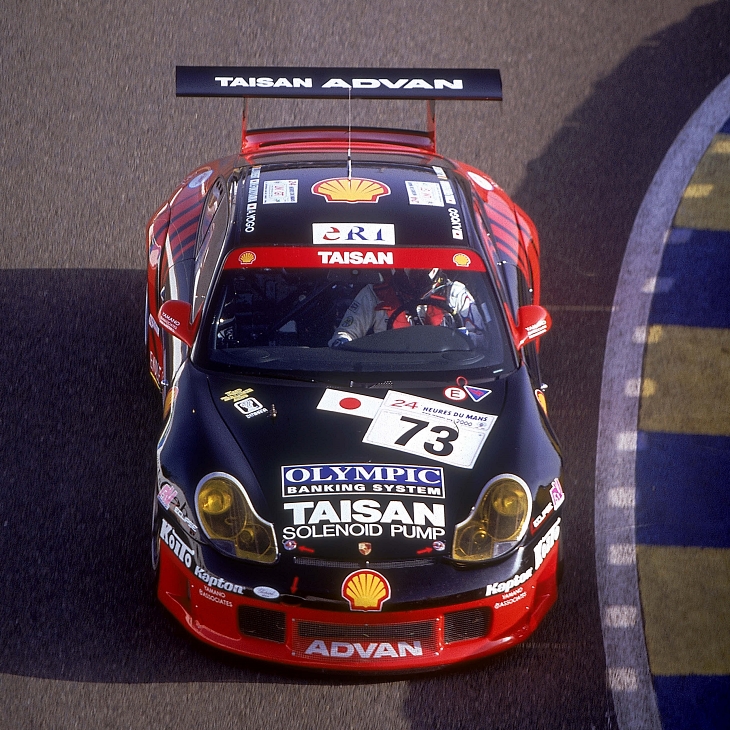
Thanks to the disqualification of the #83 Dick Barbour Racing Porsche for an oversized fuel tank, Hideo Fukuyama’s last-lap pass on Fabio Babini for what was originally second place ended up being the LM GT class’ winning overtake for Team Taisan, and the trio of Fukuyama, Atsushi Yogo, and Bruno Lambert.
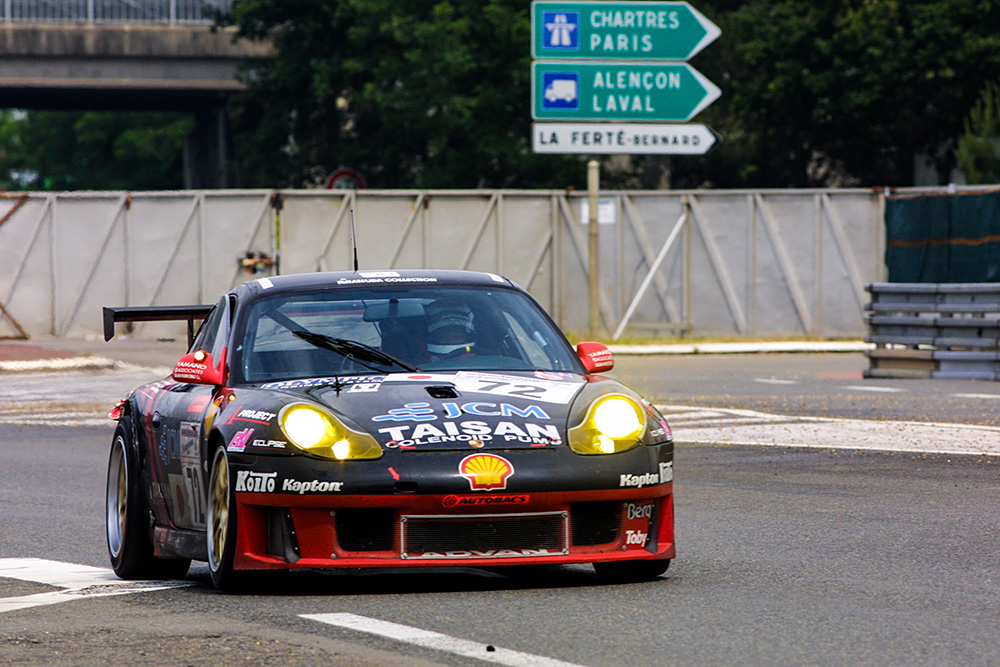
Chiba’s team returned to Le Mans in 2001, 2002, 2003, and 2006 with Porsche 911 GT3s, finishing third in LM GT in ’02 – in fact, Team Taisan never finished lower than fifth in its class during those years.
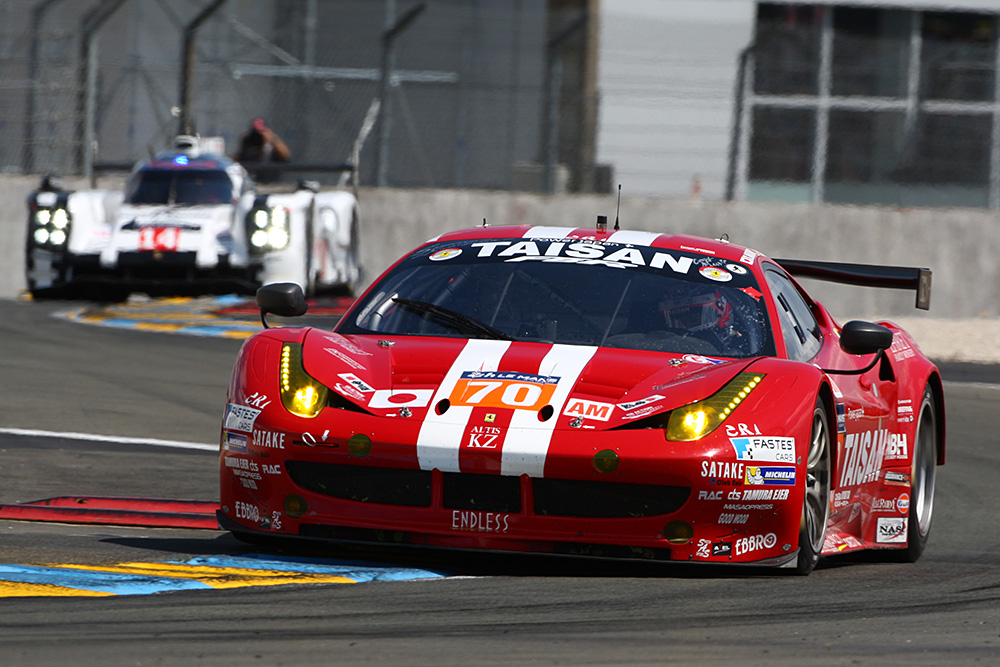
Team Taisan’s last Le Mans entry came in 2014 with a Ferrari 458 Italia GT2, promoted from the reserve list as the reigning Asian Le Mans Series GTE Champions.
Though Chiba withdrew from the highest levels of petrol-fuelled sports car racing after 2018, Team Taisan never stopped competing. Expanding on Chiba’s early investment in the potential of electric vehicles in motorsport, which began some 20 years ago, Team Taisan has been the dominant force in the All-Japan EV Grand Prix (JEVRA), winning championships in six of the last seven years and running Team Taisan’s total win count across all categories of motorsport to 126.
They’ve also run in the K4GP Series, the endurance series for modified Kei cars, many of which feature hand-built bodies styled in the image of iconic racing cars. It’s only fitting that Team Taisan has raced with vehicles modified to resemble their own Porsche 956 and Ferrari F40 from yesteryear.

“Ricky” was a genuine enthusiast for the sport, a man who treated his employees as if they were family and continued to show enthusiasm and excitement for the future of his team and motor racing as a whole – even in his final days.
On behalf of the entire DSC team, we would like to send our heartfelt condolences to Chiba’s family, and to every member and supporter of Team Taisan, past and present.
Feature image courtesy of J Sports