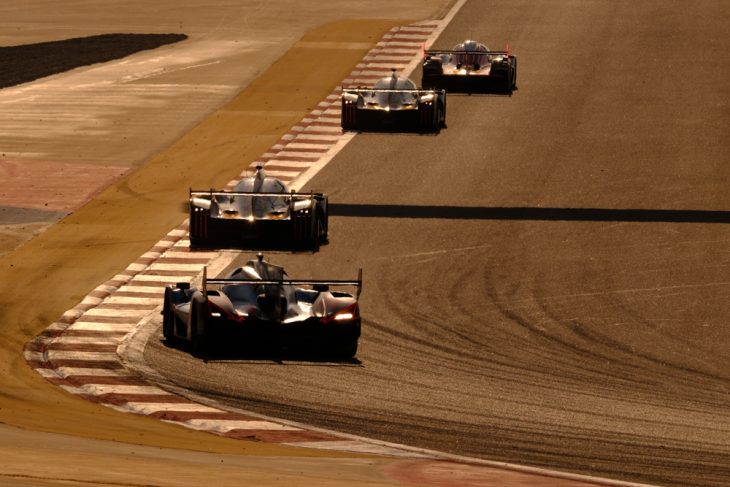
Upon arriving in Bahrain for the 2024 FIA WEC finale back in November, DSC caught wind of an ongoing debate in the background between the FIA, ACO, IMSA and the crop of top class manufacturers concerning car updates and the use of performance-related evo ‘Jokers’.
It appears that there is a movement towards tightening the regulations to restrict the introduction of ‘Jokers’ mid-season in the FIA WEC and IMSA, in order to aid the BoP process and in turn, curb the arms race which has been gradually escalating over the past 12 months.
But a number of questions remain as we move through the off-season. What will the current discussions lead to, when might the new rules/agreements come into play and will they achieve their overarching aims?
DSC has been making polite enquiries to the FIA, IMSA and a number of manufacturers and suppliers over the past two months to find out more before we get into the weeds of 2025. It’s a debate which appeared to be relatively simple at first glance, but after further investigation, is both complex and nuanced.
So what do we know? In recent technical working group meetings, a proposal was understood to have been made to ban mid-season performance updates to both LMH and LMDh-spec cars. This is a ban that DSC was told by a paddock source in Bahrain had always been in place in IMSA via a collective agreement between the LMDh manufacturers, but is not written into the rules.
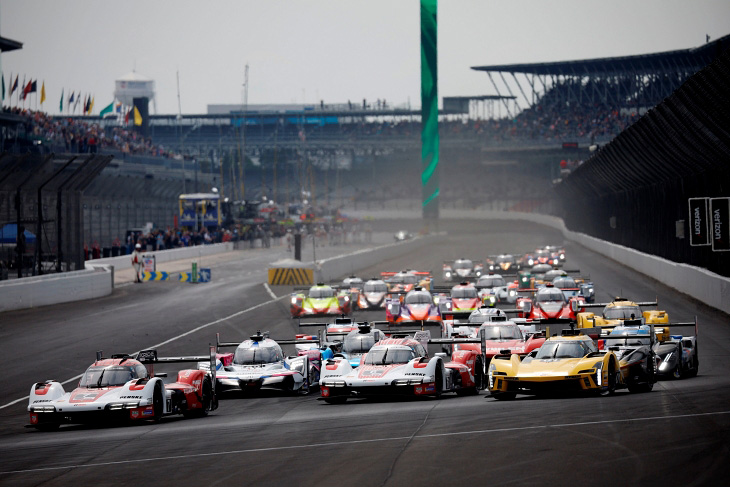
On this matter, an IMSA spokesperson has since confirmed to DSC that talks are ongoing regarding convergence rules and specifically clarified that there is no agreement between IMSA and the GTP-entered OEMs to hold off on mid-season updates.
“We can clarify that there is no gentleman’s agreement between IMSA and the GTP manufacturers regarding mid-season performance updates,” they said. “All requests continue to be considered on a case-by-case basis, judged on the merit and timing of the manufacturer submission. Matters surrounding convergence topics are currently being discussed in LMDh/LMH manufacturer & ACO-FIA-IMSA technical working groups, per normal process.
“IMSA’s continued objective is to ensure current and future regulation fully supports the ongoing global success of sports car racing, for stakeholders and fans alike.”
In simple terms, a change to the rules prohibiting mid-season updates would aid the Balance of Performance processes that the FIA, ACO and IMSA employ to govern their top classes. It would also give the rule-makers stability across the cars racing in the Hypercar and GTP categories and reduce the challenges that come with levelling the playing field with a fleet of cars evolving at different speeds.
It may help reduce the level of spending somewhat too, allowing manufacturers to plan longer in advance with greater clarity and prepare updates for their cars to coincide with a defined window.
As it stands, the process surrounding evolutions for top-class prototypes is fluid. There are no hard rules that specify when you can and when you cannot develop, test and sign off updates. There are no black-and-white rules on what counts as a Joker and what doesn’t either, as “it can be anything on the car”. Thus, it all comes down to debates with the rule makers and the logistical challenges associated with the packed racing schedule.
There are, however, some guidelines in place. Want to bring in a major update for the Le Mans 24 Hours? You’ll be told to have it ready two races prior. What about the Rolex 24? Having it ready in time for the Sanctioned Test in November is necessary. Beyond that though, it’s all done on a case-by-case basis.
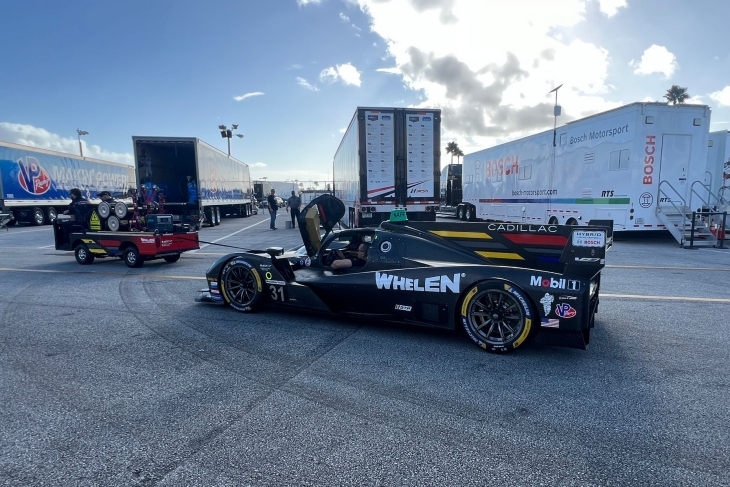
For instance, the manufacturers that have brought significant updates to their cars over the past two years – Toyota, Porsche, Ferrari and Peugeot – have all had to factor in time for simulation work, track testing, discussions with the rule-makers, filing paperwork, wind tunnel testing at Sauber and/or Windshear and supply chain constraints. Trying to navigate all of these phases is extremely tricky.
One interesting example of the challenges that mid-season upgrades pose is Porsche’s planned change to the 963’s crankshaft. It was explored, pitched and developed to be a reliability-focused update before being scrapped.
To negate the impact of the vibration issues which the current flat-plane crank caused for the 963, the German manufacturer developed a 90-degree one. This was not a cheap exercise and required a lot of planning.
In Porsche’s case, it also needed to ensure it could develop the update to an agreed schedule and produce kits for both its factory cars in the FIA WEC and IMSA, and its customer cars run by JDC-Miller, Proton and JOTA. It needed to prove to the FIA, ACO and IMSA that this change was being made to improve the car’s reliability and not its performance levels with data too.

As it happened, updates that Bosch made during the 2023 off-season to its off-the-shelf LMDh Hybrid system significantly reduced the aforementioned vibration issues Porsche was looking to solve. This eventually led to it shelving its update plans after the 2024 Le Mans 24 Hours.
“It’s (about saving) tokens but to be really honest, it’s even more the money. If we would have to change the crankshaft for a good reason it will cost us a lot of money because we will have to update the customer cars (at the same time) as well,” Urs Kuratle, the head of LMDh racing at Porsche, told DSC at the time.
Now, with more time to think, Porsche is working on updating another area: its suspension, which it plans to introduce in time for the 2025 Rolex 24 Hours at Daytona this month. This will be the car’s second evo ‘Joker’, as the updates introduced at the start of the 2024 season counted as its first.
Thus, with restrictions on updates potentially coming into play, it has acted fast to ensure the 963 is ready for both the FIA WEC and IMSA seasons.
This is a microcosm of what’s going on across the Hypercar and GTP ranks. Every manufacturer involved is constantly evaluating updates and making the case to their boards for budget, all while trying to work out when it’s feasible to test, develop and sign off each one of its limited set of ‘Jokers’.
Some, like Porsche, Toyota, Ferrari and Peugeot have been keen to keep pushing the envelope, others, like Acura, BMW and Cadillac, have generally adopted a more cautious approach.
In theory, with Balance of Performance governing the category, there should be no need to bring regular performance updates to cars anyway, unless your case is extreme, such as Peugeot, which updated its 9X8 during the 2024 campaign to address major flaws. This, at its core, has been a key draw for the manufacturers who have signed up en masse to the current formula. The promise that costs would not spiral out of control was and still is a major contributing factor to the bumper grids we see today.
Right now though, beyond Porsche, a number of the other manufacturers are making moves behind the scenes.
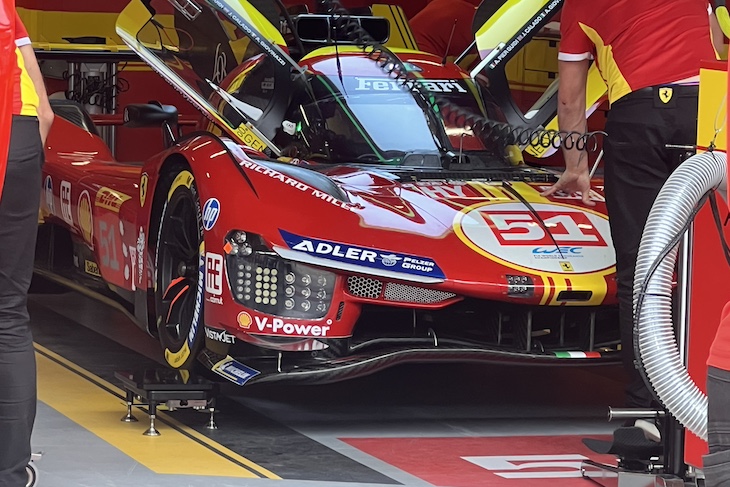
Ferrari is working on a second update for the 499P after its brake cooling change post-Le Mans. Peugeot has been out testing another significant update for the 9X8. Alpine is looking to improve the reliability of its Mecachrome-based engine. Cadillac has played its first Joker by implementing an update to its control system electronics package. BMW has tested new parts for the M Hybrid V8. And Toyota is currently busy planning to transition to hydrogen at the end of the decade, which will include an outline roadmap to the endgame for the GR010 HYBRID.
But with additional factories on the horizon, the FIA, ACO and IMSA are keen for everyone to take a step back. They feel that the shift to a more structured update cycle, which would see manufacturers handed a single window to bring performance updates rather than multiple across the year, would benefit everyone.
However, it appears that there is no concrete plan or deadline for a final decision on this subject just yet. At the time of writing it’s still under (“deep”) discussion, and it’s still too early for anyone, including the FIA, ACO and IMSA, to comment on publicly with firm details.
Multiple sources have told DSC that an official regulatory amendment may not even need to be made anyway for the WEC. Instead, it could all just amount to a “Gentlemen’s agreement”. This is in part because, philosophically, the two governing bodies see things slightly differently when it comes to BoP, upgrades, homologation and technical regulations for their platforms.
An example of where the complexities and nuances lie came in a conversation with a manufacturer source before the race in Bahrain. They told DSC their understanding was that only aerodynamic updates would be off-limits for teams after the 2025 season starts, everything else would still be allowed. This is in part because of the complications associated with the transition to a single wind tunnel for LMDh and LMH homologation at Windshear in North Carolina for 2026.
The wind tunnel factor is key here. At present, cars racing in both IMSA and the FIA WEC are homologated after being put through both the Sauber and Windshear tunnels. While each car has a single, unique homologation, LMDh cars have slight deviations in bodywork when racing in the WEC and IMSA, due to differences in the homologation process between the two tunnels.
This will change in 2026 though, when the Sauber tunnel will no longer be used. DSC’s source above added that they feel the transition would likely lead to “all the planned aero updates from manufacturers being made in time for 2026.”
Crucially, this would still mean that manufacturers could still introduce updates on the grounds of safety and reliability and for components under the bodywork mid-season.
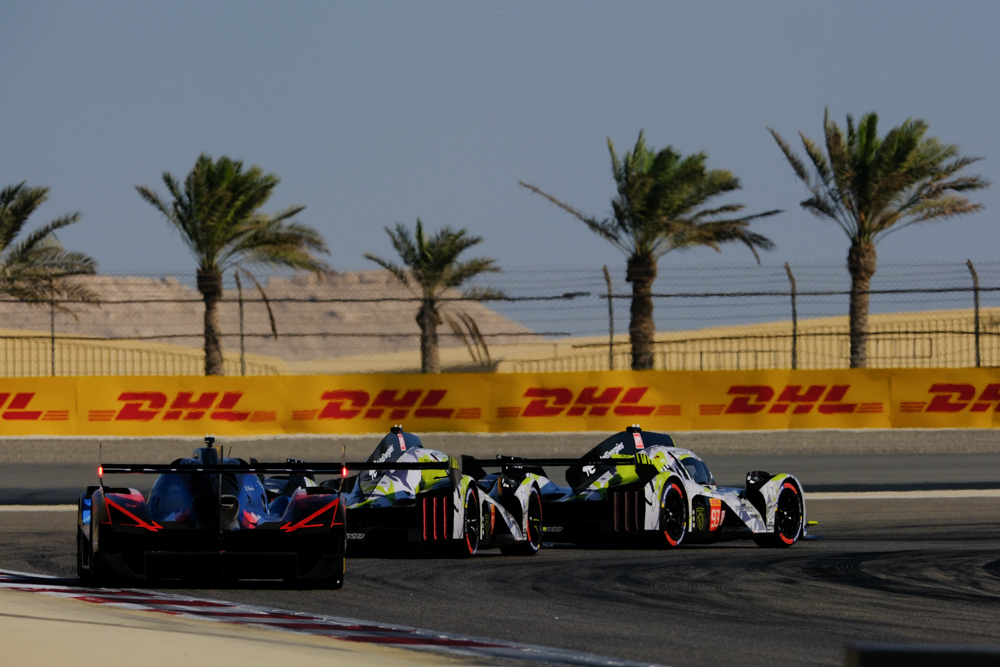
“I think the way it will play out, is that you will be able to bring in software updates as usual, plus any changes to solve any major reliability issues with your car. I think if you find your car’s rear wing keeps falling off at 200 miles per hour, they’ll let you bring an updated one! It’s just significant aerodynamic updates that will be frozen,” the source explained.
The expectation is that this year we will see Peugeot, Porsche, Cadillac, BMW and Alpine bring updates, signed off in time for the season openers – the Rolex 24 Hours and Qatar 1812km. Ferrari, meanwhile, has made it clear that it plans to start the 2025 season with the current-spec 499P and is unlikely to play any further ‘Jokers’ until 2026 in light of this ongoing debate.
So, a lot more is up for discussion it seems, as the FIA, ACO and IMSA move to make a calculated decision in this area. What it will look like in practice is not yet clear. What’s most important (and encouraging) though, is that this discussion is taking place at all.
As this ‘Golden era’ continues and we edge closer to the end of the current rule cycle in 2029, the priority will need to shift from building grids to sustaining them. Having debates as a collective on subjects such as this one seems entirely sensible, as it can help ensure that top-level sportscar racing remains competitive, affordable and sustainable for years to come.