As the cars in the Hypercar category continue to mature year on year in the FIA WEC and the rate of new manufacturers arriving slows down, we are beginning to see the factory teams get creative in pursuit of podiums, race wins and of course, titles.
Looking at the entry list in the top class for 2025, one element stands out. Beyond the addition of Aston Martin’s Valkyries, Lamborghini’s exit and Cadillac’s expansion with JOTA, there’s been a suite of driver line-up changes up and down the field.
Some have stepped away, and others have shifted teams or cars within the same team. Factories are also beginning to experiment with smaller, two-driver crews for the full season, exploring the potential performance benefits that consolidating your roster can bring.
Just two factories head into the 2025 season with identical full-season driver line-ups, Toyota and Ferrari. Both hope it’s a strategy that will have paid dividends by the time we reach the annual end-of-season FIA WEC Awards Ceremony on the beach in Bahrain.
At Ferrari, the aims are clear for the new season: win Le Mans for a third straight year and put together a title-winning campaign across the two cars. Through 2023 and 2024, speed has been there, what’s been missing is consistency and standout results outside of Le Mans for the factory 499Ps.
The car has just one win in one of the WEC’s shorter races, and that came at Lone Star Le Mans with the third car run by AF Corse (below). By Ferrari’s lofty standards, that’s not good enough. Thus, tireless work has been ongoing behind the scenes at Maranello ahead of the Prancing Horse’s third year in the WEC’s top class.
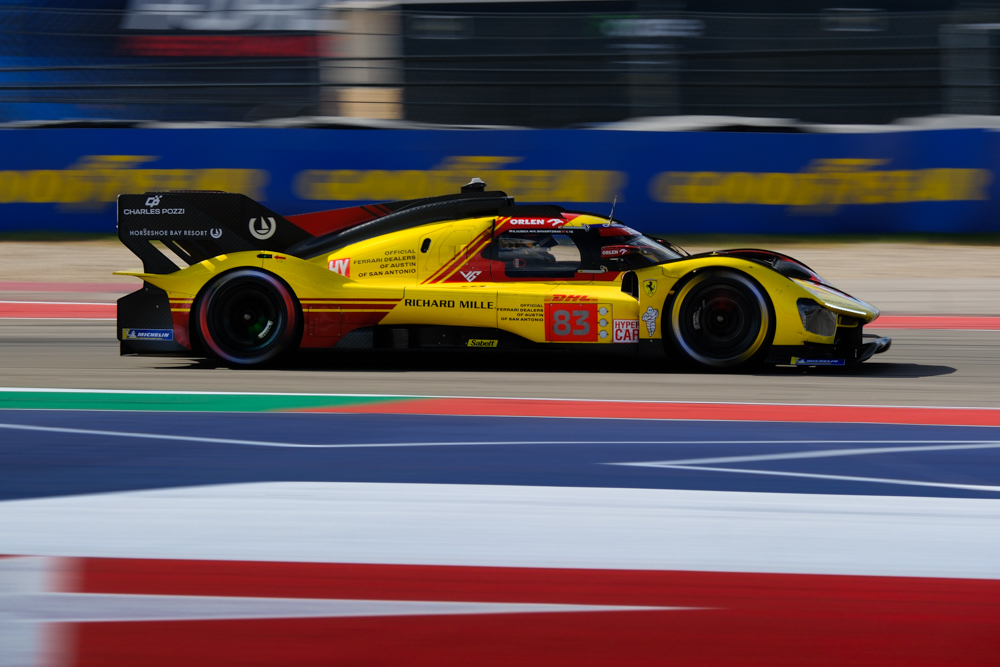
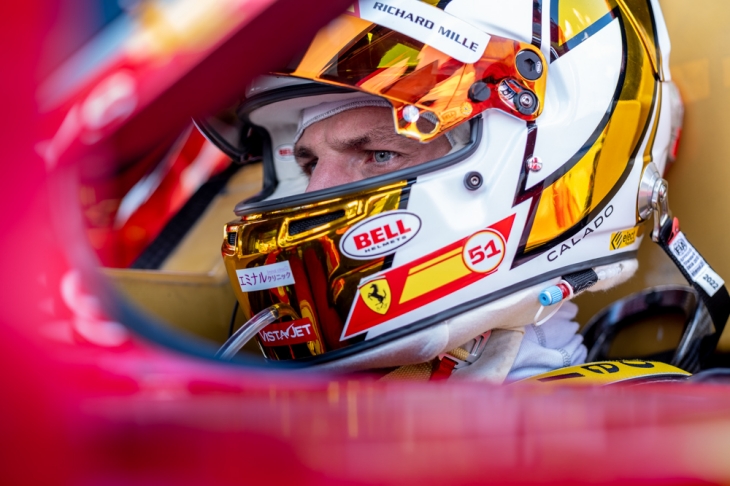
Nevertheless, James Calado, who shares the #51 499P with Alessandro Pier Guidi and Antonio Giovinazzi, feels Ferrari has made the right decision when it comes to its driver strategy. Rather than shuffle the pack, bring in new faces or trim its full-season line-ups, it has remained loyal to the drivers that have delivered two of the brand’s biggest sporting results this century over the past two seasons.
Perhaps that shouldn’t come as a surprise but look at Porsche: both Dane Cameron and Andre Lotterer lost their drives last year after winning titles. With the margins at the top so fine, it’s becoming a cut-throat business.
“I want to stay with what we have for the whole season,” Calado told DSC, “I wouldn’t want anything different, I wouldn’t want someone to miss out and then come back in, and have things change. You’re a team at the end of the day, so for me, it makes sense that we all stay together for the whole year.”
There are pros and cons. A clear plus to cutting down the driver line-up for the shorter races (beyond the obvious cost-saving element!) is an individual increase in track time and, perhaps, less compromise on car set-up.
However, physically, it’s tougher behind the wheel without a third pair of hands – particularly in more challenging climates – and there are occasions where strategically, having two drivers can be a disadvantage.

It’s also worth noting that there is a significant level of concern in the WEC paddock amongst drivers that the driver market will become significantly more volatile than it already is if more factories begin to experiment further in this area.
“Maybe on track time it helps a little bit, but it depends on the driver,” Calado added when asked about the benefits of a smaller line-up.
“Some drivers like to build up and take a long time to get up to speed, others are on it straight away. We’ve got simulators we can use all the time though, so for me doing it two drivers is quite tough. I think Antonello (Coletta) is happy with three, and we are.
“And keeping the same teammates is important too. I have been with Ale (Pier Guidi) for so long (since 2018) and with Giovi (Antonio Giovinazzi) now too, it would be tough to split me and Ale up, that’s for sure!
“In terms of results last year, what you see on paper, it’s not good,” he continued. “But we were super strong, we showed pace and we were there at the front. Unfortunately, some of the races we didn’t finish, we had some bad luck and with only eight races you need to consistently score to be at the front.
“We know this, but that’s why I am looking forward to this year because we know we have a good baseline and we know what we need to do to chip away.
“When you look at it closely, Spa we could have won, Imola too, Austin we had a DNF and Fuji we had a hole in the floor from the first lap. That’s four races in which we had the potential to pick up big results, instead, it’s a lot of points we lost.
“I have no doubt we learned a lot, and we have improved from these experiences.”
Another live debate ongoing in the background that concerns drivers is weight parity. Previously, in the LMP1 Hybrid days, the differences in driver weight were equalised by ballast.
If the average weight of the driver line-up (including equipment) in each LMP1 car was less than 80kg, ballast was added to the car to take the average driver weight plus ‘driver ballast’ to 80kg. And this has since been removed from the regulations in the current era.
However, there appears to be a movement to reintroduce this measure, and sources have suggested to DSC that we may see driver weight ballast return in time for the opening round of the 2025 season in Qatar.
“It’s absolutely necessary. It’s been outrageous. We have a situation where drivers who weigh significantly less can offset BoP ballast. It’s crazy that it hasn’t been thought about in recent years,” one Hypercar driver, who wished to remain anonymous, told DSC over the off-season.
“It’s taken Max Verstappen expressing concerns and saying he won’t do Le Mans because of it, for them to look at introducing it.”
When asked for comment on this subject by reporters last week in Fiorano, Ferrari’s head of endurance race cars, Ferdinando Cannizzo, was tight-lipped but suggested that change may indeed be on the horizon.
“At the moment, we don’t know (if the rules will change). It’s in process. We will see how they will implement it. But it’s difficult for me to comment,” he said.