In part one of DSC’s conversation with Adam, Daniel, and Dr. Fareed Ali, we discussed the foundation of their racing careers being established in Canadian national motorsport and enhanced through their involvement in the Sports Car Championship Canada and Radical Cup Canada.
In part two, RJ O’Connell and the Ali family discuss what’s on the horizon – for second-generation racers Adam and Daniel as they continue their racing careers in Europe, and for Fareed who continues to support his sons’ racing endeavours.
RJO: Looking ahead to the future, how much of a benefit is it for FEL Motorsports to start new initiatives of giving top performers opportunities to test with Bryan Herta Autosport or drive in an LMP3 car?
Adam: I think I speak for every driver that competes in the series that having the opportunity, if you’re successful, to go into something that is considered a higher class – like, if you win the Radical championship, and then you get the opportunity to drive an LMP3 – I think it’s a great opportunity. Not only for the series to showcase the skills of the drivers that actually compete in it. It’s also a great opportunity for the person who succeeds in that car to have the opportunity to go to the next level. I think that’s really valuable.
There’s always been times throughout karting, and even some of the racing in FEL, where it’s been tough to really showcase your talent sometimes – even if you’re successful. One of the problems in Canada, obviously, in the past, has been it’s hard to showcase your talent and then move up to another programme. So I think that’s a great idea for the series, to have something where you can showcase your talent in an LMP3 car or a higher-level IMSA category. I think that’s what everybody’s really going to be wanting out of the performance of the FEL series. So I think that’s a great idea.
RJO: It’s clear that FEL is doing a lot right for Canadian national motorsport at the moment. Where can they take that next step forward?
Daniel: I think one thing that’s quite attainable is to have some of the FEL championships to be part of feature races for some other, bigger championships. For example, IMSA has their big race they do every year at Mosport. And it’s definitely, I think, aside from the Formula 1 race at Montreal and the IndyCar race at Toronto, one of the most attended motorsports events in all of Canada. Having the potential to have FEL run as a support race in an IMSA race, would be really beneficial, I think.
Adam: We already talked about FEL doing, like, if you win one of the series you get to experience an LMP3 or a TCR. I think having something like that to enter FEL would also be really valuable for karters. I think that would be really entertaining for karters, specifically because it gives them great motivation to get into this series, and also great competition to see who actually wants to get into it. I think it’ll bring a lot more karters into FEL, even if they don’t win the championship. I think they’ll be quite interested in competing in that series, because it’s quite local.
Daniel: Taking a bit of inspiration from the US as well, I believe they have the Lucas Oil Scholarship, for F1600 racing. I know a few people personally that have actually done it, and from what I’ve seen, it’s a very successful scholarship and opportunity. Lots of the drivers who have won it have gone to do some very big things in motorsports. I feel like having a similar type of scholarship for Canadian racing drivers would be really beneficial.
RJO: For Adam, what are your goals for this upcoming GT World Challenge season?
Adam: Obviously I had some good success in ELMS – I was vice-champion on debut in that, and I was vice-champion again the next year. It’d be nice to continue with some success in the series, although GT is something quite different for me. I’ve been doing a lot of prototypes, so it’s a bit of a transition. I’d be looking for a new, bigger learning experience on my side. It’s a completely different challenge driving something with ABS, more developed traction control, with a staple manufacturer like Lamborghini and a team like Barwell. It’ll be a great learning experience for me.
Like all of my other racing endeavours, I’m not aiming to win every single race. Everything is a learning experience. Every race is something new. So hopefully, we get some good results along the way. But as it’s my rookie year in the series, I’m just looking to learn about the car, enjoy racing in a new series, and experience some cool events like the Spa 24. That’s quite a bucket list thing to achieve, so I’m looking forward to competing in that as well.
RJO: Which other races do you want to run in your career?
Adam: One thing that’s always been on the bucket list is Petit Le Mans. Initially, that was actually going to be my first LMP3 race before I did ELMS. I was really looking forward to that, unfortunately, it didn’t work out. But obviously, I did a lot of preparation there. I’ve driven that track quite a bit in preparation for that event. It just fell through. So it would be really great to experience that track – I really enjoy Road Atlanta, and driving that in any car would be quite a nice achievement for me, at least.
Daniel: I mean, obviously, you have the big four major 24-hour races – Spa, Nürburgring, Daytona, and Le Mans. I think I’d absolutely really love to have a go in all four of them at one point. Obviously, we have the opportunity to race at Spa this year – it’s a really cool, ‘pinch me’ moment. I think it’s the only way I can really describe it.

But there’s also other very interesting championships that I’d be interested in doing as well. Racing in IMSA would be very interesting. Racing in the World Endurance Championship is a big goal. Or some other races as well, like racing in Petit Le Mans which is part of IMSA, or racing in the Bathurst 12 Hours.
RJO: Do you plan on getting back behind the wheel yourself, Fareed?
Fareed: No, I mean, right now – it’s one of those things, right? You never know. Obviously, when we got Adam and Daniel into karting, I never knew it would turn into this. When I got them into Radicals, I didn’t go into a plan here and say, ‘Yeah, I want them racing Le Mans one day. I want them racing in the Spa 24 Hours.’ It was just something that they enjoyed, they really loved doing. They’re excelling at it. Let’s see how far they can go. And so, going into Radicals, we didn’t know exactly where it would take them. I never thought they would excel so much.
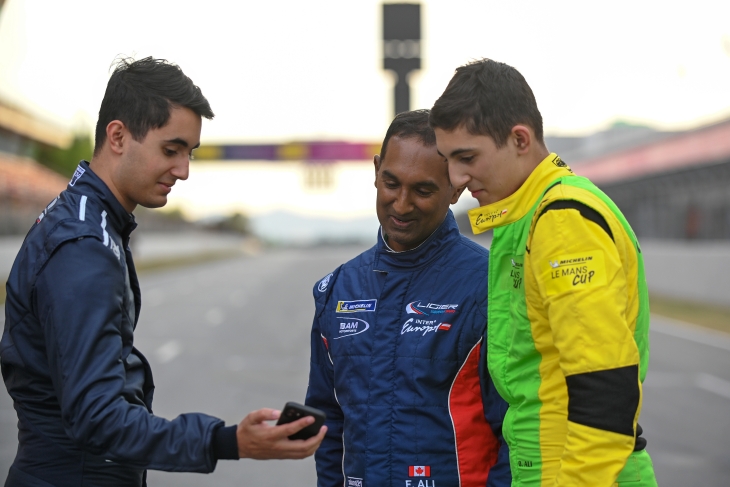
The first year I was doing the Ligier European Series, the racing got so intense. First of all, I wanted to be part of it. I wanted to get into the team and interact with them, I found it quite fascinating. I went on some of their track walks and sat in on some of their engineering meetings.
But as they excelled – first of all, it took a lot of my focus, it took a lot of my time, and it took a lot of my money. So I just had to step back. You know, it was a lot for me to do my racing. I just couldn’t focus on it, while helping to focus on their racing.
So I figured, as of last year and this year, I’m just gonna take a step back. Do some local grassroots racing. The three of us did a couple of Lucky Dog (Racing League) races together, so we got to race together there. Maybe, one day, we’ll see how it goes – maybe I’ll be the Bronze driver to their Silver and Gold drivers. One day, we’ll do some really high-level stuff.
But right now, I’m focused on them, as it should be. They’re the focal points, really.
RJO: And as your boys make another step in their career, what goals do you want them to achieve?
Fareed: I want them to just experience it. They’re moving from ACO rules and paddock and manufacturers to the SRO. They’re very complementary, but they’re very different. In the SRO, you have a lot more of the manufacturers directly involved. There’s a manufacturer’s trophy, of course. You get to see a lot of the involvement of the manufacturers – for example, you get the factory drivers for each team. And what I found interesting is you don’t just have a designated factory team that gets all the factory drivers, and all the other teams running the same brand of car are ‘second class citizens’. It was really interesting to see.
We have Sandy Mitchell, who’s just one of the most talented Lamborghini drivers in the world – he’s factory Lamborghini, but he is with our team. It was really neat to see him there working with the rookies. Three of the four drivers had never really done any significant GT3 racing at all, and none of them had ever been in a Lamborghini. So Sandy was right in there, working with them, teaching them, and coaching them. And then also, we had Casper Stevenson, who, again, is top-level in Aston Martin. He was amazing.
I thought that was really nice to see – how the manufacturers really get in, and they allow the factory drivers to work with all of the teams. This is something I really want the boys to get working with. Racing is really about developing a toolbox, right? It’s developing a toolbox of on-track talent, but it’s also developing a toolbox of the off-track stuff. It’s working with the media, working with other drivers. It’s coaching, it’s being coached, working with the manufacturers. ACO was great, but it’s just another level, where you’re really working with the manufacturers, you’re working with factory drivers. For them, they’re going to be learning a few new tracks, but certainly learning a new platform, a new skill.
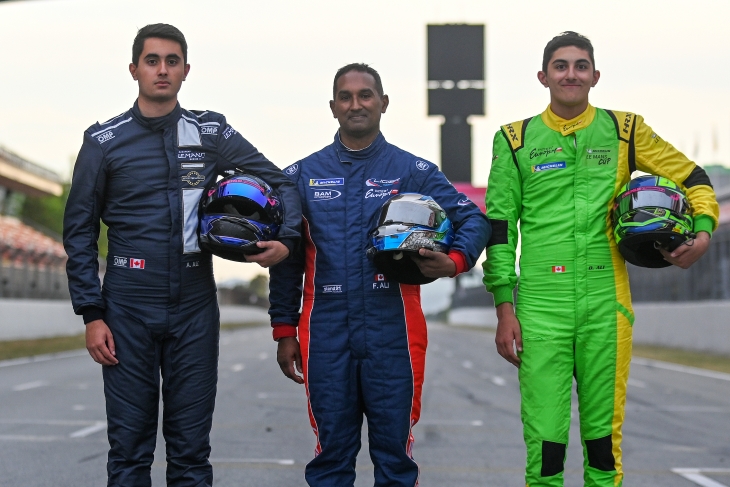
If I have to say it in one sentence: Obviously, enjoyment is number one, and progressing their skills. But for them, it’s just adding to their toolbox, building on the experience of young drivers working with the different rules and manufacturer relationships.