With the ‘reveal’ of the Porsche 963 RSP and the Aston Martin Valkyrie LM at Le Mans, there’s an opportunity to look back through the story so far of Hypercar and GTP ‘spin-offs’ into the road-going and track-only marketplaces.
Aston Martin
From the start of Hypercar, Aston intended to produce a road car-derived Valkyrie for the track. Indeed, the regulations initially not only catered for that, but in certain instances made road cars a mandatory part of the homologation. That aspect of the ruleset did not last long, though!

With Aston Martin withdrawing its first iteration of the programme before it ever raced, the boffins at AMR decided not to waste the lessons learned and produced a limited number of Valkyrie AMR Pro machines, which is a track-only version of the concept but built around a new and longer full carbon monocoque.

The AMR Pro produces c.1300 bhp with an extreme aero package and was unveiled in ‘production’ form in 2021.
Spool forward to late 2023 and the current Valkyrie LMH followed on, the cars reverse engineered back from the AMR Pro base design to meet Hypercar and GTP regulatory aero and power levels.
And then, earlier today, Aston Martin announced yet another version of the car, a super-exclusive track-only, non-homologated version of the LMH, dubbed the Valkyrie LM, of which only 10 examples will be produced.

The rear-wheel drive Valkyrie LM is set to be powered by a modified, lean-burn version of the LMH’s Cosworth-built 6.5-litre naturally aspirated V12 engine, tuned to an identical regulation-limited 520kW (697bhp) and recalibrated to accept readily available fuel.
The differentiation is minimal between the LMH and the Valkyries currently competing in WEC and IMSA, though it has been adapted to ensure it is fully accessible to amateur drivers. Race series-specific items such as ballast and FIA-regulation electronics are being removed, and it will utilise a bespoke cockpit interface tailored for track day usage.
It will also benefit from a user-friendly open-loop torque control (rather than competition closed-loop system with torque sensors).
The seven-speed sequential transmission operated by semi-automatic paddle shift gear change, just like the competitive version, is present. Its racing suspension configuration features double wishbones front and rear, with pushrod actuated torsion bar springs with adjustable side and central dampers.
Unlike the race car, which competes on Michelin tyres in the WEC and IMSA, the LM will run on bespoke Pirellis, to assist the process of division of the cars from homologated race versions and their associated testing restrictions.

All told, Aston Martin produced 150 coupés, 85 Spiders, and 40 AMR Pro models, plus the newly announced Valkyrie LMs and the race cars all assembled by Multimatic, for a total believed to be around 290 cars.
Porsche
Porsche’s Hypercar and GTP-contending 963 has spawned a (currently!) one-off road-going version: the Porsche 963 RSP.
The 963 RSP project was conceived as a one-off created for and named after Roger Penske, whose team operates Porsche’s factory Hypercar and GTP cars in both the FIA WEC and IMSA.

The RSP was designed and developed by Porsche AG, Porsche Penske Motorsport and Porsche Cars North America in partnership with Roger Penske. 50 years on from the 917’s debut as a road car, the original ‘Count Rossi’ road-going rebuild utilised in the launch publicity for the 963 RSP.
The 963 RSP has further ‘nods’ to the Count Rossi 917, the 963 RSP is finished in Martini Silver and features altered bodywork and a bespoke tan leather and Alcantara interior, with a single-piece carbon seat.

The car was given a dedicated mechanical and electronic setup, which was configured for its debut on the street near Le Mans – including a raised ride height and softened dampers, as well as a reprogrammed control unit to allow for the headlights and taillights to operate closer to those of a road car.
Bodywork changes include unique fender vents and the carbon fibre blanking plates that sit within the rear wing – a requirement on the race car – were able to be removed for the 963 RSP.

The control unit was modified to allow the car to operate turn signals and allow the headlights to be adjusted for road. The hybrid 4.6-litre V8 powertrain with a lithium-ion battery – capable of being run on electrical power only – remains in standard race tune in the 963 RSP, but power delivery from the MGU has been remapped to provide smooth delivery more appropriate for road use versus race competition.
The powertrain has also been remapped to be capable of running on pump gas – a significant undertaking for the team.
And added to the nose of the car – replacing the graphic that is applied to all conventional 963s – was an enamel Porsche badge, a detail shared with the 917.
Final touches included the use of Michelin wet weather compound tyres and the fitment of a horn, to allow the car to meet the necessary criteria to be allowed to drive on the road with (temporary) license plates under special permission from the French authorities.
Toyota
The Japanese brand was set to become the first Hypercar manufacturer to hit the road with a production version of its racing LMH product. Indeed, a development version of the car has actually run at Le Mans, albeit very slowly, and in the wrong direction!
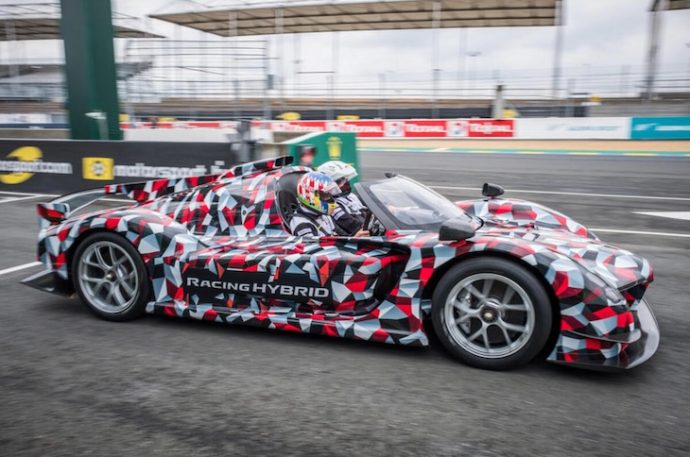
The road car, dubbed the GR Super Sport, was tested extensively and, in open-top form, was used to bring the Le Mans 24 Hours trophy to the grid ahead of the 2020 race. It was set to be powered by a reportedly uprated hybrid powertrain derived from the performance-restricted version in the GR010 HYBRID racer.
All those plans, though, went, quite literally, up in smoke after a significant incident while testing at Fuji Speedway in summer 2021, when a pre-production version of the car caught fire after a crash. The road car was subsequently cancelled.
Peugeot
The French OEM never produced a roadgoing version of either iteration of their 9X8 LMH Hypercar, but it did, in the early months of the programme, feature the car on the homepage of its corporate website alongside all of its roadgoing products in the car configurator!

It is also set to use Le Mans week as a platform for the launch of the e 208 GTI, and DSC understands that a 9X8 will form part of the presentation.
Ferrari
The iconic brand has no plans to launch a road-going version of its double Le Mans-winning 499P, but instead has launched a track-only, uprated version of the car for some very carefully curated customers!

20 plus of the 499 P Modificatas have so far been delivered, with ultimate numbers understood to be capped at under 40.
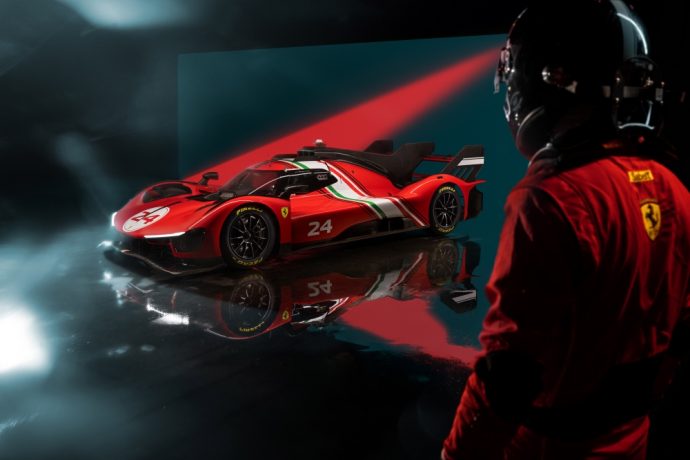
The cars feature an unrestricted full-time hybrid system, bespoke Pirelli tyres, and form the core of Ferrari Corse Clienti’s new for 2024 Sport Prototipi Clienti package.
The Modificatas are cared for by Ferrari’s Fiorano-based team, which supplies full trackside engineering support at special events. The reported cost is c.5.1 million Euro, including two years of trackside support.
*Correct at time of writing!
Glickenhaus
Jim Glickenhaus’ boutique brand was a very welcome early adopter of the hypercar ruleset and kept things interesting whilst we all waited for the cavalry to show up.
Pole positions and a podium at Le Mans added to the challenger brand’s legend with a three-year, two-car 100% finishing record at Le Mans, a heritage to be proud of.
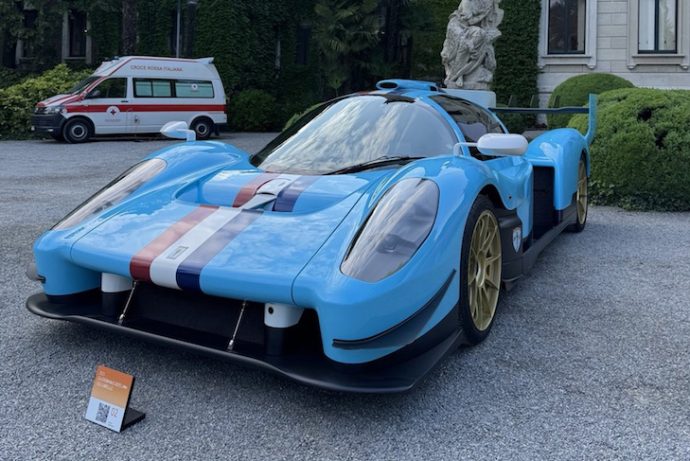
Into the mix, team founder Jim Glickenhaus always said that he would produce roadgoing versions of the gloriously retro-styled SCG007 LMH, and, true to his word, he has!

The car, given a high-profile debut at Concorso d’Eleganza Villa d’Este, features a widened monocoque to accommodate a three-seater interior, powered by a 1000 HP TT Katech V8.
Glickenhaus has announced a limited production run capped at 24 cars, all produced with the help of their collaborators at Podium Engineering. Never change, Jim!
Isotta Fraschini
The revived Italian brand was a surprise package in entering Hypercar for many, after it went through a couple of iterations of ownership groups before settling on the all-Italian group that finally brought the Tipo 6 LMH Competizione to the track in 2024. It was a car designed and built by Michelotto.
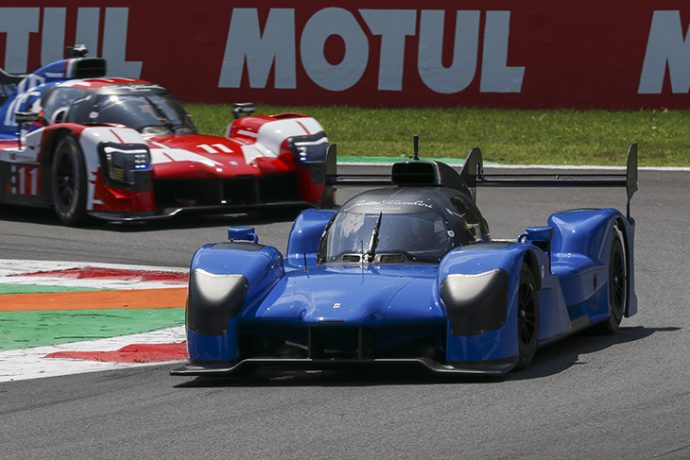
It was a short-lived campaign with the effort only lasting until the Interlagos post-Le Mans round, but it did give the brand at least some racing credibility, and a race finish at Le Mans on debut was achieved, no small feat.
The brand produced two additional versions of the car. The Pista, a non-racing track-only version, which was demonstrated on track at Monza with the LMH before the car’s debut (pictured above), and a Stradale, road-legal version. The latter was demonstrated on a road run, including city and autostrada (including the toll booths).
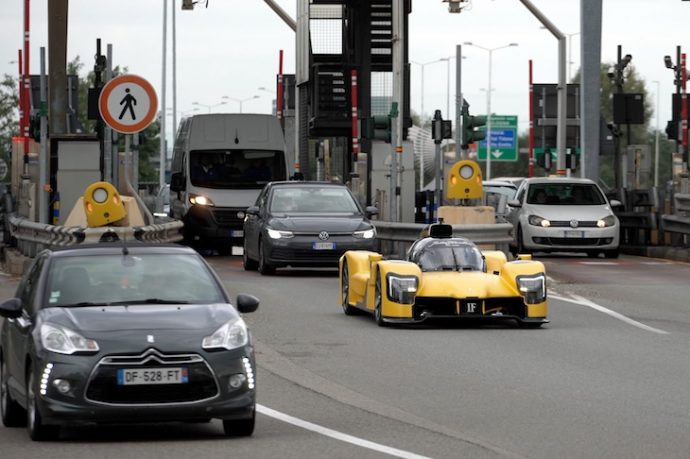
Beyond a reported delivery of a Stradale version to Emerson Fittipaldi, little more has been heard from the project.
Vanwall
In every golden era, there is always a little tarnish, and the Kolles/Vanwall programme provided plenty of that.
The car, though pretty, was always woefully off the pace, underpowered and undercooled.
Leaving aside empty promises of two-car entries, and a revised powertrain and aero package, we’ll pause here to consider the ‘reveal’ of the brand’s roadgoing version of the Vanwall Vandervell race car.

PR pictures showed a/the car on temporary plates outside the team’s HQ, captioning stating that the car had driven around local roads, though no evidence of this has ever been released.

In reality, the “Vanwall Vandervell 1000” appears to be the race car with replacement bodywork, the telling details being the centre-lock racing wheels and the presence of the race data acquisition pod atop the cockpit.
No additional pictures have ever been released.
Attention from the ‘brand’ has since focused instead on its rebodied and power boosted ‘Vanwall’ H-GT super hatches, based around the Hyundai Ioniq and on the recently revealed Vanwall Teardrop motorcycle, which bears a striking resemblance to the Lotus C01 superbike developed by Kodewa/Kolles.
777
The 777 is an outlier here in that it is not a Hypercar brand and is not confirmed as being based on the same Dallara ‘spine’ as the BMW and Cadillac Hypercars.

Revealed at Monza in 2023, the track-only literal hypercar is, though, based on an undisclosed Dallara chassis and does bear a striking family resemblance to its racing Hypercar brethren.
The car, with a 7 million Euro pricetag and powered by an LMP1 spec Gibson 4.5 litre naturally aspirated V8, was intended to have just seven examples sold with deliveries starting in 2025. Any day now, then!!
Images courtesy of Aston Martin, Glickenhaus, Porsche, Toyota, Peugeot, Vanwall, Isotta Fraschini and Ferrari