Like Le Mans and Nurburgring, the Spa 24 Hours is a popular sport for manufacturers to take the wraps off their latest racing models. At the 2025 edition, we were treated to the new Ferrari 296 GT3 Evo, as well as a new entry to the ranks of GT2 machinery from Ginetta – the latest incarnation of its stalwart G56 platform.
Wrapped in full carbon-fibre bodywork and sporting an in-house Ginetta-manufactured 6.3-litre V8 engine with supercharging, an Xtrac transaxle LMP gearbox, Sachs triple-plate clutch, Ohlins double wishbone suspension and Alcon GT Endurance brakes, the new GT2 had prominent positioning in front of the SRO hospitality unit for the duration of race week.
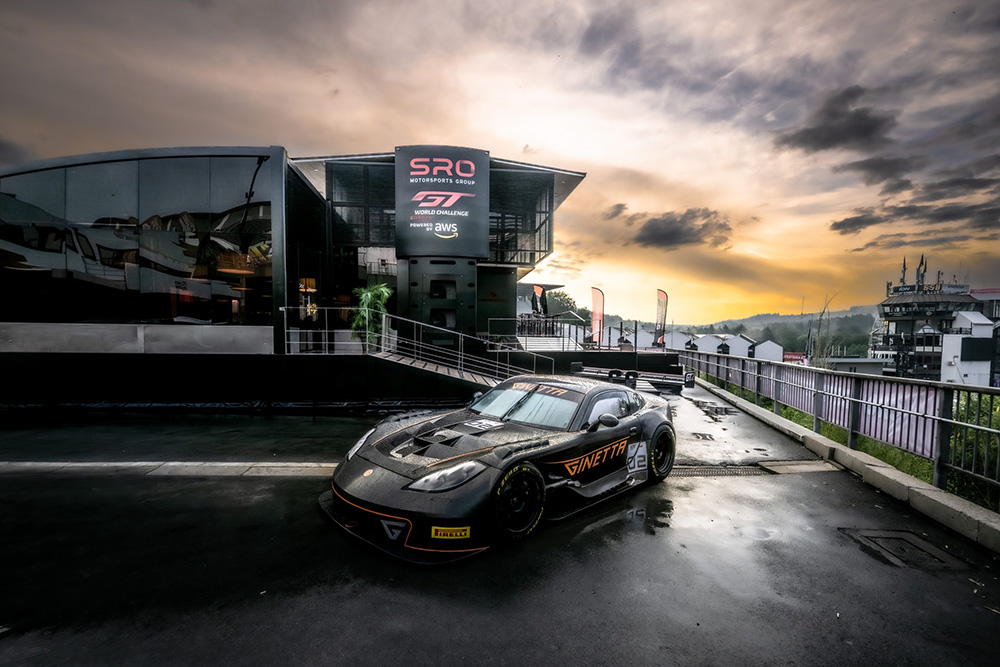
So why GT2, and why now? “We’ve looked at for a couple of years,” said Mike Simpson – former factory driver and now chief executive of the whole motorsport division.
“We initially explored it with the G56 GTX, which took the G56 GT4 as a base and pushed it to its limits. We started speaking to Stephane [Ratel] in the early part of 2024, and the green light was given to start developing the GT2.
“Lawrence [Tomlinson, Ginetta’s owner] raced the the GTX as an invitational entry in the European series, which was kind of a feasibility study for us; we wanted to see where the car needed to sit for the BoP. It was clear after that event that we’d need a slippery, high-powered car. So we’ve been in development ever since, really.
“The GTX was still very much about cornering speed, which isn’t the aim for GT2. It has big power, as well a lot of safety upgrades. It had to look cool, it had to be attractive to Am drivers, it had to be a car people would be proud to drive and show to their friends that they’re racing it on weekends. GT2 is aimed at someone who’s maybe running a business, who maybe doesn’t have the time to dedicate to what you’d call a ‘professional amateur’ programme in British GT or GT World Challenge – someone who just wants to come and be part of some spectacular weekends racing cool cars – that’s our market.”
Also present at Spa, Ginetta technical director Clive Seddon explained the process of taking the basic G56 concept from GT4, to GTX and now GT2 form.

“We realised with the GTX that we were shy on the stats, shall we say?” he said. “We were heavy, we were underpowered, we were draggy. So to step that up, we had to revisit the whole thing. The car now is just over 1200 kilos, but we’re safe anywhere from there to 1550 kilos if necessary. The engine power will be tuned down from nearly 800 horsepower – we’re at 650 at the minute, ready for the BoP. Aero-wise, we extended the front to make it slippier, and there’s a lot of work down the side to clear out the air behind the wheel.
“We know we’ve got quite a versatile package now, whereas previously we were always at the top end of what we could do; stretching the GT4 into the GTX exposed a lot of weaknesses, and so we went quiet for a bit and came up with this. With GT4, there’s too much focus on corner speed and braking, so the gentlemen drivers were getting mugged on the straights; it wasn’t an enjoyable lap time. You could pole the car, but by the time you’d reached Stowe corner, you’d be fifth. So we don’t want to repeat that.
“There’s also a big difference when it comes to cooling; the whole front end of the car from the wheels forward is completely different. And there’s a big focus on driver comfort, we’ve made a step with the air-conditioning. The GT2 regulations require a fixed seat and moving pedal box, so work has been done to the chassis to house the latest spec seat.”
In terms of a race debut, Simpson says the GT2 event supporting the GT World Challenge Sprint Cup round at Valencia in mid-September is the current target. “This one is Lawrence’s, then we should be able to bring between three and five cars to the track in 2026; I don’t see why not,” he added.
Images courtesy of Ginetta