Aston Martin Thor Team is not expected to bring any significant upgrades to the Valkyrie for the 2026 season, according to team principal Ian James.
The last two WEC races in particular have served as real progress markers for the Valkyrie, which is hitting its stride as the off-season approaches. In COTA, both cars ran solidly in the top 10 before overheating issues forced both cars into retirement in the final hour. Then, in Fuji last weekend, the #009 qualified a season-high of third on the grid before going on to achieve a best finish of fifth.

The Heart Of Racing team has taken a number of steps forward in year one with its LMH-spec, V12-powered prototype, but there’s more work to be done. It’s for that reason that James feels it’s too early to utilise an EVO ‘Joker’ to improve the car.
“It’s hard to quantify it, but we started the year a few seconds off the pace and now we’re at the sharp end,” he said to DSC. “The general understanding of the engineers, the crew, the drivers, that’s really the most significant change. The car has continued to evolve, the ruleset is tight, but there are things you can change and adjust, and we’re constantly doing that. It does feel like a never-ending cycle, but we’ve worked hard this year to reach our current position.
“I don’t think we’ll make any significant change next year. We’re going to run the car in the (Windshear) wind tunnel; we’ve been there for IMSA, and we know where we need to be to get in the box. There are a few technical changes they’re going to measure, but it won’t be a significantly different car from where we are now.
“This year we’ve been flat out, so we’ve not really considered any major updates as we haven’t yet maximised the car’s potential. We’ve got to do that first, then we can think about the future.”
Driver Alex Riberas agrees that the true potential of the Valkyrie hasn’t yet been unlocked and is positive about the gains the team has made to the car’s drivability in such a short timeframe.
“The progress is real,” he said. “The car is just getting better and better. It’s a never-ending process of learning. But we’re taking strides. We have gains to make in reliability, but like at Austin, I’d rather have that issue happen there than next year at Le Mans, it’s part of the journey. It’s all encouraging, and it’s a statement to the fact that we have such a good team on the US side and here. The global effort is a key.
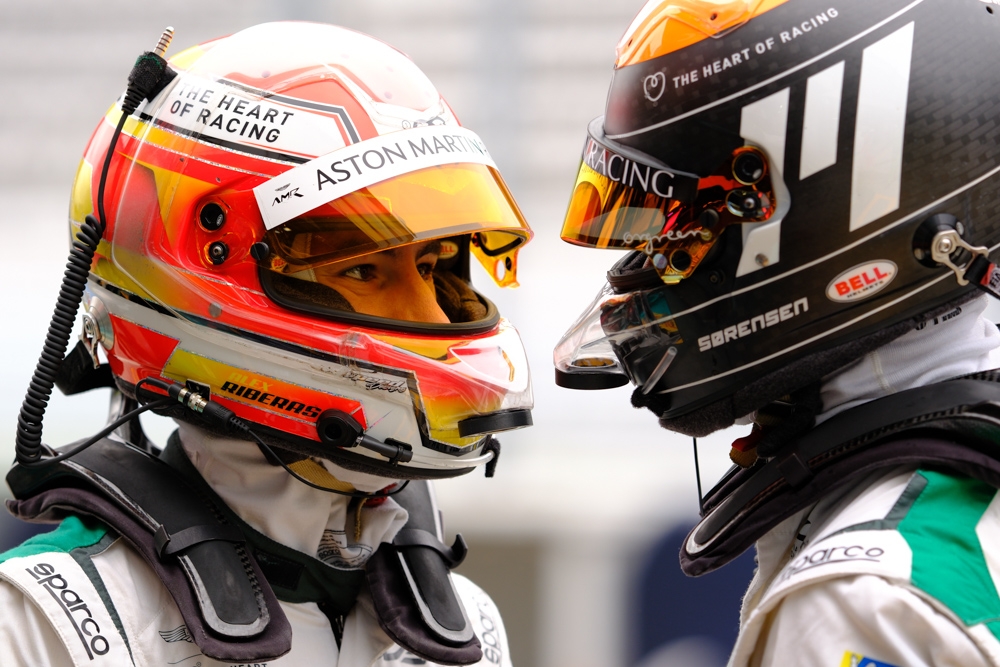
“The team has improved so many layers, the electronics, the damping, the suspension. It’s a fascinating experience to be part of this process, taking ideas, testing them and making a difference. We’re still taking it one day at a time. An indication of where we are is that we leave here (Fuji) feeling that not finishing on the podium was a missed opportunity, and it’s only our seventh WEC race.”
A specific area that has needed improvement this year is the car’s compliance over kerbs, which, at circuits such as Imola, has cost it time each lap.
“It’s not where we want it to be, but we’ve improved a lot,” James said of the Valkyrie’s improved drivability over kerbs and bumps in recent months. “But it’s a lot further down the road in terms of the desired outcome when we started off.”
He also pointed out that Aston Martin is working on a solution for the overheating issue that caused the team’s double retirement in the rain at COTA.
“Radiators and stuff like that, we’ve got to analyse it, it’s in process. We’ll definitely have a fix for it next year.”
Further good news is that in 2026 Aston Martin THOR Team will continue to operate its dual full-season effort in the FIA WEC Hypercar and IMSA GTP classes with the fan-favourite Valkyrie.
“We’ll be doing both again,” James confirmed.