

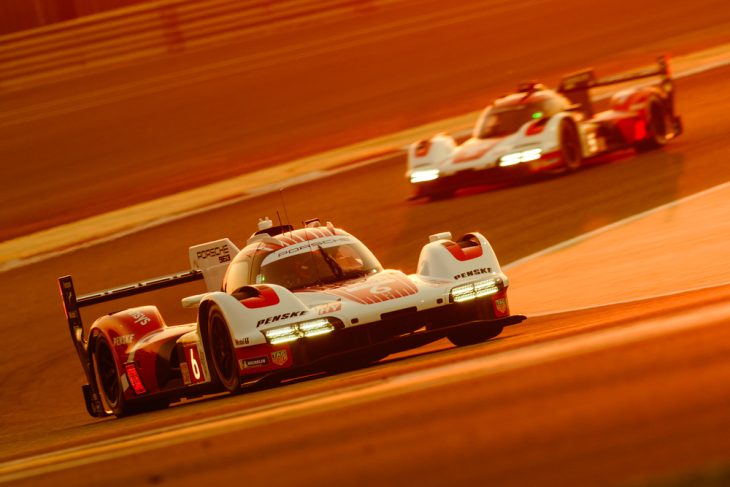
There was the predictable scramble in Bahrain for the significant assembled media pack, with the press room more full at the event than this writer can ever remember, to try to ascertain whether Porsche’s announced withdrawal of their factory Hypercar effort really will see the brand absent from the World Championship grid in 2026.
So, after multiple conversations with pretty much every interested party, here’s a Q&A on what is happening (and why), what definitely isn’t happening, and what is still up for grabs!
So what is happening?
What is definitely happening is that for 2026 at least, the factory Porsche Penske Motorsport effort is leaving the FIA WEC, a move forced upon Porsche in the wake of truly appalling trading figures for the company, with the very high likelihood of more to come. It is these figures, and not any other peripheral matter, that are at the core of its decision.
Weren’t Porsche unhappy with the WEC BoP?
As with every other team in the paddock, Porsche’s contentment with the BoP was a movable feast, somewhat linked to how the teams were performing in the races. It was not, however, a significant consideration in the brand’s withdrawal.
But hadn’t Porsche made it clear it was unhappy with the balance between the LMH and LMDH cars?
Indeed, it had, and it was an active and willing participant in ongoing cordial discussions between the sanctioning bodies and its manufacturer about a future evolution of the Hypercar regs that met its concerns with a glove-like fit.
Isn’t the ‘Two Car’ rule for Hypercar factories to blame?
No, in 2026 the WEC will again have eight manufacturers with two-car teams; in 2027, it will (against current expectations) be 10. In any case, Porsche is entering two cars in IMSA competition where no such rule exists.
But if the company’s figures are so bad, why has it chosen to continue in IMSA?
Funding structures for motorsport are somewhat different in the USA, plus there is an imperative to support sales in North America ahead of a potential ‘bubble’ caused by price protection from the US government’s tariffs policy.
Isn’t IMSA GTP much cheaper than WEC Hypercar?
No, it isn’t; the cost of competing in the FIA WEC compared to the IMSA WeatherTech SportsCar Championship at the factory level is broadly at the same level.
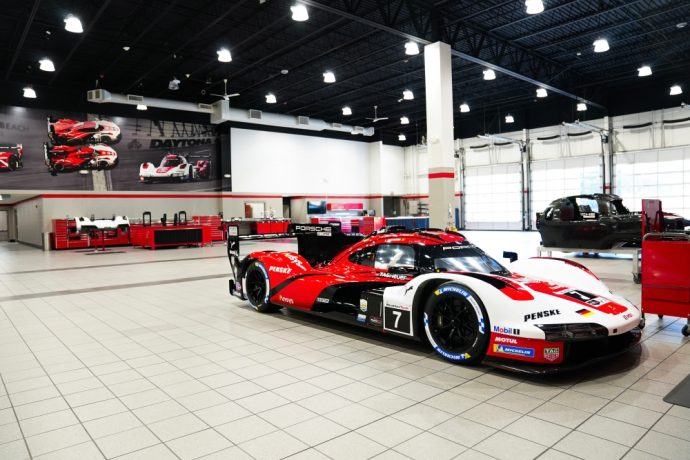
There is a key difference in this case, however. Porsche Penske Motorsport’s GTP arm is run out of Penske’s existing HQ for NASCAR and IndyCar in Mooresville, North Carolina, rather than the dedicated facility in Mannheim where the WEC effort was operated. There were cost advantages there.
I have seen that there would be potential financial penalties to Porsche if it had stopped completely. Is this true?
There are significant penalties within the WEC regulations if a car registered for the full season withdraws from either individual or multiple races; neither was the case for Porsche in 2025.
There may well be, though, publicly undisclosed penalties contained within the Porsche contract(s) with Team Penske. It is not unusual for multi-year contracts of this sort containing protective clauses for a contractor to ensure that they are not left entirely out of pocket should a client change their mind during the contracted period.
What about the IMSA Championship-winning car? Can they come to Le Mans in 2026?
There is pretty much a zero per cent chance that the ACO would allow a single PPM 963 from IMSA to race at Le Mans if no 963s are competing full-time in WEC. It would set a precedent that manufacturers could compete at Le Mans without a full-season WEC effort, and the ACO has already turned down Acura/Honda in recent years after it attempted to bring the ARX-06 to La Sarthe.
What about the Proton WEC car?

What is clear is that, against the current regulations, if the factory cars withdraw, then the current single-car Proton effort would be counted out too. Privateer entries are permitted only with cars used by competing manufacturers; there is no ‘legacy’ or ‘grandfathered’ permission to return.
What if Proton returned with two 963s?
That is the only remaining realistic option on the table. For those entries to be accepted, Porsche would have to pay the 500k+ Euro Manufacturers fee, which Thomas Laudenbach has stated recently that they would consider favourably. Still, significant barriers remain before this can be considered a likely 2026 outcome.
Are there any other potential Hypercar entrants for WEC with Porsche?
There are a number of other potential players, DSC has established that none of them are potential 2026 entrants.
Could Penske enter itself?
It could, subject to the same constraints around factory fees as Proton, but the simple fact is that it doesn’t look likely. The prospect of a programme, for either one or two cars, has been privately ruled out by Roger Penske’s team. What hasn’t been ruled out is some form of collaboration – public or otherwise – with Proton.
Some sources suggest a potential one car apiece for Penske and Proton, others reject that as being a realistic prospect.
So what needs to happen for Proton to confirm a programme?
Proton has two 963s on its strength, the 2025 WEC car and the now-repaired 2025 IMSA chassis.
It would, though, need a significant uptick in parts and technical support to enable a two-car WEC programme at a factory-blessed level. This includes a significant six-figure Euro sum purely for the homologated 2026 upgrades.
Add in testing, drivers, and decisions to be made over whether an upgrade in support services is warranted, including logistics and hospitality, and the overall cost runs well into eight figures in Euros.
Proton would cover a reasonable chunk of that via its current and projected future commercial partnerships, but it would require input, principally for materiel and technical manpower from Porsche (much of which is already available), with Penske likely to be part of any deal to ensure that Proton were equipped to be competitive across a full season.
Why would Porsche/Penske support Proton’s programme?
See below – to preserve Porsche’s presence, and very specifically to enable the 2025 IMSA Championship-winning 963 to take up the automatic invitation to Le Mans in 2026.
The arrangement could be a relatively cut-price replacement for a high-budget factory effort with a proven platform and potentially with availability of top-quality factory talent on the driving and technical fronts.
What about LMGT3 Porsches in 2026?
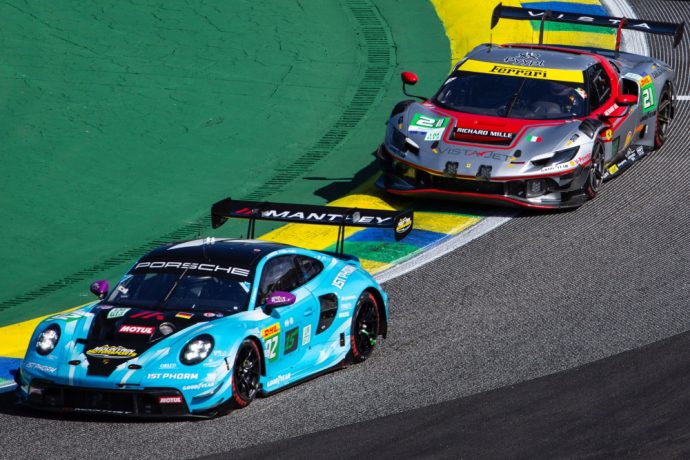
Manthey will have to go through the WEC selection process in the same way as everybody else – as a repeat LMGT3 Champion, there is nothing to suggest that its 2026 presence is in any way at risk.
What about 2027, when Ford and McLaren enter Hypercar?
This is a key point. With the Hypercar grid set to further expand in 2027, against the WEC’s current model, and even presuming no further potential entrants emerge (and there are other potential additions), the continued presence of Porsche in LMGT3 could be at risk.
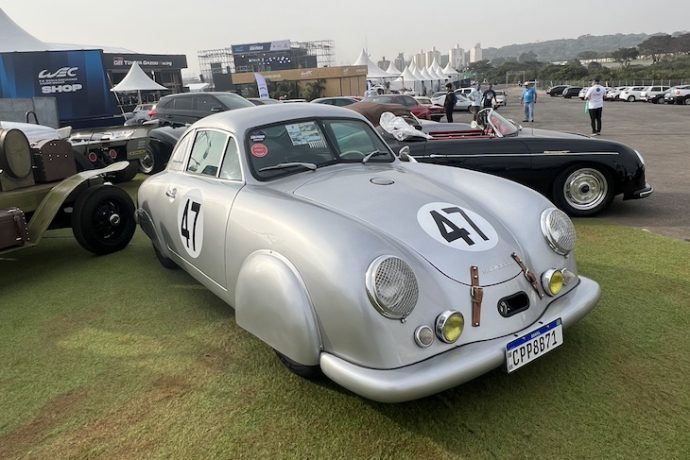
If that happens, and the WEC entries are rejected, Porsche risks breaking a streak of having cars built and powered by Porsche competing at the Le Mans 24 Hours that stretches back to 1951, by then 76 years of unbroken sportscar racing history, a core strand in the brand’s sporting identity.
It is perhaps this scenario above any other that is motivating some within Porsche to find a solution for 2026 in Hypercar.
How would this leave Proton and its relationship with Ford?
The possibility of a Porsche Hypercar programme is understood to have been discussed with Ford at a high level, with clearance believed to have been given should it occur.
Proton is not involved with the 2027 Ford Hypercar programme.


