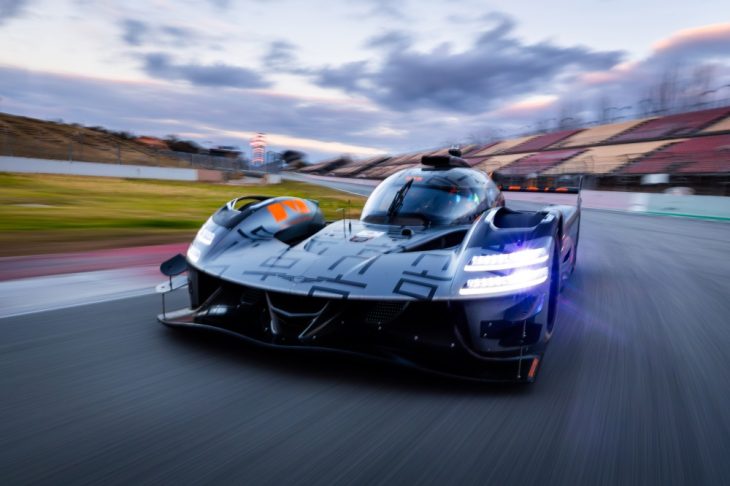
The development programme for Genesis Magma Racing’s GMR-001 LMDh has reached its final stages, with just two tests left on the schedule before the team travels to the Lusail International Circuit for the FIA WEC Prologue test and its debut race in March.
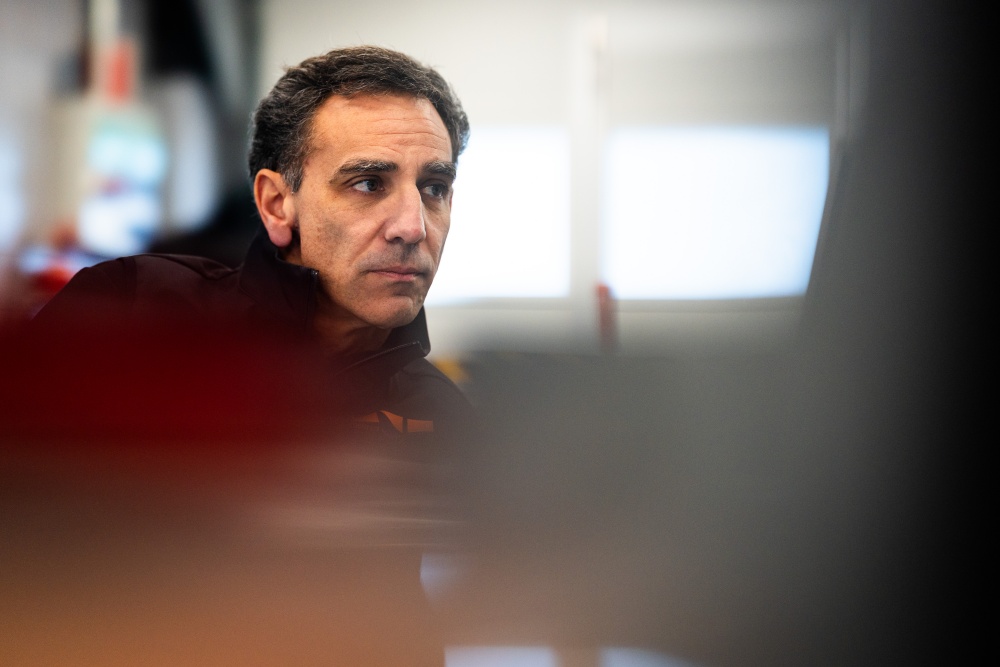
So much has been achieved since the programme was greenlit in 2024, with the aspirant Korean brand building a team from scratch and developing a car in a matter of months. However, GMR’s team principal, Cyril Abiteboul, is candid about where the project currently sits: close, but not quite ready; promising, but unproven; ambitious, yet realistic.
That self-awareness runs through the team, which now comprises about 60 members of staff, the vast majority of whom have been poached from other Hypercar programmes. Familiar faces from Ferrari, Porsche and Alpine’s WEC efforts, for instance, can be found in the back of the garage, as well as a handful of engineers who have moved over from Hyundai’s WRC arm.
On paper, with around 20,000 kilometres of on-track running in the books, the programme appears ready to roll. But in reality, the brand’s ORECA-based, turbo V8-powered racer (which is surprisingly loud on track) still needs finishing touches applied before homologation. The team itself also lacks experience working together as a unit in a high-pressure, competitive environment.
Ultimately, until the car is frozen and pitted against the other Hypercars in Qatar, we won’t get a true sense of how high the ceiling is for the project in year one.
“It’s coming nicely together,” Abiteboul explains. “It’s always the same thing. We are probably 95 per cent there; we know the last five will be difficult to get. It’s easy to flatter ourselves. We’ve got a nice truck, nice car, nice liveries, lots of people.”
At the heart of the GMR-001 sits a powertrain choice rooted in pragmatism. The decision to choose the LMDh ruleset, work with ORECA on the chassis and to carry over the World Rally Championship-derived engine architecture was made to develop a car that matches Genesis’s approach to roadcar building, while remaining cost-effective.
“I think we’ve got a good baseline,” Abiteboul explains. “With ORECA and the carry over of the WRC engine, it’s a solid foundation, but it’s the little things that can amount to big issues when the season actually starts.”
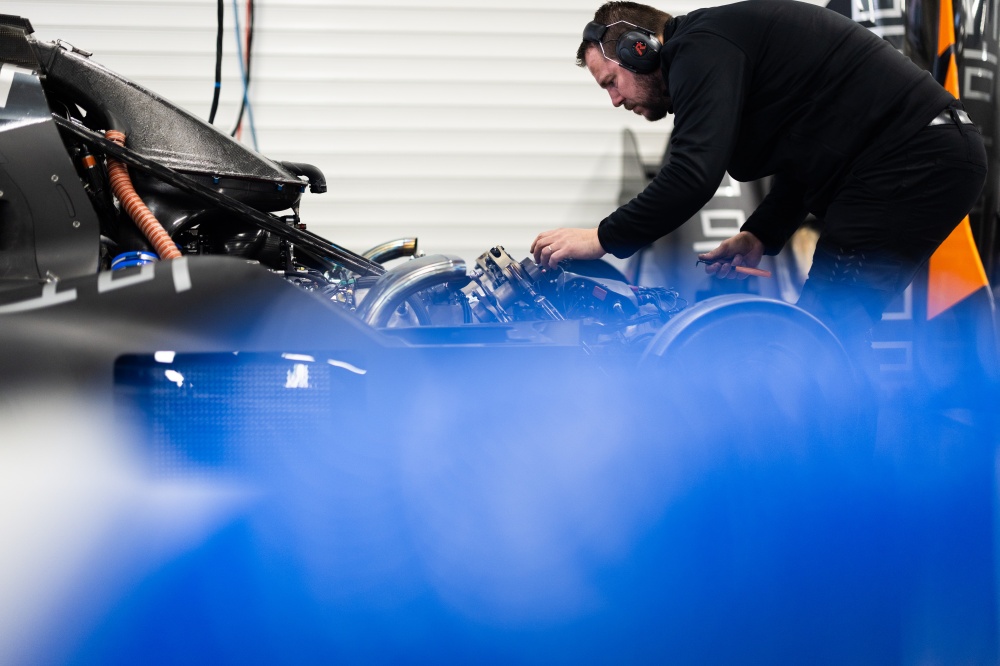
Those “little things” are precisely what define the difference between a promising test programme and a successful race operation. Genesis is under no illusions about the task ahead as it joins the WEC’s stacked Hypercar grid.
“We need to be realistic and manage expectations about what we can achieve at the start of our programme,” Abiteboul admits. “We’re going to join a group that is well established, very competitive and we will have to make our way into this group. It will take time.”
Rather than setting immediate targets for wins or championships, the emphasis is on execution and credibility.
“Our mission is not to say we will fight for wins and championships anytime soon. At the same time, though, we have ambitions to do things in a good way, with faultless execution, without being arrogant. It’s finding a balance. First, we have to be safe, legal and reliable; that’s our main objective for the season.”
In endurance racing, reliability is, of course, as important as performance — particularly for a new entrant. Genesis Magma Racing’s early objectives reflect that reality. Testing, as expected, threw several challenges at the engineers on hand. Cooling, turbo lag, software glitches and tyre degradation using Michelin’s 2025 rubber are all areas that have needed work.
Our concern relates to software, systems and calibration; it takes a lot of time, and it can only be done with mileage and feedback
“We’d like to be able to finish races,” Abiteboul says of the team’s targets for 2026. “It’s long races, and it starts hard with 10 races. Then we would like to be on the lead lap as long as possible, we know the advantages from a strategic perspective.”
Where the challenge really increases is in software development for the car. It’s an area of the rulebook that is open, and Genesis’ competitors have had a significant head start in making progress.
“Our concern relates to software, systems and calibration; it takes a lot of time, and it can only be done with mileage and feedback,” Abiteboul explains. “We need to go through every race of the season to have all the ideas and feedback so we can be more competitive in year two.”
Factory driver Pipo Derani – who has been with the team since its inception – stresses that running the car to the power limit defined by the power curve for long periods on challenging circuits is no easy task. Developing bespoke software and working with the torque sensors is a fiercely complicated element of the ruleset for the teams to improve on and exploit.
“The key is for the teams to stay as close to the power target as possible without being over it and risking a disqualification,” Lawrence Butcher, a technical columnist for DSC, explains. “Besides the combustion engine itself, a key factor is how the teams can control the instantaneous power at the wheels, balancing the ICE and the electric motor (if the car is a hybrid).
“Critical is how much tolerance they need to build into the system to avoid going over the regulation targets. This control is closely related to how effective their control systems and strategy are. It would be nearly impossible to hit the exact power target all the time, so teams must retain a small safety margin under this target.”
Derani believes Genesis is making steady progress in this area: “At times it felt like we were going to crack the code a bit quicker, and at times it felt like we were never going to crack the code, and we were scratching our heads.
“But it’s, it’s fair to say that it’s part of the development. At the end of the day, it’s part of a new manufacturer coming into a new sport, a new engine being built from scratch (by marrying two inline 4s from the WRC effort). So I think we’ve come out the other side in a good way so far.”
This is because Genesis has invested heavily to shorten that learning curve, but Abiteboul is clear that some elements cannot be rushed.
“We are pushing hard, investing hard in software, feedback, people and facility,” he explains. “We will have the highest level of commercial simulator available, but that won’t be delivered until Q3 of 2026, so for a good period of time, we have to make do without it. We have a small simulator to work on the software side, but we need the data from the tracks to inject it into the simulator.”
Besides that, another significant technical hurdle, according to Abiteboul, has been cooling — an issue compounded by the parallel development of chassis and powertrain.
“Cooling was a big challenge. Because if you look at most programmes, when they were established, the engine existed physically. In our case, there was no engine when we designed the car, so we had to design it based on assumptions of cooling requirements.
“The two programmes were moving in parallel, the powertrain and chassis side, then when you put them together, you find out if your calculations were right. They were not wrong, but there is always a bit of a gap.”
Supply-chain realities, exacerbated by Formula One’s shift to a new regulation cycle in 2026, have added another layer of complexity.
“It’s not been without challenges; we’ve had difficulties with things like cooling,” Abiteboul continues. “Sometimes these things have a long lead time. We’ve worked with a single supplier for cooling and radiators based in Australia.”
“If you want to change something, it takes a long time, in particular when Formula One is having a change of regulations.The growth of that is great, but it’s stretching the capacity of the big motorsport suppliers, so all the teams are going through it.”
ORECA has been superb in supporting us, from a technology standpoint, a people standpoint
Genesis Magma Racing has also chosen the more challenging organisational path, opting to operate the race team itself rather than outsourcing to a team, as a number of current Hypercar brands do. Attracting the right personnel has required internal change as much as external recruitment.
“ORECA has been superb in supporting us, from a technology standpoint, a people standpoint,” Abiteboul says. “The other challenge was building up the race team as that’s part of the decision we made to race the car ourselves rather than relying on an external party.
“We’ve reviewed a number of our own systems, to attract the right people because you need to be competitive in terms of remuneration and also in working policy.
“It’s a shortcut, but provided you have the right HR system to get these people on board. I’ve probably made 12 trips to Korea back and forth to explain the requirement of this level of motorsport.”
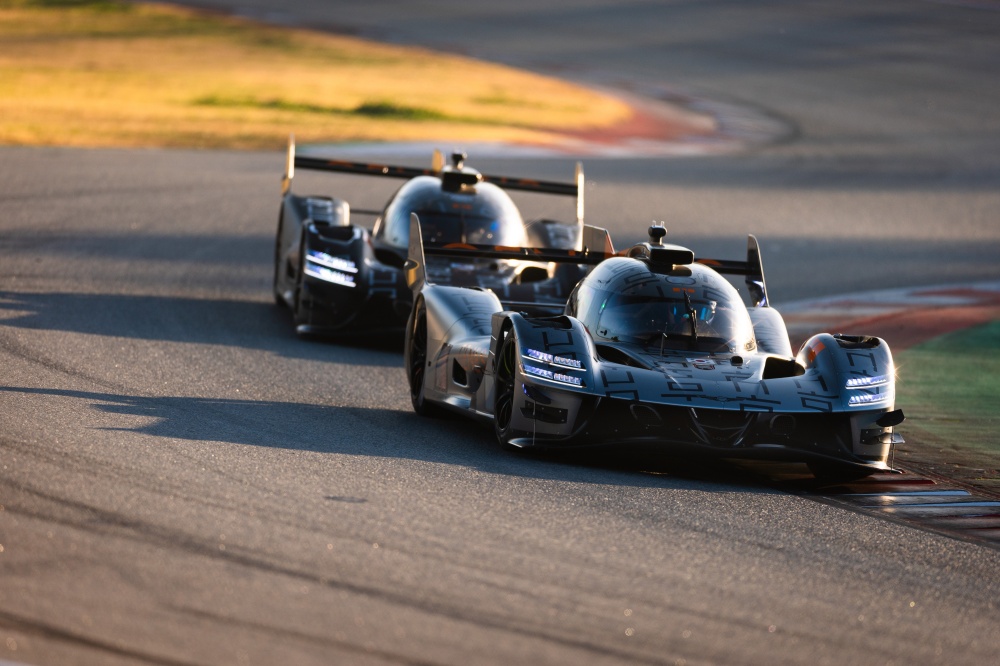
On track, the numbers are beginning to stack up. Since last August, Genesis has pushed to make the most of its limited window to test the car without restrictions ahead of homologation. To this point, the GMR-001 has been put through its paces at several circuits across Europe, including Circuit Paul Ricard, Portimão, Aragon, Magny Cours and Barcelona.
Durability has been a specific focus, particularly on the engine side.
“One of our big targets was to complete as many kilometres as possible on one engine, one of the engines on these ares is at around 8,000 kilometres,” Abiteboul reveals. “That was a target, which is a ratio of Le Mans in the sense that you need to cover Le Mans and qualifying.”
Chief engineer Justin Taylor admits, though, that nothing compares to running on the circuits that the WEC visits, in anger. When the team heads to Qatar later this month, it will be the first time it has gathered data on a circuit that features on the schedule and should help provide the team with a head start to the first meeting of the season.
“You can’t reproduce Le Mans. You can’t reproduce the bumps and kerbs of Imola or the heat of Qatar, especially because, I mean, we just got started in August, we weren’t ready to really run the car and see how it does in 35-degree temps. So we’re doing our best to see what things would like be normally. You can do some offsets to see where you would be, but it’s gonna, it’s gonna be a big test for us to get to Qatar.”
“We know we are there or thereabouts in terms of the performance window,” Abiteboul adds. “It’s mainly about improving the reliability of the car. It’s about cooling and making sure the engine is ok, we have a couple of things with the engine, nothing structural, a few things around the engine, not in the engine.”
Asked whether Genesis would make the same engine decision again, the Frenchman is unequivocal.
“Yes, absolutely,” he responds. “There could have been a route to buy an engine from another company, but you know that we’re a brand, we’re a group that is extremely keen on the authenticity of our own technology.”
It’s a philosophy that underpins the entire programme.
“We went for LMDh because we believe that it was the only set of regulations that was affordable and accessible to us in the time available. But we aspire to take more and more control of the platform.
“We are a company focused on product and technology. We are not brand or marketing-centric; we are product and technology-centric. So it was the only way forward, and we have no regrets; we have to do the best with it.”
Testing continues into the new year, with key milestones still to come before the car visits the WindShear tunnel for homologation. An additional endurance test, for instance, remains high on the wish list.
“We are planning one more endurance test because our first target is to cover the race distance,” Abiteboul explains. “We’ve done a bit in Aragon, which was based towards endurance, and we covered 30 hours, but there were a few things here and there.
“I’d be approaching race one in a happier place if we were to conduct a proper endurance run, without having to touch the car and put it back into the pits to remove bodwork.”
For Genesis, the GMR-001 marks the opening chapter in what the brand hopes will be a lengthy motorsport story. The first season may be about team bonding, finishing, learning, and integrating, but the foundations that have already been laid suggest that it has set itself up nicely, with a programme designed to grow — deliberately, methodically, and on its own terms.
Images courtesy of Genesis/Drew Gibson