Had it not been for the team’s late return to form at last year’s 8 Hours of Bahrain finale, the conversation around Toyota entering the 2026 FIA World Endurance Championship season would likely be very different.
Instead of dwelling on the Japanese marque’s least successful campaign to-date, a 1-2 finish meant that it ended the year as an unlikely runner-up in the manufacturers’ world championship, and with its streak of at least one win per season extended through a ninth consecutive season.
Now, rather than its overhauled Hypercar package needing to bring about a much-needed return to form, the renamed TR010 Hybrid simply needs to build on where its predecessor left off, as Toyota seeks to reclaim its crown and score a sixth victory at the 24 Hours of Le Mans and another World Manufacturers’ Championship.
The TR010 Hybrid, an evolution of the GR010 Hybrid, which competed from 2021 to 2025, is the most significant change to Toyota’s Hypercar contender to date. After three years of stability, the marque has used one of its EVO ‘Jokers’, with the new update bringing a styling redesign.
The car update wasn’t a reaction to last season’s form dip; this package has been in development for over a year.
“The decision to do the aero update was taken in the course of 2024 to try and keep up with the development pace,” says Toyota’s technical director, David Floury.
“We were initially targeting the introduction for the 2025 season, but due to the [homologation] wind tunnel change from Sauber to Windshear, and due to Sauber being now used by Audi, we could not achieve 2025 because our plan was to go in the wind tunnel to homologate the car in the first month of 2025.
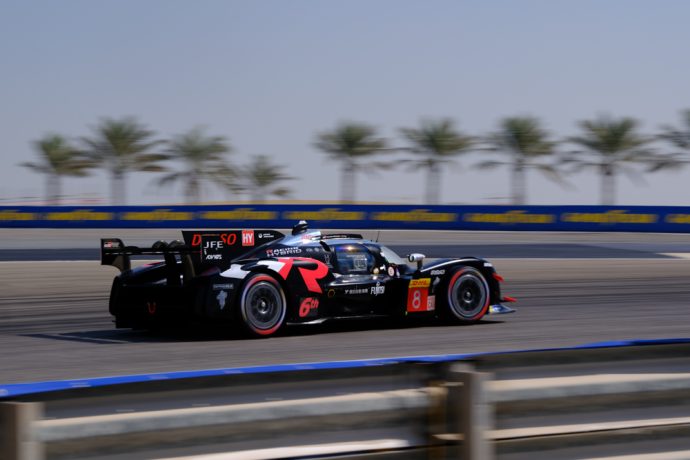
“This was a very tight schedule already, and due to the change in wind tunnel, the 2025 car had to be homologated in Sauber before December, which was impossible to achieve, or would have led to too big of a compromise, both in terms of performance and styling. So at the end of the day, we decided to push it to 2026, and have more time to go into the details.”
Having competed through the LMP1 era, where car updates were more frequent and ambitious, designing an upgrade for its Hypercar provided Toyota with a very different challenge. Not only is ultimate performance no longer the top objective, but the cost-control measures in the Hypercar ruleset also limit the number of ‘Joker’ updates each manufacturer can make, meaning any misstep in direction could result in a longer-term disadvantage.
“The first thing to consider is that Hypercar is regulated based on a narrow performance window, which is used for all cars as part of the homologation process,” Floury explains. “Therefore, it is a very different approach to the LMP1 days, because now we are not developing to reduce drag, increase downforce or maximise aero efficiency, but we have to satisfy this aero window.
“In our particular case, we wanted to address a few small issues we had seen with this package and generally make the car easier to drive and more consistent in all conditions. So that was the target. And the second target, which is also new to the 2026 car, was to integrate much more styling identity so that the car represents the brand image more accurately and strongly.”
The visual goals led to Toyota’s in-house styling department in Japan being brought into the project, ensuring the car fell squarely within the direction of the brand’s current and future road models.
We wanted to address a few small issues we had seen with this package and generally make the car easier to drive and more consistent in all conditions
“By having aero targets that are not too challenging to achieve, it enables us to integrate some styling identity,” Floury says. “That is something you would not really consider on an LMP1, because everything was about maximising the performance.
“Our first [Hyper]car didn’t integrate strong styling identity, and once we decided to do an upgrade, this was one of the key targets on all sides, that the car should have a much stronger Toyota identity. I think, at the end of the day, it is quite well achieved thanks to the work of the styling department back in Japan. I think the car looks quite cool compared to the previous version.”
The styling team was fully integrated into the upgrade programme from the off. This is vital, as it allowed the engineers and stylists, with their differing objectives, to collaborate and compromise to develop the best overall package within the parameters laid out in the ruleset.
“It was right from day one when we decided that we needed an aero package,” Floury adds. “In the same day, we got in touch with the styling department and said, ‘Look, guys, we are going to upgrade our car, and we would like to offer you the opportunity to keep strong Toyota cues in the car to give a strong identity to achieve a Toyota-looking car’, and from that day, we agreed that this was our target, and we worked closely together all through the developments.
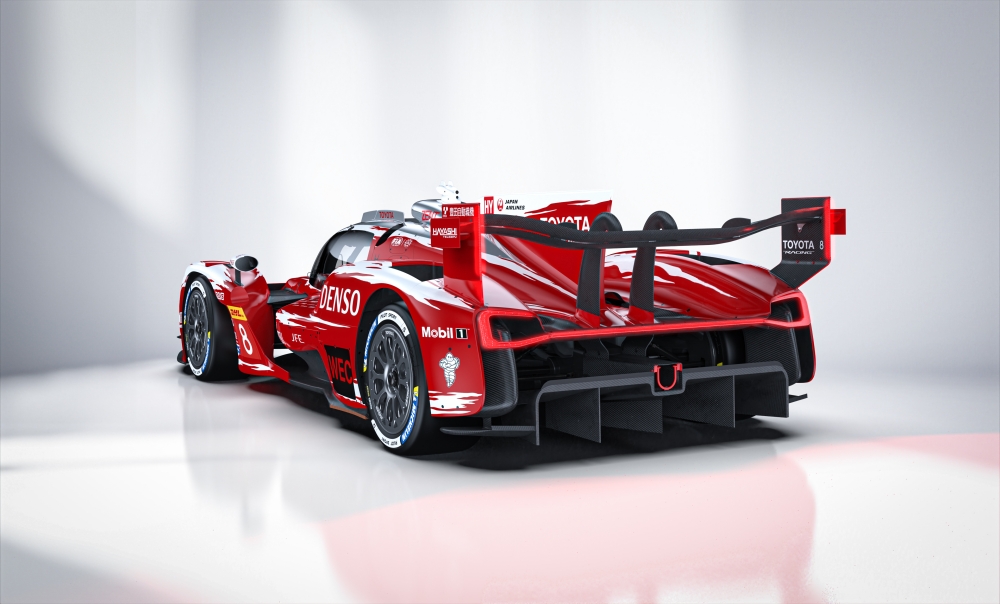
“Obviously, it’s a compromise. Some of the styling cues were too penalising in terms of aero, so we couldn’t use them, and some of the aero solutions were too compromising in terms of styling, so you have to find the right balance between the two and come up with the final product that we have now homologated.”
Beneath the bodywork, further changes have been made to the car, with Floury emphasising that a focus has been made on improving reliability. He particularly points to last year’s 24 Hours of Le Mans, when the #8 entry lost a wheel exiting the pits with four hours to go, and with it a likely top five finish.
Some of the styling cues were too penalising in terms of aero, so we couldn’t use them, and some of the aero solutions were too compromising in terms of styling
“We have made some small updates which are more linked to reliability than anything else,” he says. “We had a couple of small things last year, the biggest one being losing a wheel at Le Mans. These points we need to address. With the very competitive environment of WEC nowadays, if you want to win races and championships, you need to be perfect in all aspects.”
One of the challenges facing Toyota this year is the introduction of a new specification of Michelin tyre for the Hypercar category. The simultaneous introduction of a new aero package and a new tyre means a team known for its continuity has multiple variables to contend with entering 2026.
“The development timing for the tyre is not necessarily fully aligned with the development of the aero package,” Floury admits. “Right now, we still don’t have a very deep understanding of the 2026 tyres. We’ve taken part in all development sessions, but during the course of the development sessions, you share the duty between the different manufacturers, and you don’t necessarily always end up testing the final spec.

“We will definitely be in catch-up mode at the start of the year in this respect. The manufacturers involved in IMSA will start with a much better understanding of the 2026 tyres, so it is now up to us to do a very good job to maximise the learning and to come in as ready a state as possible.”
The good news for Toyota, however, is that between the aerodynamic updates at Alpine, BMW and Cadillac, the new arrival in Genesis, and the homologation wind tunnel-change related adjustments made at Ferrari and Peugeot, the majority of its Hypercar opposition will also arrive at Imola with significant unknowns.
“Obviously, [the new tyres] will be one of the differentiators and one of the elements we need to take into account,” says Floury. “This will definitely be a challenge, but not only for us.
“Then, in parallel to this, we have one new manufacturer with Genesis, and at least four manufacturers who will have developed their car in terms of aero, with no full clarity on what one or the other is doing in parallel, so it’s going to be an interesting start of the season.”
Visually, the TR010 Hybrid, adorned in a new red and white livery, has checked every box so far. Floury is more than aware, however, that the car’s real test begins once the FIA WEC season starts with Toyota’s 100th race in the championship at Imola next week.
“When you go racing, it’s a great thing to have a car that looks good and looks like it’s really representing the brand,” he says. “But at the end of the day, why we go racing is to win races, championships, and obviously Le Mans is a big target.
“Le Mans is probably the most challenging race in terms of endurance racing for circuit racing, and it is also now a very competitive environment. It’s a challenge, but we are up for the challenge, and we are aiming to achieve this.”
Images courtesy of Toyota, Michelin & Andrew Hall