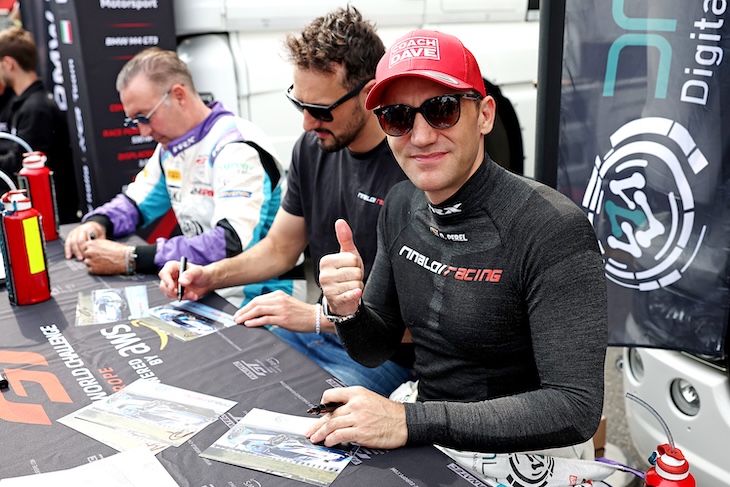

In 2026, David Perel is spoiled for choice with his racing programme.
The South African, known widely for his association with sim racing, is competing in the European Le Mans Series and Italian GT Championship with Spirit of Race, and in GT World Challenge Europe and the ADAC 24H Nürburgring with Rinaldi Racing, as part of his busiest campaign to date.
It’s a far cry from the early stages of his career. Perel only turned professional at 32, with the dream of competing at Le Mans motivating him to return to the sport after a seven-year break.
“I’ve had a strange career,” Perel tells DSC. “I started karting when I was 15, stopped karting when I was 22, and at 23 stopped racing entirely. Then I was watching Le Mans when I was 29, and I was like, ‘How do I get there?’ But I’d already known this whole time I wanted to race Le Mans. The stints seemed longer, you did a lot of driving, and that was my naive perception of it.
“And then I cold-called racing teams. They all said no, so I saved up enough money to do one race in Italian GT, which went fairly well considering my lack of experience. My teammates in the other car were fighting for the championship, and in that race, I was defending for them from their protagonists.
“Then I just clung on to the dream. Signed contracts for teams that I had no money for, did the championship, found sponsors along the way, and then in 2018, Rinaldi started to pay me, and since then I’ve only been paid to race.”
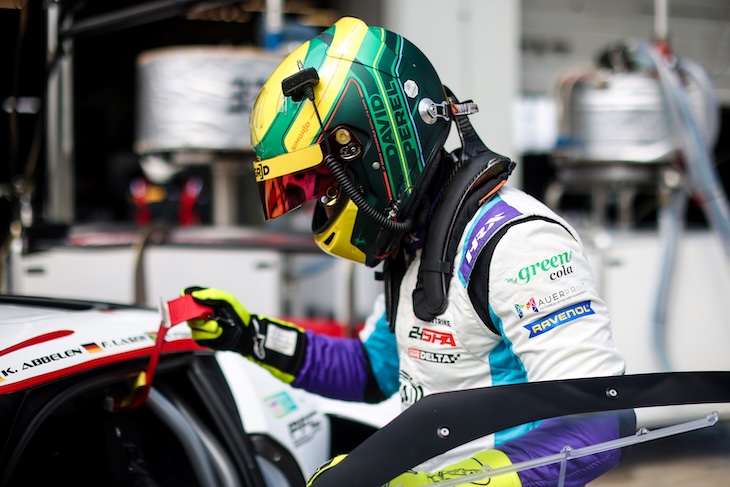
His second shot at motorsport didn’t come without risk. Committing to racing and subsequently moving from South Africa to London meant leaving the business he had started with his brother and the more stable lifestyle and income it provided, against his family’s advice at the time.
“I had a successful business with my brother, a tech company,” the 40-year-old reflects. “He was primarily a developer, and I was the interface designer for the company. We made cool products that were used by lots of people, and it was fairly successful in our industry.
“We were like some of the top guys in that world, and I threw it all away. By the time I’d spent all the money I’d saved trying to do these like races to get a foothold in GT racing, and moved to the UK, I was beyond broke.”
It was whilst at Rinaldi in 2018 that a chance meeting would define the most recent years of Perel’s career. When competing at the 24 Hours of Spa, he met Nick Foster, who was there helping the German team.
Perel won the race in Pro-Am, scoring his second consecutive Spa 24 class victory, and impressed Foster so much that the Australian invited Perel to race with him for HubAuto Corsa at that year’s Suzuka 10 Hours, where they finished second in Pro-Am alongside Hiroki Yoshida.

“I went to race in Japan with HubAuto, and Matt Griffin was in the other car,” Perel explains. “And we just got on really well. There’s strong chemistry there, but we never really kept in touch after that.
“Then eventually, in 2020, I started to race in the ELMS full-time, and competing against Matt, I must have caught his attention as a silver as he called me the following year to ask if I was available. And right at that moment, I’d just become available.”
Perel made the switch from Rinaldi to Spirit of Race for 2021, joining the long-established pairing of Griffin and Duncan Cameron in the #55 Ferrari to form what has gone on to become the longest unchanged line-up on the ELMS grid.
“The longer I’ve known Matt, the more I’ve come to appreciate him giving me this opportunity, because he’s got a lot of drivers that he helps, manages and supports,” Perel says.
“He’s trying to give back in his own way to racing by helping these younger drivers. And in the end, he called me straight away, and I didn’t appreciate that at the time, because I didn’t know him closely. I just knew he was a good guy.”
The #55 Ferrari trio is now in its sixth season together, and has won two races and claimed seven further podium finishes, as well as putting together multiple title challenges.

Over this time, Perel and Griffin have developed a strong collaboration, despite significant differences in their styles once they get behind the wheel.
“I hope it continues, because we have a really good working relationship,” Perel says. “We work really well together. We have completely different driving styles, but we always seem to be within a tenth. One race, he gets me by a tenth. In the next race, I get him by a tenth, but he’s a right-foot braker; I’m a left-foot braker.
“If you look at our data, we can’t really learn much [from each other]. The most we can see is, ‘he carries a bit more speed through there’. How he does it is not how I would do it, but there is a possibility to carry more speed, for example. But when we come to setup and stuff, we give very similar feedback, and I trust him when he gives feedback. When he’s speaking to the engineer, it’s like, ‘that’s exactly what I feel’, and vice versa. So that creates good chemistry out of the car as well.”
The third member of the crew, Duncan Cameron, is now one of the most experienced Bronze-rated drivers in the field. The Briton has had a fair amount of success over the course of his career, but it’s not the be-all and end-all for him, as Perel explains:
“Duncan works with Matt, it’s not my business to get in the way of that. That’s their relationship that I have to make sure that I respect, so I never go in and coach Duncan. My relationship with DC is more just on a friendly level. When we’re having lunch, when we’re on the bike, we have a good chat, but professionally, I stay out of the way, which is how it should be.
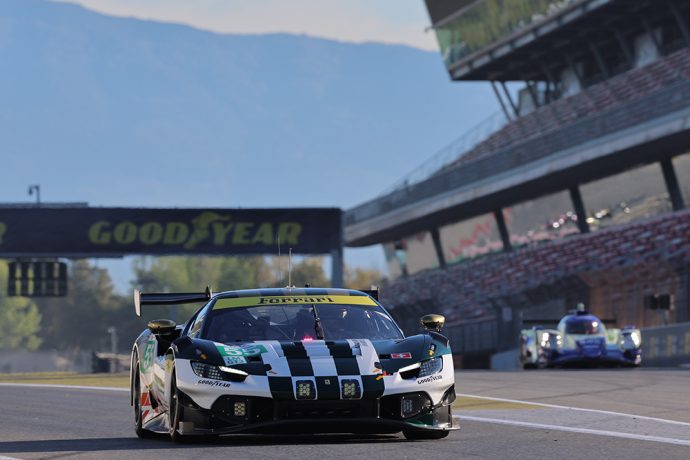
“Each Bronze driver is different. Some are very high intensity, who want to be involved in every single decision that’s made. Duncan’s not like that. He’s not the guy who’s going to pour over data. He’s got much more natural feel for what he needs to do. Matt understands that, the way they communicate and stuff like that.
“And the key thing, when you’re a professional driver, looking after these bronze drivers, is are they having fun? They have fun in different ways, and have different objectives. I’ve worked with guys who only care about getting the fastest lap in the weekend amongst the bronze drivers. So that’s your focus.
“Other guys, when I raced at Kessel, my co-driver just cared about winning and anything else but winning was not acceptable, so that’s a different level of intensity.
“And Duncan loves driving, so he gets a lot of time in the car. And obviously, he loves it when we do well, but if he has a good stint, then for us, that’s a successful weekend, regardless of the overall result. If DC is having a good time, then we’re good.”
Whilst his racing career has had its peaks and troughs, there has always been one type of racing which has been consistent in Perel’s life: sim racing. The 40-year-old discovered early on the benefits that sim racing could bring to elements of his real-world skills, something that has only gone on to increase as simulators have developed.
“When I was karting in South Africa, I lived in Cape Town. There’s only one race track, Killarney. And how are you meant to learn racetracks if you’re only doing the same racetrack over and over?
“I was addicted to racing games as a kid. Playing Gran Turismo 2, I realised I could use the game to learn race tracks. I could learn how to learn racetracks, because there are so many tracks in the game. It clicked for me very early on that you can use video games to become a better racing driver.”
I was addicted to racing games as a kid. Playing Gran Turismo 2, I realised I could use the game to learn race tracks
The Gran Turismo franchise also offered Perel his first taste of organising sim racing events, a step, fuelled by his competitive nature, he made with the series’ fourth instalment.
“Around the age of 21, I was playing Gran Turismo 4, the last version of Gran Turismo to not have an online element to it. I wanted to know if I was the fastest in the world, so I made a website where you could post your lap times, and then I would be able to compare my lap times to yours.”
Perel wasn’t the only one using Gran Turismo 4 competitively, however, with the game also the platform for arguably the most significant racing game contest of all-time, the Nissan GT Academy.
The multi-year programme launched several careers, taking three drivers as far as LMP1, and if it wasn’t for one piece of geographical misfortune, Perel could well have been amongst their ranks.
“When I stopped karting, I didn’t want to stop. I stopped because I ran out of money, and then GT Academy popped up. They had online qualifiers, with like one million entrants, and I finished fifth on the online times overall. But I never got the call to go to the Silverstone event because it turns out South Africa was a region that didn’t qualify. So then I just closed the door.
Everything came full circle for Perel during the Covid-19 pandemic, when, with racing on hold, the 40-year-old had to figure out how to make a living. What he created merged his history in tech, and his passion for racing and sim racing.
“You only get paid when you’re at the racetrack, so I was like, ‘What do I do now?’ I realised that there were so many missing elements in sim racing, and I could build all of them. So now most people know me as Coach Dave, which is the brand I created.”
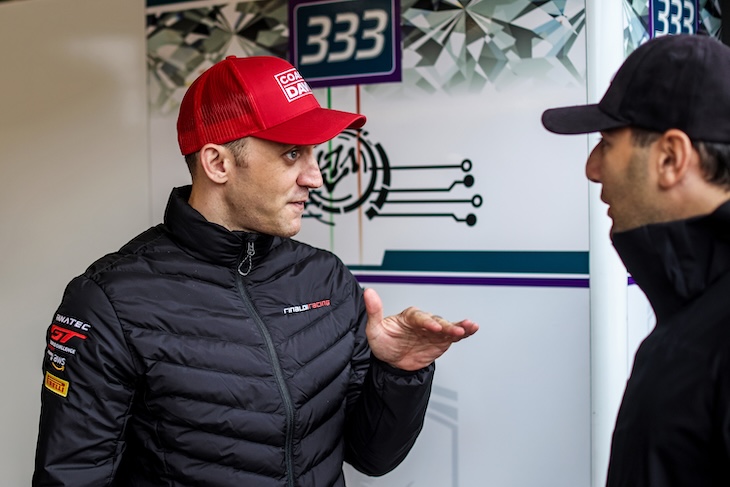
Coach Dave and Sim Grid, Perel’s coaching company and competitive organising body, respectively, have gone on to become staples of the online racing community. Le Mans Ultimate, for example, has Coach Dave Academy setups built directly into the game.
“Long before anyone gave Le Mans Ultimate a shot, I was like, ‘there’s something here”, because my whole career, I’ve been helping games where I can to get more realistic,” he explains.
“The team at LMU gave me early access to try the game, and at that time, it had a lot of bugs, but oh my goodness, it was fun to drive. Was it the most realistic? No, but they’ve made improvements since then.
“I’ve known Stephen Hood, who’s the CEO, for a very long time, and I said, ‘We build technology for online racing, maybe you guys could benefit from it’.
“It started with us building Race Control [LMU’s online portal], first just a WordPress blog that I built myself, and then it evolved into the full competition platform that they have now. And through that, we just got closer and closer, to where Coach Dave started to produce the setups in the game.”
The setup work is no mean feat. On release days, such as last month’s Version 1.3, which added two new cars and a new track, dozens of setups need to be created and rolled out within a matter of hours.
“We use a lot of technology now to make the setups,” Perel says. “We used to have a huge human workforce, which was up to 20 drivers at any time. They’re all contractors, esports drivers who helped us make the setups, but we’ve narrowed it down recently.
Before Le Mans Ultimate, Coach Dave and Sim Grid initially found success on Assetto Corsa Competizione, with Perel leveraging his experience to help develop GT World Challenge’s official game.
“I heard this game ACC was coming along, and then when I was at Misano for GT World Challenge, I saw them there,” Perel explains.
“I said I’ve been a sim racer my whole life, I know these cars inside out, I can help, and they were very receptive. I helped them with the audio, track accuracy, the [Ferrari] 488, the dash, and the way it feels.
“Through Sim Grid, we created some pretty epic competitions with big prize money. It was all my savings to try and build up the brand and create esports events. My ambition for sim racing has always been to get everyone in the industry paid.
“I was one of the guys who pushed esports very hard and wanted it to become pro. But I’ve come to realise that the unique thing with sim racing is that the casual player gets to experience what I get to experience, and that’s where we should be focusing. I think we need esports as the pinnacle. But Sim Grid almost does zero professional esports itself, we do casual esports.”
If it ended today, I’d be sad, but I wouldn’t be devastated like I was when I was 23
Looking forward, and Perel is aware that as he enters his 40s, the clock has started counting down on his professional driving career.
“If it ended today, I’d be sad, but I wouldn’t be devastated like I was when I was 23, because I just wanted to do Le Mans so badly. I could not stop thinking about it my whole life, and then I got to do it twice,” he says.
“2022 specifically, it far exceeded my expectations. Of course, I want to go back, but I don’t mind if I don’t; it’s okay. It was such a cool experience.”
The bucket list experiences haven’t ended at Le Mans, however, with other highlights including racing on home soil at the 2019 Kyalami 9 Hours, whilst in recent years the South African’s attention has increasingly turned to the Nürburgring 24 Hours.
On his debut in 2025, Perel led early before the car ultimately retired late on, and with the #45 Ferrari having already pre-qualified for Top Qualifying 3, his Realize Kondo Racing with Rinaldi squad is well positioned to challenge again this year.
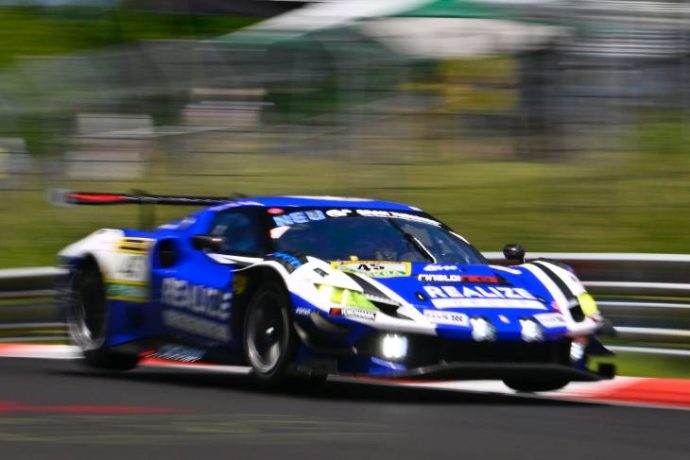
“I got a call early last year from Rinaldi to say that Kondo and Rinaldi are pairing up, and Michele [Rinaldi, team founder] was like, ‘I’m gonna give you a chance’,” Perel states.
“I started to get my permit, so I missed the first NLS race to finish getting my permit, and then I got in the GT3, and it was like heaven. It’s just the best place on earth for a racing car.”
Although being a racing driver has now been his job for almost a decade, Perel remains, first and foremost, a fan of the sport.
“I’m still obsessed with racing,” he says. “I can’t help myself. I think that there are very few drivers at this track who will try and watch every other race on the same weekend that they are racing as well, but I will try and watch MotoGP, DTM and F1 on three screens just before jumping in the car.”
If you need any proof of that obsession, look no further than his schedule during this month. When his ELMS and GT World Challenge Europe programmes clashed, Perel managed to pull double-duty, making the five-hour trip between Barcelona and Circuit Paul Ricard four times to compete for two different teams, in two different countries on the same weekend.
And in the weeks since, he’s competed at the Nürburgring and Imola before heading back to Paul Ricard for this weekend’s ELMS event. Five events in four weekends is far from a light workload, but for someone who’s already had to give up on the sport once before, it’s all part of the dream.
Images courtesy of SRO, European Le Mans Series, David Lord & Frozenspeed