20 years ago today at a damp Silverstone, 42 cars took to the grid for the inaugural round of the FIA GT3 European Championship, the maiden outing for SRO’s then-new GT3 formula.
Run on the support package for the FIA GT Championship, the first 60-minute encounter was won by Hector Lester and Allan Simonson aboard a JMB Racing-entered Ferrari 430 Challenge, with Race 2 victory going to Andrea Ceccato and Stefano Livio’s Dodge Viper.
The GT3 European Championship might be no more, but it will forever be remembered as the first home for a category of GT racing that has defined the past two decades.
“GT3 has surpassed all my wildest expectations,” Stephane Ratel, CEO and founder of SRO Motorsports Group, told DSC.

“The big success, I would say, is what was the Blancpain GT Series, which became GT World Challenge. Last year, we made a calculation that we were, since [starting it in] 2011, at 53 cars on average at each race.
“And every year, I promise you, I’m like: ‘That’s not normal, one year we’re going to come back to a normal grid.’ And every year we look, and we’re full.”
The global expansion of GT3 has been extraordinary, with the cars having now been adopted by the ACO, IMSA, Super GT, DTM, ADAC, Creventic and more.
And every year we look, and we’re full
SRO itself currently operates seven different GT3 championships across four continents, with its headline European competition joined by World Challenge series in American, Asian and Australia, British GT, Japan Cup and the Intercontinental GT Challenge.
With GT World Challenge Europe in such a healthy position, at 59 cars for the Endurance Cup, 45 for the Sprint Cup and over 70 expected for the 24 Hours of Spa, the focus has turned to how to elevate SRO’s newer series to the same level.
“We do have successes, but we haven’t reached yet the level that we have in Europe,” Ratel reflects.
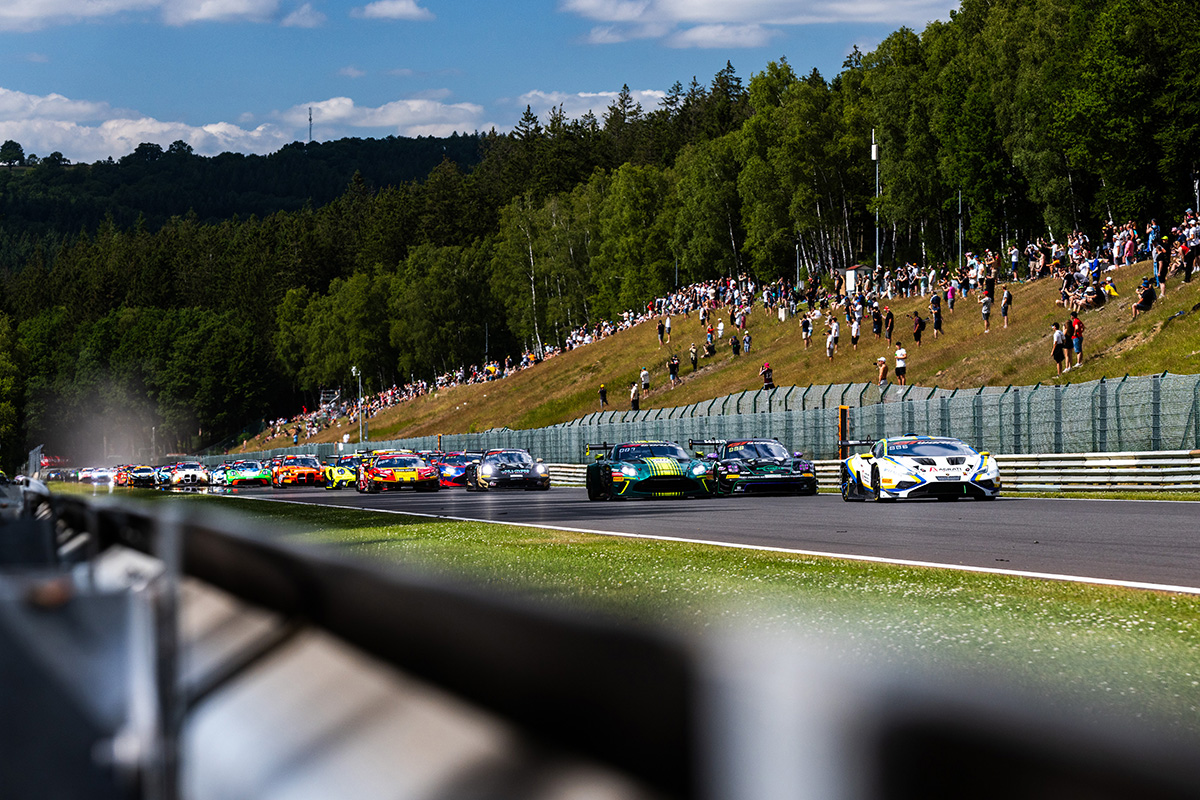
“It gives us the ambition to say, if we do it here [Europe] to this level, the US market is big enough to do the same thing. The Asian market is big enough to do the same thing. And Australia is a smaller market, but it’s such a motor sport environment country that we should be able to grow it, even if, and the fact that we do have, people would say yes, with hindsight, much more difficult.”
SRO’s success in Europe, where it competes against the likes of the European Le Mans Series, has encouraged Ratel that the GT World Challenge product can happily run simultaneously to IMSA in North America, owing to its single-class appeal.
“In Europe, we have Le Mans, we have WEC, we have the ELMS and all of that,” he states. “I think the fact that our DNA is GT3 racing, separate grids, is why, despite the appeal of Le Mans, the fact that we offer something different, where GT3 wins overall, and where drivers only race GT3 cars among other GT3 cars…it’s a unique product.
“Now that we’ve finally changed the format in America to something normal, we hope not to take people away from IMSA, because that has never been our objective, but to bring more people into the sport.

“What I’ve always believed from the start is we need to grow the cake. The further you grow the cake, the bigger your share of the cake. Even if you keep the same share, but if you grow the cake, you will have more on your plate.”
One of the challenges that motorsport faces compared to other sports is the expectation, both on the technical and sporting front, to be consistently changing its format.
GT3 has, so far, successfully toed the fine line between evolution without revolution whilst remaining relevant, with Ratel highlighting a focus on the teams as SRO’s key to maintaining this balance.
“The way we manage our championship is really with the teams,” he explains. “Usually, especially in Europe, at the end of each season, we meet the teams one by one and note if they have any remarks. If only one team has a remark, it’s a remark. If multiple teams tell you the same thing, it starts becoming a complaint or a suggestion, and we have, over time, designed and evolved our championships according to the proposition from the teams.
“I must say, we’ve gotten in Europe to the point where, thanks to our new race directors, thanks to our new structure, sporting, technical, the vast majority just say don’t change anything.”
Managing a series, however, is a different challenge when grids aren’t at capacity, such as in GT World Challenge America. Rather than retaining current teams, the task also involves attracting new ones.
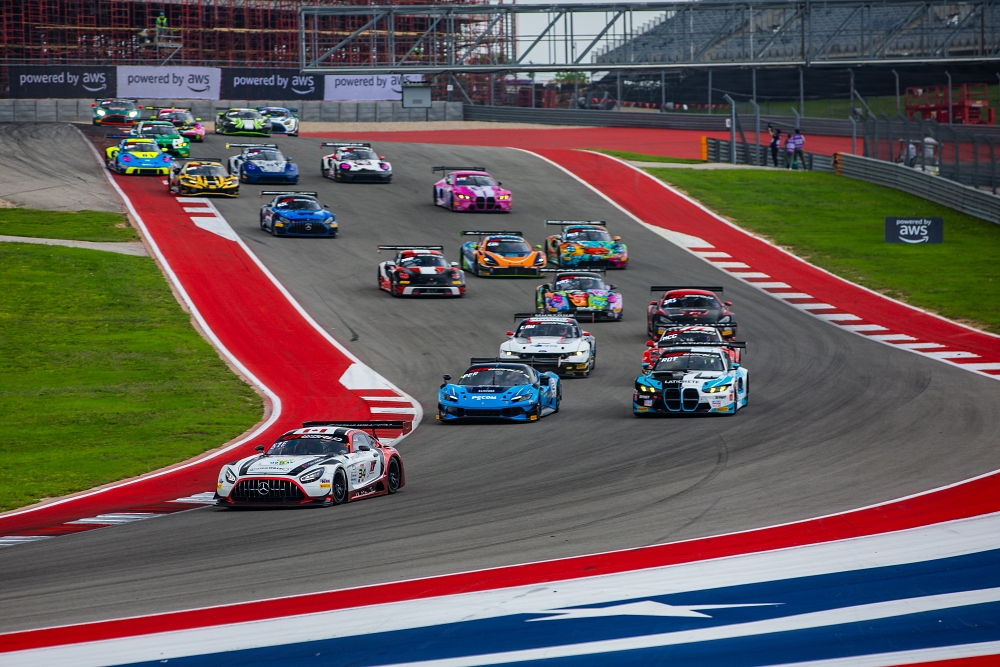
“The problem is that you shouldn’t look only in your paddock, because the people that are there are there, but you need to listen to try to understand why the other ones aren’t there,” Ratel continues.
“Then you try to define things and to evolve. I think in America, to come to one type of racing with one format, a three-hour format, and at the end the Indy 8 Hours, we now have a proper format to hopefully start to develop.”
Although it has evolved steadily, GT3 has undergone a significant transformation since 2006. The cars have advanced significantly, as has the calibre of the competitors.
The GT3 European Championship, for instance, initially prohibited factory drivers, whilst at least eight manufacturers are set to bring works-backed efforts to this year’s 24 Hours of Spa, where the expectation now is that all of their machinery will run trouble-free for the entirety of the twice-around-the-clock enduro.
The cost per kilometre might still be efficient, but it has become more expensive
This professionalisation has truly brought GT3 into the mainstream, with the category now a firm fan-favourite amongst the wider motorsport community. Ratel, however, is wary of how much they should infringe upon what he refers to as the “pillars of GT3”, the foundations upon which the formula was created.
“There are some challenges, and the most important is cost. At one point, it gets too expensive,” he cautions.
“GT3 was cost-effective. Before Covid, the vast majority of the grid were all like 400,000 euros, to 600, and [now] everything is close to 900, it has taken a big hit. The cost per kilometre might still be efficient, but it has become more expensive.”
One of the challenges with this, however, is striking the correct balance between keeping costs down and retaining a focus on prestigious machinery, which naturally adds to the price.

“I used to say, GT3 is like the platinum dome of the most prestigious manufacturers and iconic models. I think we have taken a bit of a risk by allowing cars that are neither iconic nor very prestigious,” Ratel states.
“Don’t get me wrong, I think cars like the Mustang are great, [but] at the beginning, I was horrified, saying ‘how can you have a $30,000 car racing a $300,000 Ferrari?’
“Then Mark Rushbrook [Ford Racing’s global director] came to see me, and he presented this very special Mustang Dark Horse, and that, I think, did the job, and the car is impressive.
How can you have a $30,000 car racing a $300,000 Ferrari?
“I’m always very careful and say, at a time, will it work for a long time if a Ferrari and an Aston start being beaten by a much lower category in terms of market positioning. So that was always one of the pillars that was eroded a bit. I don’t say it’s fallen, because you still have all these prestigious brands, but it’s a bit eroded.
“Then you have the customer racing aspect of it, and it’s why I’m fighting all the time to make sure that the manufacturers don’t just produce 20 cars, which is the regulation, but that they also race these cars.
“Because if you start having manufacturers that produce 20 cars, but they give seven to three factory teams, then it becomes a factory programme. You can do one in WEC, one in IMSA, one in Super GT, and that’s it. That’s no longer customer racing.”

For Ratel, what matters for GT3’s future is, rather than attracting new manufacturers en masse, adding ones that will commit fully.
“We want the manufacturers that come like before. You come, you present a car, you produce 50. Everybody has one already. Not, we’re producing 10 in the first year, and we’re going to see to whom we’re going to give it.
“My view is that if you are a manufacturer, you want to come in a category that allows you to go to DTM, Le Mans, the World Endurance Championship, the Nürburgring, Bathurst, Spa and all the races that form the IGTC, in addition to all these GT championships around the world. There is a rule, and you need to respect this rule.”
The pillar most under threat in recent times is the fundamental key to making a car a true GT machine: basing a model off a car that can be bought from the showroom.

“An essential pillar, since the beginning of GT racing, is that it’s a road car going racing. Now, the Toyota and the new Mercedes-AMG are cars that have been developed to allow the homologation of a road car from a race car,” Ratel notes.
As long as GT3’s pillars are protected, though, Ratel sees no reason why its success cannot continue for at least another 20 years.
“As long as it remains customer racing, as long as the manufacturer needs not only to sell but to race quite a large number of cars, then they need to remain at the price where they can sell and run these cars,” he says in summary.
“The moment GT3 completely replaces GTE, we’re in danger, because the same cause, the same effect.”
Images courtesy of Mercedes-AMG, SRO, DPPI and Jack Webster