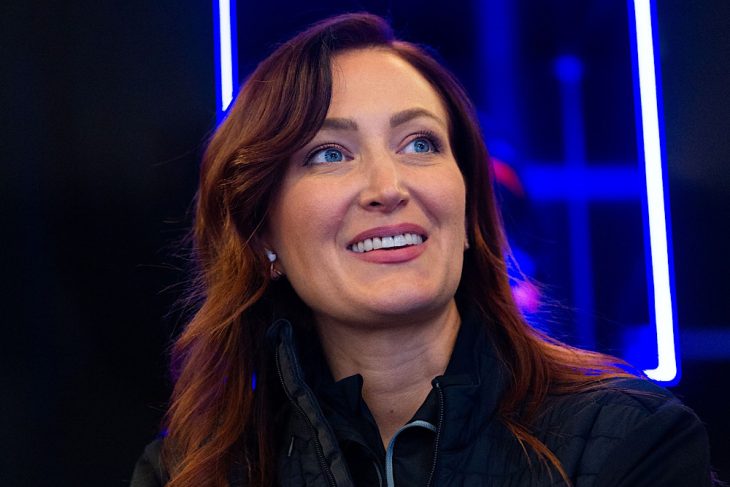

With more than 600 days on the job now, Cadillac Racing’s sportscar boss Keely Bosn is fully settled in, overseeing the dual V-Series.R programme across IMSA and the FIA WEC, and managing the GM brand’s relationships with its three works teams: JOTA, Action Express Racing and Wayne Taylor Racing. But it’s a full-on role, in which no two days are the same and no months pass without important events, meetings and/or milestones.
Since her tenure at Cadillac began, results have been a mixed bag, but everything seems to be coming together nicely as we reach the business end of the 2026 season. Action Express’ IMSA title challenge (despite the recent setback at Elkhart Lake) is in full flow and will be in the spotlight in the weeks ahead; JOTA looks poised to take a second Hypercar win before the end of the season in the WEC, and Wayne Taylor Racing looks more like its old self after an encouraging return to Le Mans in June and its visit to victory lane at Road America earlier this month.
In 2025, there were no titles to celebrate and a number of near misses in both championships, but the fan-favourite, V8-powered LMDh prototype still produced a number of standout performances. It won the IMSA Endurance Cup races at Indianapolis and Road Atlanta at the tail end of the season with Action Express, clinched a milestone first Hypercar victory in the WEC at São Paulo with JOTA, and locked out the front row at Le Mans for the British team’s first appearance at the race as a two-car factory team.
The big headline coming into this year for Cadillac was the EVO ‘Jokers’ it brought to the car, focused on aero and braking performance. Whether or not they would make it more consistent over race stints, nimble in traffic and effective in dirty air were the overarching questions before its debut at the Rolex 24 at Daytona. In hindsight, with 11 races now in the books, Bosn is confident that the updates have achieved their aims and set up the programme nicely for the end of this year and next.
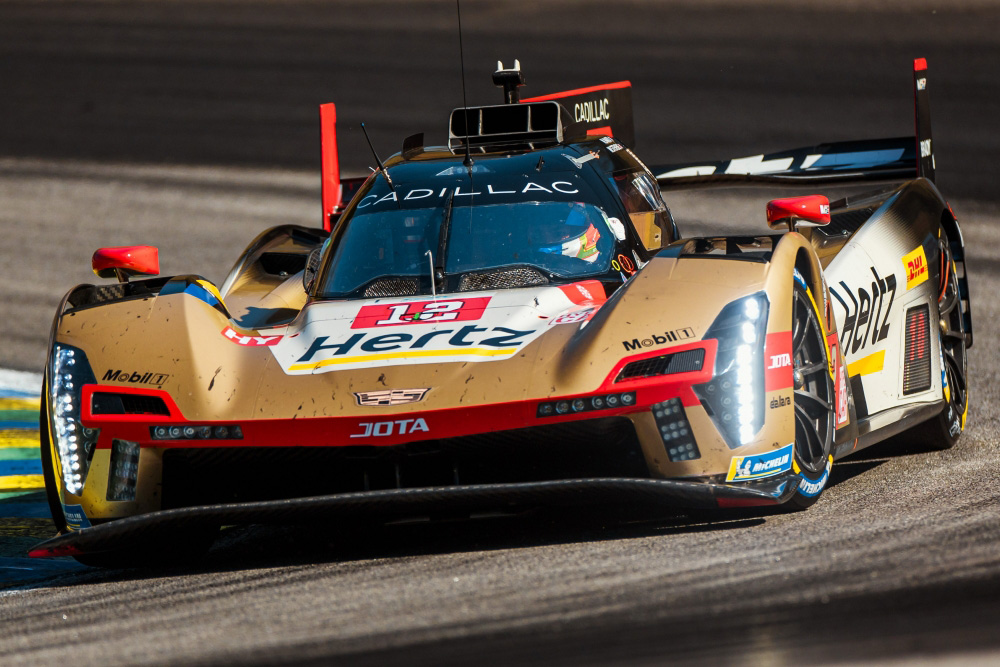
“I’m pretty confident,” she says of the car’s potential going forward. “I think the cars are looking strong coming out of Le Mans. You know, we saw we had the pace, we had a potential win there or a potential podium. And I think we’ve seen just the strength overall of the JOTA organisation. And so on the WEC side, we’re hoping for a second win soon.
“We developed the aero EVO over the past year or so. We hit the ground running; we showed some pace in IMSA, at Imola and Spa, and then going into Le Mans, especially, we were looking to optimise the performance package that we’ve been working so hard on for the aero side of it. I think that really showed at Le Mans because we saw that added performance this year over last.”
That doesn’t mean the work stops. Far from it. Cadillac still has high hopes of winning Le Mans before the car reaches the end of its life, a World Championship and more signature results in IMSA. And in order to achieve those goals, it may introduce further updates to the car in future seasons as we approach the ruleset change in 2030.
We hit the ground running; we showed some pace in IMSA, at Imola and Spa
“We’re always looking to optimise, looking for those tiny performance and drivability gains in all areas of the car,” Bosn continues when asked about future plans to update the V-Series.R “From a development standpoint, we have some of the most proficient engineers we can, who are always looking to find those gains. So we’ll just keep doing that and keep working with our suppliers and keep working on the car.”
Asked if there are specific areas Cadillac is looking to focus on next with EVO ‘Jokers’, Bosn is keeping her cards close to her chest. “We want to improve everything!” She laughs.
As for the size and shape of the programme going forward, there are some big discussions and decisions looming for Bosn and the higher-ups at General Motors too. Action Express is at the centre of this, as its body of work with the V-Series.R deserves not to be, and should not be, overlooked.
Big Endurance Cup wins at Sebring, Watkins Glen, Indianapolis and Petit Le Mans have been achieved since the programme debuted in 2023. Titles have been won too. And the long-standing Gary Nelson-run team looks set to add to its bulging trophy cabinet at the end of this season, as the #31 crew, led by Jack Aitken, leads the standings with two rounds to go.

There will be plenty of speculation heading into the off-season about the potential for a second car for the team to be deployed next year, as it has consistently fought at the sharp end for two seasons now. AXR was believed to have come close to expanding its effort when Cadillac Racing and Chip Ganassi Racing severed ties at the end of 2024, but a three-car stable, with two machines for WTR, was the final call.
Will that change for 2027? It would certainly come as a huge boost to the IMSA GTP grid if it added a fourth car, with the field set to lose Acura at the end of the current campaign and McLaren, Genesis and Ford all still mulling over joining the grid.
“I think it’s always a negotiation across the teams and the manufacturer of what the goals are,” Bosn explains when asked if it’s time to expand Action Express’ programme. “You know, I can’t comment on whether we would expand the current programme that we have, but I think AXR has blown everyone out of the water with their performance. They have a secret to finding some exceptional drivers and creating a culture that really benefits everybody that’s around them. They’re a strong team, and I’d like to see them keep doing what they’re doing.”
As for the other side of the Cadillac Racing pit stall in GTP, Bosn has been encouraged by the progress made by Wayne Taylor Racing to close the gap to the Whelen-liveried car this year, en route to its first win with the V-Series.R.

“We’ve now won six out of the last 10 races (dating back to Indianapolis last year),” Bosn reflects. “We were fast last year at Sebring, then from Detroit on; it just took until Indy to win. This year, I think we’re starting to really see those results in IMSA. Our goal at the beginning of the season was to make all three cars equal in performance as much as possible because we really struggled to get everybody up to speed with a whole new team coming in, and I think we’ve really seen that work begin to pay off this season, which is promising.
“I think WTR put in all the hard work that they need to find the pace and get the car set up properly for the drivers. Their drivers now know the car. And a learning curve is always something that occurs. So I think we’re finally in a position that between WTR and AXR we’re going to be competitive with each other. We saw that at Watkins Glen, right? And of course Road America! I think the teams are starting to come together and show a partnership and competitiveness as one. And it’s exciting that Wayne Taylor’s car was on pace at Le Mans. The result didn’t reflect it, but that performance was pretty stellar.”
I think the teams are starting to come together and show a partnership and competitiveness as one
Looking further than the raw race results over the past 12 months, Bosn has also taken pride in the Cadillac LMDh programme’s other achievements on the periphery, notably its award wins for sustainability in both the WEC and IMSA. At Le Mans, she received a DHL Sustainability Award on behalf of Cadillac and General Motors – which proved tough to carry onto her flight home as a personal item! She also helped secure a similar title at Watkins Glen and Road America for the IMSA side of the programme, from tyre supplier Michelin.
These initiatives, on the face of it, are easy to overlook. But from the point of view of a manufacturer like Cadillac and a parent corporation like General Motors, these accolades have become increasingly important in helping justify a programme’s existence at board level and showcasing a brand’s general outlook on the future.
“I can tell you on a personal level, it’s extremely important to me,” Bosn says. “In addition to a business degree, I have a master’s in sustainability, so I really wanted to bring that background and passion to this role. I take it seriously. We’re already looking towards the Le Mans Sustainability Award for next year, and working on what we can start to do now to remain a contender.

“We put a lot of effort last year into understanding where we ranked and what different areas we could improve upon. We set our baseline, then we worked to look at what type of measurable successes we can show to the organisation.
“We did a lot of work on the community and social side,” she continues. “We partnered with a local school to Le Mans and asked all the children to draw what they thought a sustainable race car would look like on the track, and displayed those over in our fan zone areas. That was one way that we helped involve the younger generation and try to show a level of STEM engagement.
“We also switched out logistics from the U.S. over to France with the WTR team, and shipped all of their equipment over. We looked at sea freight over air freight, as it’s much more sustainable. Then we went all the way down to what’s on the menu for catering and had no single-use plastics within our facility. On top of that, we installed water stations in two different locations around the track too, for fans and track staff to use.
“These goals sit within the Cadillac organisation within GM. Sustainability is definitely a topic at GM as we look to balance EV and ICE vehicles around the globe. So winning that award both at Le Mans and showing that we could also do it on the IMSA side, which is a little bit different criteria, was a huge milestone.
“In IMSA, with Michelin (the award accepted by Kristian Aquilina, the VP of Global Cadillac below), they’re measuring tyre and energy use, and then they’re also looking at how you balance that for your overall performance and your competitiveness on the track. Essentially, it’s testing a manufacturer’s ability to be fast but also efficient. We’ve shown that we can do this.”

On the road to 2030 and the shift to a single platform in Hypercar and GTP, the cost, relevance and return on investment for a brand like Cadillac in sportscar racing will all once again be on the agenda. Bosn’s primary task is to set out her vision and justify it to ensure it keeps coming back at a time when General Motors, amongst other things, has been getting an F1 programme off the ground and transitioning to the next ruleset for IndyCar.
Following the ACO’s pre-Le Mans conference, where it presented the framework for the next ruleset, which will see Hypercar and GTP move to a rear axle-driven hybrid ruleset that, on the face of it, leans more to the current LMDh technical regulations, Bosn remains upbeat.
The hope is by the end of the year we have a solid framework, so we can really start to work on development
“I think I have the same level of positivity as I did before the conference,” she says. “You know, I previously said that we were looking for it to converge into one single platform, so I was excited to see that that truly was the case. I think that lends us some flexibility in different areas.
“As the working groups continue to occur over the next few months, I think we’ll start to really dial down and understand what that impact will be on the manufacturer side. But I think overall the regulations are what we expected them to be as far as an outline, and I think the overall goal is still to keep costs down, which is good.
“I am very hopeful that that continues to be the focus, and we, within Cadillac, are starting to try to lay out our plan while also navigating the working groups. The hope is by the end of the year we have a solid framework, so we can really start to work on development and get that ball rolling next year, so that we’re not behind.

“We’re evaluating it now, right? Until the end of the season this year and probably into early Q1, Q2 of next year, we’ll be fully laying out the plan, and that takes a lot of players involved between engineering suppliers trying to understand what it is that GM wants to accomplish and how we take what we have today, and all the lessons learned.
“We pulled this car together very quickly; now we have a little bit more benefit of time. We can say: ‘If we were to build it from the ground up, what does this look like?’ So I’m excited that we have a little bit more time. But time is ticking away, and so we need to get moving on it.”
As for whether or not Cadillac would maintain its two-pronged approach in IMSA and WEC going forward, Bosn is bullish on that too. In the wake of Lamborghini walking away after 2025 and Acura announcing its ‘pause’ from 2026, she believes that IMSA GTP will remain competitive, and as important as ever to GM in terms of visibility.
“I personally don’t have any concerns,” she said of GTP’s future. “I think it’s a time of change, right? I think the manufacturers that we’ve seen joining WEC and/or, you know, leaving, that it’s all just part of everyone’s bigger marketing plan.
“We’ll see how the series changes in the next few years, but I think overall, I’d say the strength of both is very strong. We’ve seen that in viewership and participation from the fans, and I think that both will continue to stay strong into the future.
“We took a big step in expanding with having the three teams and the five cars over this past couple of years. The hope now is to continue doing what we’re doing and to make sure that we’re always focused on raising the bar of performance.”
Images courtesy of DSC, DPPI & Cadillac Racing