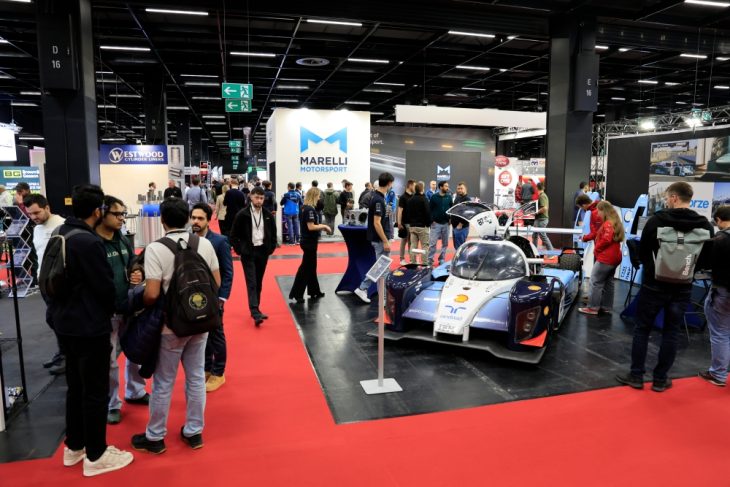

The engineering and technology underpinning the present and future of sportscar racing will take centre stage when PMW Expo returns to Cologne next month on November 11-12, with a technical programme spanning hydrogen combustion, hybrid powertrains, GT3 engine development, advanced materials and the future of endurance racing.
More than 200 specialist exhibitors and over 3,000 industry professionals from more than 45 countries are expected at the event, which focuses on the engineering, technology and supply chain supporting motorsport, high-performance automotive and niche vehicle manufacturing.
For industry professionals working in the FIA World Endurance Championship, IMSA and international GT3 competition, the programme includes several key sessions examining relevant technologies and engineering challenges.
Among the highlights are discussions on MissionH24’s work toward hydrogen-powered endurance racing, Lamborghini’s development of its Temerario GT3 powertrain, modular battery systems for hybrid applications and the industrialisation of metal additive manufacturing.
Hydrogen combustion features prominently in the programme, with two sessions on the opening day examining the technology’s potential in high-performance applications.
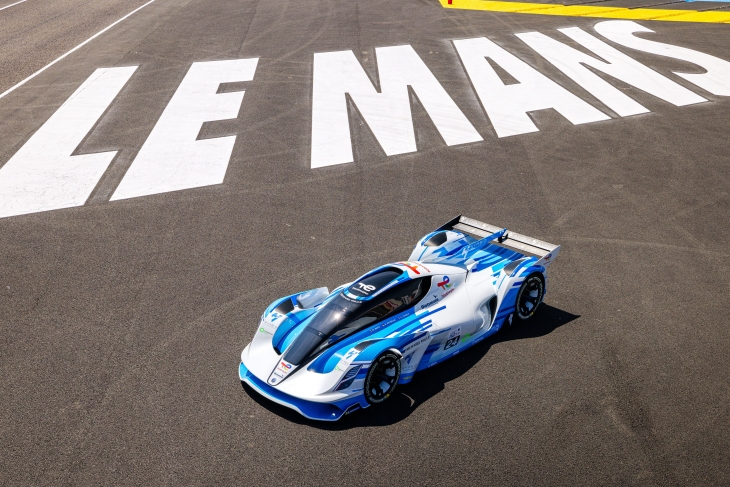
At 16:00 on Day 1, MissionH24: Internal Combustion Engine and Liquid Hydrogen in Motorsport will bring together representatives from MissionH24, Toyota Racing, Michelin, FORVIA, Fortescue Zero and Motion Applied.
Speakers include Bassel Aslan, the technical director at MissionH24; Yann Drouvin, project leader H2 Development at Toyota Racing; Serge Grisin of Michelin; Pierre Tipner of FORVIA; Douglas Campling of Fortescue Zero; and Sam Guest of Motion Applied.
MissionH24’s work toward hydrogen-powered endurance racing, including the ambition for a dedicated hydrogen class at the 24 Hours of Le Mans in 2030, makes the session particularly relevant to the future direction of the discipline. The panel will explore the engineering challenges and opportunities surrounding liquid hydrogen and internal combustion engines in future endurance racing.
Earlier in the afternoon, at 15:00, Richard Cornwell of Ricardo and Chris Ward of JCB Hydromax will discuss Pushing the Limits of Hydrogen Combustion – JCB Hydromax 805 hp Record Engine.
The session will examine the engineering behind JCB’s 805 hp hydrogen combustion engine and its record-setting project, offering a practical look at the potential of hydrogen combustion in high-performance applications.
Hybrid technology is also represented in the programme. At 13:40 on Day 1, Dr. Temoc Rodriguez, technical expert for electronics at Ricardo, will introduce Advanced Modular Battery Systems for Hybrid Powertrains.
The session will focus on Ricardo’s AMBERS platform, a scalable battery technology designed to support high-performance hybrid applications, with potential relevance for both OEMs and privateer efforts.
At 14:00, Danny Hammond, head of design at MAHLE Motorsport, will present From Road to Race: Power Cells for Energy-Starved Race Applications. The session will explore the transfer of technology between road and race applications, including the challenges surrounding energy management, heat management and future emissions requirements as manufacturers balance performance, efficiency and regulatory demands.
GT3 and LMGT3 remain central to international sportscar racing, and Lamborghini’s latest model will feature in a session examining the engineering behind its new powertrain.
At 14:40 on Day 1, Davide Bizzarri, head of vehicle motion and energy management at Automobili Lamborghini, will present Lamborghini Temerario GT3: Pure Racing Soul of a BiTurbo V8 Engine.

The session will examine how Lamborghini has developed the Temerario’s twin-turbo V8 racing engine from the road car’s hybrid architecture into a dedicated combustion-engine package for GT3 competition.
The subject offers an insight into the engineering considerations involved in translating road-car technology into a purpose-built racing application, particularly as manufacturers continue to develop competition platforms around increasingly complex road-car architectures.
The second day includes a session at noon on the growing industrial role of metal additive manufacturing. Giulio Del Fré of Robert Bosch GmbH will present Industrialised Metal Additive Manufacturing – Printing V8 Engine Heads.
The session will examine industrialised applications of metal additive manufacturing, including the production of V8 engine heads, and the potential to move beyond prototyping toward repeatable manufacturing of complex, high-performance components.
Elsewhere, the programme will look at the commercial and organisational factors that shape motorsport engineering.
At 10:30 on Day 2, Richard Hull from Motion Applied will present A Tale of Two Paddocks: Motorsport Culture in Europe and America.
With IMSA, the FIA WEC and other international racing series operating across different markets, the session will explore contrasting approaches to technology adoption, commercial strategy and team decision-making in European and American motorsport.
Cost pressures and regulatory requirements will be examined in The $3,000 Helmet: Compliance-Driven Cost Inflation, presented by David Vaucher, Managing Director of Vaucher Analytics, at 11:30 on Day 1. Using helmet costs as a case study, the session will consider how regulatory and safety compliance can drive costs in motorsport, with implications extending beyond equipment to the wider financial pressures facing teams.
The human side of performance will also feature. At 11:10 on Day 1, Dr. Mandar Hazare, F1 performance engineering lead at General Motors, will present High-Performance Culture – People, Behaviours and Environments, exploring the people, behaviours and working environments that help engineering teams perform at their best.
The event will also host ‘Introduction to Vehicle Dynamics in F1’, a full-day short course on November 11 led by Javier Bermejo and Alex Burg of Racetrack Dynamics.
Drawing on experience from Formula 1 engineering environments, the course is aimed at engineering students, Formula Student teams and early-career professionals looking to develop their understanding of vehicle behaviour, handling, suspension, weight transfer and performance.

For event director Ben Hutchinson, the emphasis for the PMW Expo this year is on providing access to relevant expertise, technologies and people across the motorsport supply chain.
“Motorsport is ultimately about finding performance through engineering,” he says. “PMW brings together the companies developing the components, materials, systems and technologies that make that possible, alongside the engineers and decision makers who need to understand what’s available and what comes next.
“One of the most valuable things a visitor can take away from PMW is a conversation they wouldn’t otherwise have had. Whether that’s discovering a new supplier, challenging an existing approach or finding a technology that could solve a problem within their own programme, those connections can have a real impact long after the show.”
Endurance racing, in particular, provides a demanding environment for the development of new technology, with competing requirements around performance, efficiency, reliability and energy management.
“Endurance racing has always been a demanding environment for engineering innovation,” Hutchinson continues. “The work being done around hybrid powertrains, hydrogen combustion, materials and energy management shows just how broad that challenge has become. What interests me is seeing the engineering behind these developments and understanding how they could shape the next generation of performance vehicles.”
For exhibitors, the event provides access to an audience directly interested in the technologies on display.
“For our exhibitors, PMW is an opportunity to get in front of a focused audience that understands what they do,” Hutchinson notes. “These are conversations with engineers, technical decision makers and buyers who are looking for solutions, not simply browsing. That relevance is what makes the event valuable.”
The overall objective is to help visitors understand the industry’s direction and identify the people and companies developing the technologies that will shape its future.
“What I want visitors to leave with is a clearer understanding of where the industry is heading, who is developing the technology and who they need to speak to. If PMW helps someone make a new connection, identify a solution or see a technical challenge differently, then we’ve delivered something worthwhile.”
PMW Expo takes place in Cologne on November 11-12, 2026, and there are still visitor passes available.
REGISTER FOR YOUR FREE VISITOR PASS HERE >>>
Meanwhile, the deadline for exhibitors to sign up is fast approaching, with any sign-ups needing to be completed by 30th of October to guarantee floor space.
Images courtesy of PMW, H24 and Lamborghini