Welcome to Part 3 of DSC’s GM Motorsports adventure, covering the Technical Center’s role in the Cadillac LMDh programme. Missed out on the previous parts? Catch up HERE: PART 1 | PART 2
The third and final part of DSC’s Tech Center journey took place at CoTA for the FIA WEC’s Lone Star Le Mans weekend, spending time with Jeromy Moore, Cadillac’s chief LMDh engineer, to get a deeper understanding of the impact that the Technical Center has had on GM’s flagship sportscar programme with Cadillac.
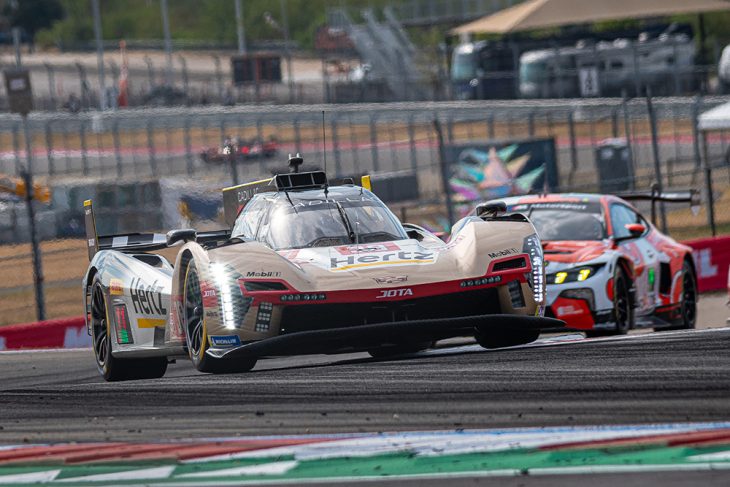
The V-Series.R that we see competing around the world in the FIA WEC with Hertz Team JOTA, and across the USA with Wayne Taylor Racing and Action Express Racing, has evolved significantly since its 2023 debut. From the outside, the Hypercar/GTP era may look pretty static, with development on the cars and testing heavily restricted, and Balance of Performance systems in place to keep things close.
The rules have been relaxed significantly since the manufacturers arrived in droves in the build-up to Centenary Le Mans though. Additional ‘EVO Joker’ updates are now permitted to each OEM following a rule change for this year. A procedure also allows factories to apply for dispensation to bring further performance-related updates beyond the stated allocation, helping those lagging make up ground.
Still, this formula has, to a degree, remained successful in keeping a lid on spending, by design, to prevent a repeat of the LMP1 Hybrid era, when the steep performance curve put newcomers off that Audi, Porsche and Toyota’s prototypes went on. Programme budgets skyrocketed as the cutting-edge hybrid technology matured between 2014 and 2017.
“I enjoyed that era,” Moore (below) notes, “I worked in it, and as an engineer I’d rather we went flat out, but it priced itself out of the market. It’s a sport after all, and you need tough competition; you don’t want to race yourself.
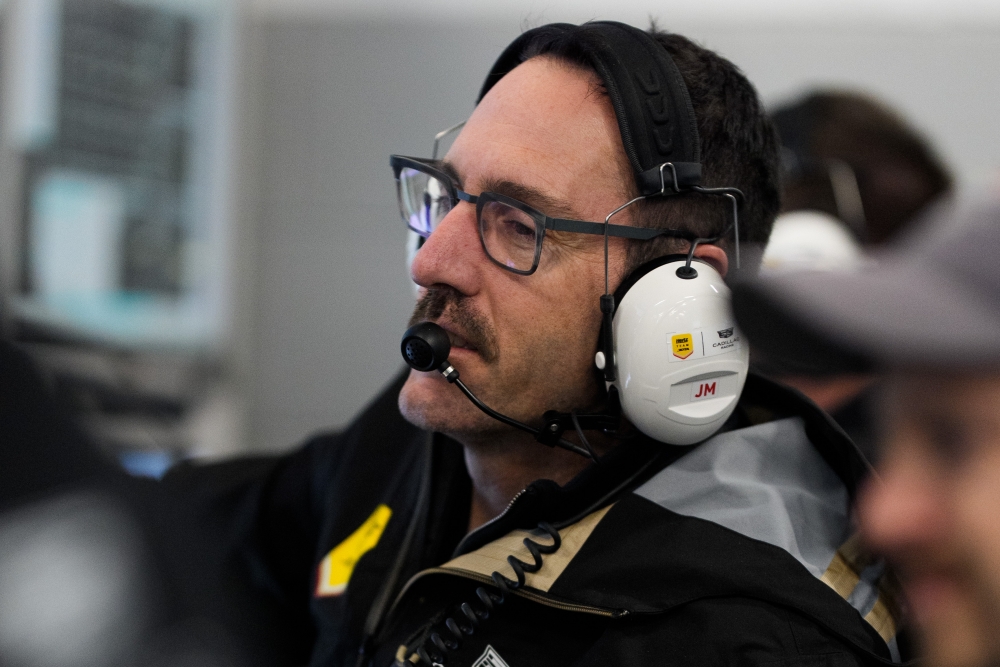
“The rules are about making it technically challenging for the manufacturers and interesting to be able to develop technology, but also have a series where everyone’s wanting to watch, and manufacturers and teams wanting to compete in. So I think they’ve struck the right balance.
“You can always be better, and the focus is always on making the next step better. But at the moment, a lot of manufacturers are coming in. It’s a strong sign that the series is healthy at a time when it is not the best time economically.”
****
So, if you’ve designed an LMH, or in the case of Cadillac, an LMDh prototype to compete in the WEC and/or IMSA in the current era, how can you make a difference and find consistency when the rulemakers wield the power to alter your car’s power and weight throughout each season? This is where the brains trust at GM Motorsports, its partnerships with key suppliers, and its investments in technical facilities come in.
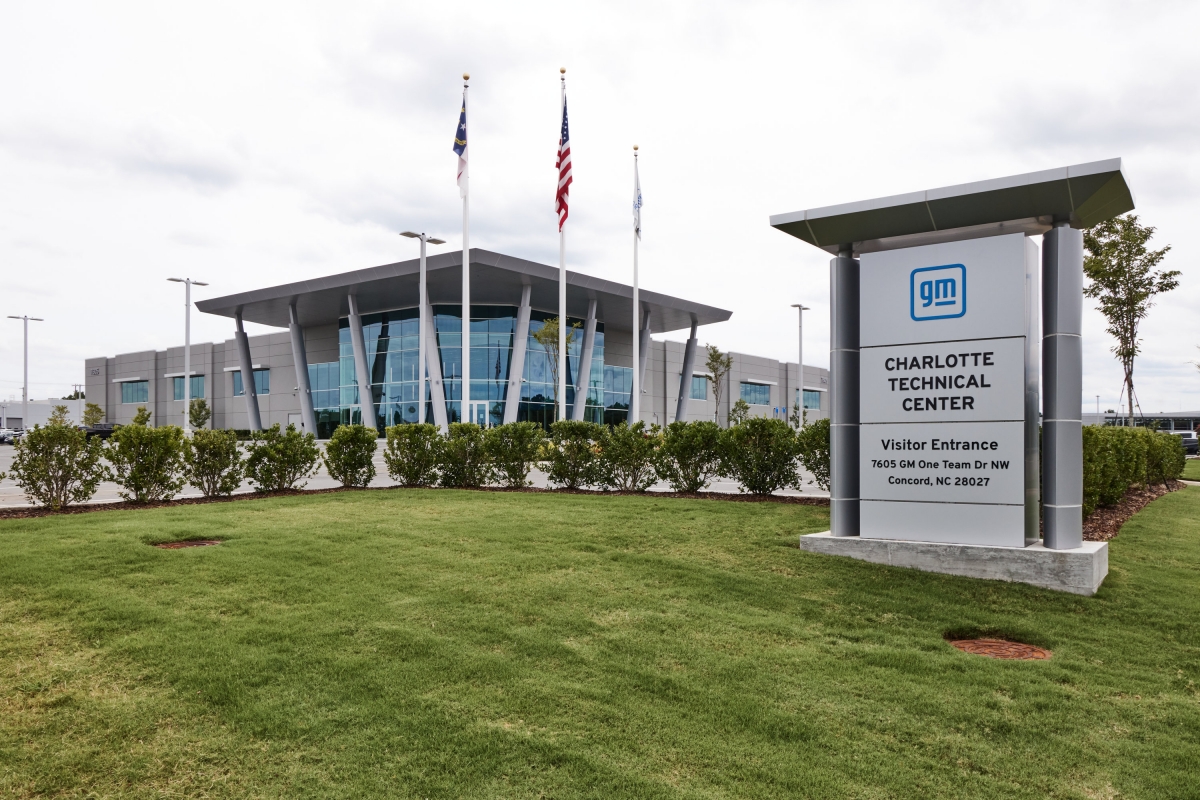
“Even today, to race in WEC’s top class still requires a big programme, with a lot of staff,” Moore explains. “And they’re not all just based in the Tech Center. We have a powertrain group up in Pontiac. There are engineers, software engineers in particular, in Milford (Michigan). In LMDh, just in the Tech Center, I’d say around 35, 40 people are working just on that programme alone, and we have partners like Dallara based in Italy, and in Indianapolis, who allow us to use their simulators.
“But having the hub in Charlotte definitely helps. It’s good to have the majority of people in one little area, and so you can reach across and say, talk to the aero guys, talk to the tyre guys, and get the best out of the programme. It’s so hard as it is. The car is quite complex, so it’s good to have as many people as you can in one area. It just makes a lot easier.”
The software side of the formula is huge; it’s where marginal gains can be found throughout each season, without restrictions or the need to re-homologate the car.
“I think these cars are more of a software war compared to LMP1, where it was a hardware war, so it’s one of the avenues where you can keep developing and improving,” Moore notes.
“Having simulators, hardware-in-the-loop, the engineers working just flat out on optimising the car that we have, it’s really where you get the best out of the programme, out of the car on the track, making sure everything’s functioning as the driver needs it. It’s intuitive. That’s always the hardest part: making sure all these complex functions are as intuitive and organic to the driver as possible. So having the devs, the driver-in-the-loop simulators, and the software guys working together with the drivers helps make the car as strong as it can be. It’s super important.”
A big change coming for Cadillac heading into 2027 is the addition of a full dynamic driver-in-the-loop simulator set-up, with a fully realised V-Series.R cockpit, installed in the Charlotte base. This will add significant punch to Cadillac’s race preparations and future development programmes, bringing it in line with the IndyCar and NASCAR efforts.
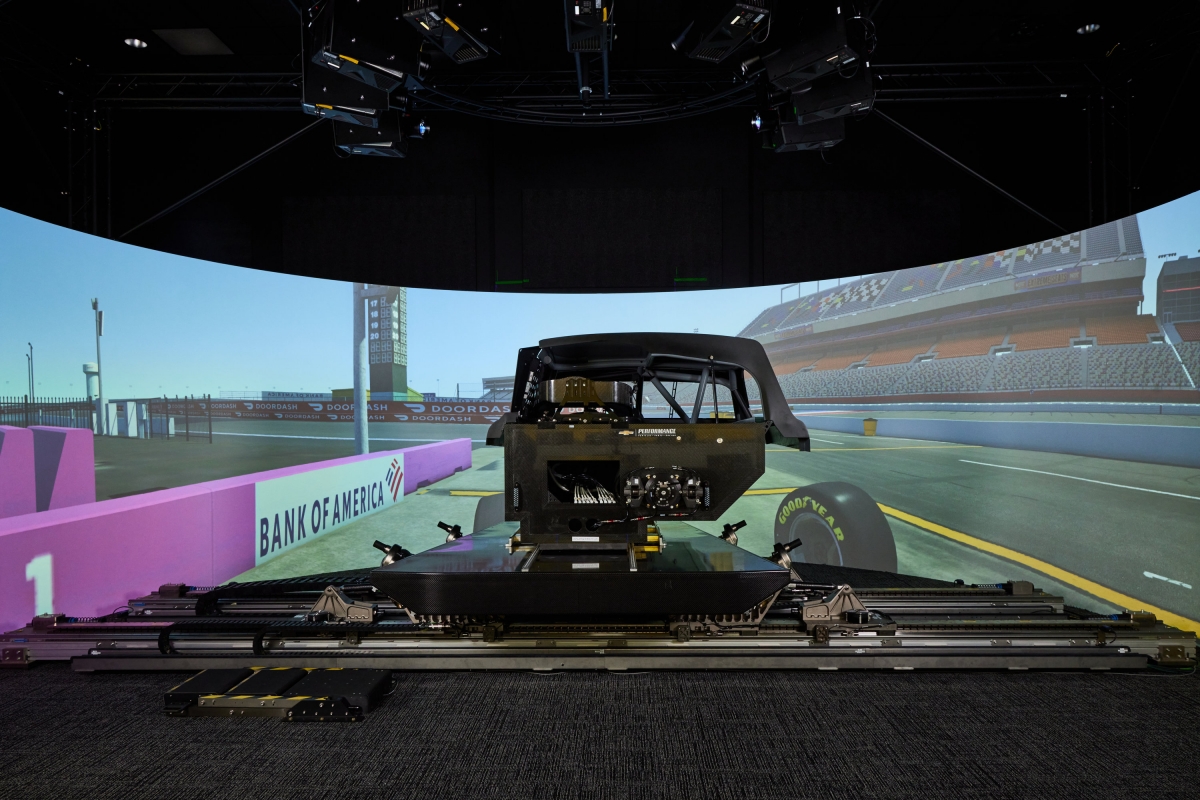
“It’s critical to have the cockpit and all the controls and all the stuff that the driver’s touching, feeling, seeing as representative as it can be of the racing car,” Moore adds. “So by building that up, it supplements the deals that we have, the driving loop simulators that we have already, and really just it’s an area where we’re really digging into, investing in across all the programmes because testing is limited on the track. You can do setup changes almost instantaneously in the virtual world, where you can’t on the race track. So it’s a key area.”
Though JOTA regularly interacts virtually with staff at Technical Center and has sent staff to work at the site on occasion since it took over from Ganassi Racing, this addition will likely be most useful to Cadillac’s IMSA teams.
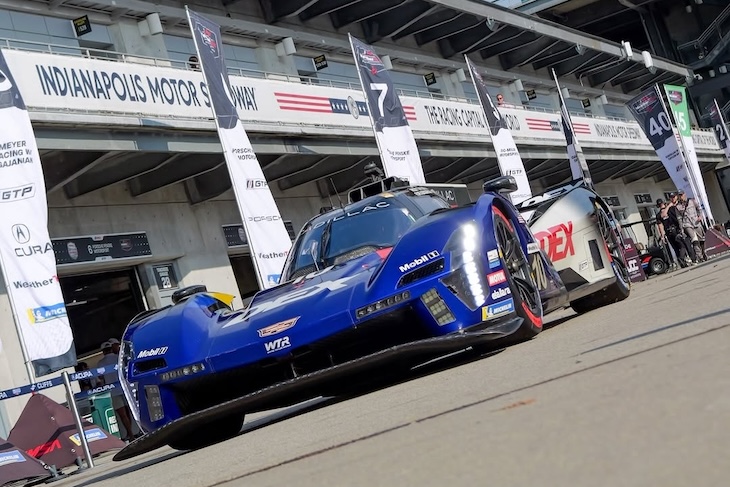
It may prove especially beneficial for Wayne Taylor Racing, which has spent the past two seasons getting up to speed with the V-Series.R package after switching from Acura to Cadillac at the end of 2024. WTR invested heavily in its on-event capabilities in 2026, adding an engineering hub that sits directly above its race truck, and this new sim set up in Charlotte should supplement its efforts between races next year.
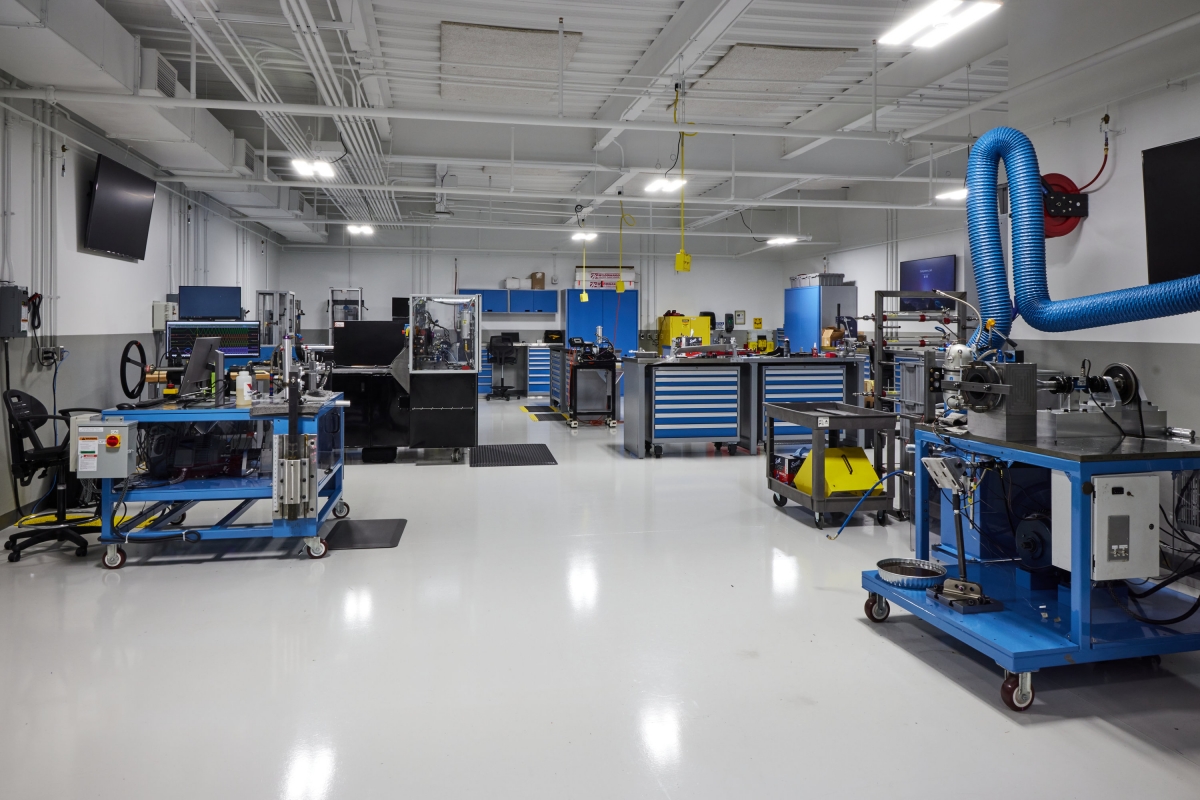
“If we have question marks on a car’s performance between one team and another, we can bring them back down to the Tech Center and pull them apart, analyse them, put them on the various test devices to make sure that they’re doing exactly what they need to do,” Moore adds.
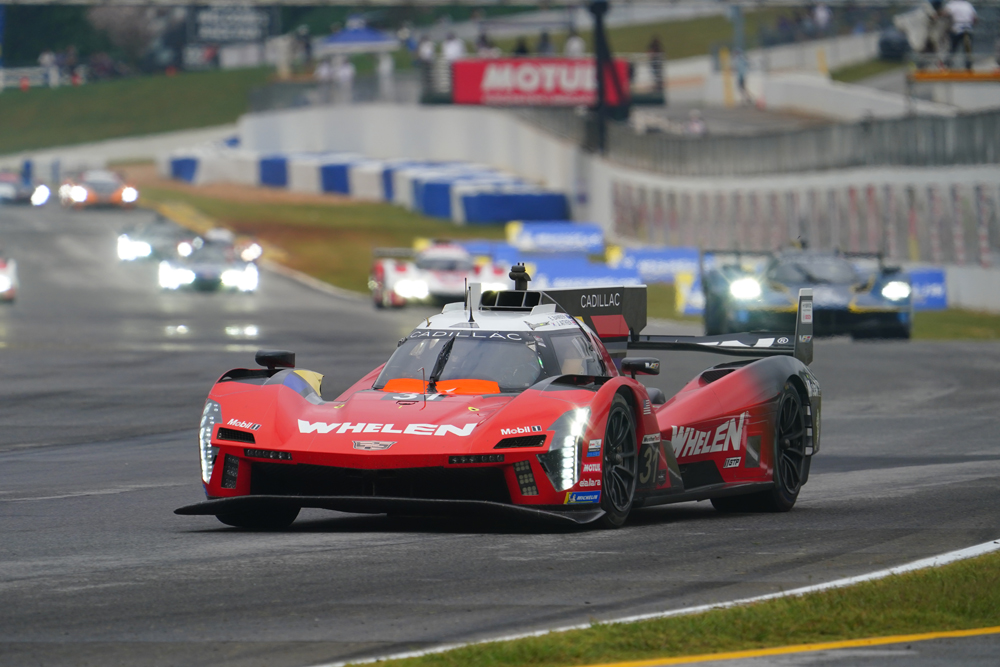
“This programme needs the teams to work together to get the best out of it, not only on the IMSA side, but with JOTA. I mean, it’s two very important programmes for us, and they’re the same cars now. In previous years, they were slightly different, but this year, with the aerodynamic homologation process going through WindShear for WEC and IMSA, they’re exactly the same. So there’s definitely a lot to be learned across the different programmes, different series, and combining all the smart people’s brains together and getting the best out of it all.”
****
The sportscar programme also now has access to the vehicle dyno in Charlotte, which, on the road to the 2030 Hypercar regulations – assuming Cadillac signs up to them – has the potential to play a critical role in developing its next car as well as helping refine the current one towards the end of its life.
Meeting the brief from the outset in 2030 is likely to be especially important under the new regulations, with the cars expected to remain frozen for five years. The intention is to end the development arms race that has characterised the current era, with manufacturers routinely introducing EVO Jokers every 12 to 24 months to optimise their cars for the allotted performance window and keep pace with the competition.
With that device, we can fully measure what the engine’s doing, what the MGU is doing, what the brakes are doing, all at the same time
“It’s vital for the road ahead,” Moore stresses. “You’re trying to test the car in as complete a scenario as possible, and with that device, we can fully measure what the engine’s doing, what the MGU is doing, what the brakes are doing, all at the same time, and understand: are we actually getting what we expect?
“We can always calculate and simulate, but without actually physically knowing and measuring at the wheels what everything’s doing, you don’t know. So with that device, there’s so much potential, and we’ve only just cracked the surface of what we’re going to be using it for. We’ve already had the car on there to do some initial runs and understand what it’s doing. But there’s a lot more potential that we’re going to dig into in the near future.”
It is an investment that looks beyond the immediate demands of the current V-Series.R programme. With the next regulatory cycle already on the horizon, Cadillac has an opportunity to apply the lessons learned over the past three seasons and use the expanded capabilities of GM’s technical operation to get its next-generation package right from the beginning.
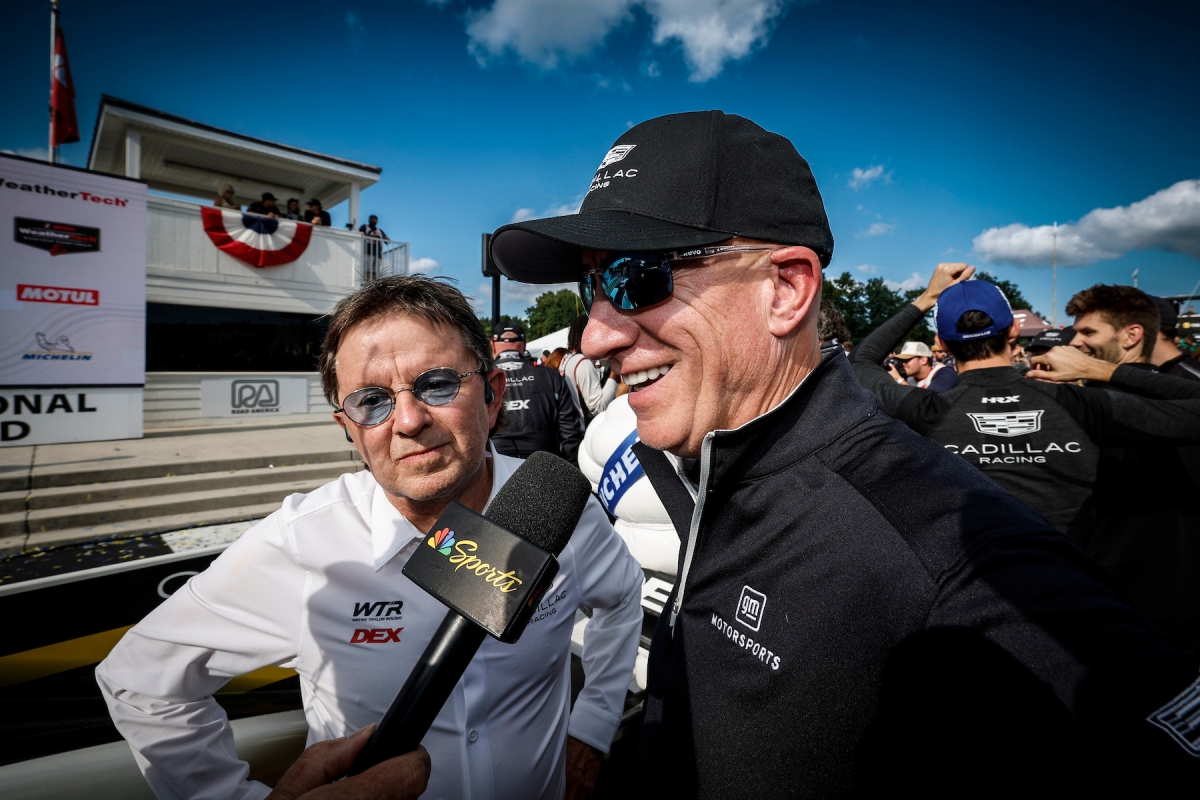
Dr Eric Warren, GM’s vice president of global motorsports competition, believes the experience gained during the development and evolution of the current LMDh car has already put the organisation in a stronger position. “We’ve gone through a cycle already, which puts us in a good place for the future,” he notes.
The current generation of Cadillac’s sportscar programme has been a learning process, particularly in understanding how to optimise a car for the realities of prototype racing with Balance of Performance. The challenge has been to find the right balance between qualifying performance, race pace, reliability and efficiency, all while operating within an increasingly complex Balance of Performance framework.
As Warren points out, the early focus on outright performance brought its own limitations. Cadillac had a car capable of fighting for pole positions, but translating that speed into consistent race performance required a different approach to development.
The lessons learned have shaped the current package, with greater emphasis on understanding how the car performs in traffic, where overtaking opportunities actually arise, and how its aerodynamic characteristics can be exploited across an entire race rather than over a single lap.
“We kind of had to look strategically at each of the races, look at where the actual passing is happening, and ask ourselves again, ‘What does the car need to be?’ And it kind of led us to build a little bit different car (for 2026), and I think we’ve been successful this year with how that’s played out,” Warren (below, right) says.
That evolution reflects the wider philosophy taking shape within GM Motorsports. The emphasis is no longer simply on developing a fast car that wins the odd race, but on creating the tools, processes and technical environment that allow its engineers and teams to extract the maximum from it across a season.
For Cadillac, the next challenge is to carry that thinking into the next era. The prospect of a five-year homologation freeze makes getting the fundamentals right more important than ever, while the ability to bring together expertise from across GM’s various motorsport programmes should provide a significant foundation on which to build.
There are no guarantees in top-level sportscar racing, particularly in a formula where Balance of Performance, reliability, driver line-ups and execution all play such decisive roles. But after spending time at the Charlotte Technical Center and seeing how its resources are being deployed, it is clear that the organisation is building something designed to deliver long-term benefits across its suite of programmes.
And that, ultimately, is what makes the formation of GM Motorsports and the addition of the Technical Center such an important part of Cadillac’s story. The V-Series.R is already taking the fight to its rivals in IMSA and the FIA WEC, but the real value of the operation in Charlotte lies in how effectively it prepares the brand for what comes next.
Images courtesy of GM, DSC and IMSA
Thank you for reading! Missed out on the previous parts to the feature?