It seems hard to credit that a team like Murphy Prototypes went for almost two whole seasons without a win. Consistently quick, almost invariably class-leaders at some stage in every race they contested, and with a high public profile – almost 50,000 followers on Facebook alone – and yet, never the glory of victory. Well, there’s nothing sweeter than the taste of success when you’ve been kept waiting for so long. Greg Murphy and his squad were almost beside themselves with delight as drivers Brendon Hartley and Jonathan Hirschi took the team’s first win at Paul Ricard in the final round of this year’s ELMS.
Just seconds from the cockpit, Hartley was hoisted onto Murphy’s shoulders and paraded like some triumphant gladiator in a display of exuberant jubilation that seemed both fitting and fully justified. These guys had been challenging for their debut win for months and had only ever been denied by trivial problems that were rarely, if ever, of their own making. Finally, it had all come right, and Hartley had taken the chequered flag at the end of another impressive demonstration of skill, speed and slick pitwork.
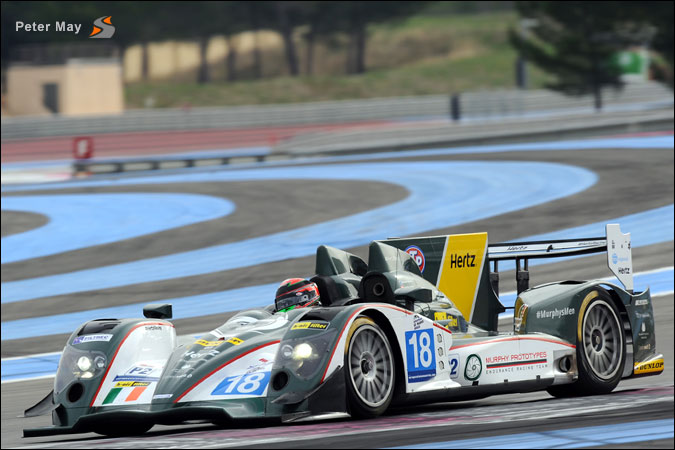
It should never have been unexpected. Through 2012, when the team raced Warren Hughes and Jody Firth, the team had consistently coaxed front-running performances and fastest laps from the Oreca 03 chassis, including an impressive class-leading stint in the 24 Hours at Le Mans and an historic Irish podium at Spa in the WEC. That Belgian outing had also seen the introduction of a new name in sportscar racing; Brendon Hartley – a tousle-haired Kiwi with aspirations to make it big in Formula 1, and a remarkable talent.

The European Le Mans Series in 2012 had its problems, to put it mildly, but 2013 has been a great year for the ELMS. The series has grown in stature, and the quality of the field in LMP2, which heads the line-up, has never been stronger. These are the best teams, cars and drivers currently competing in LMP2 anywhere in the world, and there’s not much to choose between them. The championship itself went down to the wire, and several teams were in with a shout even as the final dramatic race unfolded. Bad luck earlier in the year meant that Murphy Prototypes weren’t in the running for the title, but when Hartley and Hirschi stood proud on that top step at the end of the race, you just knew that one of the best teams had won. For once, the luck of the Irish had prevailed, and this was no fluke.
The Race to Victory
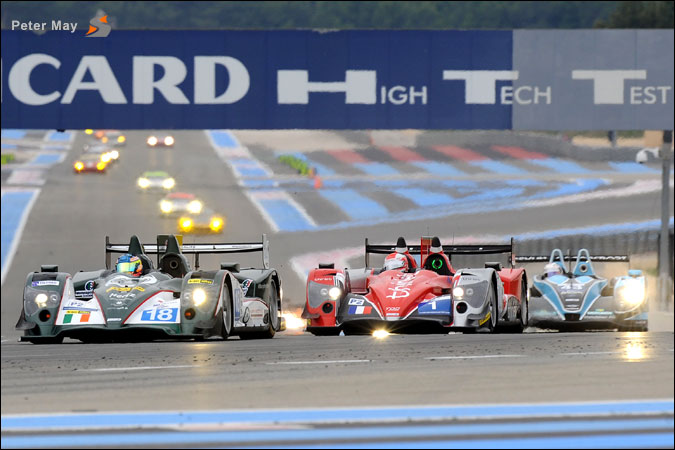
It was another front-row start for Jonathan Hirschi – his third this season after joining Murphy Prototypes at the A1 Ring in Austria – and he was obviously enjoying the clear view ahead of him. Beneath a grey and overcast but pleasantly rain-free sky, he again made a good start. Tucking in neatly behind Oliver Turvey, the fast-starting pole-setter, Hirschi swung across to take up station directly behind the white Jota Zytek. The move was obviously planned, but the consequences for Matthias Beche in the Thiriet by TDS Racing Oreca couldn’t have been foreseen as his challenge was squeezed wide onto the blue and white stripes that border the pit straight.
The surface there isn’t quite the same as it is on the track, and neither is the view ahead. With the apex of Turn 1 looming, Beche was forced to back off just enough to allow Hirschi to recover his hold on P2 as the cars veered towards the middle of the track to make the most of the approach into the left-hander. There were inches between them as they jostled through, with Christian Klien tagged on behind, having got the better of Pierre Ragues in the debate over fourth.
It was all neat and tidy, and no repetition of the debacle we’d witnessed a few years back which had seen half the Porsche GTs wipe each other out across the startline. Instead, everyone emerged safely to complete the first lap.
Turvey appeared able to pull clear at will, and while Hirschi remained under constant pressure from Beche all the way around the 5.8 kilometre track, the Jota Zytek was a good second clear even before they reached the Mistral.
With clear air ahead, Hirschi was able to pick his line along the world’s longest uninterrupted racing straight, but Beche was hoping for a tow from the Murphy car. He weaved from side to side, nipping out from behind the Oreca, gaining no benefit, and then trying the other side for good measure. If he was trying to unsettle the “gentleman” driver in the #18, then he was going to be seriously disappointed. Hirschi showed a composure and determination that belied his amateur status, and besides – Beche had his own mirrors full of Klien’s pale blue Morgan. There was enough on his plate already.
They came round the final tightening right-hander to complete the opening lap with Turvey a good 1.7 seconds clear. Not much more than this then covered two through five. Around Lap 2, however, steadily and inexorably, Hirschi, Beche and Klien eased out their own advantage over the massed ranks behind.
Turvey must have been glancing in his rear view mirrors every now and again and wondering where the others had got to. The leader’s advantage grew at a second or more lap by lap, but next-up Hirschi was having to work hard to fend off the attentions of Beche in the #1 – a challenge he was facing in a quite masterful way. Judging by the way Beche had the nose of the TDS Oreca tucked under Hirschi’s tail, there was little doubt that the Swiss driver was delaying the second and third-placed cars, but everything was clean, fair, and perfectly legit.
With fifteen minutes completed, the situation appeared little changed. Turvey had galloped off into the distance, a good five seconds clear, but just a tenth or two separated second and third, and hardly more than that between Beche and Klien. The three cars looked as if they were strung together like beads on a thread, and as Hirschi drifted across from one side to the other along the Mistral, so Beche and then Kline followed him.
The pressure on Hirschi was relentless. He couldn’t allow himself a moment’s lapse in concentration, because a heartbeat’s uncertainty would have allowed one or other of his pursuers through – or both. All credit to the man – this was brilliant stuff.
Twenty minutes gone and it looked as if Klien was going to be the first to ease off. The Morgan was slipping visibly back from the rear of the TDS Oreca . . . but it was all a ruse. Lulled, or distracted, Beche made the first error, and like a cat pouncing on an unfortunate mouse, Klien was in there, clawing for grip, and through in a flash.
Uncorked from the bottleneck, Klien was immediately challenging Hirschi for second, picking up the attack where Beche had left off. Turvey, meanwhile, was almost 8 seconds up the road and peerless. He was also encountering the first (or last) of the tail-end GT cars, and starting to weave his way through the traffic.

That traffic was probably Hirschi’s saviour. He encountered his first GT car at just the right moment, and slipped by easily. Klien, and then Beche, were not so fortunate. A GT car on a charge at Paul Ricard, heading down the long straight, is a match for even the fastest LMP2 car, and nigh-on impossible to pass. It’s only under braking that the prototypes have the edge, and only then can they impose their authority and overtake. It was a Ferrari that caught out Hirschi’s pursuers, and while he was able to pull away along an uncluttered track, they were both delayed. It gained him three seconds.
Klien regained some of that ground fairly quickly, but Beche was held back far longer as he negotiated a 458. The TDS car dropped behind, almost wholly thanks to encountering traffic at the wrong place, but his bad luck was only just beginning. Coming through the long, sweeping left hander that is the penultimate turn on the circuit, the left-rear wheel on the Thiriet by TDS Oreca sheared free, spinning off across the track. He held the car for a moment, but simply couldn’t control his pace through the final turn, and spun. Misfortune gave way to good luck; he was still the right side of the pitlane entry.
Crabbing awkwardly, Beche was able to steer the stricken car off the track and seek help. The team was quickly on the scene, but there was more damage than had first appeared. With the ELMS teams again, mysteriously, operating out of the paddock awnings, the crew made a snap decision, and hauled the car into the nearby scrutineering bay to effect repairs. Good idea, bad move. They’d pay later for their presumption with a ten second stop-go and a four minute time penalty. (In their defence, whose daft idea was it to think that single-seaters without the need to make pitstops or refuel had prior claim to the pitlane garages? This is a miscalculation that must, surely, be corrected before 2014?)
Coming up to the half hour and Klien was about to succeed where Beche had failed. Having maintained his hold on second place for a dozen laps, Hirschi was about to relinquish that spot to Klien, who swept through to begin lap thirteen 8.5 seconds down on the leader.

With Beche out of the equation, and Ragues another ten seconds in arrears for Signatech Alpine, Jonathan Hirschi found himself with time to breathe. He settled down to some steady, consistent and untroubled lappery, clocking regular sub one-fifty-fives and comfortably holding on to third.
Behind him, the battle for fifth was now the tightest in the race. There had been contact between Frey in the Race Performance #34 and Perazzini in the #55 AF Corse Ferrari as the LMP2 cars worked their way through the traffic, and Mediani in the #37 SMP Oreca looked to have an opportunity to get by, but Frey held his nerve, and the place. Meanwhile, Ragues was starting to pull away in the Signatech Alpine, and establishing a firmer hold on fourth.
Out at the sharp end Oliver Turvey was enjoying a clean and uneventful run, but Klien had the bit between his teeth, and the Jota lead was starting to diminish. Back in the pits, Matthias Beche was about to rejoin the race, but the TDS Oreca had lost seven laps in the process, and the team’s grasp on the title was starting to look very fragile.
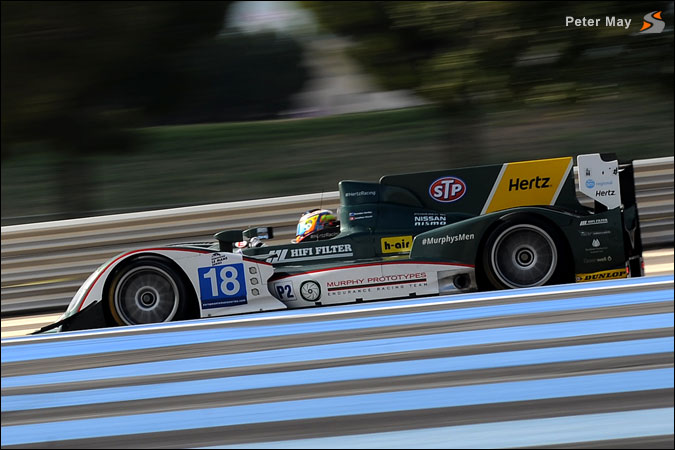
Over the next quarter hour the 8 second gap between first and second would stabilise, while four more stood between Klien and Hirschi. Mediani, however, was on another of his courageous charges, and having passed Frey, he then caught up with Ragues, and nipped through to take fourth as they argued over rights of way and a Ferrari. As the race neared forty minutes, the scheduled pitstops began.
Jonathan Hirschi was among the first to stop, pulling off after 21 laps. He was swiftly followed by most of the other prototypes – it’s a quick lap at Paul Ricard – and as the irregularities in the timing screens unravelled, it became clear that some efficient work by the Murphy pit crew had gained the Swiss driver several seconds. The Murphy Prototypes Oreca was back in second place.
Hirschi emerged on track just a few seconds behind Matthias Beche, and used the pro-driver in the TDS Oreca as a sighter, albeit six laps down, for pace and inspiration. He was 14 seconds behind Turvey now, but with Christian Klien like some perpetual bugbear just a handful of metres behind.
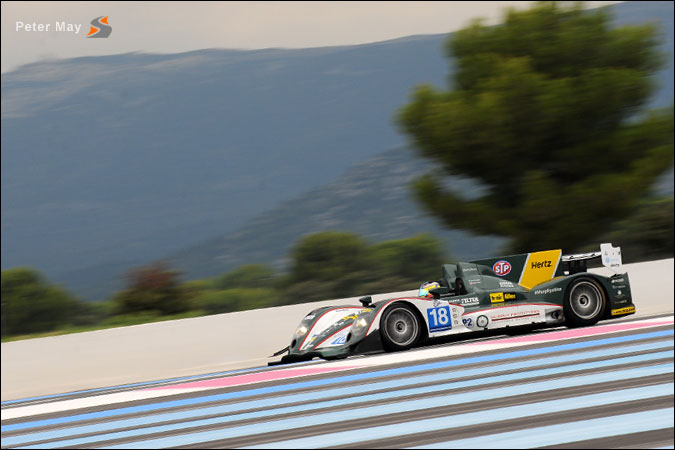
It was around this time that Jonathan Hirschi came on the radio to report an issue with the brakes. “He’d done a fantastic first stint, dicing with Beche and Klien, but half way through his second stint Jonathan came on the radio to report that only one of the front brakes was working,” explained team-mate Brendon Hartley. “Every time he applied the brakes, the car pulled hard to the right, and the pedal was getting increasingly ‘soft’.”
It later transpired that the locating system that secures the disk to the hub had failed, and each time the drivers applied the brakes, the disk on that wheel just kept on spinning round. “Jonathan did a mega job to manage it for the second half of his stint,” said Greg Murphy. “We could have brought the car in, and replaced the hub, but that would have cost us several laps, and we’d certainly have been out of the hunt, so it was a great call by the team, and by Dunlop, to press on and find a way to work around the issue.”
Hirschi pressed on – as Hartley would do after him, with fingers crossed and hoping for the best. “To be honest, we thought the race was over!” admitted Hartley.
It was inevitable, of course. Inch by inch, Klien moved closer. Then, ten minutes past the hour, the pale blue Morgan found a way through. Once again, it was traffic induced. They were closing fast on one of the AF Corse Ferraris and arrived almost together. Hirschi looked one side, Klien the other. Klien’s side was better, and the #43 was through the gap, but Hirschi didn’t give up easily. As they needled their way between the next Ferrari, the Murphy #18 closed right back down on the Morgan, and showed his nose, but Klien wriggled free and, once clear of the red 458, eased away.
So the status quo was re-established, with Jota leading from Morand, with Murphy third, Alpine fourth, Race Performance fifth and SMP sixth. The lead LMPC car, the Team Endurance Challenge #49, made it seven.
It was impressive to see Hirschi yet again mixing his pace with the professionals. He couldn’t quite match Turvey or Klien, but he was holding his own – and typically getting an edge – over Ragues. Third was looking like a comfortable and secure slot for the #18.
Almost exactly on half-distance Hirschi burbled the #18 down the pitlane to hand over to Brendon Hartley. Once again, it was slick pitwork from the Murphy crew, and Hartley emerged on track just ahead of Klien in the Morand Racing Morgan, yet to stop. That placed Hartley 8th, but the front-runner among the two-stoppers.
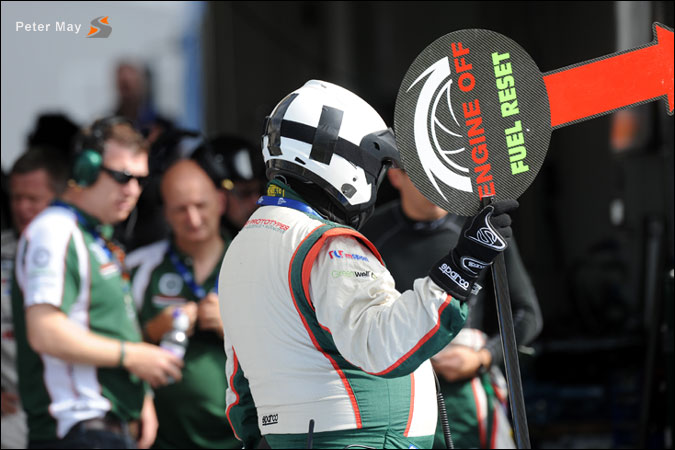
“It was not nice jumping in the car knowing we had a serious brake problem, and thinking that it could fail completely at any moment,” said Hartley. “Once I got on track I soon discovered ways of dealing with it. I was able to counteract the way the car was pulling to the right on breaking, and I realised that the best way to cope was to brake extremely early on left-hand corners and then come off the brakes completely as I turned the car into the apex. That way the wheel that was doing all the work didn’t lock up so easily. It wasn’t straightforward but I felt able to manage, and other than that, the car was fantastic to drive!”
Ragues also pitted the Signatech Alpine and was replaced by Nelson Panciatici, but it didn’t go well. The car only managed one more lap before having to return for a replacement steering wheel.
With the major pitstops and driver changes completed, Simon Dolan emerged as leader for Jota, with Natacha Gachnang second in the Morand Morgan and Brendon Hartley third. Dolan’s lead was a healthy 32 seconds, but Gachnang had just 20 over Hartley. The chase was on.
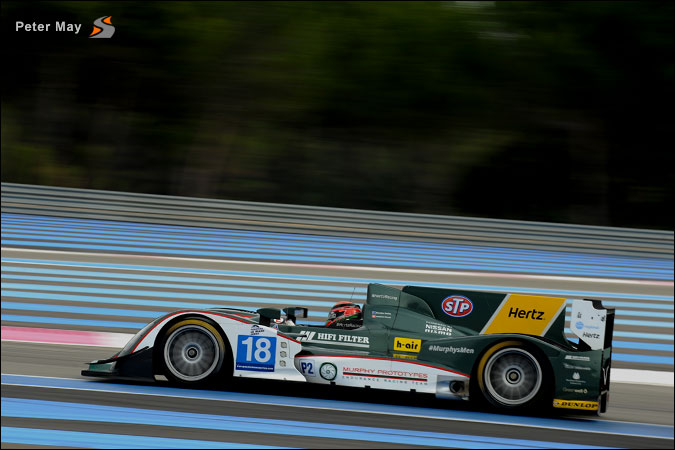
If he didn’t know already, Brendon was soon to discover first-hand the challenge of passing the GT cars down the Mistral. He paced a GTC Ferrari all the way from one end to the other, unable to ease by, and only managed to move ahead through Signes, where superior braking and downforce allowed him to carry more speed through the flat-out right-hander.
Steadily but surely the gaps between the top three narrowed. The spectators were probably aware of the way Gachnang was closing on Dolan, but few will have noted that for every two seconds she took out of the Jota lead, Hartley took a second out of hers. “Lee [Penn], our engineer, was keeping me very up-to-date on the gap to the cars in front. When I’d first taken over from Jonathan I didn’t believe there was much chance I’d be able to catch them, with all the braking issues we had. However, with every lap I was learning how to get the most out of the situation and lower the lap times, and I was starting to catch them.”
By the time the race entered its final hour, the gaps had more than halved. The sun was starting to dip below the mountaintops and the headlights were flaring across the banking and lighting up the trees around the hilltop circuit as the cars sped round. The three protagonists crossed the line to begin their 62nd lap – and Gachnang had just 7 seconds to make up on Dolan, but less than ten seconds separated her from Hartley. Panciatici was 75 seconds back in fourth, with Alex Kapadia running a close fifth for Boutsen Ginion.
It was always going to happen, and Simon Dolan probably knew it, but it must still have come as a bit of shock when Gachnang’s blue-nosed Morgan arrived on his tail with fifty minutes still to run. Catching was one thing, passing quite another, and this allowed Hartley to close the gap until all three were nose-to-tail. “I was pushing 100%!” said Hartley.
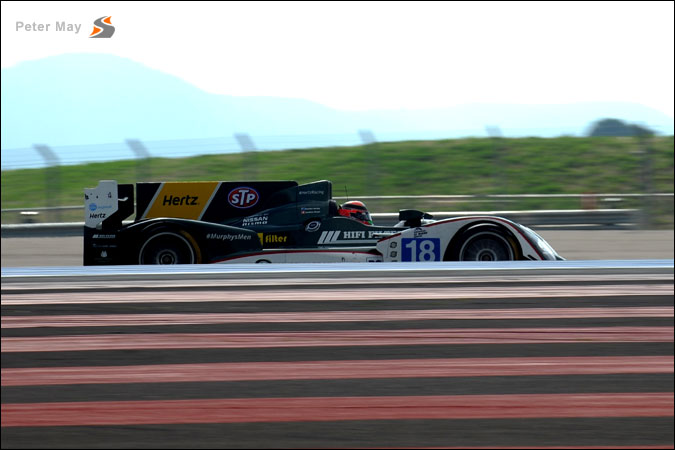
It all became a little frantic, as Gachnang made a bold attempt through the final sequence of corners, but Dolan hung on. Gunnar Jeanette in the #53 RAM Racing Ferrari was briefly trapped between the two, and Gachnang took advantage. In a brilliant move, she swept clean round the outside of the final left hander, sandwiching the Ferrari between herself and Dolan, and emerged, apparently victorious, onto the pit straight. But she couldn’t make it stick, because a better line out of the final corner and Dolan’s superior straight-line speed gave him the edge down the pit straight and he recovered the position into Turn 1.
As if utterly spent by the attempt, Gachnang was then caught totally off-guard by Hartley, who blazed through with barely a pause, caught Dolan on the over-run, and nipped straight through into the lead. “I think I caught them by surprise!” grinned Hartley. “I got them both in one lap! I caught Dolan at the double-right, and went up the inside. Our car was fantastic through there.” As Mr Punch might say; ‘That’s the way to do it!’
The three hared down towards the chicane at Turn 2, and for no obvious reason save the fact she was very close on Dolan’s tail, Gachnang spun. There was no contact, but perhaps the loss of downforce was enough. Hartley, however, was probably blissfully ignorant of events behind him, because he was already disappearing off into the far distance. Setting a pace that was typically three seconds faster than Dolan’s, the margin of his lead had stretched to almost 8 seconds within a couple of laps.
With a little over half an hour to go, Hartley made his second and final pitstop, It was fuel only, and even that was just a splash – enough to see the #18 through to the finish. Everyone else had to stop too, but for a little while Dolan added to Jota’s tally of leading laps. Gachnang, pride and dignity restored, was closing fast, again.
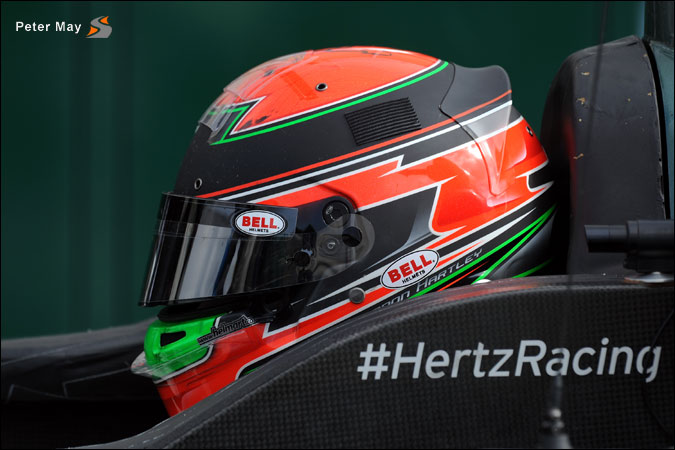
Pitstops all completed, Hartley stood 7.5 seconds clear of Dolan, with a further four seconds back to Gachnang. Momentarily, both gaps narrowed significantly, as Brendon made a most uncharacteristic hash of the first turn; out-braking himself into a swirling flurry of tyresmoke and running wide. “It was just so very difficult to stop the car with the brakes behaving as they were,” he insisted, “and it was very inconsistent too. Sometimes it still managed to catch me out!” Paul Ricard’s HTTT is a forgiving track, and he was able to return to the black stuff with little delay – and regain his advantage soon after. “He never told me anything about that!” exclaimed Greg Murphy, on being told of the incident.
Twenty minutes to go, 81 laps completed, and Hartley had eased out a healthy 14 seconds over Jota, but the gap between Dolan and Gachnang was under a second. It took the Swiss lady half those remaining minutes to catch, and finally pass, the Zytek. It was almost a repeat of her earlier attempt, but this time she had the edge on the run past the pits, and made it stick. Once through, she too romped away, perhaps intent on slicing time out of Hartley’s 16 second advantage.
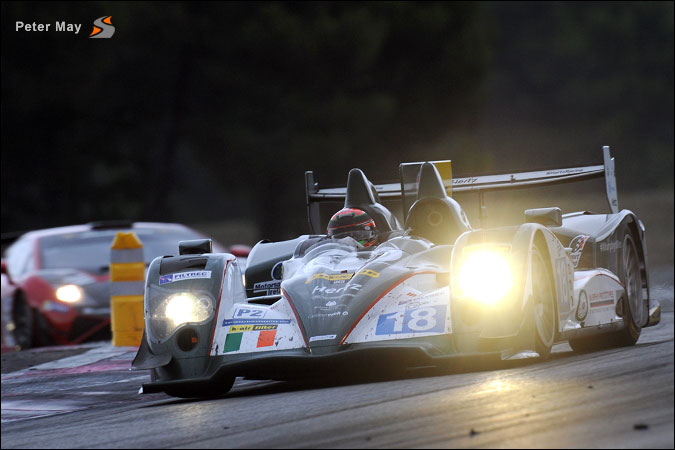
The gap did diminish, but more through Hartley’s right foot being less heavy than it had been than Gachnang’s pace. “Although I was happy to have taken the lead, I knew I still had a long stint to complete with a damaged car. I had to nurse the car home, and I’d backed off almost immediately after I’d passed Dolan.” The Murphy driver eased back as much as he dared – just enough to maintain a cushion over the pursuing Morgan – without risking either the car or the position. “The truth is, with all the work of braking being done on the front left, the wheel was locking up time and again – probably fifty times or more – and towards the end of the race the tyre was down to the canvas. I really did have to look after the car. It wouldn’t have made it without.”
In the closing minutes Gachnang did close the ground, but it was never going to be enough to deny Hartley the flag – or the Radio Le Mans “Spirit of the Race” award. She narrowed the gap even more on the penultimate lap, when Hartley was detained by one of the LMPC cars, and that allowed her to edge up to within three seconds, but just to emphasise his pace, the young Briton easily pulled out another three seconds on his final tour, crossing the line to take Murphy Prototypes debut win.
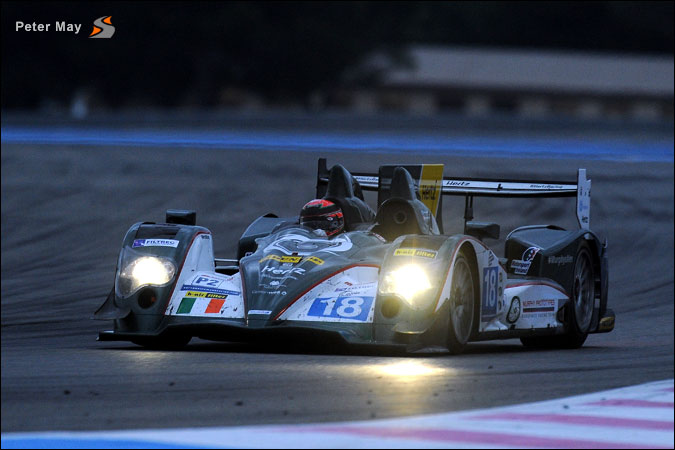
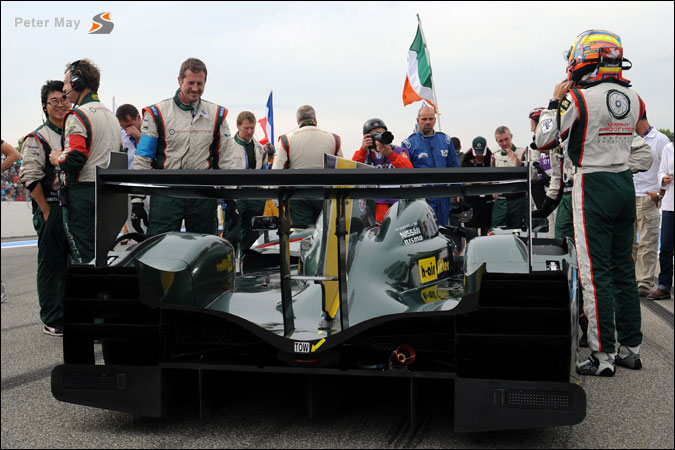
It was a very emotional slowing-down lap. Hartley brought the car back down the pitlane and pulled up beneath the podium. He sat for a second, then eased off the steering wheel and stood up in the cockpit. He paused again to replace the wheel, clenched both fists in triumph, and leaped from the car. He headed straight for Greg Murphy; the Irishman clasping his young protégé in a huge bearhhug before lifting him high onto his shoulders and parading him along the pitlane.

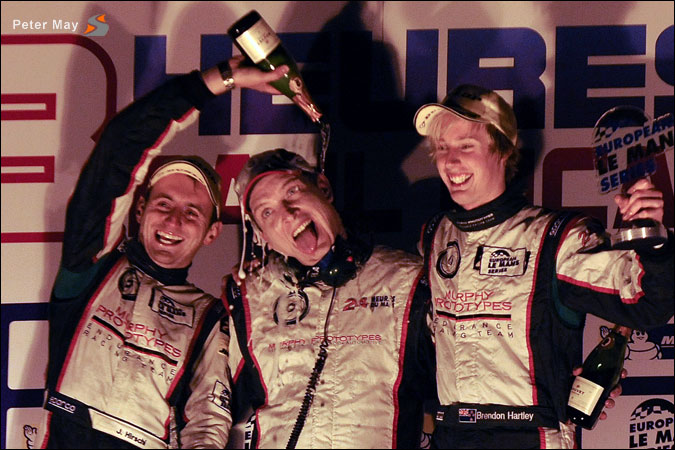
The delight throughout the team was tangible – and fully deserved. Few teams can have been so close so many times without achieving victory, but here was Murphy Prototypes on the top step at last.
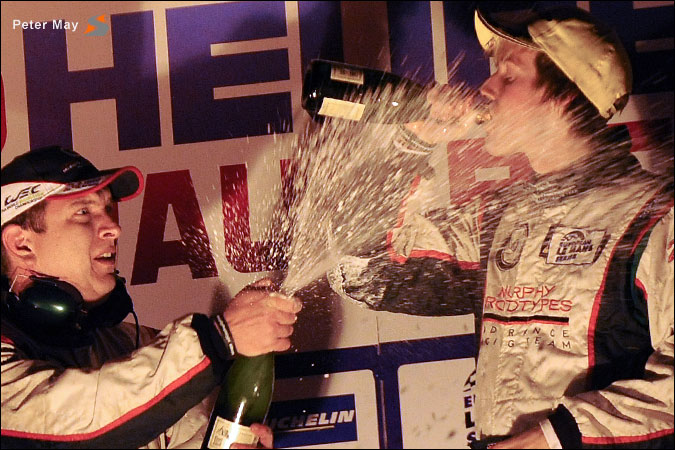
Needless to say, most of the champagne on the podium was directed down the back of Greg Murphy’s overalls!
Post Race
“It felt amazing to see the chequered flag!” said a jubilant Hartley. “The Murphy Prototype team has done such an amazing job this year, but especially over the last two or three races, and they’ve truly developed into one of the best teams I’ve ever driven for. And what a way to end the season! I’m just so proud of everyone. I’d also like to say a massive thanks to Jonathan. I couldn’t ask for a better team mate. We got on extremely well, worked hard together and he showed that he is a very classy driver. Cheers Jonathan!”
“When the car crossed the line, and I knew we’d won our first race, the overwhelming emotion was one of enormous relief,” admitted Greg Murphy. “We’ve been knocking on the door so many times in the past couple of years, and this first win could have happened a number of times, but somehow it never did. It would have been great to have picked up a few wins earlier in our history as a race team, but in some respects, this one couldn’t have come at a better time. It’s the last race of the 2013 series, and Brendon’s last race with us this year, so what better way to finish the season?”
“The guys had to contend with a very serious braking issue, from almost half way through Jonathan’s second stint. Jonathan did a mega job to manage it for the second half of his stint,” said Greg. “We could have brought the car in, and replaced the hub, but that would have cost us several laps, and we’d certainly have lost the race, so it was a great call by the team, and by Dunlop, to press on and find a way to work around the issue.”
With the right-front effectively inoperative, all the braking effort was being focused on the front-left. “The tyre on that side was doing so much extra work, and taking a lot of punishment,” said Murphy. “I don’t think anybody else knew what was going on, and Brendon never let on, that’s for sure. The fact he set the fastest lap of the race with only three brakes is another testament to his skill. Not only that, but he brought the car home with the tyres well beyond their limit – that one front tyre was virtually down to the canvas. How he managed to race the way he did, take the lead, pull away, and handle all that pressure from behind, I’ll never know!”
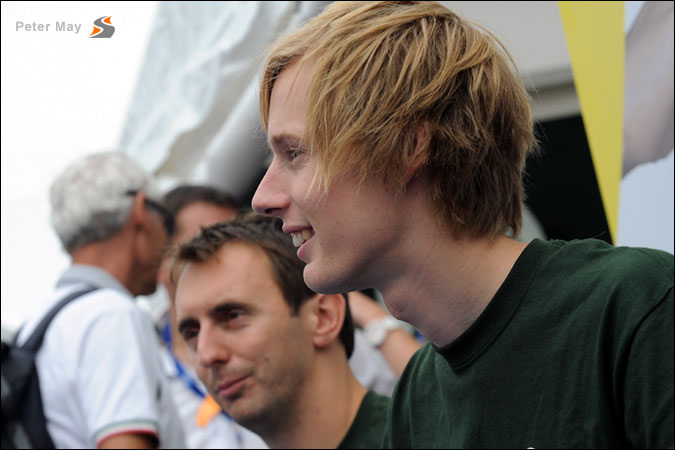
“Of course, Brendon is an absolute phenomenon. We’ve worked together for two years, and I’ve watched him come through from the unknown to become one of the best sportscar drivers on the planet – and I really do believe that. A lot of people seemed to dismiss him when he first arrived on the sportscar scene last season – just another single-seater driver with F1 aspirations. I worked really hard to find him some other drives last year, and again coming into this season, but nobody seemed interested! I can tell you, that situation really has changed now, and there are some very big names out there who now know exactly who Brendon Hartley is. It’s been great for us to have him in the squad, and we’d love to keep him – of course we would – but would it be right to tie down a talent like that and keep him in LMP2 for ever? He has a very bright future ahead of him, and I’m just proud to have played a part in seeing him realise some of that potential.”
Greg Murphy is also happy to have teamed up with Jonathan Hirschi. “Jonathan has fitted into the team so well during the second half of this season. He may have had the rough end of the stick these past two years, so I was delighted to be able sign him up when Status finished in the championship. I approached him, we had a few discussions, and he joined us for the first time in Austria. He turned out to be a great driver and a really nice guy. He also seems to enjoy working with us, and he appreciates that we’re serious about what we do. He’s done us proud and we couldn’t be happier with him, so I hope we can race with him again in the future.”
“This has been a fantastic season for Murphy Prototypes, and that’s all credit to the hard work of everyone in the team,” adds Murphy. “It was an all-new squad at the beginning of the year, but they’ve really come together well, and it has been a great atmosphere to work in. I’d particularly like to thank Malcolm Swetnam, Michael Jakeman and Lee Penn for everything they’ve done, and not forgetting the Irish racing legend, Alan McGarrity. (#irishracinglegend). We go back a long way – much further than I’d probably care to admit!”
Looking to the Future
So, what lies ahead for Murphy Prototypes? “We’re very strong supporters of the ELMS,” suggests Greg Murphy. “We like the format, and we like the circuits and countries that the series visits. We also appreciate the high standards and intense competition that comes with racing in a series that’s focused on LMP2. There are some issues, of course, but on the whole, we can live with them. We’d very much like to see the ELMS billed as the headline event at the race weekends, and we also think that the races themselves should be run to a longer format. At the moment, the three-hour race with four pitstops does not lend itself well to a three-driver line-up, but in the case of many of the privately funded squads such as our own, that third driver can make the difference between a cost-effective season and a very tight budget.” A simple extrapolation of typical stint lengths of around 50 minutes and three drivers would suggest that five hours would suit the teams best. “Yes,” agreed Greg. “If we could run three drivers, then it would make the commercial end of our operation considerably easier.”
So, would Murphy consider a move to WEC? “We would certainly consider doing the WEC if we were joined by the right set of partners, but I think the standard of LMP2 in the ELMS is still significantly higher than it is in WEC. That means the competition is stronger too, which increases the challenge and means that success is even more rewarding. At the moment there’s also no point in us going to some of these other countries in far-flung corners of the world – they just don’t fit into our current strategy – but as the business develops, then we can start considering expansion into other markets. For now, though, the long-haul travelling would be an additional financial strain, and the WEC is tough on privateer teams for that reason. However, I would still want to be able to race at Le Mans, and prove that we can compete on the world stage.”
If everything does go to plan, then Murphy Prototypes will be back in the European Le Mans Series again next year, but Greg admits that he has been looking at a few other one-offs as well. More news on those, we hope, as soon as they’re finalised. In the meantime, it’s been a great privilege, as always, to work with a team like Murphy Prototypes. Somehow they manage to achieve the perfect blend of light-hearted banter and dedicated focus. As they say, the craic was mighty.
MP