One of the major challenges for DSC is getting writers and photographers to as many races as possible, and the introduction of the FIA WEC has not made that task any easier. But we have merely to book a flight, hotel and car and turn up at the airport on time – what’s it like for the teams who go racing on a global scale? We caught up with AMR’s Operations Director and Team Manager, Paul ‘Drez’ Diggins, and Logistics Manager, Dave French, on raceday morning at the Austin round to find out what was involved in running five cars at a WEC race; and with DSC’s away team once more on the ground in Daytona, it seemed an appropriate time to run the interview.
PD: The most important stage of the planning process happens before we leave the factory. We have to decide what to take, without taking too much but also ensuring we have enough spares for all eventualities.
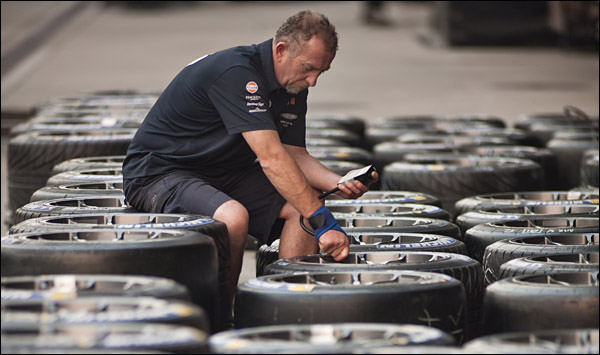 Paul Diggins
We have a core team of people who work with us all the time, but 25-40% of the people you see here only come to the races. They may be employees of Prodrive in other departments – the rally team, the IT department, etc. – but they are only here at weekends.
The core team – those who are directly involved with the cars – comprises about 45 out of the roughly 65 people you see here; engineers, mechanics, truckies, bodywork people, fabricators, people who are actually doing things on the cars. It varies a bit, depending on which race it is. We then have the race drivers and the marketing people, but they are independent of this part of the operation.
So for this race, we have five cars that have to be shipped 5,000 miles. When does the planning process for this particular event begin?
DF: We actually started in January. We had to nominate to DHL how much freight we wanted to bring by March 10th and we were continually working on that deadline. But we didn’t have all our equipment by that date as we were still making it; we didn’t really have all our kit until we got to Le Mans. Last year [2012] we were a one-car team and we’d previously been a two-car team, so we had two or three of everything, but now we needed five or six of everything and we didn’t really have all we needed until probably the week before Le Mans.
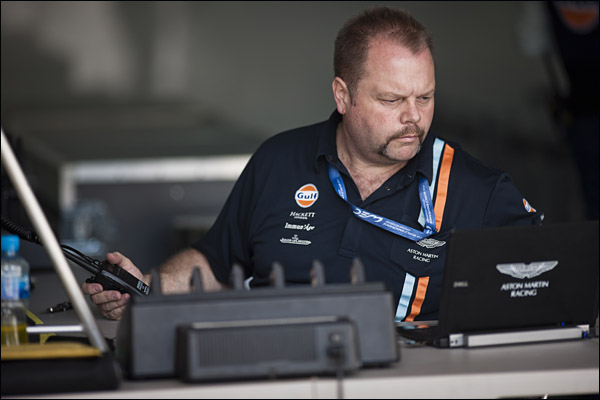 Dave French
Immediately after Le Mans we broke the equipment down and took it back to the factory, and then three weeks later we delivered it all to DHL in Antwerp; it did its first leg here in sea containers.
That’s a lot of spares. Presumably you know in advance how much space you have to work in at the races?
PD: We do get told ahead of time, but for Austin we only found out a week ago. We’ve actually left with everything before we know; it’s one of the problems we face.
How do you decide how many spares to bring?
DF: The chief mechanic is very experienced and will have a good handle on the life of the cars. He works together with the head of the bodywork department and the head of sub-assembly, and together the three of them will do a prediction of the life of the car at any one point and what we will need to replace throughout the five events we’re going to do. So we have planned work on each of the cars at various points, and obviously we have to cater for unforeseen events – accidents; a technical change in the regs; whatever.
There is an element of ‘suck it and see’. We might take more of a particular part as history has told us that it’s more likely to end up needing replacing for whatever reason.
Do you have to organise hotels and the like as well?
DF: No, there’s a girl in the office who sorts all that, thank goodness!
PD: She’ll organise hotels, flights and hire cars for everyone, but we get together with the chief mechanic to organise when all the individuals need to arrive. We don’t bring everyone on the first day – we probably have 20 people here on the first day, then some more come the next day and then we built it up over the week. It’s expensive to bring people out to the races, so we try to make sure they’re only here when we need them.
So once you’re on site, how do you manage such a large team of people?
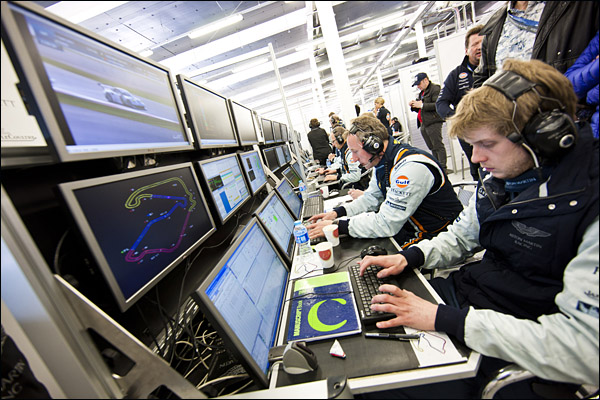
PD: We have an individual plan for each race and we run each car as almost a separate mini-team. We try to anticipate the unexpected, but it gets quite difficult at times; for instance, the day before we came out here one of the guys broke his shoulder, so we had to rewrite the plan. We try and have a balance of strengths within each team, so each car will have at least two very good mechanics, and normally they’ll have a junior or an apprentice with them as well to make it three mechanics for each car. There’s also a sub-assembly person and a bodywork person for each car. So they are the core team; the rest of the roles – dead man handle, fire extinguisher, etc. – are handled by the weekend warriors. I’m not saying they aren’t skilled, but their main skills lay elsewhere. Often they bring additional benefits, like if he’s an IT man then he can help out with the network we have here.
So nobody arrives at a race meeting not knowing what they are doing?
PD: Hopefully not! We try and keep the same teams from race to race. When the cars are running they are part of the car teams, but when we’re in the set-up stage they move into different teams. We have what we call Truckies, who are responsible for maintaining the garage – making sure the air supply is cooled; that the tyres are prepared and ready; ferrying fuel around; all that sort of stuff. Then we have a bodywork crew; they work continually on the bodywork – the guys on the car will take the bodywork off and the crew will check it, repair it, re-sticker it, whatever needs doing and hand it back to the car guys, who obviously just work on the cars. And then we have a sub-assembly crew – any major assembly like an upright, steering rack or gearbox goes to those guys. We try to keep the same people doing the same job all the time, so every steering rack etc. is made by the same people; so you don’t get one car doing one thing and the next car doing another. The aim is that every car is prepped in exactly the same way.
Assuming the race goes to plan, how soon can you expect to get out of here?
PD: There’s no set leaving time for tonight – the plan is to get all the cars to the end of the race and as many of them as possible onto the podium; and hopefully be on the top step. All our efforts are focussed on achieving that.
The next thing we’ll do is break the garage down – we want to leave here tonight with probably 90% of everything in its box. That shouldn’t take too long; hours rather than all night.
DF: We’d expect to have that done by midnight.
PD: The majority of people will then fly home tomorrow, but a small group of us will come back here tomorrow to load up. The stuff came in by boat but will leave by air, so between the two of us we’ve created a plan for every pallet; that way the guys have a plan to work to when they’re building each pallet. If that all goes to plan, we should have all this kit on pallets – DHL will be happy with them as they’ll all be to the correct sizing – strap them all down, hand them over to DHL and then get away. We have until Tuesday morning if we need it, but if there’s no major damage to the cars we’d expect to be out of here tomorrow night.
DF: All in all, we’re looking at 58 tons of equipment, plus the five cars – probably 64 tons in all!
MH
Images ©AMR/Drew Gibson