When the first FIA GT3 car entered a Super GT race in earnest back in 2010, it was a game-changer for the GT300 category. Coming off a nationwide economic recession and seeing many top teams of the class shut their doors, GT3 effectively saved Super GT’s second category.
Nearly a decade later, GT3 cars have evolved and developed well beyond the scope of what anyone could have seen at the beginning. These are now by and large full-fledged factory racing cars, as fast as the GTE cars that run at Le Mans by way of massive gains in aerodynamics and downforce.
They create a great contrast between the traditional JAF-GT cars and Mother Chassis machines, and with Balance of Performance tuned by Super GT and the SRO, it creates for compelling racing between two very different types of cars.
This year, 21 GT3 cars will represent the GT300 class. While German manufacturers such as Mercedes, BMW, Audi and Porsche have been the class of GT3 racing around the world for the past decade, including GT300, the Japanese makes have been making significant strides as well, with the established Nissan GT-Rs now joined by the upstart Lexus RC F and the all-new Honda NSX.
In total, nine different manufacturers from four different countries, including Italy and the United Kingdom, are on the grid from the GT3 contingent, and together with the JAF-GT/MC cars, it’s a very robust field we have once again in GT300!
Mercedes-AMG
The Mercedes-AMG GT3 was the class of the GT300 field last year, their top two customer teams finishing 1st and 2nd in the championship, and their top three teams combining for four victories in the eight races in 2017, including the Suzuka 1000km.
Goodsmile Racing & Team UKYO are the reigning and defending GT300 champions, bidding for their fourth championship in eight seasons. Last year, they ended a three-year winless drought at Okayama and carried the momentum of a season-opening victory all the way to winning the championship at Motegi.

Back together for their seventh season, three-time GT300 champions Nobuteru Taniguchi and Tatsuya Kataoka are in a bid to make history of their own, to become the first four-time GT300 champions in history.
This is the first time that GSR & Team UKYO will defend the title with the same car and drivers from the year before. Taniguchi and Kataoka are both at the top of their game, and the popular itasha livery is always a crowd-pleaser when it adorns the mega-fast Mercedes with its 2018 update kit. GSR & Team UKYO should once again be considered among the favorites to win another championship.
So too should K2 R&D LEON Racing, who ended their 2017 runner-up campaign with two thrilling come-from-behind victories at Suzuka and Motegi.

The switch to Bridgestone tyres definitely helped the team go from race winners to title contenders in 2017, as did the continued development of young Naoya Gamou, who will again drive with Haruki Kurosawa, who’s been with LEON Racing since its inception.
Kurosawa is still looking for his first GT300 championship victory in his 15-year career in Super GT, and Gamou could be Super GT’s all-around fastest GT300 driver in terms of race pace. If they pick up where they left off in 2017, the LEON AMG will be a dangerous threat for the championship.
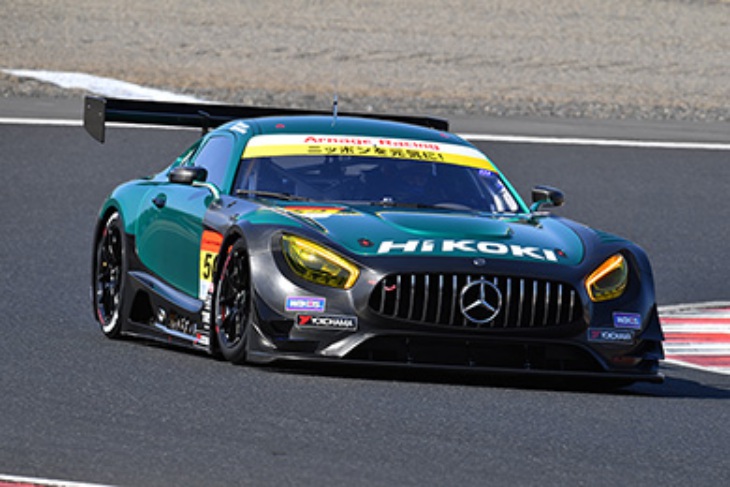
Arnage Racing returns to Mercedes-AMG after returning to independent status, and they also bring back their familiar pro-am driver duo of Hideto Yasuoka and Masaki Kano, who are also joined by Yuya Sakamoto for the long-distance rounds at Fuji.
This is another plucky, likeable independent team who has shown at times to punch well above their weight class with the right car and conditions – as they did when they finished an astonishing 2nd at Sportsland Sugo last year, albeit, with a much different-looking team.
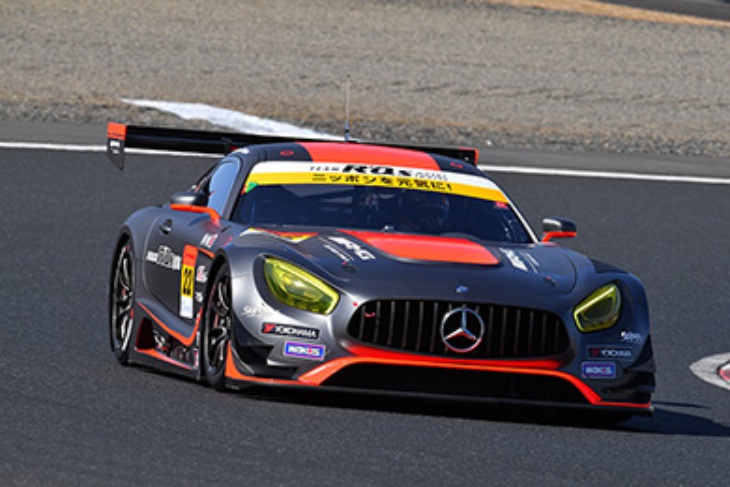
R’Qs Motor Sports have also upgraded their ride to the new Mercedes-AMG, and will be working closely in a technical alliance with Arnage Racing.
Owner/driver Hisashi Wada and his co-driver Masaki Jyonai make up one of Super GT’s oldest and most experienced driver combinations, though a successful season by their standards will be just to finish all the races without drama.
Nissan
Nissan will launch the second-generation GT-R NISMO GT3 worldwide this year, a refreshed and redeveloped version of the car with much more aggressive aero, a new fascia to reflect the updates on the road car, and much better weight distribution, cooling, and safety.
As NDDP Racing step up to GT500, Gainer takes their place as Nissan’s prime customer GT300 team, fielding two Nissan GT-Rs for the first time after years split between Mercedes and Nissan.

There will still be a split in terms of tyre development between the two Gainer TanaX GT-Rs: The #10 car, driven by two-time GT300 champion Kazuki Hoshino and seventh-year am driver Hiroki Yoshida, will be fitted with Yokohama tyres.
While the #11 car, which features former GT500 driver and race winner Hironobu Yasuda alongside the returning Katsuyuki Hiranaka, will run with Dunlop tyres, as they did last year.

The testing results weren’t all that impressive for the new GT-R, between either the Okayama or the Fuji tests. They recently got a BoP tweak to give them more boost pressure to start the year with, but there’s still plenty of work to be done for Gainer and the new GT-Rs to get up to speed.
On the flipside of the coin, there are two privateer teams still using the 2015-spec Nissan GT-R for this season, a car that isn’t exactly lacking top speed.
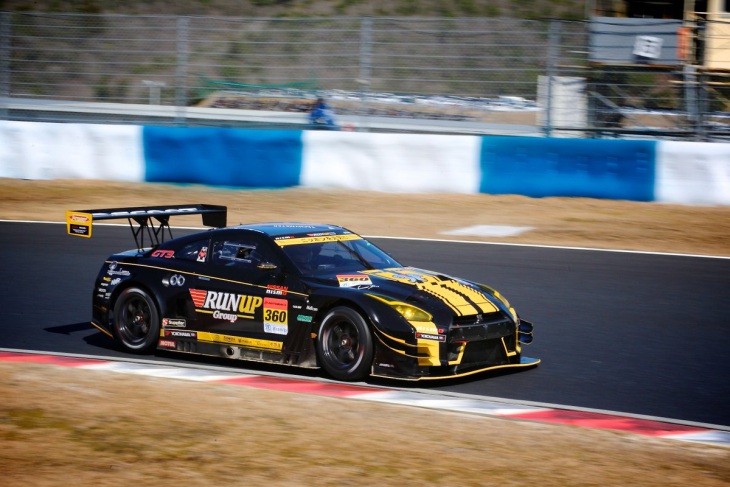
Tomei Sports were a big surprise and a good one at the Fuji tests, and they’re hoping to score their first GT300 points finish since 1994 (!) with a four-man crew.
Gymkhana star Yusaku Shibata and gentleman driver Atsushi Tanaka are the regular pairing for the season. For Okayama, Tanaka is replaced by 2001 GT300 champion Takayuki Aoki, their third driver. And two-time GT500 champion Masataka Yanagida will join the team for the Fuji 500 Miles as their fourth driver.

The other privateer Nissan team is Dijon Racing, and their aquamarine Shokumou (lit. translation: “Hair Transplant”) GT-R affectionately dubbed, “Mintzilla”.
They have an all-am driver combo of Masaki Tanaka and Taiyou Iida for the full season, and they tested Richard Bradley at Fuji – who could help Dijon Racing get some strong showings this season.
Lexus
The Lexus RC F GT3 programme finally launched in full-force last year after two years of difficult on-track R&D conducted in Super GT races. LM Corsa won two races last season with the revamped car, and come into 2018 with a fresh look for the season ahead.
The #51 team from last year has a brand new identity: K-Tunes Racing LM Corsa, part-owned by Okayama Toyopet. The number also changes from 51 to 96.
Yuichi Nakayama returns from the 2017 team, he finished 3rd in the championship last year, 2nd the year before, the 26-year-old has been agonisingly close to his first GT300 championship in back-to-back years.

He has a new co-driver: Morio Nitta, the three-time GT300 champion, who is still a capable driver even at 51 years of age. This is likely Nitta’s best final chance to win his fourth title, in a capable car on Bridgestone tyres.
The #60 Syntium LM Corsa RC F also had some change in the off-season. Akira Iida stepped out of the cockpit to become the new team manager in the off-season, and named Ritomo Miyata, the incredibly talented 18-year-old rookie from the Toyota Young Driver Programme (TDP), as his successor.

Miyata will join returning GT300 veteran and rockstar of the paddock, Hiroki Yoshimoto, and they’ll be running on Yokohama tyres. Yoshimoto wants to get back to winning races, and with rookie of the year candidate Miyata flourishing in testing, this is a solid-looking team.
The Lexus Customer Racing programme in Japan has now grown to include a third GT300 team: Arto-Panther Team Thailand, the only non-Japanese team on the grid.
Nattavude Charoensukhawatana and Nattapong Horthongkum have found the RC F GT3 much easier to drive than their previous Toyota 86 MC, and having a year in Japan under their belt along with additional factory support for the team, Panther Team Thailand could see significant improvement from last season.
Honda
With the Super GT debut of Honda’s twin-turbocharged NSX GT3, all of Japan’s “big three” have a GT3 racing machine on the GT300 grid this season. Their soft launch in North America proved successful, and with the new customer programme run by Mugen, Honda have already snatched up two big customers.
The first is a returning team, Modulo Drago Corse, led by a returning driver, GT500 legend Ryo Michigami.

The return of 2000 GT500 champion Michigami to Super GT after four years away is one of the big stories of the off-season, along with his returning team, who will lead the NSX GT3 charge into the 2018 season after a very impressive run of tests at Fuji.
Driving with him is 23-year-old Honda young driver Hiroki Otsu, who makes the switch from Formula 3 to GT cars, and has been the catalyst for the Modulo NSX’s great form in testing. If the Honda NSX GT3 is going to be a race winner in its first season, it’s more than likely going to be with this team.
CarGuy Racing are a newcomer to Super GT, owned by car collector turned racing driver, Takeshi Kimura.

Kimura makes his Super GT driving debut along with his new team, where he’ll work with an experienced pro: 2012 GT300 champion, Naoki Yokomizo, who is back in the series after a year’s absence. Japanese-Italian driver Kei Cozzolino is the youngest Super GT team director in the paddock.
A good test at their home circuit at Fuji positions CarGuy Racing well amongst their pro-am rivals on the grid. They’ll be looking, first and foremost, to finish all the races – anything more from there is a bonus.
Porsche
Porsche haven’t won a Super GT race since 2012, but they had a very strong 2017 campaign where both their cars placed in the top eight in the championships. And for 2018, both of their cars receive a new aero update that could push them back to the top step of the podium.

D’station Racing were one of the standout squads of pre-season testing at Fuji, and general manager Kazuhiro Sasaki is confident that his team can get back to the top step of the podium in 2018 after two gutsy third-place finishes.
Tomonobu Fujii, now a veteran of over 100 races, returns to pilot the #7 D’station Porsche, as does Porsche factory driver Sven Müller, and this time, for a full season in GT300 instead of the partial slate the young German ran last season. On paper, it’s an awesome lineup that will contend for victories right out of the box.
Their counterparts are Pacific with Gulf Racing, who will have the third different driver lineup in as many seasons in the Gulf colours.

Rintaro Kubo comes over from apr Racing, just off of his first career podium at Fuji last August, this is his third different team in as many seasons. His new co-driver is former Honda young driver Keishi Ishikawa, formerly of Rn-sports. They replace the departing Jono Lester and Kyosuke Mineo, who led Pacific/Gulf Racing to their best-ever Super GT campaign in 2017.
Lamborghini
As Lamborghini are starting to rack up milestone endurance race wins and championships around the world in GT racing, Team JLOC are confident that it will start to rub off on them, in their 25th season.
There’s a new look for both of JLOC’s two Lamborghini Huracán GT3s, and refreshed young driver combinations with a lot of potential.

The #88 Money Partners (ManePa) Lamborghini retains 26-year-old Kazuki Hiramine, a former Super Taikyu premier class champion, who is now joined by Lamborghini Squadra Corse driver Marco Mapelli, making his Super GT debut.
Mapelli is a world-proven GT racer across Europe, and his arrival marks the beginning of what could be a new era for JLOC and Lamborghini as he replaces the legendary Manabu Orido.
Its sister car, the #87 Legal Frontier Lamborghini, has the former single-seater standout Kimiya Sato, who returns to race alongside 2015 PCCJ champion, Yuya Motojima, promoted to full-time duty after a part-time slate with JLOC and D’station Racing in 2017.
Mapelli and Motojima add what could be the missing pieces for not only JLOC’s first GT300 win in four years, but their first serious run at a series championship in 25 years.
Audi
Audi Sport endured a miserable 2017 season, first fraught by shockingly dismal pace, then by horrific luck. Their aim for 2018 is to get back to the benchmark Audi have set for customer racing around the world.

Audi Team Hitotsuyama will aim to put past them a woeful 2017 campaign with a refreshed driver lineup for 2018.
Richard Lyons, a former double champion of both GT500 and Super Formula, stays on for his seventh season as the head driver at Hitotsuyama Racing. He’s joined for 2018 by former Gainer driver, Ryuichiro Tomita, and they also have a new third driver in F4 graduate, Takuro Shinohara.
The pace that Audi Team Hitotsuyama showed in testing on their Dunlop tyres was very encouraging, they look poised to get back in winning form this year.

Team Taisan, one of Super GT’s oldest and most successful teams, have also revamped their driver lineup after a tough season.
Shinnosuke Yamada is now joined by another Japanese F4 graduate to Super GT, sophomore driver Shintaro Kawabata. Shinji Nakano has also joined the team as an executive advisor and test driver. With four GT300 Drivers’ Championships to their name, Team Taisan’s aim is to rekindle the magic of their glory years.
BMW
BMW Team Studie’s shocking withdrawal in the offseason means that Autobacs Racing Team Aguri (ARTA) will be BMW’s sole customer for the M6 GT3 this year.

This car was especially quick at the tests at Fuji, where ARTA have excelled in recent years with the turbo-V8 M6. The combination of a potent car, and aggressive pit strategies, combined with the Bridgestone tyres, makes ARTA a formidable challenger for the title again this season.
Shinichi Takagi is the lead man once again at ARTA’s GT300 team, tied for the all-time record of 18 race victories as of the start of the season. But big things are also expected out of second-year driver Sean Walkinshaw, who improved by leaps and bounds as the 2017 season went on. “Drift King” Keiichi Tsuchiya effectively runs this side of the ARTA garage, and runs it very well.
They may be down to just one car this year, but BMW supporters will still feel like they have a chance at the championship.
Bentley
After introducing the big Bentley Continental GT3 to Super GT last year, EIcars Bentley are back for a second tour with the burly turbo-V8 monster.
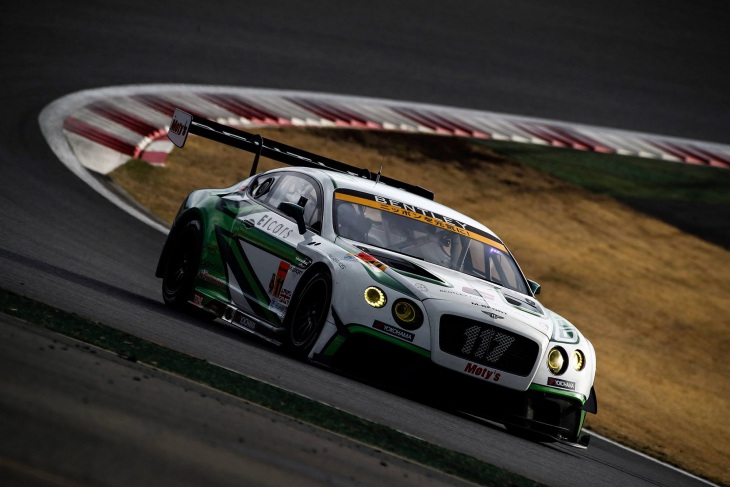
GT500 race winner Yuji Ide, and five-time Super Taikyu champion Ryohei Sakaguchi, are the full-season drivers once again in the EIcars Bentley. They’ve also tested young drivers Ryo Ogawa and even Bentley factory racer Jules Gounon this off-season – potentially for a drive at the Fuji 500km or 500 Miles.
After finishing all but one of their races last season, the team at EIcars wants to score their first top-ten finish in GT300 to build upon a solid foundation laid down in 2017.
Photos courtesy of: Goodsmile Racing, Nissan, Toyota, OTG Motor Sports, Drago Corse, CarGuy, D’station Racing, Money Partners, Hitotsuyama Racing, Audi Sport Japan, ARTA Project, EIcars, and the GT Association (GTA)