During these long days, one of the ways of filling the time (once you have finished clearing out the cupboard under the stairs) is catching up on some quality reading. In the first of an occasional series, Paul Tarsey looks at a couple of the recently published motorsport titles
The story of XKD526 by John Elmgreen
You may think that there are already enough books about the D-Type Jaguar but this new release from Porter Press International comes at the subject from a somewhat different angle. Instead of taking the well-trodden path of discussing the famous long-nose ‘works’ superstar cars, author John Elmgreen delves into the considerably less famous XKD526 ‘customer’ car.

The car was delivered new to Australia in late 1955 and immediately started an active and varied competitive life. First owner Bill Pitt entered the car in the Leyburn Sprints in February ’56 for one of Australia’s few female drivers, ‘Geordie’ Anderson, where she clocked an impressive first time out flying quarter mile at 135.2 mph. Albert Park is now famous as the home of the Australia Grand Prix but there has been racing held at the venue for many years. Car owner Bill Pitt finished the racing year in 1956 with a shunt at the fledgeling venue, and although the only things he hit were straw bales, there was a fair amount of damage, albeit superficial.
By the time the car reappeared in 1957 it had a reprofiled nose section, the famous oval air intake replaced with a much squarer and, it has to be said, less attractive, ‘face’. The British Racing Green paintwork had been changed to metallic gold as well. Thankfully by the end of the season common sense had prevailed and BRG was again the colour of choice, although the unique front end was still there.

XKD526 was in for another change of colour though, as it evolved to the yellow with a blue stripe of the Leaton Motors team. The company was a successful retailer of road cars and one of their salesmen persuaded them to buy the car for him to race under their banner. That salesman was none other than Australian racing legend Frank Matich, embarking on what would become a very successful career in motor sport.
Over the next few seasons, the car continued as part of the Leaton Motors stable but became less and less competitive. In an effort to extend its racing life, a number of modifications were tried, not least a couple of different hardtop interpretations of the Malcolm Sayer bodywork, photographs of which appear in the book and are strangely appealing.
In 1967 the redundant racer was pensioned off and was eventually bought by Keith and Sandra Berryman who restored the old girl to her original state…. or nearly because they added a Le Mans type fin to the headrest before entering ‘526’ onto the Concours circuit in Australia.
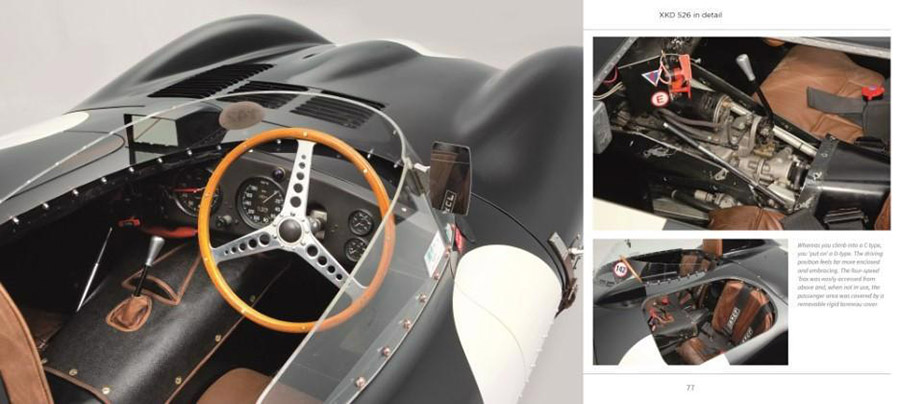
It was only in 2014 that she finally made the long trip home where a full nut-and-bolt restoration took place, returning the car to the condition in which it left Browns Lane all those years ago. Porter Press supremo Philip Porter is a well known Jaguar aficionado and he takes up the story from this point. The rebuild is covered in detail and the photography of the car as it exists today is stunning and highly detailed.
Porter Press International produce these ‘Profile’ books as a comparatively lightweight read with a correspondingly affordable £20.00 pricetag. For those people wanting a more in-depth D-Type biography, PPI has published a book on the XKD 504 ‘Longnose’ as part of the Great Cars series at £60.00. Each book appeals in a different way and are equally rewarding reads.
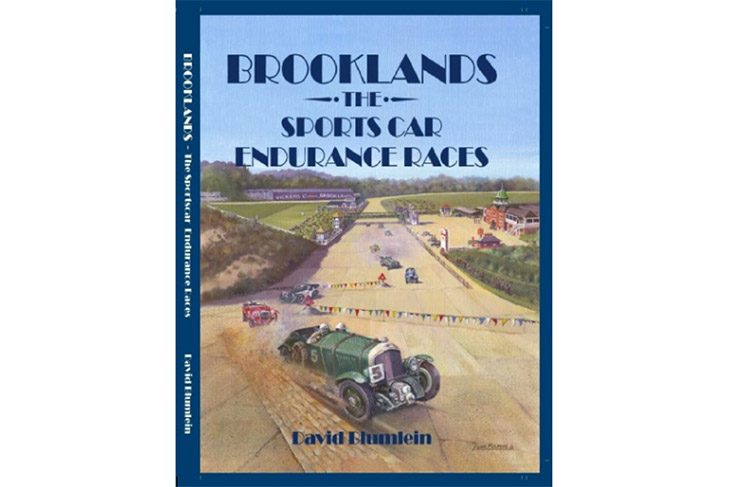
Brooklands: The Sports Car Endurance Races by David Blumlein
“I kept on looking around for a book about the Brooklands endurance races and couldn’t find one” explained David Blumlein as he started talking about his latest labour of love. “It was only when I realised there was no such thing that I decided to write it myself.”
Brooklands is one of those now-defunct race tracks which most people know something about but very few know ‘The Track’ (as it was always known by the beautiful people who were there) in any detail. The Brooklands Society and the glorious museum keep the dream alive but this work gives additional insight into that world. This book will fill in a lot of gaps for enthusiasts worldwide.

It wasn’t all perfect anyway. The track had been somewhat cheaply built, the Locke King family having underestimated the amount of money it would cost to create this vast civil engineering monument within their Weybridge estate. The ensuing financial crisis caused the actual poorly finished race track to be hard on cars and drivers alike. The famous mantra of ‘the right crowd and no crowding’ was indeed true, but for many of that crowd, the motor racing was little more than a backdrop extension to the social season rather than the reason to travel to Surrey.
David Blumlein’s background as a schoolmaster comes through loud and clear. The work is scrupulously researched and very obviously the many facts and figures have been laid out in ways which is both informative and interesting. Indeed the author started our conversation, as a teacher would, at the very beginning by defining just what makes a sports car.
He talked about the American-built Mercer Raceabout as perhaps being a very early iteration. Having been built in New Jersey these cars were driven to their race debut at the Indianapolis 500 and then, once they had competed in ‘the 500’ were driven home again a cross-country journey on dirt roads, of over 1400 miles, plus the race distance itself!.
The author, warming to his subject, said that surely the absolute definition of a sports car came from the late Cyril Posthumous, who said that a sports car was one which ‘put performance before carrying capacity’. That definition probably held true until the introduction of the first ‘hot hatch’ some seventy years later!
In the early days at Brooklands, the majority of races were short handicap events rather than the endurance competitions covered in this book. Racing had been designed to mimic the horseracing equivalent, and indeed in the first season of racing in 1907, drivers wore jockeys’ silks to identify not only themselves but also the owner of the car, exactly as would happen at Ascot. This effort to draw the horse-racing crowd saw the events become known as the ‘Motor Ascots’.
It was SCH ‘Sammy’ Davis who realised that Le Mans, in particular, was growing in stature and that there was a place at the world’s first purpose-built race track for endurance racing. Even then, racing on the public roads was not allowed in the United Kingdom and so, unlike Spa or Le Mans, a 24-hour race was going to need to run on a race track.
There was an element of endurance racing at Brooklands even before the First World War but these tended to be out and out racing cars and race distances did not include night racing, and it was only in 1927 that sports car endurance racing started at Brooklands. Local resistance may seem like something which we have to battle within the 21st-century but the residents of the select area of Weybridge were incensed by the idea of a 24-hour race disturbing their enjoyment of leafy suburbia and racing had to finish at 6 o’clock every evening to preserve the local tranquillity. The action could not start until the following morning.
The way around this was to have two twelve-hour races and this is how the Brooklands Double Twelve came about. The first race was on Saturday and the cars were placed in parc ferme overnight and began racing again the following morning. However, we must remember that communications were not to the level that we would expect today and the somewhat sparse crowd was hopelessly lost as to who was leading the race and just what was happening.

Brooklands reputation as a car breaker saw the fast disintegrating banking take its toll and consequently when the Double Twelve resumed very few cars came out of perc ferme on the Sunday morning. This was because they were all being repaired by the mechanics after their strenuous run on the previous day. Even when the cars did return to the fray it wasn’t always at competitive speeds and there was a period first thing that morning which can only be viewed as testing, where drivers would run round in second gear simply to make sure everything was alright and that nothing was likely to break or fall off.
After satisfying themselves of the safety of the repairs they would rejoin the race proper. There were even stories of the Alfa Romeo mechanics warming the oil in parc ferme to pour into the cars ready for the resumption of competition on Sunday morning. Some things never change!
Motor racing was very different in those days. Brooklands is famous for ‘the right crowd and no crowding’ but safety was never paramount. Spectators were kept back from the race track simply by wooden railings and indeed one of the public relations disasters that Brooklands faced was that spectators occasionally got injured or even killed whilst simply enjoying the racing. It was after one such fatal accident that the requirement was brought in that you had to print on the reverse of the ticket ‘motor racing is dangerous’ and a few disclaimer statements which, of course, still happens to this day.
Brooklands itself ran to several different layouts and these are covered in the book. The original pear-shaped banked circuit always had the start-finish line where the clubhouse and pits were located and fed directly onto the members banking. The much longer Byfleet banking was at the other end (the fat end of the pear) and strangely there was a’ Mountain Circuit’ which used the start-finish line but turned right onto the members banking using a very short and somewhat unpopular layout. The Campbell Circuit was a completely new layout utilising the members banking as part of a purpose-built road course, all of which is covered in the book.

When all is said and done there were only nine long-distance sports car races ever held at Brooklands and yet there is enough to fill David Blumlein’s excellent book with all sorts of facts figures, anecdotes and trivia. The book is well illustrated with many unseen photographs and has been brilliantly designed by Marcus Potts although the cover illustration (not Potts’ work) perhaps lets the rest of the book down. The book is published by well-known booksellers Chater’s and company and costs £30.00 and is available now via the Chaters website.
Further information about the book can be found on the dedicated website: Brooklands – The Sports Car Endurance Races
ISBN:9780995705432