In the next of our long-term series of multi-part trots through the recent history of the cars and classes involved in contemporary sportscar racing we look at another class that has seen a significant change in a remarkably short time.
LMP2, or Le Mans Prototype 2, emerged from the struggling LMP 675 and SR2 classes in 2003, designed to be a class with costs accessible for privateer teams, retaining high performance, significant downforce, but addressing the reliability woes of the lightweight LMP675 cars, and increasingly seeing safety improvements over the generally older-tech SR2s.
Successive regulation changes saw ‘grandfathered’ older cars (which are included here for completeness), become uncompetitive, obsolescent and outlawed.
From there regulations have evolved to encourage production-based engines, restrict power, and, in more recent years, to mandate enhanced safety including the introduction of the ‘shark fin, enclosed wheel covers, internal safety features and a mandatory shift to closed top, ‘coupe’ construction.
In the most recent change, for 2017, only four manufacturers were licensed to build LMP2 chassis, all four featuring a ‘spec’ c.600 bhp, 4.2 litre Gibson engine, by far the most powerful LMP2 powerplant the class has seen – and an end to a parade of powerplants that ranged from grunty and great, down to breathless and bloody awful!
The cars have seen competition in the FIA WEC, European Le Mans Series, Asian Le Mans Series, American Le Mans Series, Japan Le Mans Challenge, Le Mans Series, Intercontinental Le Mans Challenge and in the combined IMSA Series since 2014 plus odd appearances in other international and national series and races.
GALLERY
Acura ARX 01a – 2007 – Based on the Courage LC75 chassis but heavily modified into the Porsche RS Spyder-challenging Acura, later badged as both an HPD and, briefly, a Honda – The 2007 ARX 01a was fielded by three favoured teams (together with a HPD-powered Lola) – the Andretti Green run car won on its debut but thereafter was outpaced and outraced by the Penske-run Porsche RS Spyders
Acura ARX 01b – 2008 – The further uprated 01b took the fight to Porsche in 2008 with six race wins in the ALMS but spread across the Patron Highcroft 94 wins) and Andretti Green (2 wins) teams, Highcroft losing out in the Championship to Penske again.
Alpine A450 – 2013 Badge-engineered Oreca 03 that took the Signatech Alpine team to consecutive ELMS titles in 2013 and 2014
Alpine A450b -The Alpine-badged version of the Oreca 03R with revised aero debuted at the 2014 Le Mans 24 Hours and scored a podium for Signatech Alpine before contesting the Full FIA WEC in 2015 with a class win at Shanghai
Alpine A460 – The Alpine version of the Oreca 05 – otherwise identical – Raced in the FIA WEC only in the 2016 season, and took both the Championship and Le Mans 24 Hours class wins
Alpine A470 – Re-badged and re-homologated version of the Oreca 07 – exclusively used by Signatech Alpine – Le Mans class wins in 2018 and 2019 and the WEC class Championship in the 2018/19 ‘Super season too.
Aurus 01 – As with Alpine, Aurus, a Russian limousine manufacturer, paid to have Oreca 07 chassis rebadged and re-homologated – Campaigned with some success in ACO rules racing until 2021 when the cars reverted to the Oreca badging
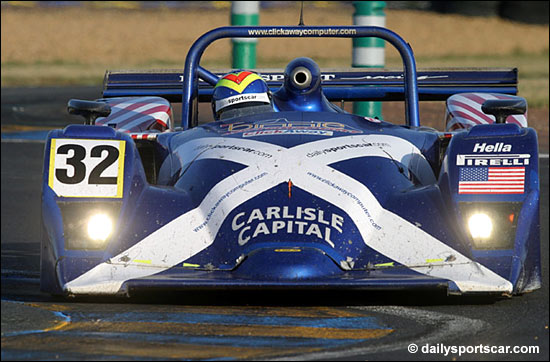
Courage C65 – Debuted as an LMP 675 in 2003 but was designed as an LMP2 and found plenty of takers – well into double figures were produced for teams on both sides of the Atlantic with some race-winning successes in both the LMS and ALMS. The cars saw a wide variety of engines fitted including being selected as the vehicle for the relaunch of Mazda’s efforts in the USA with a rotary engine – A factory-team-run C65 won the inaugural LMS LMP2 Championship. The LMP2 game moved forwards very rapidly in the early years of the class and by 2006 the C65 was outclassed.
Courage LC75 – An honest to goodness customer LMP2 car from 2007 that spawned the Acura and later HPD factory efforts , Yves Courage’s last new car before the Courage concern was sold to Oreca wasn’t the most glamorous of platforms, but the basics were clearly very good indeed – customer cars saw midfield results in Europe as HPD got to work on re-developing the chassis
Dallara P217 – Initially a popular choice as the 2017 Gibson-powered era dawned but the car soon proved to be a tricky proposition, in particular for non-Pro drivers. Capable of race-winning speed in Pro hands the ACO’s ‘Joker’ process did not allow the Italian manufacturer to fully cure the car of an in-built aero issue and its customers abandoned the cars by 2020. The chassis though lives on as the basis for Cadillac’s hugely successful DPi.
Dome S101.5 – 2007 – A one-off LMP2 version of the revised Dome S101 LMP1 car, redubbed the 101.5 – The car was run in the 2007 Le Mans Series and at le Mans by T2M Motorsport, hampered by an underpoiwered and unreliable 3.4 litre Mader BMW engine. It did not return for 2008!
Embassy WF01 – 2008 – in-house design from UK team Embassy Racing, the WF01 designed by Peter Elleray and powered by a Zytek V8 – the car had some promising runs in the Le Mans Series and raced at Le Mans in 2008 – the effort petered out in 2009 as the long arm of the law caught up with team owner Jonathan France, currently serving a long prison sentence for tax fraud. The project was bought by Mike Newton’s Tiga Cars with an intention to relaunch the car with a production-based Judd engine but the revised cars never emerged from the team’s workshops
GC21- rebodied F3 cars designed around sprint race cars from a Japanese national championship – included in the LM2 class of the 2006 Japan Le Mans Challenge as LMP2 grid fillers
Gibson 015S 2015 – The final iteration of a car that started as a Reynard design, briefly became an IRM/ YGK, then a DBA, Zytek, Ginetta Zytek and back to Zytek before adopting the name of Bill Gibson after the Zytek company was partially sold on. 15 years on from its race debut the car was still winning, taking the 2016 ELMS title with G-Drive (Jota) and just missing out on a podium at Le Mans with Strakka
Ginetta Zytek GZ 09/S2 – 2009 and with the brief coalition between Ginetta and Zytek the LMP1 and LMP2 cars had an equally brief name change, still lauded as a sublimely handling package, still with the Zytek V8.
HPD ARX 01c – 2010 – Acura had switched their branding to LMP1 in 2009 with the LMP2 cars rebranded as HPD (Honda Performance Development. They found a quality customer in Europe with Strakka Racing who used the low-drag Le Mans spec 01c to good effect, taking a near faultless class win at Le Mans in 2010 and taking an overall Le mans Series win against significant LMP1 opposition at the Hungaroring, but missing out on the title to the (HPD-powered) MG Lola of RML.
HPD ARX 01d – 2011 – With cost-capping looming the switch was made from the naturally aspirated 3.4 litre V8 of the )1a,b andc to a production-based 2.8 litre turbo V6 that initially had significant issues in the power stakes against the then dominant Nissan V8s in Europe.
HPD ARX 01g – 2011 – New cost-capped regulations meant another new specification of HPD and the 01g was it, used to good effect by the emerging force of Level 5 Motorsports, the team replacing their Lolas mid-season. they would assist the team to an uncontested LMP2 title in 2011
HPD ARX 03b – 2012 – A new Wirth Technologies designed chassis saw the advent of the ARX 03 in 2012 , the 03b the LMP2 version of the car seeiing early and sustained success with Starworks clinching the inaugural FIA WEC class Championship, Level 5 claiming back-to-back ALMS Championships in 2012 and 2013 – ESM contesting both the ALMS and later the FIA WEC in the cars and reverting to their 03bs after the failure of the intended replacement 04b.
HPD ARX 04b – 2015 – The Wirth-research-designed car was raced only once – at the 2015 Rolex 24 Hours but proved to be aerodynamically flawed, and less effective than the ARX 03 it was designed to replace – The ESM team reverted to their older cars before opting for Ligier machinery. The car was later upgraded, was set for a run at Pikes Peak (later cancelled) and was tested by Mike Shank Racing which included some of the development work on the 2017 Continental rubber for the new LMP2 formula.
Ligier JS/P2 – The first car branded as a Ligier by Jacques Nicolet’s Onroak Automotive concern. The JSP2 was a pretty and effective tool, c.15 were built and many found themselves in very significant programmes in the WEC, IMSA, ELMS, Asian LMS and, of course at Le Mans – Several lived on lived on in the Asian Le Mans Series for a couple more seasons after the new cars arrived in 2017. SIgnificant results included Wins at Daytona and Sebring for ESM, at Petit Le Mans for MSR and the 2015 FIA WEC Championship for G-Drive Racing/ OAK Racing
Ligier JS P217 – Ligier’s offering in the 2017 Gibson-powered era saw some success, race wins in the ELMS and one in IMSA racing too, but it lost out in the numbers game with Oreca, saw tyre development move away from a window that suited the JS P217 and fell out of favour – formed the basis for the privately developed Nissan DPi – the LMP2 is still in limited use in 2021
Lola B2K 40 – Lola’s little B2K/ 40 was a legacy vehicle from the SR2/ LMP675 era but still found success as a popular choice for privateer teams. as the LMP2 era took a hold. Took a Le Mans 24 Hours win in 2004, the first year of the new class.
Lola B05/40 – Lola’s breakthrough into the LMP2 era – a replacement for both the ex SR2 B2K/40 and the ex LMP675 MG Lola EX 257 (with which the new car shared significant design philosophy F and a car that would form the basis of the famous company’s open topped LMP2 offer, through a variety of upgrdes, for over half a decade. From 2005 iut found customers and success on both sides of the Atlantic with Chamberlain Synergy winning the Le Mans Series class championship and Intersport doing likewise in the ALMS.
Lola B07/40 – 2007 – significant change to the front aero was the major change to the updated open topped Lola, BK Motorsports in the ALMS (with the turbo AER Mazda engine making its debut) and KSM in Europe both ran 05/40 chassis with the 2007 upgrades.
Lola B08/40 – 2008 – KSM (Kruse Schiller Motorsport weere the only takers for a further minor evolution to the 07/40
Lola B08/80 – 2008 – Lola’s entry into the LMP2 coupe marketplace – campaigned by Speedy/ Sebah, BK Motorsport (Mazda), Dyson Racing and RML (as an MG Lola) – The package proved to be a step forward but was no match for the Porsche RS Spyders. There were though some good results for all four customers
Lola B09/80 2009 – A further evolution with pair of new cars for Dyson Racing had some success, the cars later campaigned in LMP1, Racing Box took a pair of cars too and Speedy Sebah bought a new chassis that won in the Le Mans Series
Lola B11/40 – The last iteration of open-topped prototype from Lola – cmpaigned briefly by Level 5 who took a distant Sebring win with their car, the team switching mid-season to HPD machinery, and by Pecom Racing in the 2011 Le Mans Series before switching to an Oreca
Lola B11/80 – 2011 – A pair of cars were obtained (together with an open-topped B11/40) by Level 5 Racing, and were campaigned in programmes on both sides of the Atlantic through to the middle of the season after which the team switched to HPD machinery as the spending at Level 5 reached levels that turned heads for all of the wrong reasons! One ex-Level 5 car was campaigned later in 2011 for a number of ALMS races by Black Swan Racing
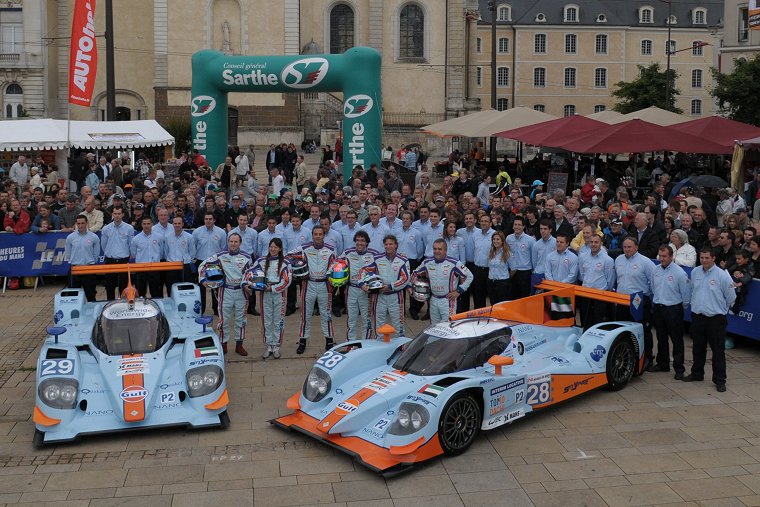
Lola B12/80 – 2012 – The last LMP cars built by Lola before the shutters came down, the UK concern had lost ground in a competitive LMP2 marketplace and high quality customers were tough to find – Six cars were though delivered, two apiece to the Gulf Racing Middle East and Lotus (Kolles) concerns with another for Dempsey Racing and a solo car too for Status GP who scored a class podium at Le Castellet in 2012 – Byt the end of the 2013 season though all six were parked and the Lola name disappeared from the international scene – for now!
Lotus T128 -2013 – Adess – designed chassis and with the car designed by ex Sauber man James Key. Two cars were fielded by the Kolles-owned Kodewa effort under the Lotus banner in the FIA WEC in 2013 – A handsome looking car but not on the pace of the then dominant Oreca 03s – The LMP2 effort was parked in 2014 as the team moved into LMP1.
Lucchini SR 2000 – 2004 Another of the ‘grandfathered’ SR2 cars – Lucchini found little success with the car in appearances in the Le Mans Series with Palmyr Competition – The car’s appearance was more notable for the cartoon elephant painted on the front than for its pace.
Lucchini SR 2001 – 2005 Villorba Corse – There was little more performance for the mildly updated 2001 spec ex SR2 car with a third place class finish in the 2005 Le Mans Series the sole notable perfomance, this more a mark of the lack of reliability elsewhere in the class than for the performance of the Lucchini
Lucchini LMP2 04 – A brave attempt to move into the 2004 LMP2 class that struggled with homologation issues seeing the first car excluded from Le Mans at the scrutineering stage – always a back marker – this showed, more thsan anything, how much even a then unreliable LMP2 class had moved on from SR2 days.
Lucchini LMP2/08 – A final throw of the dice from Luchini, but still missed the target by a fair way – the 2004 concept updated to then current 2008 regulations did little to improve on the weaknesses of the package.
Mazda Prototype- SDR-14 – For the newly unified Tudor United Sportscsr Championship in 2014 Mazda came out punching with a Multimatic-built Mazda Prototype based on the Lola B12/80 – The cars were powered by Mazda’s Sky-Activ Diesel engines, the only LMP2 effort to use diesel power. Sadly, whilst the programme was heavy on visibility it was light on results, a single podium finish in their three year programme before the cavalry arrived in the form of the RT24P DPi.
MG Lola EX264 – Rebadged and re-homologated version of the Lola B05/40 – campaigned with no little success by RML including Le Mans class wins in both 2005 and 2006
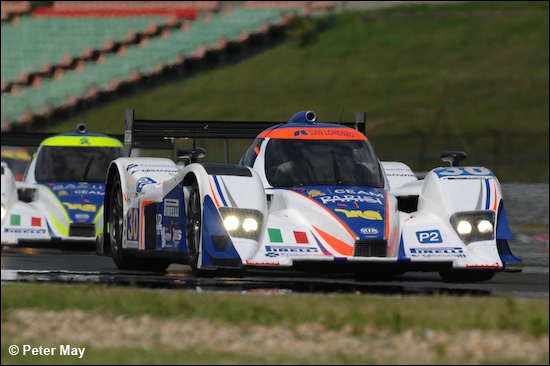
MG Lola EX265C – Reworked Lola B08/80 by RML – progressively upgraded and won the 2010 Le Mans Series LMP2 title
Morgan LMP2 – 2012 – A rebadged and mildly reworked Pescarolo chassis, progressively updated as the regulations required, proved to be a sturdy and reliable workhorse as Onroak’s first effort in international sportscar racing without the now dormant Pescarolo name. The Morgan badge was a licensing deal only. Took Le Mans, WEC and Asian LMS Championship wins in 2013 – it’s career though was shortened by the shift to closed to ‘coupe’ style cars, and was replaced by the incoming Ligier JS P2 midway through 2014.
Morgan LMP2 Evo – #43 – 2015 – A planned 2 car effort from Team SARD Morand emerged as just a single car effort in the FIA WEC with a SARD-badged Judd V8 – A second place at Spa was the sole highlight for a team that proved to be no match for the Ligier JS P2 and Oreca 05 efforts elsewhere.
Norma M200P – 2010 designed as a basic, low-cost option as the LMP2 formula transitioned to production engines for 2011. The car raced at Le Mans with Pegasus Racing and with Extreme Lilite but had little success.
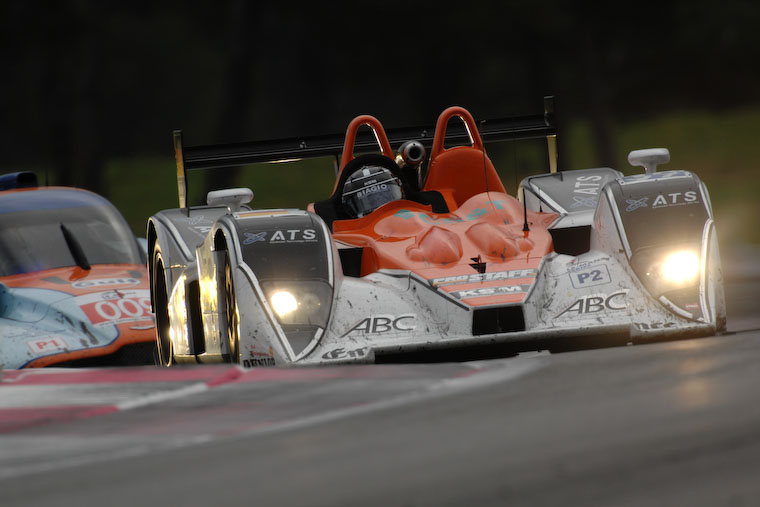
ORECA 03 – 2011 – a breakthrough car for Oreca with 24 eventually built between the original spec and revised 03R – aero efficient and fast the car soon proved a popular choice with race and championship wins in ELMS (2012 with Thirie by TDS, 2013 and 12014 with Signatech’s Alpine-badged cars), ILMC (2011 with SIgnatech and FIA WEC (2014 with SMP Racing) and won Le Mans in 2012 in the hands of the Thiriet by TDS squad.
ORECA 03R – 2014 and the Oreca 03 got a mid-life upgrade with revised front bodywork the most obvious change – that kept the car in the game as the Coupe era dawned
ORECA 05 – Succesful ‘coupe’ replacement for the 03, though its competitive life was fairly short with the incoming Gibson-powered cars of 2017 onwards – lived on in the Asian Le Mans Series for a couple more seasons. Took wins at Le Mans in both 2015 (KCMG) and as the rebadged Alpine A460 in 2016 too, the same car taking the WEC class title in the same year. The 05 was capable of being upgraded into the successor 07, as a result very few cars remain – One new car was built in 2019 to contest the Asian Le Mans Series.
Oreca 07 – 2017 – an utterly dominant force since the formula changed in 2017 with the other three alternative chassis scoring only a handful of wins in any competition against the 07. Now closing in on 100 cars built the car, based on the earlier 05 has speed and reliability, forms the basis for the Acura DPi, and has had to be progressively reeled in with engine power, aero and tyre limitations to keep it out of the performance window for DPI, and later the incoming Le Mans Hypercars. In less restricted times the cars were producing quaifying lap times at Le Mans equivalent to those produced by pre-hybrid factory LMP1s. Finished second overall at Le Mans in 2017 – winner of every significant international LMP2 title since 2017 as an Oreca, Alpine or Aurus
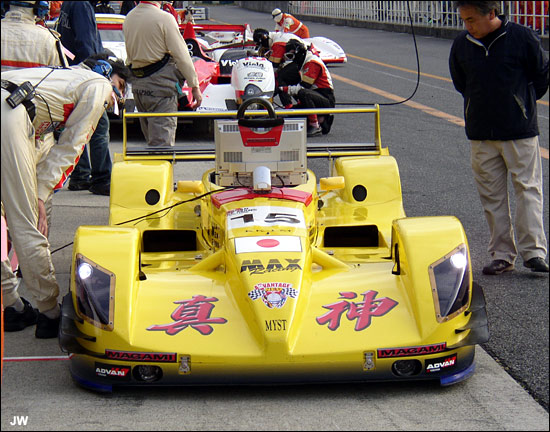
Oskar – Endurance cars from the Japanese Grand Champion Series, effectively faired-in F3 cars converted by Mooncraft, were included in the LMP2 class of the 2006 Japan Le Mans Challenge – Far from LMP2-spec they were effective grid fillers
Oskar RS KK LM – an upgraded version of the Oskar, also featured in the 2006 Japan Le Mans Challenge but with revised bodywork and a Honda S2000 engine
Pescarolo 01 – 2007 – Kruse Motorsport were the first takers for an LMP2 version of the cut-price Pescarolo chassis for LMP2 use, some encouraging early season performances came to nought when the car was destroyed in a mid-season transporter fire. A second car was then campaigned in 2008 by Saulnier Racing and went very well indeed, scoring an LMP2 podium at Le Mans in 2008 behind the two dominant Porsche RS Spyders.
Pescarolo 01 Evo – A mild evolution of the original as OAK Racing campaigned a pair of cars in the 2009 Le Mans Series with some podium success.
Pescarlo Oak 2011 – Post Oak Racing takeover of the Pescarolo design there was a single season with a further evolved 01 , one LMP2 car running alongside a pair of LMP1 versions
Pilbeam MP84 – 2004, raced for PiR until replaced by the MP91 and for G-Force – another car that showed how far the game had moved on.
Pilbeam MP91 – 2003/4 – Competed in the Le Mans Series with PiR throughout the 2004 season, and almost clinched the title, principally through points scored at every race in an otherwise unreliable class. Continued into 2005 before being replaced by the MP93 – In the ALMS Team Bucknum toughed it out with their MP91s into 2005, the cars though were increasingly outclassed.
Pilbeam MP93 – 2005 – A big step forward for Pilbeam, but not big enough as the marketplace had accelerated away up the road, the new car hung around until 2007 in the Le Mans Series in the hands of sole customer PiR but never gained traction in the customer marketplace.
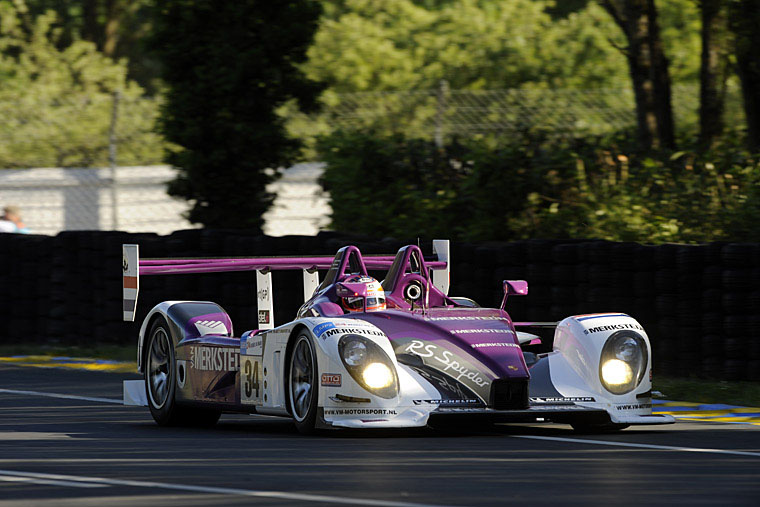
Porsche RS Spyder – The Porsche Notrth Amerca-funded car was a class game-changer, winning first time out in the final race of 2005 and dominating the ALMS in 2006, including an overall race win against LMP1 opposition – The Class Championship followed for the Penske-run effort
Porsche RS Spyder Evo – 2007 an updated version of the RS Spyder moved the game on even further as the Acura vs Porsche story in ALMS roared on – add to that cars in European hands appearing in the Le Mans Series and at Le Mans with a pair of class wins – In the end the cost cap of the 2011 regulations killed the car in contemporary competition, an end to an astounding period.
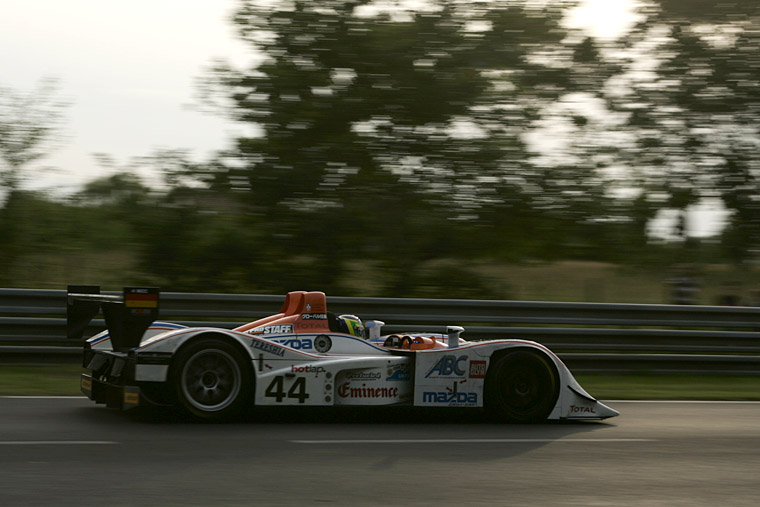
Radical SR9 – From 2006 customer cars found their way intio the Le Mans Series and Le mans 24 Hours with both Judd and AER power – The car was quick and had some very strong performances but with few major results – raced at Le Mans with Rollcentre, Team Bruichladdich and Race Performance
Radical SR 10 – Initially planned as a bio-diesel powered LMP1 car, Ian Dawson’s car tested with a Nissan engine in P2 form and then raced, just once, with a Roush-Yates Ford, at Laguna Seca in 2012 – The car updated to current LMP2 regs with the dorsal fin etc.
Riley Multimatic Mk XXX – The fourth 2017 licensed LMP2 was a joint effort between Riley Technologies and Multimatic, and became the basis for the Mazda RT-24P DPi. The LMP2 car though required pretty much a full rethink when the Joker process of attempting to close the gap to the already dominant Oreca began. Multimatic took sole charge of the project, in particular to attempt to sort a wayward suspension set-up and to allow the required development for the Mazda. Very few LMP2 cars were built, Keating Motorsport raced it at Le Mans to no good effect, the car proving ‘draggy’ even post redesign.
SMP BR01 – 2016 – Designed by serial LMP2 designer Paolo Cattone, the Russian-funded BR01 (BR is Boris Rotenberg) was one of two cars that pushed the ACO to adopt a new formula for LMP2 to prevent cost escalation. The BR was a handsome car, initially constrained by its inability to use the then-dominant Dunlop rubber (Due to prevailing economic sanctions on Rotenberg’s business interests, the car did score a pole position at the 2016 Rolex 24 Hours and had good form in European and WEC competition once the Dunlops became available. Its contemporary career was cut short by the Gibson-powered new formula of 2017 but the cars are now very active – and successful in the Masters Endurance Legends historic Series
Strakka-Dome S103 – 2015 – One of a pair of cars that effectively sealed the fate of the pre-2017 LMP2 marketplace as the ACO decided that the Dome and the Russian BR01 could start an arms race in a class designed for contained cost. Ironically in the case of the Dome, commissioned by Strakka racing in the UK, the car’s early iterations were a disaster with the rear suspension needing a full redesign and the homologation process not permitting the aero package to be built as designed – It was all over all too quickly for a car that had promise but whose time had run out – a parallel LMP1 programme died with it.
Tampolli RTA – 2004 – Another crossover from the SR2 era, grandfathered in to the new LMP2 class. The little Italian car was soon outclassed by the newer and more capable breed – Raced through to 2005 with Ranieri Randaccio scoring only one Le Mans Series finish – a second Tracsport-run car had no better luck. Remarkably the ex-Ranieri Randaccio Tampolli did turn up at a Britcar event in 2015 – though would not race when a promise to pay from a customer driver evaporated!
WR LMP2 2003 – something of an interim solution from Gerard and Rachel Welter’s WR and raced alongside a mildly updated 2004 car until Le Mans in 2006 – scored a pair of 2004 LMS podiums before the reliability vs pace equation overwhelmed its abilities.
WR LMP2 2004 – an updated version of the now aged concept that had seen WR claim some success for the previous decade – The concept though had had its day – no real results were gained before the WR marque departed the stage – at least for a couple of years!
WR Salini LMP 2008 – a final crack at LMP2 from Gerard Welter and co produced the oddly styled, Zytek-powered LMP2008, plans for further customer cars never cam to fruition and, despite some heroics from Tristan Gommendy, the driver crews and ultimate reliability of the package could not break through into meaningful results, part seasons in the LMS from 2008- 2010, including the 2010 Le Mans 24 Hours and the programme was done.
Zytek 07 S2 – 2007 saw the ex Reynard design concept, later DBA, morph into the Zytek in both LMP1 and LMP2 form -the car would race under many different badges in all its racing forms and proved to be a sweet handling and potent package in LMP2 trim
Zytek Z11 SN – 2011 iteration of the original Zytek, re-engineered for the production-based Nissan V8 engine. Proved to be still very competitive taking the ELMS title and a Le Mans win with Greaves Motorsport in its first season (2011) and was still capable of Le Mans winning form in 2014, taking a class win with Jota Sport