Another dip into the DSC archive produced this gem, the DSC Ed’s last meeting with the late and much lamented Alain de Cadenet, the interview recorded at Silverstone in 2011 as plans were coming together for the FIA WEC which started the following season.
It was to be the first and last time I’d have the chance to interview a man that had quite an impact on my interest levels in Sportscar racing in the pre-Group C era!
As a young and talented driver, what first took you towards sports cars over and above any ambitions to compete in Formula One?
Mainly the cost. You could race any road car that you could drive to the track. Formula cars needed transportation. Beyond my means!
There were many different classes and series for sports cars through the 1970s and I think you competed in most if not all of them, what were the differences between, say, Europe and Can-Am, and what was it like for drivers, teams and manufacturers to chop and change?
The tracks went the reverse way around in the USA and Canada and it was always more effort to get there because of the ocean crossing and airfares etc. Easier to drive to Europe but at least the US and Canada spoke the same language. Everyone just adapted as required. Whatever it took to get on the grid.
You were comparatively young when you decided to become a constructor, what made you take that particular step and how did you set about doing so?
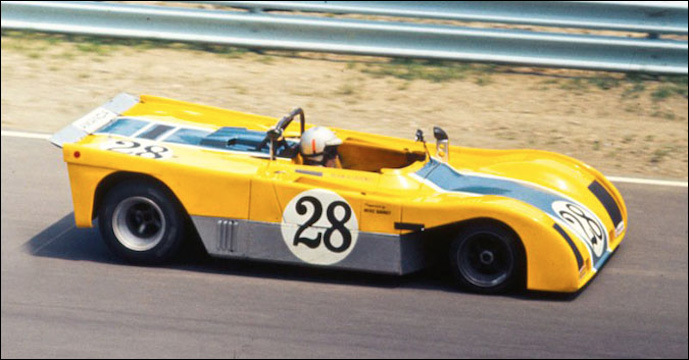
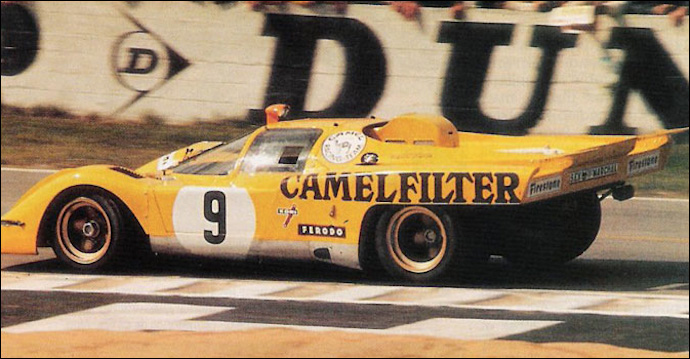
I had a go in the late 1960’s with a 3 litre prototype that failed and then a special McLaren M8C kitted out with a DFV motor with installation and rear suspension thought out by Bruce himself. At the end of the 1971 season our Ferrari 5 litre cars were no longer eligible and Ferrari wouldn’t sell the 312PB for racing.
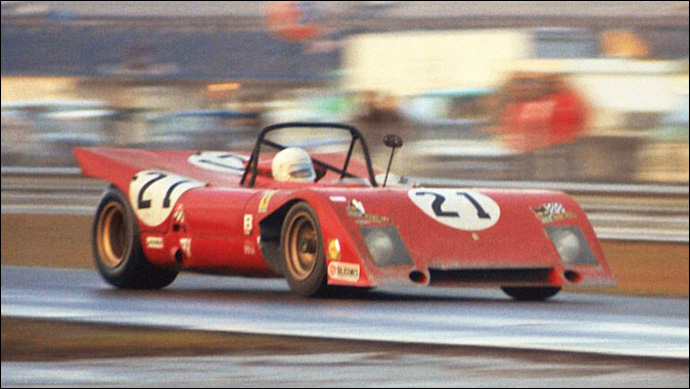
I’d met Gordon Murray at Brabham’s works and it just seemed like a good idea to knock up a two seater prototype using the BT33 running gear. Why take the easy route when there’s another fraught with difficulty?
Other than being faster than anyone else’s car, what were the main characteristics that you wanted from your own cars and how did you go about developing them?
Low budget equals no testing and development took place during official practice. Sometimes we tried stuff at Le Mans one year for possible use next year! The main objective was to produce a car that had the highest top speed we could get, handling that was adequate, especially in the wet and that wouldn’t break anything that might throw you into a barrier or worse.
There seems to be a number of F1 connections to the car, including Gordon Murray and the Brabham team, Connew and Bruce McLaren’s DFV – paddock legends or God’s honest?
Gordon Murray was a total genius and taught me more over my first pub lunch than I had learned in the previous five years. Connew rings a bell but I can’t think why and yes I did buy the DFV that Bruce won the 1968 Belgium GP with. It was the first time that John Nicolson built a DFV and it did 36 hours racing in 1972 before it got opened up.
What was the ambience like in the paddock through the Seventies and Eighties, and how did it change?
Sports car racing was still a sport with plenty of amateur involvement. It just got more and more business like as a follow on from F1 etc. But we did have a lotta fun and it was a great time to be doing it. But then anytime is good time to be racing of course.
Was there a big difference between competing at Silverstone and competing at Le Mans each year?
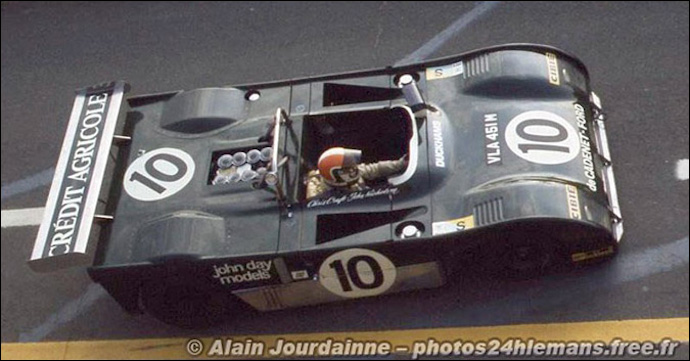
Le Mans always had a huge sense of importance and was very tricky to manoeuvre through the regulations, scrutineering etc. and it cost plenty to get sorted, set up and prepared because it was a 24 Hour race and you needed at least double of everything. Silverstone was so much easier …. Just up the road from London …… bowl up with the Transit van and trailer and just get on with it. A much more friendly environment altogether than LM and a bloody sight safer place to be to boot.
Your Silverstone win must have been one of the biggest weekends of your racing life, how did the weekend unfold?
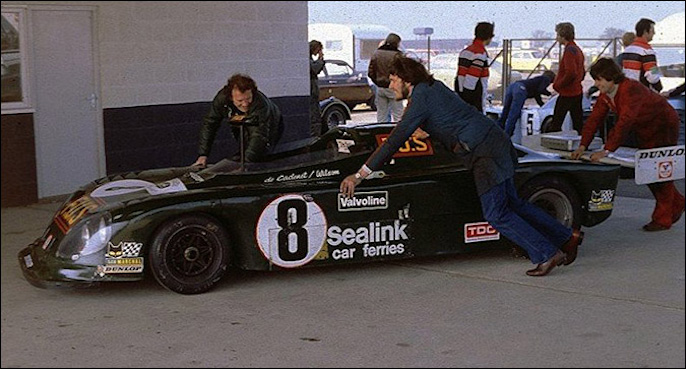
We came second in 1979 and should have won the race, but our pit stop for brake pads was too long because kids and friends’ kids had grabbed them to build into a house and it took a couple of minutes to round them up out the back of the pits.
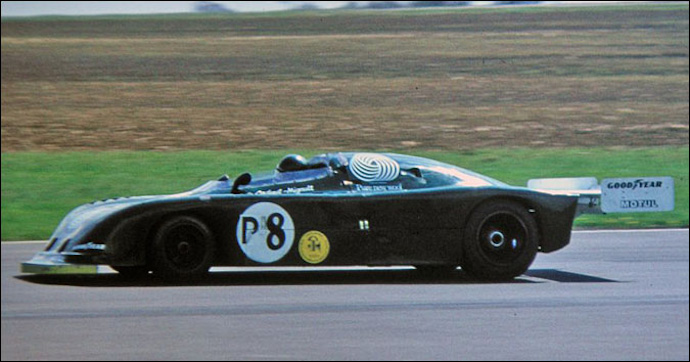
We did a better job in 1980 and halfway through it looked like we could win the thing. Desiree drove like it was a GP and even with a lap penalty for going around the chicane she still brought the car home first. An exceptional performance equalled only by her Herculean effort at Monza the previous fortnight. It did feel very good indeed to get on the podium etc. and win one of our international events.
Did your wins in 1980 make you more ambitious?
Not really because the whole scene was changing rapidly and I realised that without big money backing and a proper place to build and then test the cars etc. my time was more or less up. Trying to run a full scale team from a tiny mews house just wasn’t possible anymore. Plus there were other things to do than spend 24/7 glued to the task.
After 1981 you moved on from your own team, was that a relief in some ways?
Yes. I relished the freedom from detail and concern. A big millstone removed from my shoulders.
How did you enjoy the Group C era and how did it compare with Group 6?
It was alright, but nothing like the fun of Group 6. I had always hoped that the group C programme I had got going with Ford would work out well as I had good people in place like Alan Southgate and John Thompson. But it didn’t and eventually it took an energetic guy like Tom Walkinshaw to pull it off for Jaguar.
Have you kept up with the contemporary sports prototypes, followed the LMS/ILMC and the revival of the Silverstone 6 Hours? If so, do you have any thoughts on where it’s come to and where it’s going with the return of Porsche?
Since I stopped working as a TV reporter for sports car racing I have zero idea what’s going on. I’m glad to hear it’s still happening and that it’s getting the support it deserves. It seems a very sensible place to me for manufacturers to invest their time and money as there is an obvious relationship between the cars and the public and the roads we drive on etc. But I also see that we have to have an ultimate racing car formula that is just totally and completely at the honed edge of racing. That keeps pushing the boundaries outwards and hopefully upwards. That’s GP racing and we shall always have it!