We’ve become very used to seeing the name Iron Lynx on entry lists for GT3 and GTE racing in the past few years, the team’s immaculately presented Ferraris have appeared in Michelin Le Mans Cup, ELMS, GT World Challenge Europe, Ferrari Challenge and at the Le Mans 24 Hours.
So just what is the story behind the emerging force?
The DSC Editor sat down with racing brothers Andrea and Giacomo Piccini during the WEC weekend at Spa to find out more of the back story, and about their plans for the future.
Tell us a bit about how this started, how we’ve got to where we are now, running this extraordinary number of cars?

AP: It started at the end of 2017 with the passion of a group of friends. Deborah Mayer, Claudio Schiavoni, Sergio Pianezzola, Giacomo and myself.
Sergio, Giacomo and I were working as driver coaches so we got to know many customers, many new people coming into motorsport, most of them just for pleasure, not thinking about racing. So just teaching them how to drive road cars, and then their first contact with the racetracks or the first time on a Ferrari Challenge car.
It’s always an emotional thing when people for the first time hit the track, and for us is something very normal. For me, it’s been 26 years since I started in 1995 and so for us, in our family, it’s now all normal. But then you see all these people coming, and not only is going on track something very special but doing it in a Ferrari is even more so.
So it started with meeting some customers, that loved the idea of going onto the racetrack. And then step by step they wanted to do more and more and more, we got closer personally, they became friends, because when you start going to the racetracks, eating together in the evening, going to events around the world that’s a fun and natural progression too.
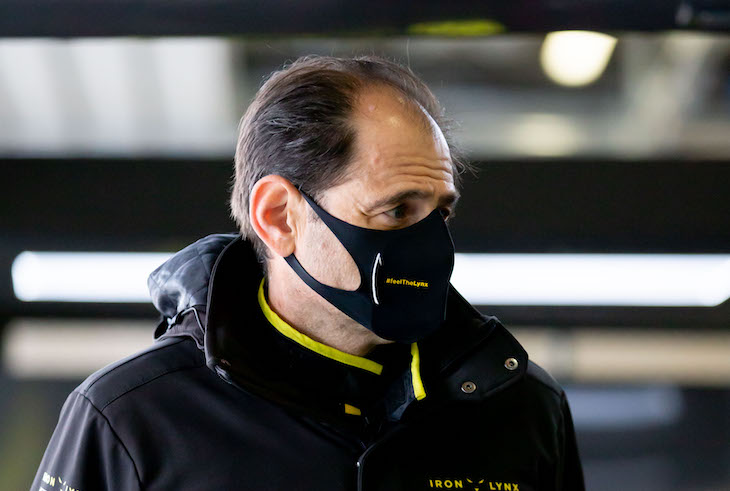
So that’s how we started. Deborah and Claudio (above) loved cars and racing and they started to think of doing something on their own. At the time Sergio and I were dreaming of having our own Academy. This had been a long-time dream. I had been working for the Italian Federation for 20 years, I started as an instructor in 1999 and since then, I’ve always been teaching all the kids who wanted to start racing.
GP: “Including me!”
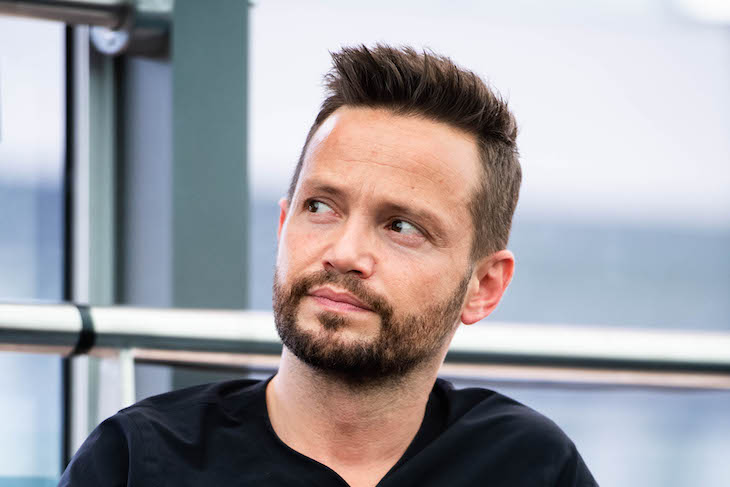
AP: But it’s true. Giacomo was my first coaching experiment, let’s say at the time it was not so common to have a coach. Today everyone does. But 20 years ago, when he started racing, no one really did it. But for me, it was a pleasure to go with him and teach him anything I know, and try to make his learning curve as short as possible.
The mark of the quality of a team tends to focus around the fact that you have got partners, and you keep them from the very beginning?
AP: We started as friends so there’s an extremely strong relationship behind all of this.
When we decided to do our own school in 2017 we started with a smaller plan.
It was to have some Formula 4s, some Ferrari Challenge cars and start to teach young drivers for Formula 4 and gentlemen drivers with Ferrari. But then suddenly, the passion got bigger and even bigger, the involvement got much bigger. And four years later, here we are!
So right now where are you in terms of programmes?
We’ve got two cars in FIA WEC, three cars in the ELMS and three cars at the Le Mans 24 Hours. We have two cars in GT World Challenge and we have two cars in Michelin Le Mans Cup.
We also have three cars in Ferrari Challenge and three cars in Formula 4.
(Plus the currently one-off car for Paul Ricard in the GTWCE for an Iron Dames Trio)
How much of that is done now with the technical partnership with AF Corse and how much of that is now done within your own organisation?
GP: They are a very good partner and they’ve been important for our development, but we want to get more and more of the racing programmes in-house (as most of the current programmes already are).
You’re building up your infrastructure
AP: Since we started in 2017 we are based in Cesena, we have a beautiful and state of the art workshop and we will soon go for a bigger one. And now most of it is done there. Most of the cars are down there.

GP – We just started step by step, we wanted to learn we didn’t want to make expensive mistakes. We have a lot of responsibility. So we tried step by step to learn from an experienced team.
So why Iron Lynx?
AP: The name was born in Casa Montaña, we were in Valencia and we had been discussing our plans for a while and the thinking behind it was that all of the famous racing brands have got an animal behind. So we said most of them are taken, we need to find one that represents somehow the quality of what we want to do.
And because in the beginning, it was a driving school, we fought the Lynx was the perfect match for a racing driver, because it’s a very fast animal but with very big feet. So it’s very stable and has a good grip, and has got excellent long-distance vision.
And when you try to teach someone, this is the first thing you teach. If you want to go fast, you need to look far away, you need to look for the next corner. This is something very difficult to get into the mind of new drivers. So we thought that was the ideal visual for our team, the perfect image of a racing driver – Cool, fast, great vision and great grip.
And then we said, okay, we also have to have something connected to the mechanical world. And so we tried to find something that sounds good and gives a strong image. And we were drinking a good bottle of wine, and Iron Lynx came out!
Let’s talk about the long term vision before we get into the specifics of the last couple of years. What do you want to take this? Because now surely after what’s happened over the last couple of years, those initial ideas must have changed. The sport is changing
AP: For sure we want to try to establish a new way to approach motorsport. I mean, we want to really have the highest possible standard not only in terms of performance where we have very strong and even more experienced contenders, but also in terms of image and communication.
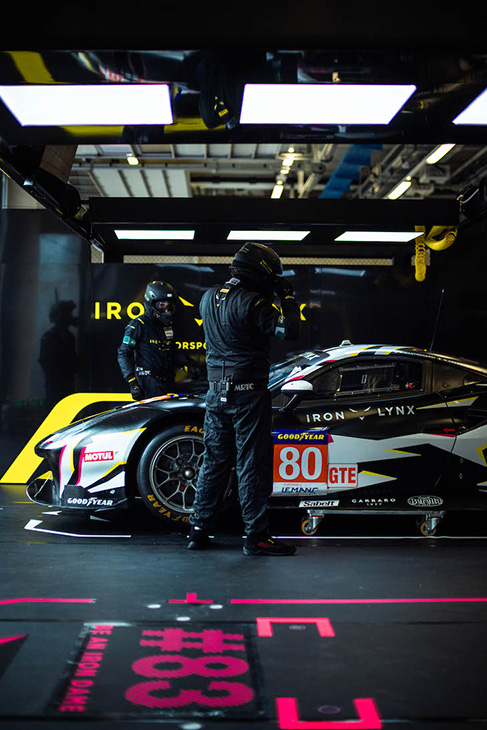
I think GT is still a step behind compared to single-seater on the technical aspects. And so our idea is to bring together the two worlds, single-seater and GT, increasing also the presence of Iron Lynx into the single-seater world.
For the future. If you look where GT is going with the hypercar project I think the involvement of the high level of engineering you have in single-seaters, it’s going to be very important for the future, even in GT racing. So we would like to get these two together to make another step forward.
In the expansion of the single-seaters, does that mean more, or does that mean in different categories?
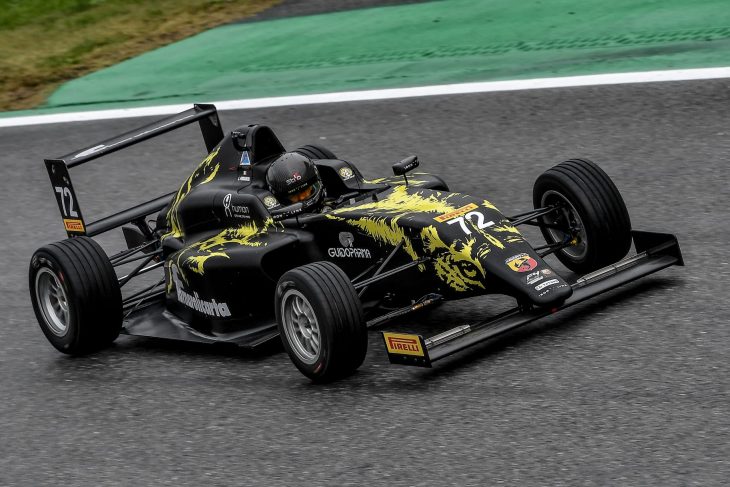
More means in different categories, because at the moment, we started from the bottom in Formula 4 – our drivers are doing very well, in the last testing our drivers were leading most of the time in the standings. So we want to step up even more there and try to bring the two parts of Iron Lynx working more and more together because they can get real advantages from that in a number of ways.
Pretty clearly there are opportunities, we know the way that sportscar racing is working to spot talent and then using that to help their customers to step up the ladder.
Actually having a single-seater arm to the company is a massive plus, You’ve got a staircase within your organisation.
So potentially, where could that take you? Are we talking here about focusing on Pro-Am, on Pro in GT, or beyond?
AP: I think this year is going to be a key year for us because everything is so new and it happened so fast that we need to understand where we can go and how far we can go.
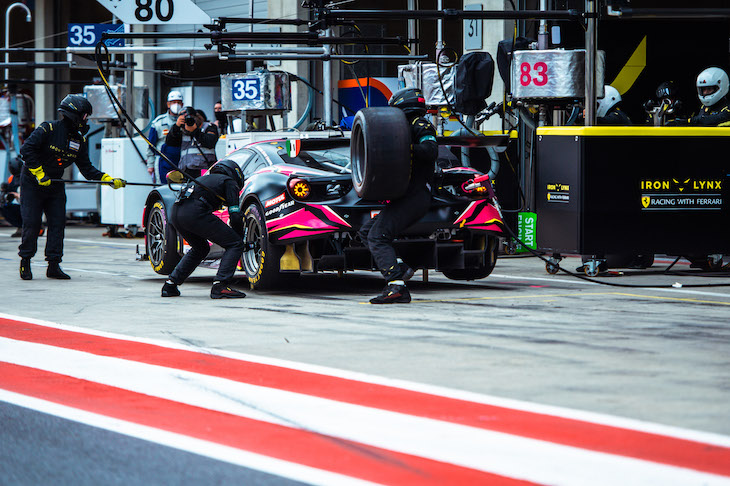
For sure I think we can say that the way we present now in the paddock, we hope and we target to attract constructors to work with us because we want to show our strength, our technical skill, and also the commercial potential that we have.
I think Iron Lynx is trying to present a different way of, let’s say, communicating to motorsport with an uncommon name, very good branding, a very good image.
Enigmatic?
AP: Exactly. We are trying to do it in a different way. We hope it is going to work. We hope it is going to attract attention from sponsors, from new customers, from constructors. And that will be the real big step.

I guess that’s the next question, you mention “constructors” in the plural.
For the moment there is a very hard wire with Ferrari for obvious reasons. That presumably is your number one target, but isn’t the only target?
AP: At the moment, we are working well with Ferrari. And, as you can see, there’s a strong relationship. So let’s hope this can get stronger and stronger. For the future. This is our main target at the moment.
Talk to me about the priorities this year. Because, again, there’s a lot of cars. They all look fantastic.
AP: Yeah, this (the appearance of the cars) is something very important for us. It costs some more money. But it gives such a different image and when you invest so much money, it is important to pay attention to any small detail.
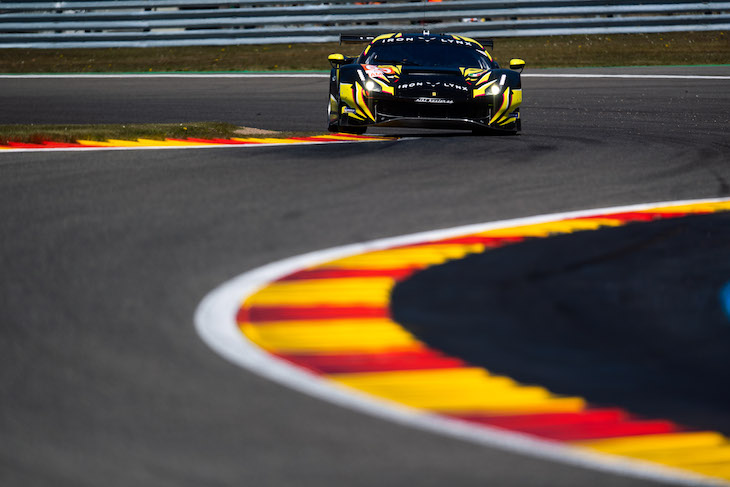
Clearly, you’re aiming to win races and championships again, you’ve already had success on both those fronts. What would be the breakthrough for you?
AP: This year we have very competitive cars in ELMS and Michelin Le Mans Cup, and in GT World Challenge. We know these are the three championships where for sure we can fight for the title, where we are maybe not as strong in WEC.
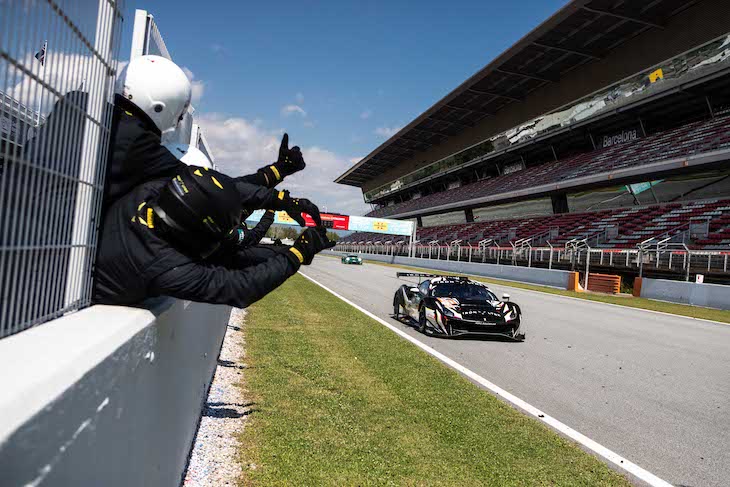
In ELMS it would be nice to take the title home but you know how racing is. We started very well. We showed very good potential. I think our cars were very competitive and the lineups are very good. In Michelin Le Mans Cup, the Porsche seems to be a little bit faster at the moment, but we have a good lineup and we can, for sure, fight for the championship. And GT World Challenge. The lineup is amazing. I’ve been I’ve honestly been amazed by the job the new guys did. Callum (Ilott) never drove the car in the wet before the race in Monza (below). He got thrown into the race with slick tires on the damp and he did a brilliant job. So I think that car can do really, really well.
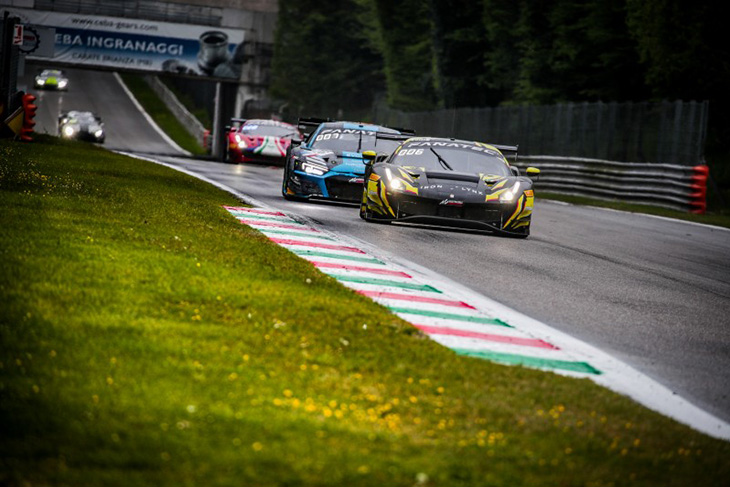
As I told you, I’ve been racing for 26 years, I think I proved to be a pretty good driver, but the way these young guys from single-seaters drive, the mental strength they have developed after a couple of season in Formula Two or International Formula 3, they jump in the car with a different mindset. They are one step ahead.
And okay GT is different from single-seaters, but you see the way they drive is another level, I mean, preparation today is so much higher level than when we started to drive.
There’s so much more you do to prepare drivers from the physical to the mental side to the knowledge they have.
So when they step in the GT 20 laps, and they’re there. Okay, then you need to get the experience of the long-distance races, but our target is to bring more and more of this type of drivers into racing and I think a good strong link with the single-seaters will pay dividends to both the team, and to the driver’s careers.
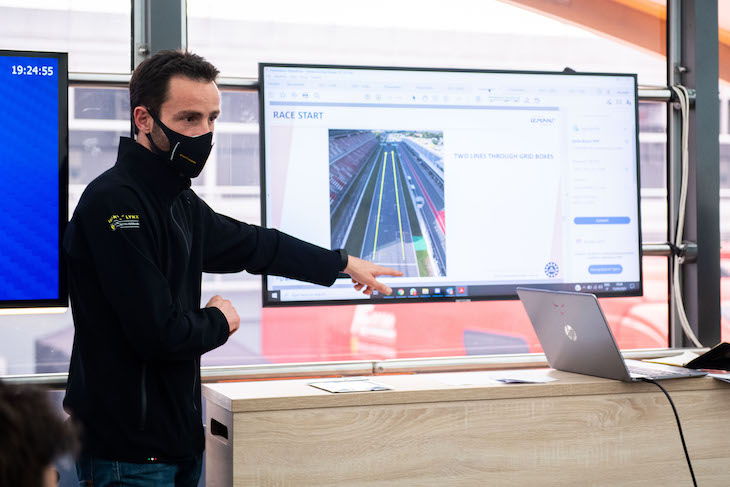
GP: And not forgetting Ferrari Challenge where Michelle (Gatting) is very strong. She did very well in the first race and also in the Coppa Shell, Claudio Schiavoni was having a brilliant race at Monza and was fighting for the lead. And on the last lap, he tried to pass the leader but unfortunately spun. So Claudio showed he can do very well. I think we have a strong car in the Coppa Shell and a strong car in Pirelli. And we have a newcomer, Arno Dahlmeyer who had an amazing race, his first-ever race at Monza, which is not an easy track. He was P6 overall and fighting for the podium until the end.
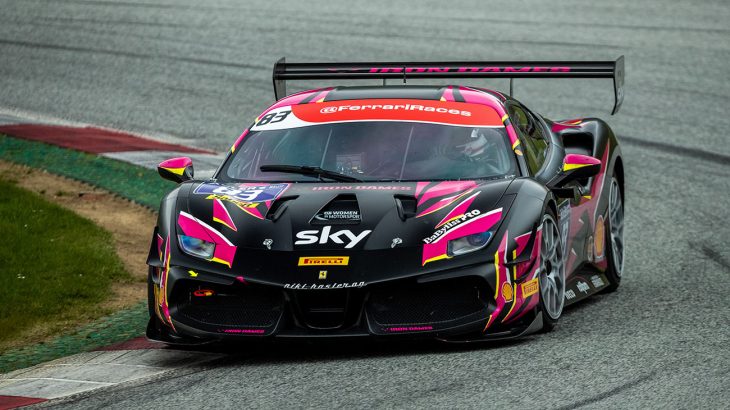
GP: The Ferrari Challenge car is not easy to drive. It is very powerful, a lot more than the (GTE) cars we drive here with less aero and smaller tires. So the car is floating a lot more. And to be fast there you need to be a good driver.
It is a good school and with our strong link with Ferrari, we will try to use it as an entry door, let’s say for our GT project. So some of the single-seater driver might step into Ferrari Challenge. Like Nicklas Nielsen did. It is a good way to show your skill because Ferrari has very good coverage for the championship.
With an expansion into the GT World Challenge this season, are you interested in looking at other markets now or in the near future? In North America perhaps?
AP: Yes. A championship like the Michelin Le Mans Cup has been a strong point for us in the past two years because Giacomo won the championship twice, first with Sergio (below) and then with Rino Mastronardi. And it’s been for us very important to get the entry to Le Mans as well.
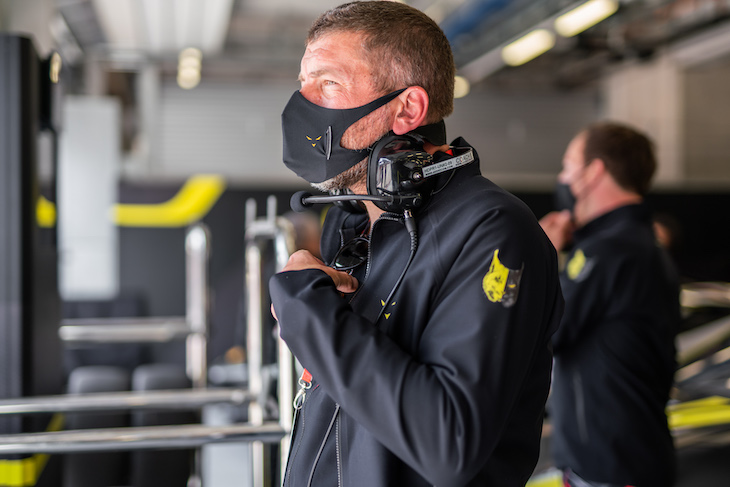
We are also looking at North America for future GT racing programmes
Which of the two packages there attracting you more? Is it IMSA, or the SRO package?
AP: We have to think about it. It’s interesting for us but, at the moment, we’re just looking at it for the future. Nothing has been decided. Next year, maybe the one after, but for sure America is a very interesting market in motorsport. It has always been special racing in the States.
Part Two of this interview will look at the genesis and future of the all-female crewed ‘Iron Dames project’