There’s been a flurry of news and comment items over the future of DTM in recent days with most confirming that talks have been underway for some time between the long-established German Championship and the de facto national sporting body for Germany, ADAC, about the potential sale of the Championship to the body responsible for running its biggest domestic market rival, ADAC GT Masters.
Whilst many outlets have been following the racing developments in DTM over its first couple of seasons utilising GT3 machinery in much the same way as they did in the glory days of major OEM funded Class One, there have long been signs that simply trying to transfer the same business model into a very different era was somewhat less than a sure thing.
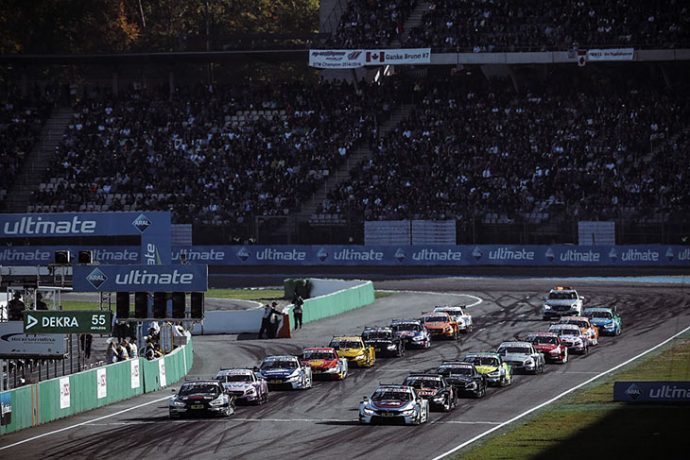
Add into the mix the fact that those changes were launched into the Pandemic era where literally everything became more difficult and more expensive and it is barely a surprise that DTM has struggled to thrive.
The facts of the matter are this:
2022 was the second year of GT3 in DTM, the Championship, almost uniquely, operating with single-driver crews and trying, very hard indeed, to focus on the grid being composed principally of top Pro drivers.
Part of the package was the retention of a premium TV service, with no free-to-view online streaming for most markets.
Also retained was the readily obvious attempt to maintain at least some of the ‘crash, bang, wallop’ appeal of the, just short of full contact, racing of the DTM’s glory days.

Still in play too, despite the avowed shift to a customer racing-based platform, was the heavy hand of manufacturer-led politics, most notably in the season finale in 2021, a race which will go down in modern GT racing history as one of the great dumpster fires of all time, with woeful driving standards, poor decision making from the race officials and a result for the race and Championship that left a taste in the mouth roughly equivalent to a tablespoon of instant coffee.
So here we are at the end of GT3 season 2 and DTM is clearly in trouble.
Multiple major stakeholders are saying publicly that if the DTM is to survive it MUST retain its sprint, single driver, Pro-focused base.
It’s a fair point because, without those, and a very few other truly meaningful points of differentiation, what’s the difference between it and ADAC GT Masters, GT World Challenge etc etc.
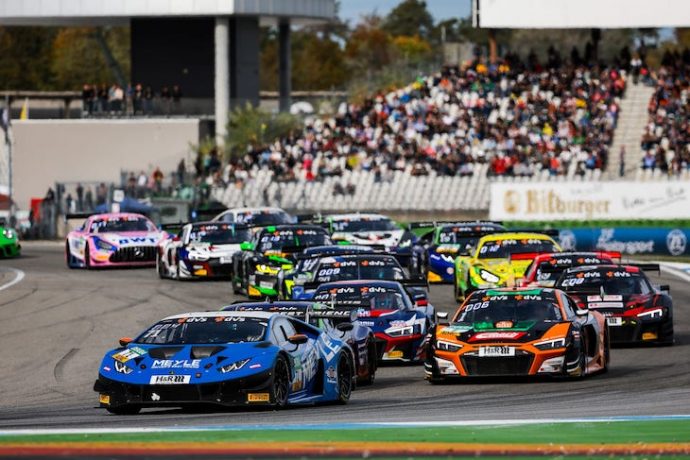
But – something has to change, because that formula has achieved little but to burn through the multi-million Euro factory dowry left with Gerhard Berger’s ITR, operators of DTM, by its outgoing factory partners in just a couple of seasons. The recent passing of Red Bull co-owner Dieter Mateschitz is understood too to have removed a key remaining supporter from the game.
What that means in short is that DTM has lost money. They are certainly not approaching ADAC in a position of financial strength!
That’s not a surprise in the circumstances, struggling back to its feet through and in the wake of pandemic whilst trying to establish a new formula in a very crowded marketplace, but an important part of any deal, and any financial recovery, must be for the realities for DTM to be acknowledged and tackled.
Amongst them is the prevailing attitude displayed by ITR that DTM was such a powerhouse that it only needed to take account of the F1 calendar, that literally every other Series sat beneath it in the pecking order.
This is not an exaggeration, and the attitude, to calendar clashes in particular, made an already rocky road for DTM significantly more difficult to navigate, bringing opposition where there need not have been any, and causing issues for teams, drivers and customer racing operations that, in common with the Series, were also struggling to get back onto their feet and likely would have appreciated not being forced to make some blunt choices.
So DTM made (very!) few friends in that regard over this period.
Add in too that the German marketplace is very, VERY crowded with options for GT3 teams and drivers with DTM sharing the national space with the well established ADAC GT Masters, NLS, the Nürburging 24 Hours and a couple of other lower level Series too.
Collaboration should have been a vital component in developing the new DTM formula into a marketplace , instead the prevailing atmosphere, described by one major team owner with history and involvement in all of the major packages listed above was “a gigantic p***ing match”.
Another paddock insider offered these thoughts: “Instead of adopting a sensible and open approach as they tried to develop a format that was clearly going to have an impact on others already established in the GT3 marketplace, there were elements within DTM and ITR that took the approach that they were the big dog and damn the rest. Questioning that approach was a shortcut to trouble.”
Of course there was the inevitable commercial poaching of entrants, sponsors etc. That barely improved the temperature of the water either, but there’s little new in that part of the commercial game across the sport.
Overall though we are now left with some significantly challenging questions:
Can DTM survive in anything close to its current form?
Will that be as a standalone Series/ package or will there be some form of packaging ‘merger’ with GT Masters?
What knock-on effects might any decision have on the current support packages for both major German GT3 Series?
Where can the clearly sorely needed financial savings be made without terminally damaging the DTM’s ‘reach’?
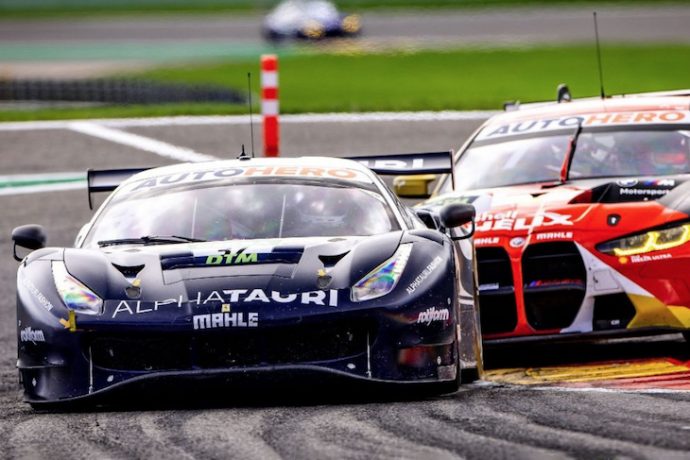
There is clearly some significant public and industry support for DTM but the question remains – Is the funding available through those routes and others to keep the Championship alive at its current level and in anything close to its current form?
Whilst talks in the background are understood to have been taking place for some time, most of the stakeholders aside from ADAC and DTM seem to be entirely in the dark over a preferred outcome.
That makes contingency planning all but impossible, makes the huge task of putting a commercial package significantly more difficult (because there can be no certainty of what that programme might be!), and puts the people that make racing tick in a hugely vulnerable situation too with few, if any, guarantees that their continued employment can be guaranteed.
And that should not be forgotten in the melee. There are a significant number of people’s livelihoods linked to the DTM, in particular amongst the teams and supporting services that are part of the ‘show’. Here’s hoping that few of them fall as economic victims of the failure to find a sustainable formula and/ or the extended machinations over the future.
The key at this point is a series of decisions that make sense for a future plan, and, critically that those decisions now happen quickly.
Good luck to all involved.