

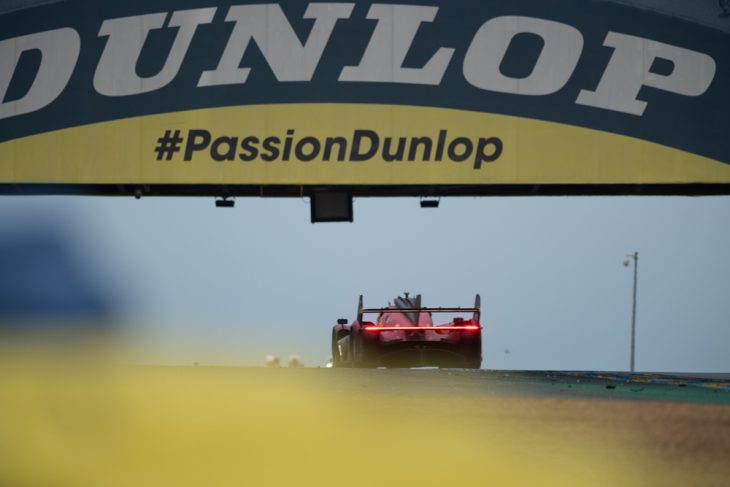
After a whirlwind of a centenary Le Mans 24 Hours week was capped by one of the best races at the Circuit de la Sarthe in recent memory, it’s time for the DSC editorial team to file its regular analysis of the major points that arose from the event.
After a race meeting as significant as this one, there is simply too much to discuss, so we’ll be posting a two-parter. The second instalment will hit the website tomorrow.
Until then, here is the first batch:
A historic result for a historic event
The #51 Ferrari AF Corse 499P had a fine run to an overall race win that in almost every way can truly be described as ‘historic’. With the ‘Prancing Horse’ claiming headlines for pole position for the sister car, the world’s most famous automotive brand must surely be delighted with the early fruits of its return to top-class sportscar racing for the first time in half a century.
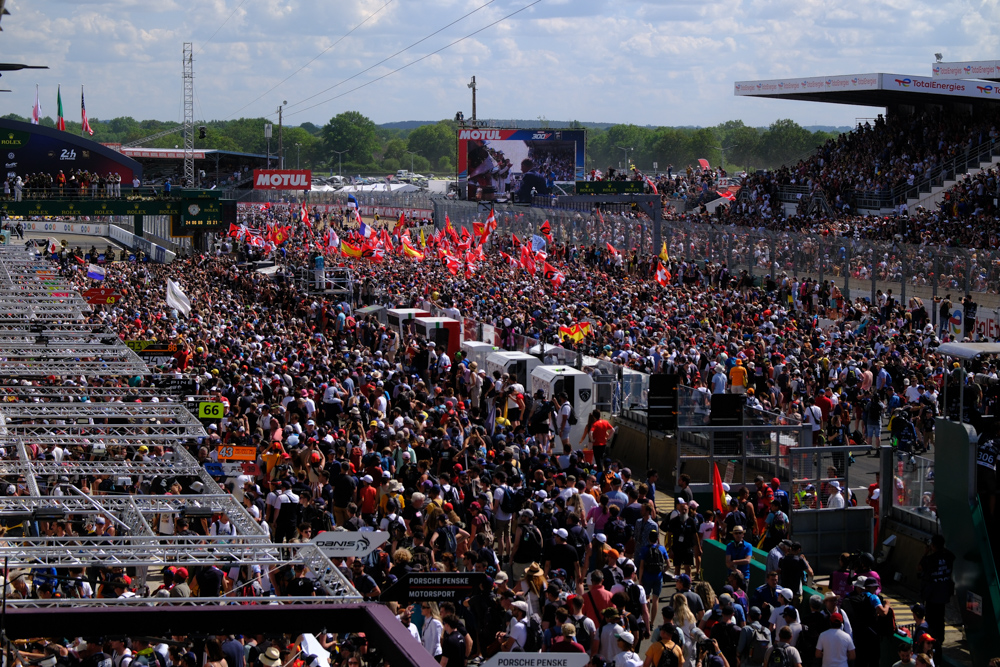
Ferrari’s win provided an all-important breakthrough outside the specialist media for the programme, the race, the FIA WEC and for sportscar racing in general and will almost certainly have boosted the ticket sales for Ferrari’s home race at Monza next month. The numbers prior to race week in France were already 500 per cent up.
The Scuderia’s 10th overall Le Mans win, at the 100th-anniversary race, will be looked back on for generations to come, as an ‘I was there’ moment and a key flashpoint for the current era of sportscar racing.
Garage 56 makes an impact
Another effort at Le Mans that had a huge impact was the Hendrick Motorsports Garage 56 project.

Motorsport in the 21st century has become exceedingly tribal. Coming into the 2023 24 Hours of Le Mans, the allocation of the Garage 56 ‘innovative car’ slot to an effort designed to celebrate NASCAR’s 75th anniversary alongside the centenary of the great race, had attracted a more than reasonable amount of online, and in some cases media, cynicism.
However, the way the #24 Camaro was presented, the way it raced, the attitude of everyone involved, was extremely impressive and fan-friendly. The trademark NASCAR rumble spread smiles right around the circuit, whilst the European eyes the unique spectacle of NASCAR-style pit stops and driver changes, added further to everybody’s enjoyment.
There were two notable additions, the first being the on-track conduct of the star-studded trio that played a major part in a decision mid-week from the ACO to allow the effort to run with fewer restrictions on performance. We are not aware that the car was involved in a single car-on-car incident from Test Day to the end of the race. That in itself is a victory and one that should be celebrated by the Hendrick Motorsports team.
The way the #24 Camaro was presented, the way it raced, the attitude of everyone involved, was extremely impressive and fan-friendly
Secondly, there was little doubt that the ACO will have noted the extraordinary positivity across traditional and social media that this programme generated. That will surely only make it very much more likely that something similar, from another area of motorsport, might find a way onto the grid in the future.
A fitting farewell to the GTE era at Le Mans
Corvette Racing’s comeback was one of the all-time great Le Mans GTE performances. Claiming a convincing win having dropped two laps down early in the race to a damper failure was a testament to both the strategic nouse of the Pratt Miller organisation and the talent of its trio of drivers, who were magnificent for the entire contest.

GTE cars have been a key part of the Le Mans 24 Hours grids or over a decade, and in both Pro and Am forms have seldom produced a boring race. In fact, during its most healthy years, the GTE battles in the Pro class in particular did a lot of the heavy lifting in terms of promotion and interest for the event when the LMP1 category became lean.
It was only right then, that the last hurrah for GTE at the French classic featured a bit of everything. The multi-car battles for podium places, especially in the closing hours of the race, were thrilling to watch. The end result was tough to predict all the way to the final round of pit stops.
There were milestones aplenty too. Behind Corvette and its ninth class win earned on its 25th anniversary year, last year’s winner TF Sport finished second, scoring a first podium for an Omani-flagged car and driver in Ahmand Al Harthy. GR Racing’s
The only dampner here was the rate of attrition. Of the 21 cars that took the start, only nine finished. The changeable weather, coupled with the pressure that the centenary celebrations put on the drivers to perform, clearly played a part in some of the major incidents in the race.
Were there too many off-track excursions? Was there too much contact? Yes.
However, in a race that saw so many world-class drivers make errors, in each of the three categories, in hindsight it should have come as less of a surprise.
By the time we return to Le Mans next year, the LMGT3 class will already be an established category in the FIA WEC and ELMS. Even with the promise of new machinery and new manufacturers, it has a lot to live up in the wake of what has been a golden age for GT racing at La Sarthe…
Hypercar closes up, but Toyota not happy
The 2023 edition of the Le Mans 24 Hours was the most hotly contested for the overall win in many years. Just how close was it? The race featured 35 lead changes, with eight cars from five manufacturers and six teams (HERTZ Team JOTA) all taking turns out front.

Clearly, the pre-event Balance of Performance tweak had an impact, but just how much is clearly up for debate. DSC’s view is that the race lead, and therefore potentially the win, was within reach for just about every team that led this race and that surely means the process has taken a step forward, albeit at the race on the calendar that this set of cars is all optimised for.
Notably, Toyota in both subtle and not-so-subtle ways, made it clear that it felt the late BoP changes affected its ability to attack. Both Toyotas though, hit trouble, one of them terminally, and the #8 GR010 HYBRID was certainly not a million miles away from the prevailing pace when running without hiccups.
To take this win Ferrari had to overcome problems for both cars and against Toyota in particular, a two-year development headstart. That it managed to do so cannot be explained by a marginal difference in weight between the two leading cars.
Beyond the leading pair there was much encouragement for the progress being made by Cadillac, on pace at least for Porsche and in particular, Peugeot which took strides in just about every department. (The 9X8 concept clearly works at Le Mans!)
Of the major factories, Porsche now looks to have the most to do to close the gap
Of the major factories, Porsche now looks to have the most to do to close the gap. The 963s looked particularly edge in transitional weather conditions which caught out both Kevin Estre in the #6 Penske car and Yifei Ye, whose stellar to the front was spoiled by an error that left the ‘Mighty 38’ quite literally in pieces.
For the two minnows, Glickenhaus and Vanwall, challenging on pace were out of the question, but both had very different races. The #4 Vandervell retired with a reported engine failure, whilst both Glickenhaus 007s had to overcome damage from multiple offs, including one apiece for the two cars at the same stretch of track at Indianapolis and Arnage, to retain the team’s proud 100 per cent finishing record.
New safety car process splits opinion
The major changes to safety car protocols at Le Mans were the cause of much pre-race discussion, as the race organisers moved to try to prevent the issues that stemmed from the previous procedure, which often played a major role in the outcome of class battles.

The new process, which sees three safety car queues merge into one with a subsequent pass-by and class separation, proved far easier for the teams to accomplish than it is to explain in writing or broadcast.
It is still a very new process, and inevitably lessons will be learned, but the time taken to rearrange the field should not be confused with the time taken to deal with the incidents. The field was under the safety car for just over three hours (roughly 12 per cent of the race), the vast majority of that time was required for incident intervention and for race control to get a read on the ever-changing track conditions. The new element of the safety car process can be completed within two laps.
Subject to a formal review and any necessary tweaks, DSC believes this process was a significant step forward.


