


It’s Petit Le Mans week, the final week of IMSA WeatherTech competition in 2023 and the title races in the new-look top class are going down to the wire, with all four factories in with a shout.
Acura, BMW, Cadillac and Porsche have all been on a journey over the past 12 months in GTP. In that time they have traversed the supply chain-related challenges that were particularly taxing in the weeks between the December Daytona test in 2022 and the Rolex 24 Hours in January this year and the teething troubles associated with every new formula and category.
Despite this, all four makes have won races and head into the final race of the season hugely positive about the first year of LMDh competition. They remain hopeful for the future too, when new manufacturers are set to bolster the GTP category and expand its reach further in the coming years.
The feeling is unanimous regarding the birth of LMDh and the reprisal of GTP: it’s ‘Mission Accomplished’.
On track, the racing between the four LMDh makes has been consistently entertaining and often spectacular, with many memorable moments. From the opening lap of the new era at Daytona in January, to the major pile-up at the end of the Sebring 12 Hours in March, to Porsche’s impressive 1-2 finish at Indianapolis last month, it’s been a campaign that will live long in the memory.
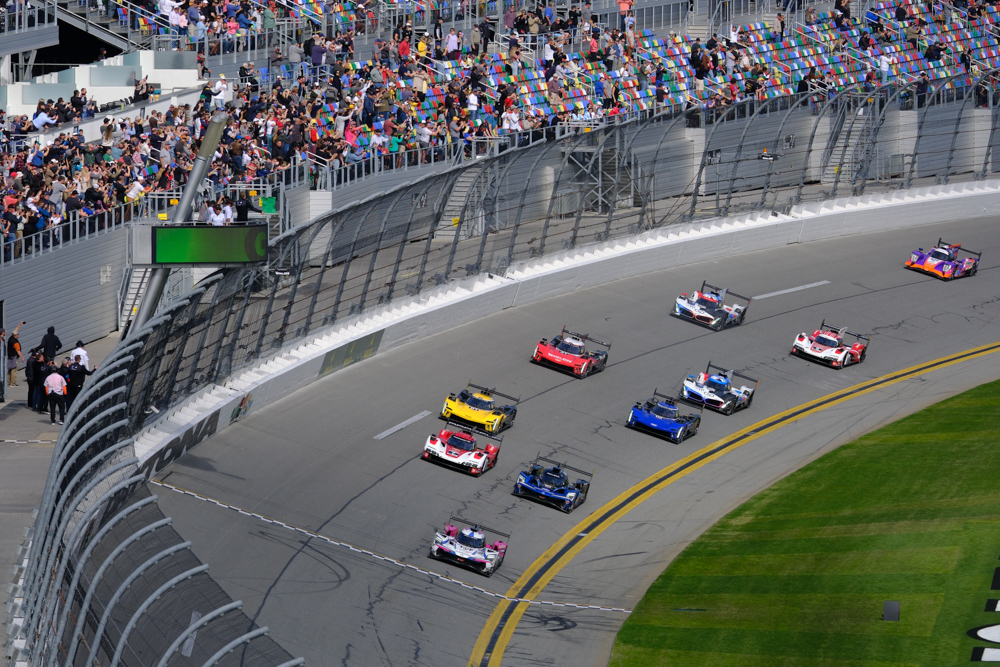
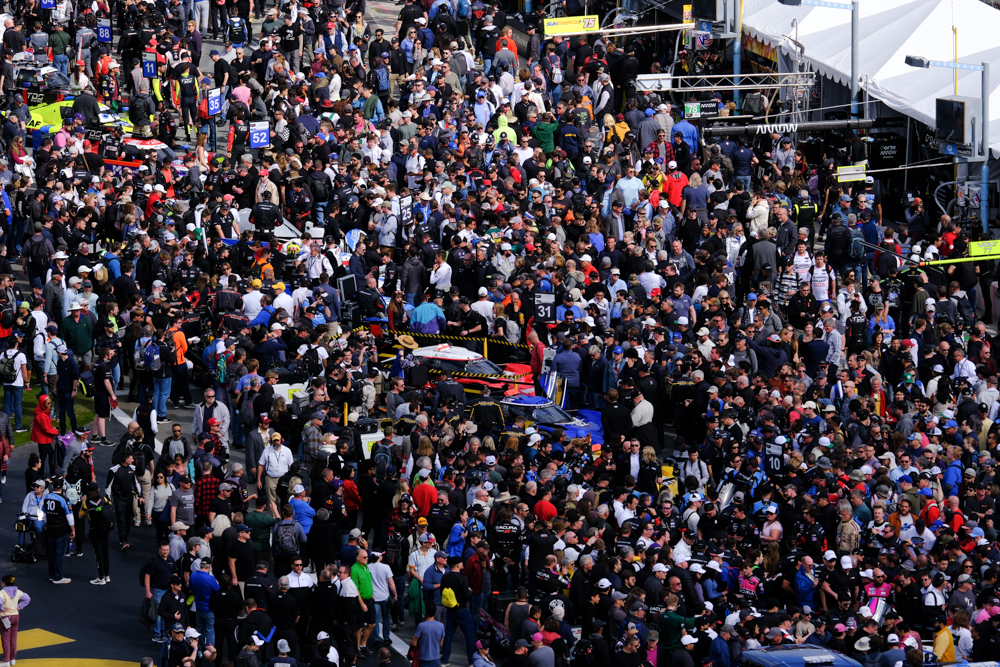
“The recipe to get everyone as close as they are has been effective,” says the director of motorsport competition engineering for GM Racing Mark Stielow. “When we showed up at Daytona the fans were so excited, then we rolled into Sebring and I’ve never seen so many people there glued to it. Even in the WEC races we’ve seen an uptick in buzz. The platform has energised prototype racing for the fans. There are a lot more eyes on it.”
“Hats off to everyone that has made this happen,” adds HPD president David Salters. “We do this to challenge ourselves and entertain people and I think we have entertained the fans this year. Anything and everything has happened. The racing is good, you don’t know who will win, everyone is fighting tooth and nail. It’s been very entertaining with cars that look great and sound great.”
We have record crowds for a new era, we’ve had great races with a big number of OEMs and there are more to come
“We have record crowds for a new era, we’ve had great races with a big number of OEMs and there are more to come. For the first year, yes it has lived up to its promise,” Urs Kuratle, Porsche’s motorsport director of factory racing, concludes.
The look of the cars has received praise too. One of the key pillars of the LMDh formula, when it was first revealed, was the promise of aesthetically pleasing, futuristic-looking prototypes that appealed to OEMs. There was a push to ensure each model featured styling cues that captured brand identities.
While all four LMDh cars have undoubtedly won over fans in the looks department, it is particularly notable that the manufacturers in play are satisfied by the look of the first batch of cars that the category has inspired.
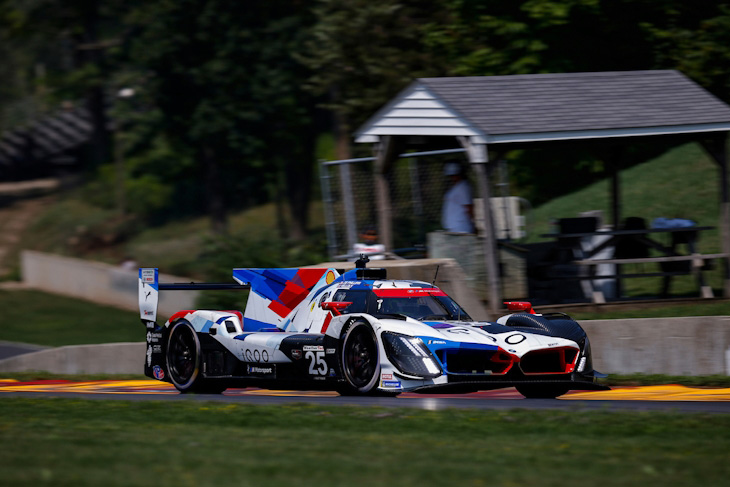
This is particularly the case at BMW, which feels the M Hybrid V8 is unmistakably a BMW.
“I think the key to this is that it’s very engaging. The car has a resemblance of the corporate ID that we at BMW want to ensure is recognised in our racing products,” explained BMW M Hybrid V8 project leader Maurizio Leschiutta.
All this has led to a scenario where the four OEMs have a chance to come away with titles after one last 10-hour encounter in Georgia.
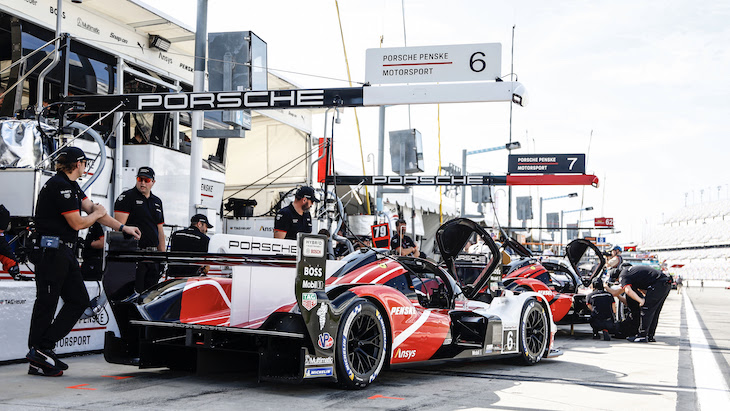
Heading into the race the #31 Action Express-run Cadillac holds the advantage. It leads the #10 Konica Minolta Acura ARX-06 by three points and the #6 Porsche Penske Motorsport Porsche 963 by five. That could make for a straight fight.
BMW is in with a chance too, as the #25 is just 38 points from the lead, meaning a Petit win could earn the title if the #31, #10 and #6 all finish in third place or worse.
“We’re very happy we have a chance in the last race. We are last in terms of manufacturers, but we’re going to give it our best shot,” says Leschiutta.
Looking beyond the on-track action, clearly, the championship needs to deliver a return on investment to keep manufacturers coming back.

Since the start of the season, it has become clear from sources within all manufacturers in play that LMDh GTP programmes (and for that matter, Hypercar programmes with LMH cars in the FIA WEC) have turned out to be significantly more expensive than the early projections made when the convergence talks began and the rulesets from IMSA and the FIA were being developed.
“This week and last week we have been going through our 2024 numbers and are taking a look at the lessons learned in 2023 because for us it was completely new and we hadn’t participated in prototypes since 1999. It’s cost more than expected, but also manageable for our super bosses, who have approved our WEC programme too. It’s expensive but manageable, otherwise, we wouldn’t be here,” Leschiutta points out.
It’s expensive but manageable, otherwise, we wouldn’t be here
“After COVID, everything has gone up and these cars are complicated,” Stielow points out. “We had an initial budget, we pushed through that, but that’s racing and we found new problems and solutions. We are in the middle of projecting our 2024 budgets now too. I can’t put an exact number, but it was quite a lot more than we expected.”
Salters echoed this point, reiterating that the reason behind the rise in cost is that almost every aspect of running a race programme, anywhere in the world, has escalated over the past few years.
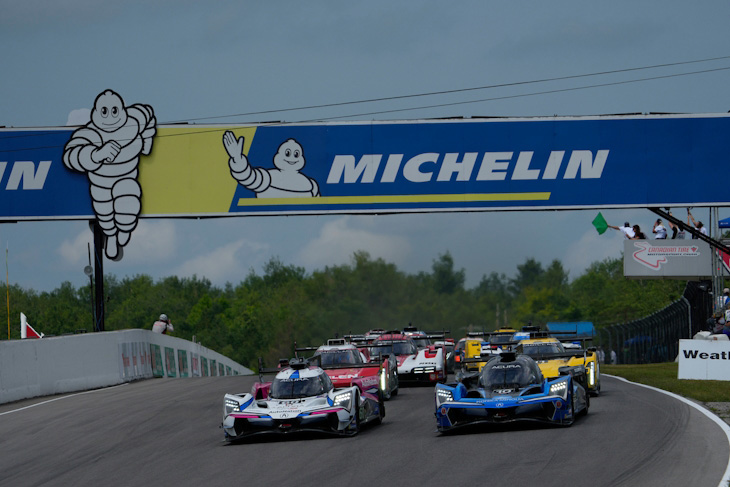
“The world became more expensive,” he says. “If you want to manufacture anything after COVID it’s a lot more expensive, which is a shame. Shipping and transport went nuts after COVID-19 and hasn’t gone down again. What we try to do is judge value, we would say so, the cars look great, the racing is entertaining and all the right people are in the room fighting for it.
“Yes it is more expensive, but yes there is value and we have seen the series develop. But we do need to keep costs under control. The blunt reality is that in IMSA and WEC we have manufacturers because there is cost control. You have to have some sort of cost control.”
The rate of development has proven to be more of a talking point than expected heading into Year 2 too. The original philosophy and promise of cars being frozen for multiple years has essentially been quietly ignored in practice, with multiple manufacturers working on significant upgrades for 2024 and beyond.
This hasn’t put anyone off though. In fact, the buzz around sports cars, the increase in trackside and broadcast crowds and the quality of the racing has prompted additional factories to commit to future seasons.
“These cars, because of the short time to market, have significantly improved,” says Leschiutta when asked about the rate of development of the LMDh formula.
“These are complicated cars,” adds Salters. “The hybrid suppliers had a mountain to climb, the chassis manufacturers had a mountain to climb, IMSA had a mountain to climb and we had a mountain to climb this year, so well done to everybody. We tend to look at what we can do better tomorrow and often don’t look back. The cars have come on a lot, they’re interesting for our engineers. Having open software for instance is relevant.
“The car is still developing but we have learnt a lot and it’s stabilising.”
The cars have come on a lot, they’re interesting for our engineers
Next year Lamborghini is set to join GTP with a single brand new SC63 for the Endurance Cup races after Daytona, before Aston Martin arrives in 2025 with its revived Valkyrie non-hybrid LMH programme.
The additional competition has been unanimously welcomed by the four factories currently in the championship. This is notable, as there will almost certainly be concerns in the background about performance balancing in the years to come.
The disparity between LMH and LMDh cars competing alongside one another in the FIA WEC for much of this season won’t have gone unnoticed by the current set of stakeholders, with the LMH challengers from Toyota and Ferrari winning every race thus far. Now they wait to see whether or not Aston Martin’s Valkyrie being introduced to GTP and Hypercar comes with Balance of Performance-related headaches attached.

“We are very excited, the more the merrier,” Salters explains. “We are here to promote our brands and engineers and entertain the fans that come. More cars and high-profile manufacturers definitely help that.
“We have Lamborghini coming next year and then, yes, having LMH here (with Aston Martin) is the point. It’s why we sat down for hours of meetings, to get this to happen. It’s moving in the right direction and I think that’s exactly what we are looking for.”
“One thing that needs to be clarified, but I know people are working on it, is the convergence between LMH and LMDh,” warns Kuratle. “In this area, there are a lot of questions we need answers to. But I am confident we will find a solution.”
Image credits: IMSA, Aston Martin, BMW & Cadillac


