

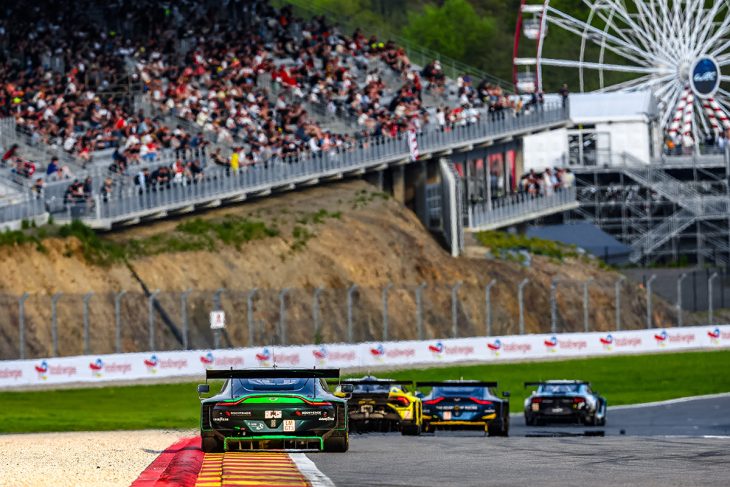
The worldwide proliferation and success of the GT3 platform now, for the first time, includes the WEC and Le Mans.
The introduction of GT3 machinery to the WEC came at the beginning of this season after the GTE era came to a close at the end of last year. The move from LMGTE to GT3 wasn’t without its critics, but what’s undeniable is that it has injected variety into the GT ranks of ACO racing, with nine manufacturers now represented in the WEC and at Le Mans.
GT3 has become the premiere GT formula around the world. Teams with GT3 cars can fight for overall wins in all SRO GT3 events – including GT World Challenge and the Intercontinental GT Challenge – DTM (with technical support including BoP provided by the SRO), and the ADAC 24 Hours of Nurburgring, governed by the ADAC Class and BoP system. It also acts as the premier GT class of the IMSA WeatherTech Championship as GTD, with IMSA BoP; as a subset of GT300 regulations in Super GT; and now, in the WEC and at Le Mans, as LMGT3.
So just how different is a GT3 car between each series? How different is an IMSA GTD car from an SP9 GT3 in the Nurburgring 24 Hours, SRO GT3 or WEC LMGT3 machine? Do the upgrades on the WEC cars – the mandated torque sensors and energy management systems – have much of an effect on how the car drives?
Well, it depends on who you ask.
Polling drivers during Scrutineering for the Le Mans 24 Hours gave a wide variety of answers, from drivers who have experience in multiple GT3 chassis, or across a variety of series.
To some, there’s effectively no difference. A GT3 car is a GT3 car, no matter the ruleset.
“It didn’t take me long to get up to speed in the Ford Mustang,” said Christopher Mies, piloting the #44 Proton Competition Ford Mustang for his first Le Mans start.

“There are a few different rules between the championships [IMSA and WEC], but it’s the same, basically.”
When asked if there’s any different feeling between the Mustang in IMSA GTD spec and WEC LMGT3 spec, Mies was very clear in his response.
“No. It’s the same.”
For others, the difference in spec can entirely change the behaviour of a platform.
“This year in the WEC, everything has changed, with the energy management, and the installation of the Torque sensors,” Michelle Gatting, who drives the #85 Iron Dames Lamborghini, told DSC. “We did the WEC race at Spa, and a few days later, we were doing the [Prologue] test for the 24 Hours of Spa.
“I said ‘Woah, the car is fast!’ It’s much faster in SRO [spec] than it is in the WEC. So that was a bit surprising.
“I didn’t expect it to be that much. This year in the WEC, driving the car with energy management, I would like a bit more power to be honest. I think they slowed the car down too much.”
Gatting is no stranger to jumping into different cars; for the second year running, the Iron Dames are running two separate cars in separate programmes with similar drivers.
In 2023, the Iron Dames team ran the Lamborghini GT3 in SRO competitions while using the Porsche 911 RSR GTE for its ELMS and WEC campaigns. This year, the Lamborghini has been the platform of choice for SRO and WEC competition, while a move to LMGT3 in ELMS has been facilitated in the Porsche.
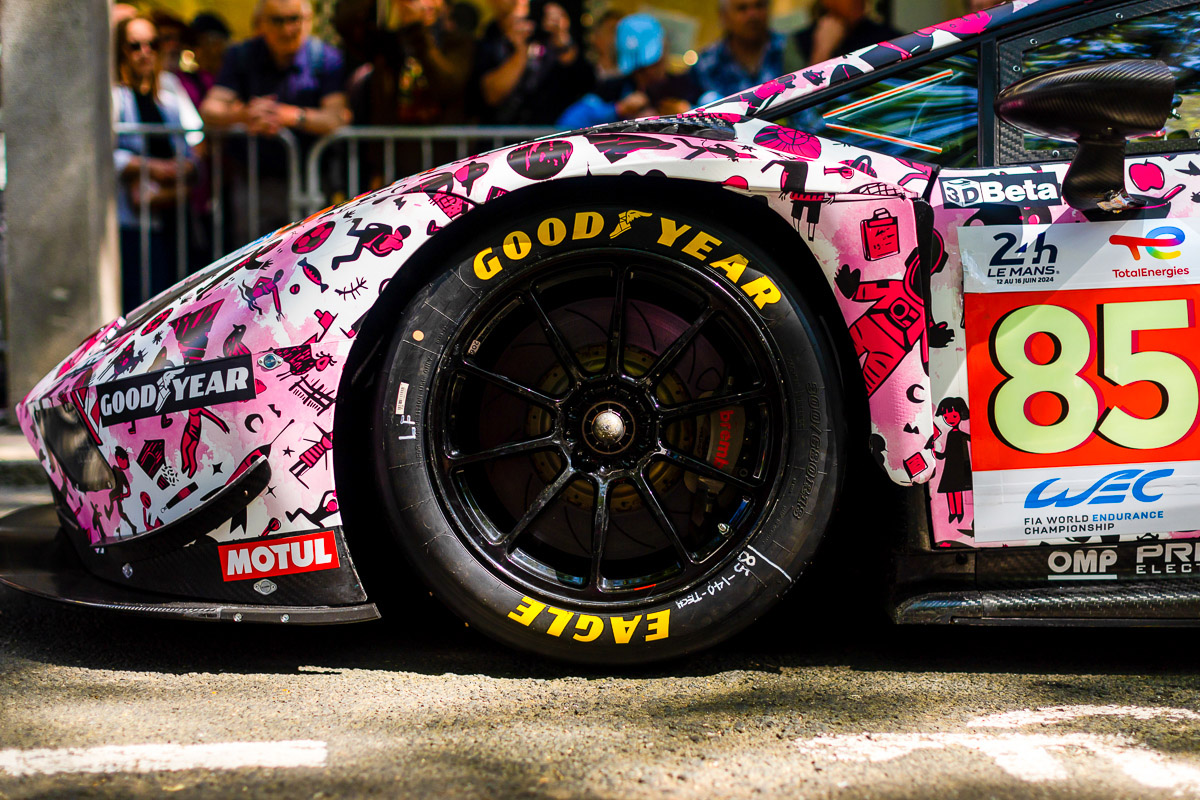
“It was much more difficult last year because it was the [Porsche] RSR GTE – a car without ABS. And going into the Lambo GT3 was very different, and very difficult to make the swap.
“This year, it doesn’t feel difficult jumping from one GT3 to another. Of course, the handling of the two cars is different, but in the end, it’s quite similar as well.
“It’s a car, it has two pedals and a steering wheel, and you just have to drive it as fast as possible.”
So what’s the cause for the massive difference in feeling between the LMGT3-spec Lamborghini and the SRO spec?
“[The WEC] is determining the Aero of the car – at Qatar for the first race in the WEC, what they decided for the Lambo was completely wrong.
“But luckily they realised that for Imola and they changed it a bit. Now on the Aero side, we are better. We have a safer car which is important with the Lambo, because it has a tendency to be quite nervous, especially at the rear.”
The change proved to be significant, with a bump up of rear-wing angle from 7 to 8 degrees enabling the Dames to compete at both Imola and Spa.
“We were begging to get that bit more downforce, which we have now.”
By far the topic that was brought up the most was the difference in tyres between series.
In WEC, like the ELMS, the LMGT3 class runs Goodyear tyres exclusively. Meanwhile, in IMSA, it’s Michelin and across the SRO GT World Challenge and IGTC series, it’s a Pirelli tyre. The outliers are the NLS (and N24) and Super GT, which remain open tyre for GT3 cars.

“Everything looks pretty much the same,” said Daniel Juncadella about the #82 TF Sport Corvette he will be driving next week, comparing it to the example he drives in IMSA. “Just the tyres [are the difference]. It’s completely different to IMSA in the US, and also to GT World Challenge in Europe.
“When I do some of the races I get to do with AMG [in GTWC], on the Pirelli tyre, it feels different.”
His assessment was supported by two other factory drivers: Maxime Martin from BMW, and Marco Sorensen from Aston Martin.
“The car, in general, feels like the same car as soon as you drive it,” was Sorensen’s assessment of the #777 D’Station Aston Martin Vantage. “But I have to say the tyres are the biggest change.
“When you’re in SRO, in the GT World Challenge, you’re on the Pirelli tyre. For sure, it’s a different kind of driving regarding the tyres – not so much the car itself.
“Sure you have different setups to compensate for the tyres, but that’s the biggest change.”
Sorensen was quick to add that the difference in tyres isn’t too difficult to overcome, however.
“As soon as you have a couple of laps under your belt, it’s all the same. I’ve learned what to expect from the different tyres.
“When we did the WEC race [at Spa], I had to do a test with the Pirelli tyres [for the 24 Hours of Spa], and it felt like there was something wrong with the front of the car, because it felt so different in a way.
“But it’s just a switch in your head that you flip to say this is how the tyre reacts. It’s not that the car is different, it’s just a different feeling. Almost like driving two different cars.”
Maxime Martin’s assessment of the BMW M4 GT3 was similar.
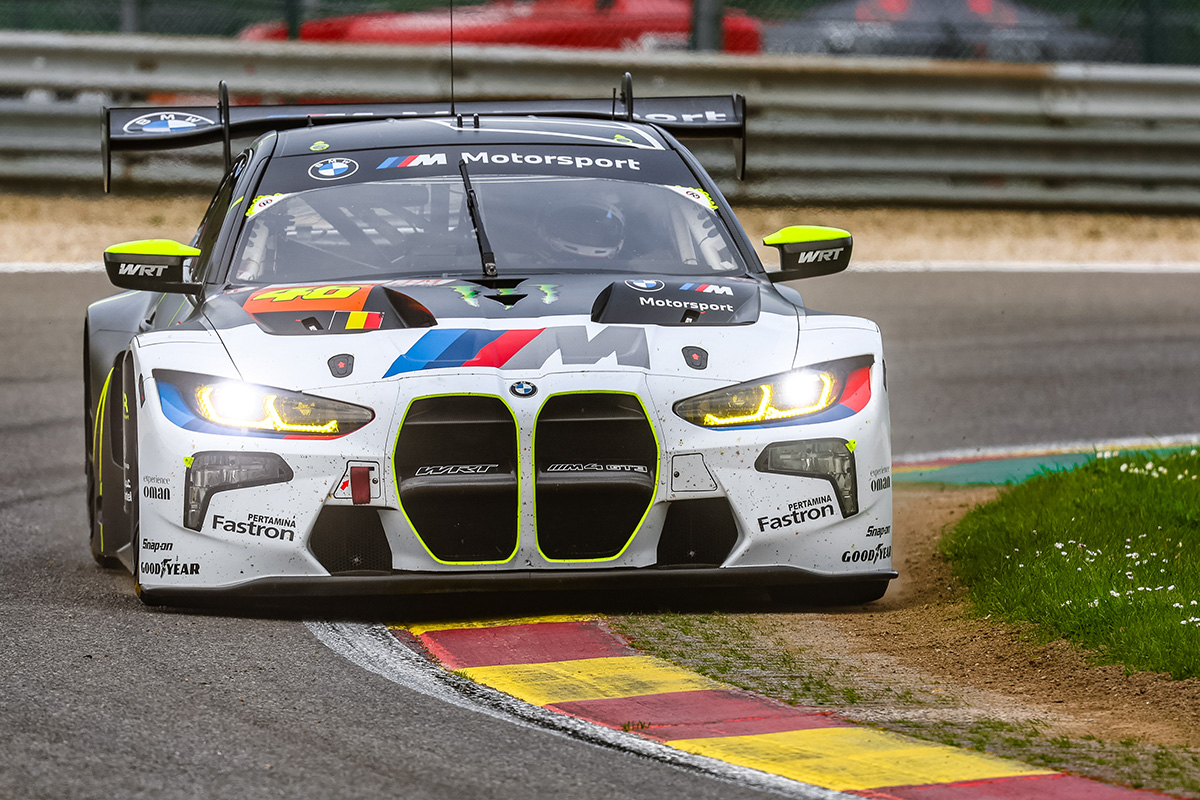
“It’s the same car, so it’s very similar,” said Martin, at the seat of the #46 WRT BMW M4. “The tyres are very different.
“We ran Michelins at the Nurburgring, and Goodyear here at Le Mans.
“There’s a little difference in the power levels, but at the end of the day, it’s the same car. The tyre makes a big difference.”
While Martin’s BMW teammate Augusto Farfus agreed that the tyres played a role, his opinion was that it was the other part of the puzzle that was changing the feeling of the cars: the tracks.
“The tyres are different, but not so much different,” commented Farfus, who drives the #31 WRT BMW in WEC. “Le Mans is a street circuit, Nurburgring is a special one, Spa is a proper race track. They’re so far apart that you don’t really notice the difference [in tyre].
“I think it would have been more of a challenge if you drove the same track with three different tyres.”
“In the past, there was a bigger difference in the car. Now we run broadly the same aero package, so it’s not much of a difference.
“Sometimes I have a bit more engine power, or a bit less, but it’s not like a shock – it’s not like one car goes 10 seconds faster than the other one. It’s all fine – you get used to [the difference] after two laps.”
Of course, this is all before the cars hit the track for their first laps tomorrow during the Test Day. Will the combination of virtual energy management and additional options on tyre strategy spring any further surprises?


