

As we approach the end of the year, we’re looking back at some of the biggest races of 2024 with a travel diary series from DSC’s Australian correspondent Michael Zalavari.
Missed out on previous parts? Catch up with the following links. PART 1 | PART 2 | PART 3
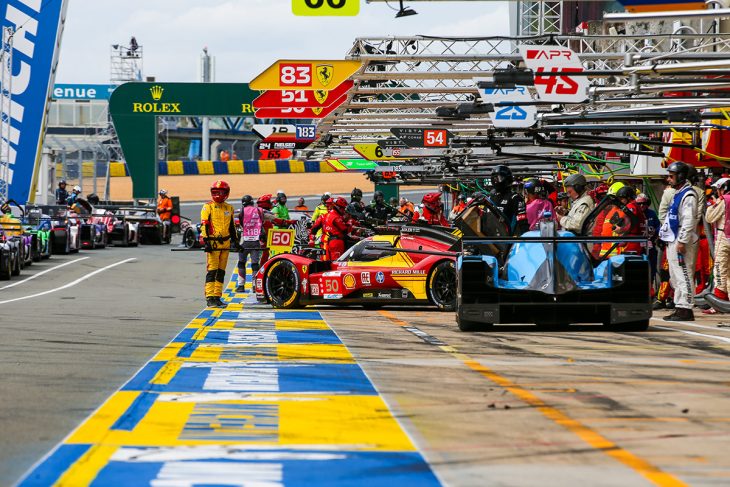
The window over pit straight is packed, with everyone craning their necks over each other trying to catch a glimpse of the main straight.
The screens above are indicating the cars are just rounding the Porsche Curves. ‘Thus Spoke Zarathustra’ starts to ring out over the circuit’s PA as the safety car leads the field through the Ford Chicanes, and I can feel the hairs stand on the back of my neck, and the pit of adrenaline in my stomach.
The clock ticks to 16:00. The safety car peels in to pit lane. The Porsche 963 roars beneath us, followed by the rest of the field.
Lap 1 underway. 24 Hours to go.
*****
With DSC’s full complement of reporters coinciding with Graham’s move from The Cottage to the TV complex on Tuesday, there were a few moving parts before we could get the week underway. A team meeting over breakfast in the United Autosports hospitality had a few key items on the agenda:
1. With Graham’s move to the TV compound, he would no longer be a part of DSC for the week, leaving Stephen absolutely 100% in charge.
2. Between the four reporters, we would have clearly defined roles and targets in coverage for the week, with Stephen overseeing everything plus writing for RACER.
3. If, at any point, anyone felt sick or otherwise not 100%, they were to be stood down to recover, with the rest of the team picking up the slack. There were to be no heroes.
4. We support each other, we look out for each other, we check in with each other, and, most importantly, we have fun.
The meeting set the tone for the intensity of the week ahead. The game plan would be simple; With three classes in the race, each of us would take a class for session reports and feature content. RJ was in charge of Hypercar, Martin took control of his beloved GT class, and I was given LMP2.
I’ve always been a fan of the LMP2 class, and have covered it offsite through the last few editions of Le Mans, so I was more than happy to have the opportunity to engage the teams for some features through the week. While LMP2 had the smallest car count at 15, it also featured the LMP2-Am subclass, plus the added complication of being absent from the WEC for the 2024 season, making Le Mans the first WEC race to feature LMP2 and LMGT3 together.
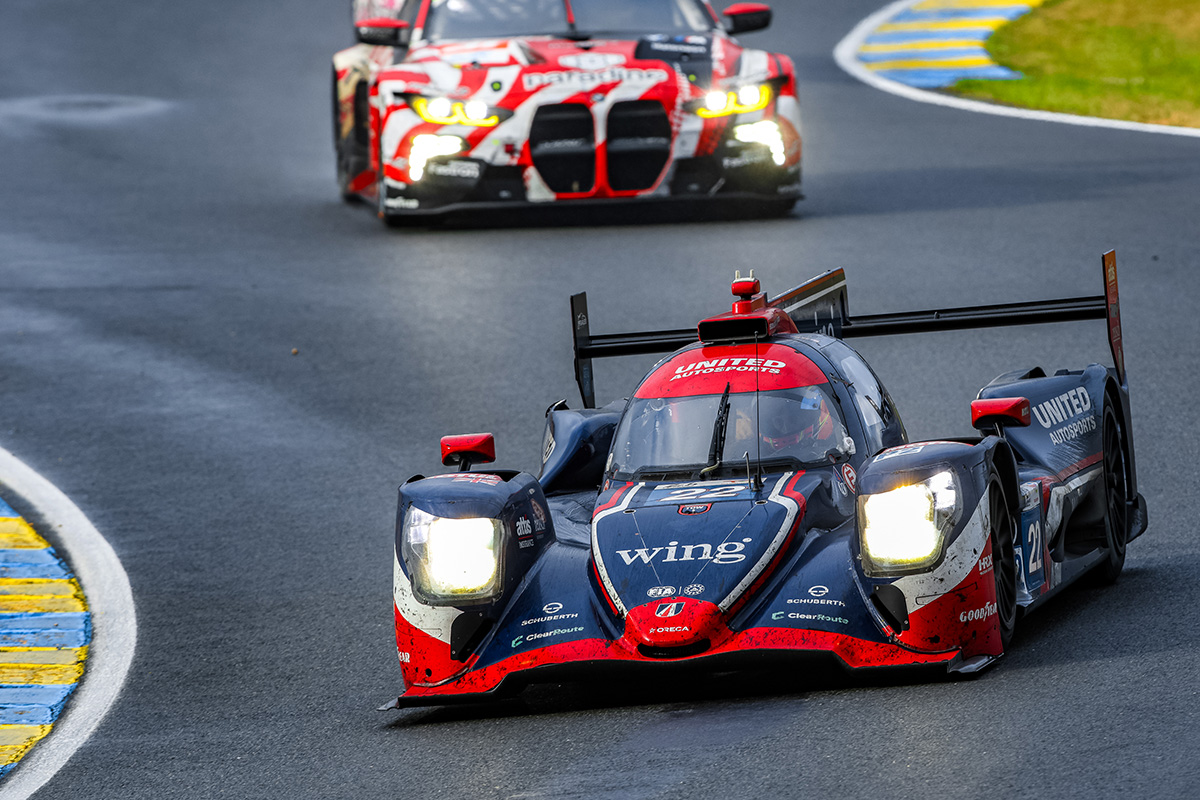
Traffic was the talk on everyone’s lips, with Oliver Jarvis from United being concerned in both directions; through Sector 1, the #22 United Autosport Oreca 07 was as fast as the Hypercars, which was certainly going to complicate things come race day.
But there was plenty still to happen before then, including ticking off driver lap requirements during practice, the rejigged Hyperpole system, and a warmup ahead of race day. In the mix as well was an inconsistent weather forecast, which predicted patchy rain after a week of mostly dry running. In LMP2, the hierarchy was impossible to predict, and that was reflected in the timesheets throughout the week’s running.
Four different LMP2 cars lead sessions in the lead up to Hyperpole, with an even split of LMP2 and Pro-Am cars making the top 8 to head into the dash for pole. Malthe Jakobsen couldn’t replicate his 3:32.8 in Qualifying, setting a time 2 seconds slower in Hyperpole. It was a mess that was hard to draw any sort of conclusion from in the lead up to the race.
On top of that, I couldn’t tell you anything about the other classes. The clear division of coverage meant that we were focussed on our own tasks, but it made it impossible to keep even soft tabs on what was going on in the other classes. You become so tunnel-visioned on your subset of the race that the rest of it is just in the way, messing up the gaps you’re predicting on the timing screens.
The only time I’d hear of anything going on would be when either Martin or RJ would ask a question to the group, seeking some clarification, or at the end of a session as the times flashed across the screen.
The only exception was the ending of Hyperpole, thanks to a sequence that set up a grandstand finish in each class. A red flag to recover the #15 BMW M Hybrid with just over 7 minutes remaining meant everyone would get one last flying lap to set the top of the grid in each class. The whole room thought Bourdais had done enough in the #3 Cadillac, before his teammate, Alex Lynn, knocked him off in the #2.
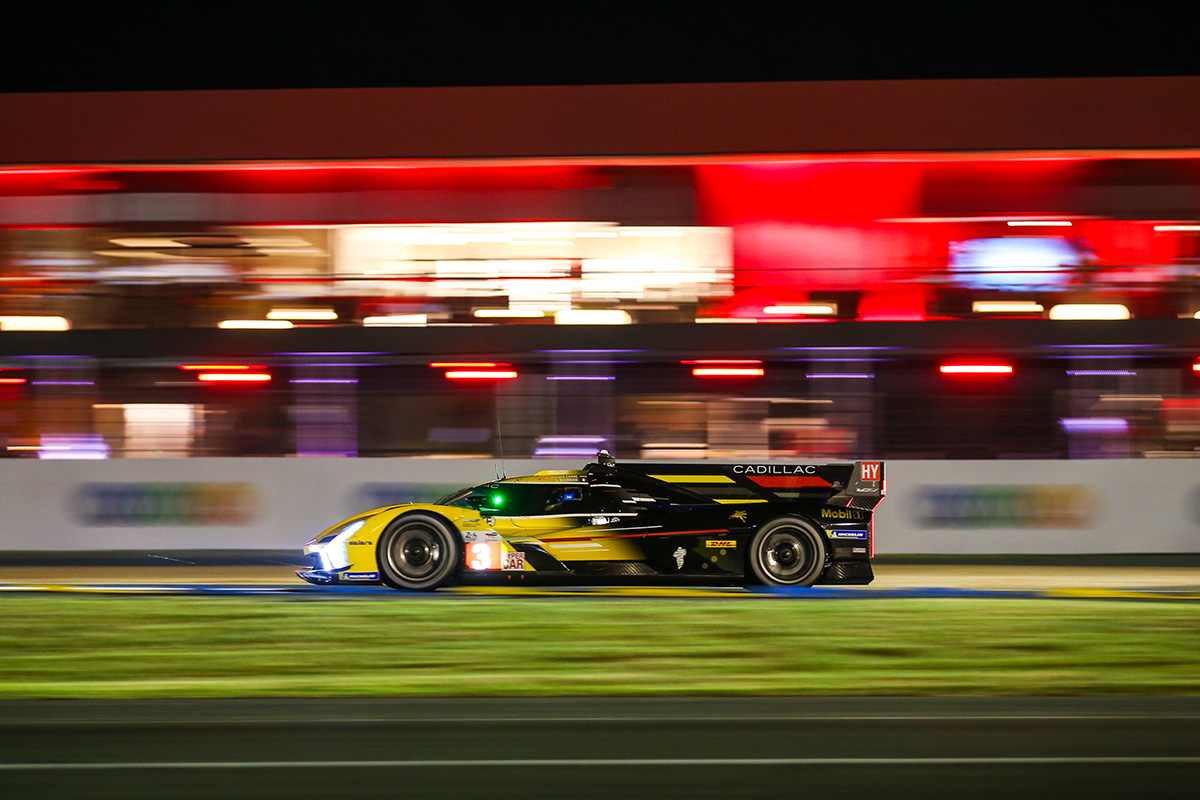
But as cameras picked up Kevin Estre’s final sector, the room waited in anticipation for the #6 Porsche’s final time… And Estre got it! The whole room cheered in awe as the time popped up on the screens, in what was truly one of the best moments of the weekend!
*****
The only way to describe Le Mans is that it is a week-long festival that culminates in the 24 Hour race. And, much like a festival, by the time the main event starts, you’re probably already knackered, and running on sheer fumes and adrenaline. I could feel the cup running low for myself as early as Test Day, where a long period of staring at a timing screen and a tracker sapped any remaining shred of energy I had after two hyper-intense days at Pesage. In a nearly empty press room, with Stephen working intently on feature content and preparing embargoed stories, I struggled to concentrate on what would be the longest and least-eventful sessions of the week.
I had already been on the road for a month, with one 24-hour race under my belt, and finding a way to rest was proving to be difficult
Managing personal energy levels at the race track is something I’ve slowly learned over the years. Four years at the Bathurst 12 Hour taught me the importance of finding ways to stay fresh during the race, especially after a hard weekend of work. But, I had already been on the road for a month, with one 24-hour race under my belt, and finding a way to rest was proving to be difficult. It took a walk up and down the paddock, and a stern word of advice from GG, but I was able to find a way back into a groove for the second test session.
Personal management would become a theme through the week not just for me, but for everyone in the team. Everyone on the team suffered some sort of physical struggle during the week, except for Pedro, even though he brought his runners along to run the track on Friday! For the rest of us, Le Mans was going to be a test of our endurance, as much as it was for the cars.
It started with Lordy on Friday, the first day of Pesage. A rush to the bathroom at the ringing of the first alarm of the morning was a bad sign straight off the bat, and unfortunately his first day at Le Mans was spent somewhere between the bed and the bathroom for much of the morning. Down a photographer on day 1, the combined efforts of Pedro, Skippy and additional support kept things ticking on the day, and we made sure that Lordy was taken care of – even if his nickname became ‘Chuck’ for the rest of the week. Upon our return in the afternoon, Lordy was back to his normal self.
RJ got sick later in the week – a sinus infection – making it halfway through Thursday’s action before having to call it quits for the day. A break in the day’s action gave him the chance to return to The Cottage, where a nap, some snacks, and France’s best cold and flu meds had him back up and about in time to cover Hyperpole offsite. A good night’s sleep and he was ready to go again on Friday for all the press conferences.
And then, I got sick. A month of being on the road had run me down, and I picked something up at Pesage that was knocking me around. I felt the scratchy throat on the Test Day, and halfway through Tuesday – thankfully after my scheduled interviews and commitments – the brain fog got the better of me and I finally gave in at around 2pm.
I bounced back really well after a good night’s sleep, and was constantly feeling better during a very busy Wednesday that featured two Meet The Teams events, plenty of track action and a post-midnight finish. Thursday was difficult, but I felt like I was holding on well enough to be useful and to make it through the weekend.
And then Friday hit me like a truck.
*****
Of my entire two-month trip, the Friday before race-day at Le Mans was the worst day, by far. The cold I’d been battling had gotten the better of me, and my visibly blocked sinuses made my entire face feel bruised, giving me a splitting migraine to boot. There was no way I was making it out of bed, let alone to the track.
A message to a team PR cancelled an interview I’d been trying to tee-up for the whole week, as the hustle of the rest of the team getting ready happened around me.
“Rest up, mate,” Stephen offered, as they left for the day; a string of press conferences, and a ‘free afternoon’ to tick off some personal bucket list items. I’d had a plan of borrowing the host-family’s bike and riding a lap of the circuit, and catching up with a few online friends who were camping inside the circuit. Instead, my day was spent focused on one thing: Get better.
Here I was, stuck in bed, on the other side of the world from home, one day out from the 24 Hours of Le Mans
Here I was, stuck in bed, on the other side of the world from home, one day out from the 24 Hours of Le Mans. One day out from the reason I was here, the reason I’d spent 8 months planning this adventure. For the first time in the trip, I just wanted to be home. It sucked. Not just being sick, but the impending weight of disappointment should I be unable to recover in time.
I remember spending a lot of the day drifting in and out of sleep, punctuated only by alerts for the next round of medication and the sporadic updates from trackside. A take-away box of pasta arrived with the return of the crew, and after one last cup of tea, it was time for bed.
Fingers crossed for the morning.
*****
I woke up on race morning, and I could breathe again. The headache had subsided, and while my nose was runny, it wasn’t the stuffed mess of the day before.
I wasn’t 100% – I was barely even 50% – but I felt good enough and I was excited enough to convince myself that I was able to get to the track for the race. My first 24 Hours of Le Mans was only a few hours away! But there was still plenty to do – as a team, we were working on completing content right up until about 1pm, only three hours before race start, with 10 articles going live on DSC in the lead up to the race. This included a wrap up of the two Road To Le Mans races, and a report on Warm Up, as the two major sessions of the morning.
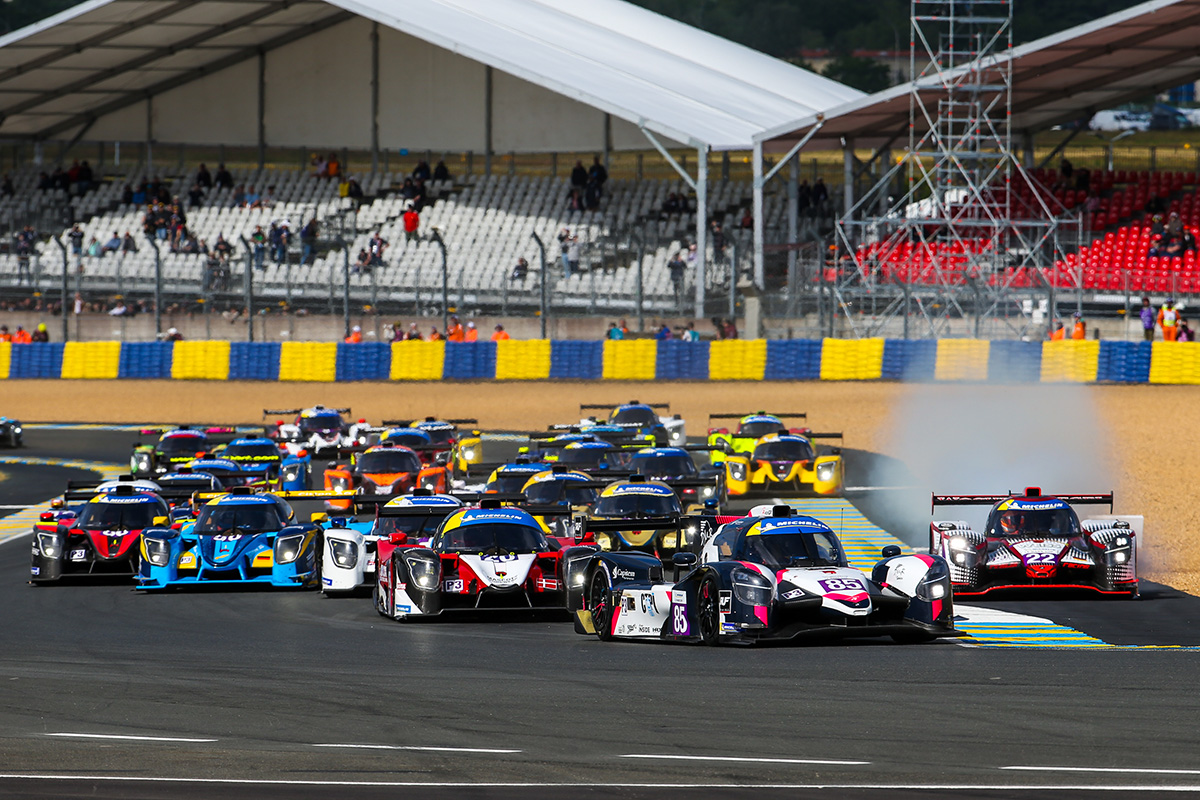
And then it was the build up to the race. As the festivities started bubbling away and the crowd was building, there were a few important tasks to take care of. First, an incident log – a shared document to keep track of incidents, Safety Cars, Full Course Yellows, and Slow Zones over the course of the race – and a car tracker – to keep tabs on any major notes on all the runners across the race.
Then, of course, there was the small matter of the DSC Sweepstakes, by far the most important of the pre-race tasks. For a 5 Euro buy-in, the challenge was to name the top three in each class, and the first retirement of the race. Winning would net you the whole pot, which, after getting a few colleagues in the media centre involved as well, turned out to be quite a tidy sum!
The fanfares began on the main straight, with the cars wheeled out to the Le Mans-style starting positions, and the arrival of the trophy and Official Starter Zinedine Zidane, to a huge roar from the crowd. Then the Tricolore was delivered by helicopter, with the air force painting the sky in blue, red and white, as the anticipation continued to build.
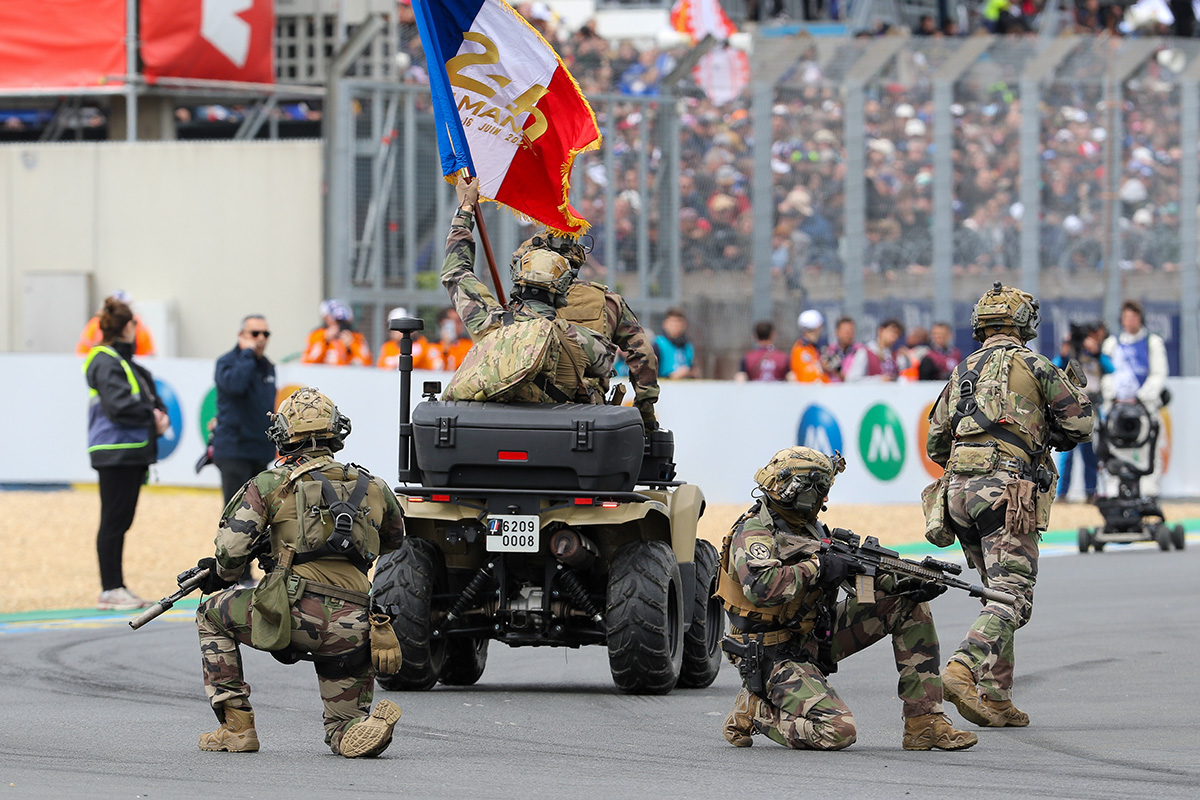
And then the grid was cleared. And then the cars started to pull away.
And then, the race was underway.
*****
The plan was simple; a short report covering each class at the end of every hour, sent through to RJ to collate, format, and post, while Stephen touches base with us all to put together a similar report for RACER. Around this, we had to plan mealtimes, sleep times, and breaks.
But that was a problem for future-us: Right now, I was trying to figure out why two LMP2 cars were already in the pits at the end of lap 2, while trying to keep up with the battle at the front of the class. It felt like seconds later that the pit sequence started, with a smattering of different strategies off the bat – this team has taken tyres, that team has put a bronze driver in, Slow Zone called, back to Green!
Oh heck – it’s already 10 minutes before the hour and I haven’t started writing yet. Quick, take a snapshot of the order, 300 words, sent off to RJ, back into the notes.
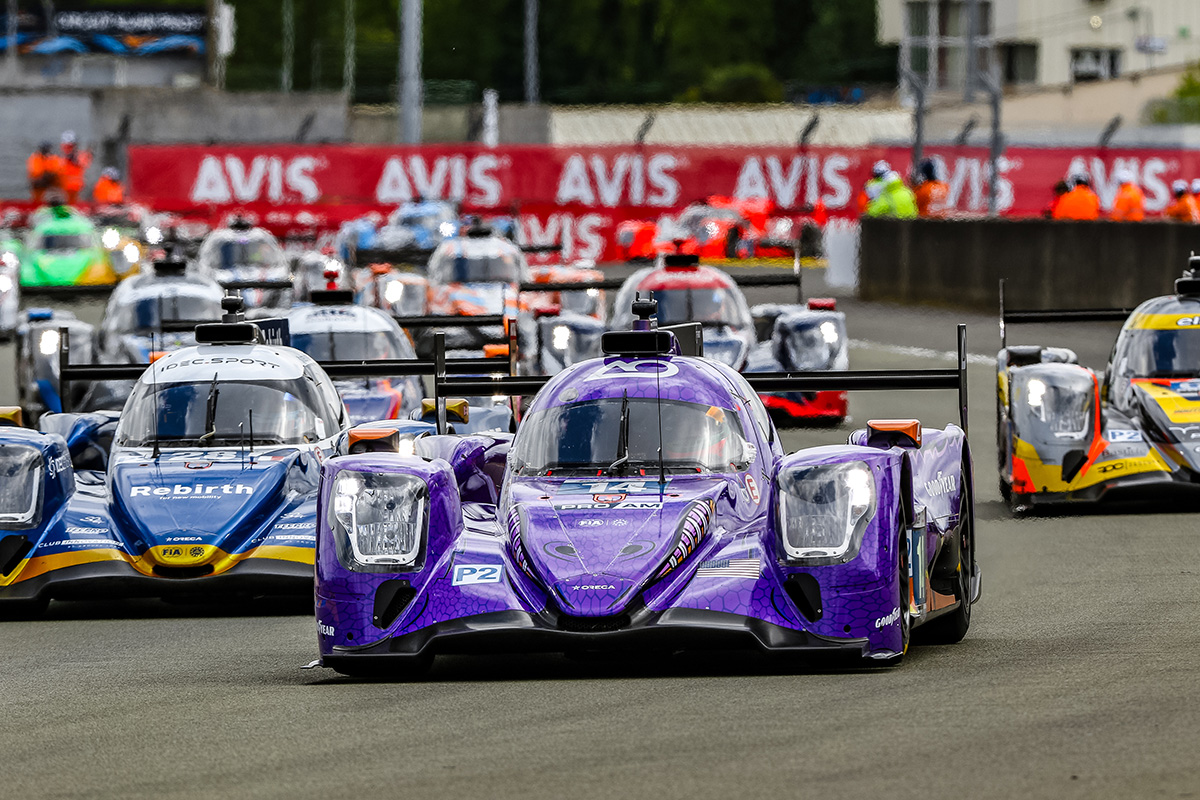
One hour down, only 23 more to go!
Just like the practice sessions, I had already completely lost track of the Hypercar and LMGT3 classes, only hearing sporadic comments from RJ and Martin as they filled Stephen in at the end of the hour. It felt like a moment later before I was writing again for the end of hour two.
It started to feel like a rhythm – Write for the top of the hour and send it off, then check the running order hasn’t changed. Check the time gaps, and prepare for the pit sequence while updating the drive time tracking. A photographer bustles in from trackside, spend a few minutes offloading photos, maybe editing a few, before mentioning where they’re off to next and whooshing back out again.
Predict how the hour is going to turn out and keep an eye out for anyone doing anything strange, before Stephen checks in with 15 minutes left, then start writing the report.
Stephen sends Martin and me down for dinner, four hours in. As we get back, RJ and himself head down. Unfortunately, in the time it’s taken Martin and I to get back, dinner service has stopped, so a detour to a pasta stand is required.
9pm – 5 hours down, and of course LMP2 are in the middle of a pit cycle as I’m trying to write the report! Gosh, they should be kinder to the poor reporters and have some courtesy as to not be coming into the pits while I’m trying to write! The sky is getting darker, as sunset approaches, as does the rain…
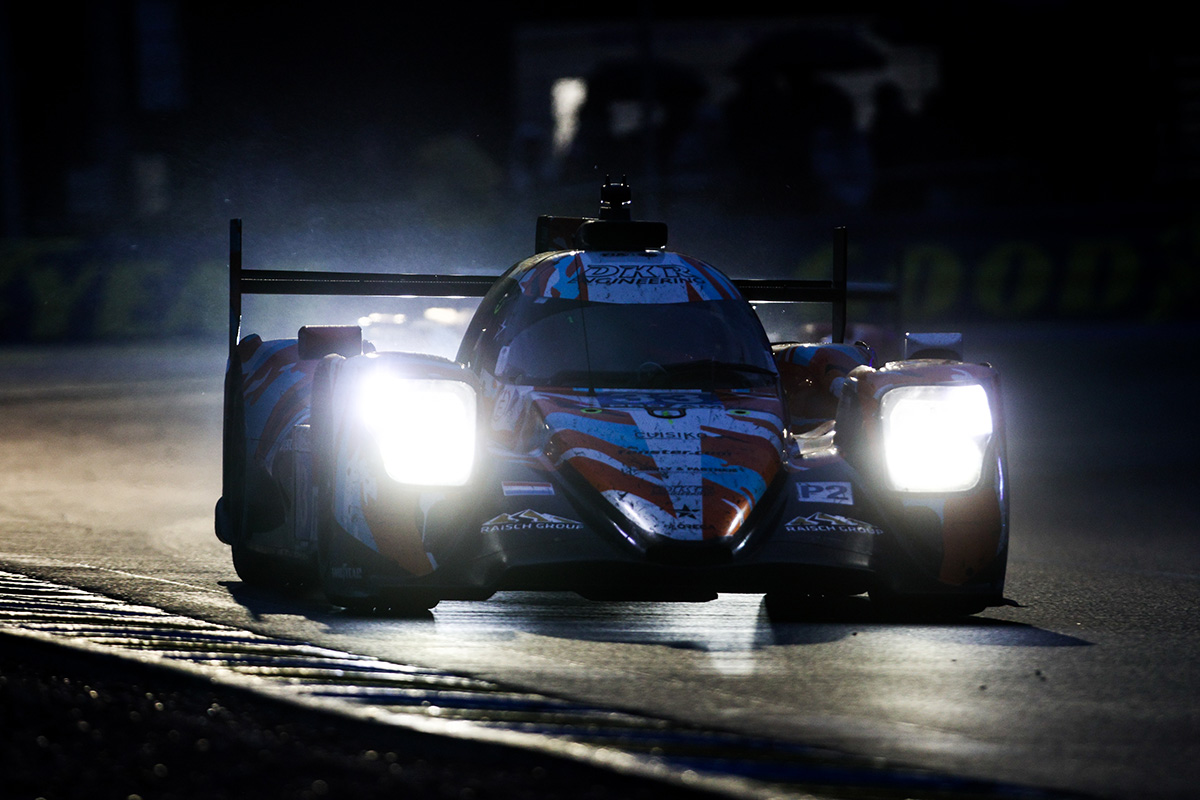
It was about here that we decided what the overnight plan was going to be. Between the four of us, we’d sleep in two shifts; One pair would head off at 11pm to return at 4am – half race distance – relieving the other two who would be able to sleep from 4am until 9. I volunteered for the night shift – I’d been feeling better and better as the night had worn on, and from Australia, the transition into night running is the hardest part of the race to watch, and so it’s something I’d never gotten the chance to really enjoy before!
At 23:00, RJ and Martin headed out for a sleep, leaving Stephen to write on Hypercar plus everything for RACER, and myself covering LMP2 and LMGT3. The Safety Car was out – for the contact between Kubica’s Ferrari and Dries Vanthoor’s BMW – settling the running order, and the hour of intervention gave Martin a chance to give me a quick brief, so I knew approximately where everyone was and what strategies they were on, before I was head-first into the night hours.
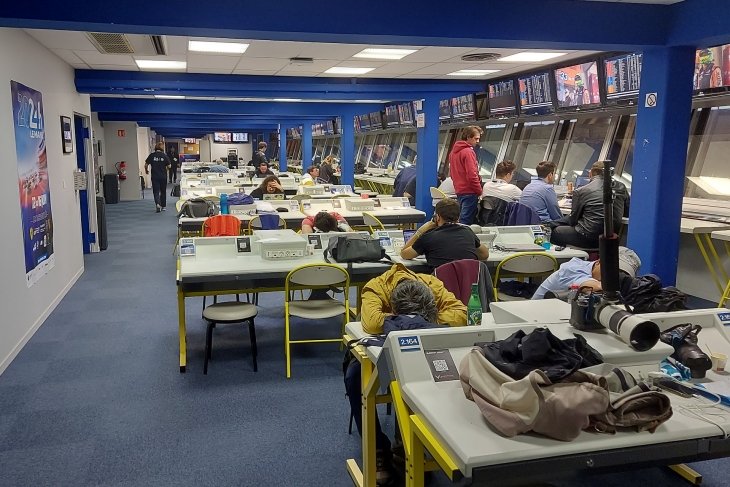
The world feels very small in the night hours at Le Mans. The once-full room now feels like it’s only Stephen and me, with the five screens above our table, the commentary in my ear, and the constant whirr of engines and headlights on the main straight becoming so routine that it’s faded into the background. Every now and then a colleague will ‘be on a walk’ and will find their way down to us for a chat, before trudging back away to their work.
The room looks like a triage ward; there’s people asleep at their desks, head down on their laptops or across their arms as tiredness takes hold. Some are clutching a coffee or tea, clearly the only thing keeping them awake. Entire benches are abandoned, with some photographers and media setting up makeshift beds underneath tables and staircases, trying to find some respite from the stark fluorescent lights overhead.
Martin hands me the keys, lets me know where the car is, and sends me on my way to the 5-star Ford Focus Hotel. In the dark, and, as it happened, the cold driving rain
The rain cleared, before coming back again in earnest, just before halfway. Slightly drenched and looking remarkably fresher than when they left, first RJ, then Martin arrived in the media centre ready to take over reporting, as again a nicely timed Safety Car gave us a chance to do a proper handover. With that, Martin hands me the keys, lets me know where the car is, and sends me on my way to the 5-star Ford Focus Hotel. In the dark, and, as it happened, the cold driving rain.
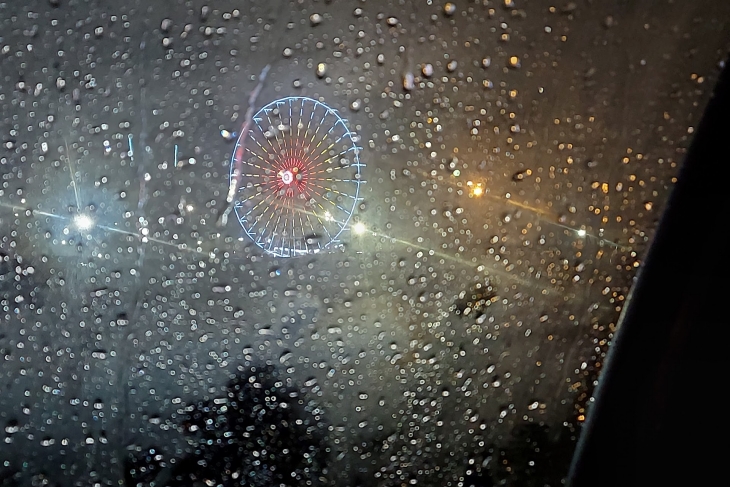
10 minutes later, I’d found the car. The rear seats had been folded forward to extend the luggage tray, which was thoughtfully padded with a single blanket and pillow. Hanging my wet jacket and pants over the passenger seat, I did my best to get comfortable, with some music on to mute the roar of engines, and a cosy, rainy view of the Ferris Wheel at the Porsche Curves. Uncomfortable bedding, noisy neighbours, 10/10 location: 5 stars.
*****
I swear I blinked and then it was daylight. My alarm went off at 8:30, and I slowly trudged my way back to the track, still waking up, to find that exactly nothing happened overnight! The Safety Car for the weather had lasted effectively until I’d woken up, with my stumbling into the press room coinciding with the return to green flag.
Stephen had arrived just before me, and gave everyone a strict order that was to be followed at all costs: Breakfast. A duo of Safety Cars for incidents at Indianapolis made that an easy order to follow, as RJ, Martin and I fuelled up for the run to the finish, before relieving Stephen to do the same.
Coming back into coverage after a significant break can be fairly jarring, especially when you find more cars on the lead lap than when you left! It was a herculean effort from the #28 IDEC Sport car to find its way back into contention in LMP2 after dropping off the lead lap before dark, and I spent most of that first hour backtracking through to find out how they had managed to do so, before falling back into the rhythm of the race.
The build to the finish was electric; the constantly changing weather wreaked havoc on strategies, keeping all of us nailed to our classes and how the race was shaping out, despite the fatigue that we were all beginning to fight. The rest of the world was a blur – the only thing that I could focus on was the tyre choices at the next pit stop, the running order of the lead pack, and the gap between the leaders as they came into the pits.
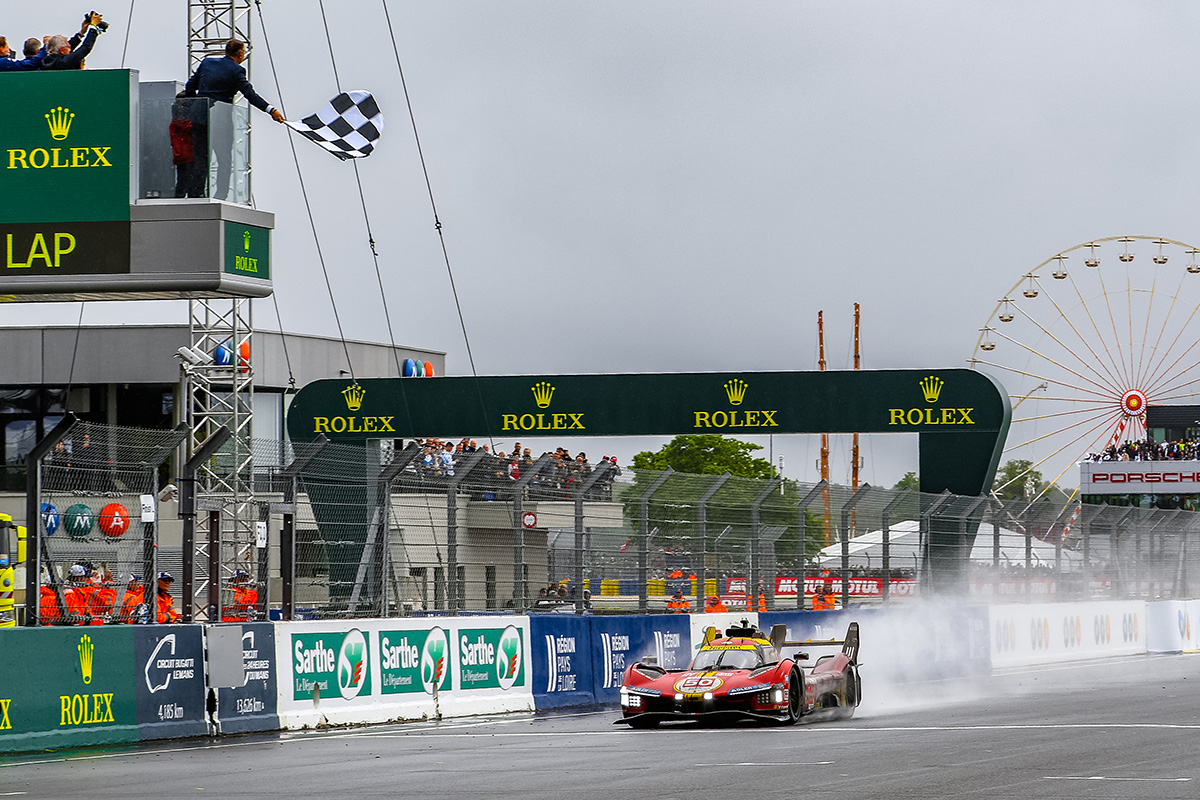
All of a sudden it was the last lap, and the chequered flag was such a surprise that I almost missed it, and the #50 AF Corse Ferrari as it crossed the line to win. RJ and Stephen organised a quick end-of-race-report, and then, it was head down to start trying to unpick the LMP2 story for this race. I could hear the roar of the crowd as the podium presentations happened at the end of pit lane, with cannons firing confetti at the end of every class podium.
In the midst of writing, I took a quick moment to enjoy the unfolding chaos beneath me, with the sea of fans showered in confetti, waving flags and cheering, almost the full length of pit lane.
Four hours later and we were on our way back to The Cottage. One last task on the agenda – the all-important DSC Sweepstakes, presented by MC Martin Little. I don’t even remember who won (It was me! Dep Ed) – I had done extremely poorly – but I remember the joy around the group, as Martin regaled us with everyone’s results, clearly enjoying the theatre of it all.
Full of KFC, post-race chocolate, and one last cup of tea, I finally crashed into bed. My first Le Mans experience was done and dusted, with all the challenges, achievements, and wonder that I could have ever expected. It had been incredible to work as part of such a productive team, and personally, it felt incredible to know I could hold my own in the team, even if it took me a while to get up to speed.
There was one more challenge still waiting for me. Two down, one to go.


