
The pictures on the wall and the memorabilia scattered across the desk, bookcases, cabinets and tables of Ben Keating’s office in Victoria, Texas, tell a story.
They illustrate the rise of a wide-eyed, inexperienced graduate who – through a combination of blind risks, confidence and nous – rose from a wannabe car salesman with a fistful of dollars to one of the most successful dealers in the country, and one of the most decorated gentleman drivers in the modern era of sportscar racing.
It is a remarkable tale of someone who has truly lived the ‘American Dream’. But how did it all happen, and how on earth does he fit everything in?
These are questions I sought to answer ahead of Lone Star Le Mans earlier this month, when I spent 24 hours with the man himself, shadowing him at work, at home and on his way to the race track.
*
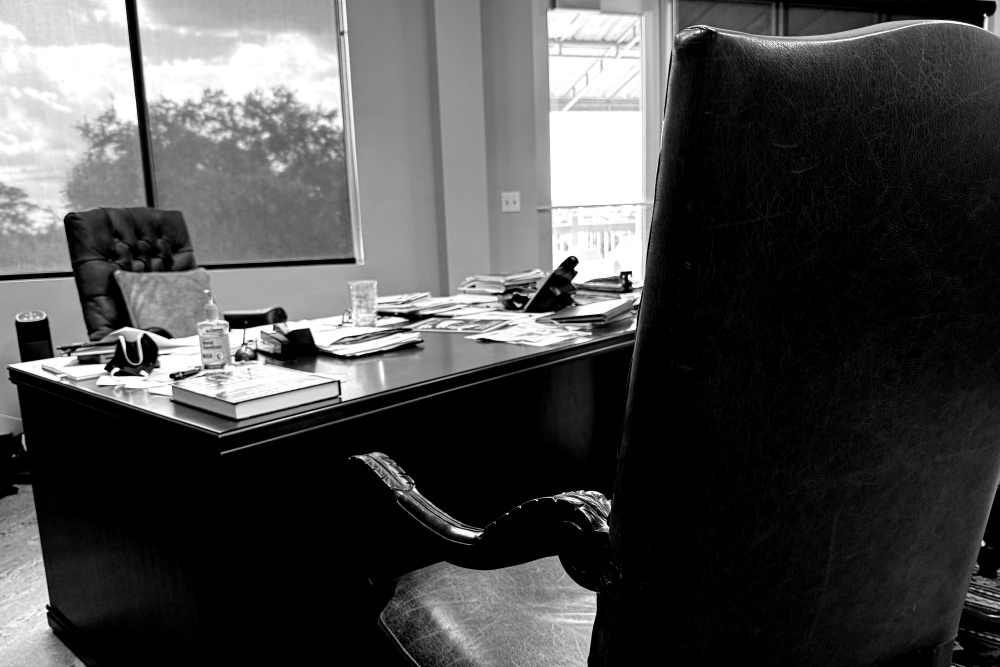
As Ben opened mail sitting behind his desk, catching up with tasks and to-dos ahead of his home race, I took a closer look at the decor.
On the wall in the far right corner are three stacked images of his first dealership in Port Lavaca, about 30 miles southeast of the office block we’re spending the afternoon in. The sign outside the forecourt reads “We’re different”. And as you’ll find out later, it’s for that very reason that Ben was able to take a failed business in rural South Texas and use it as a platform to build an empire that now boasts more than 30 dealers across the Lone Star State.
“It’ll make you laugh,” he said as he caught me taking a peek at the framed pictures. “If you take a look over the other side of the room, you’ll see aerial shots of that from when I first bought it, to what it became, and the contract I had made up to purchase it from the previous owner.”

The original Port Lavaca site was tiny, especially when compared to some of his current properties. The second shot, though, shows the scale of growth in six years, as it expanded to a site with three large buildings and triple the inventory, stocking cars from Chevrolet, Buick, Pontiac, GMC, Ford, Dodge, Chrysler and Jeep by 2008.
Scanning elsewhere, there’s a side cabinet with family photos and a print of Ben on the front cover of Time Magazine, celebrated as 2024’s Dealer Of The Year, and newspaper cuttings featuring both his business exploits and his late father’s before him.
The bookshelf is packed. It’s piled high with everything from a copy of “The Snowball, Warren Buffett and the Business of Life” to John C Maxwell’s “Leadership 101”.
One cannot help but notice the presence of racing, though. Dan Binks and Norm Dewitt’s ‘Making It Faster’ sits on its side with a scale model of a Mercedes-AMG GT3 on top. A money box which reads “Saving for a Racecar, Million Dollar Bills Only” is on the window ledge behind a cabinet dedicated to models of his IMSA and WEC hot rods through the years.
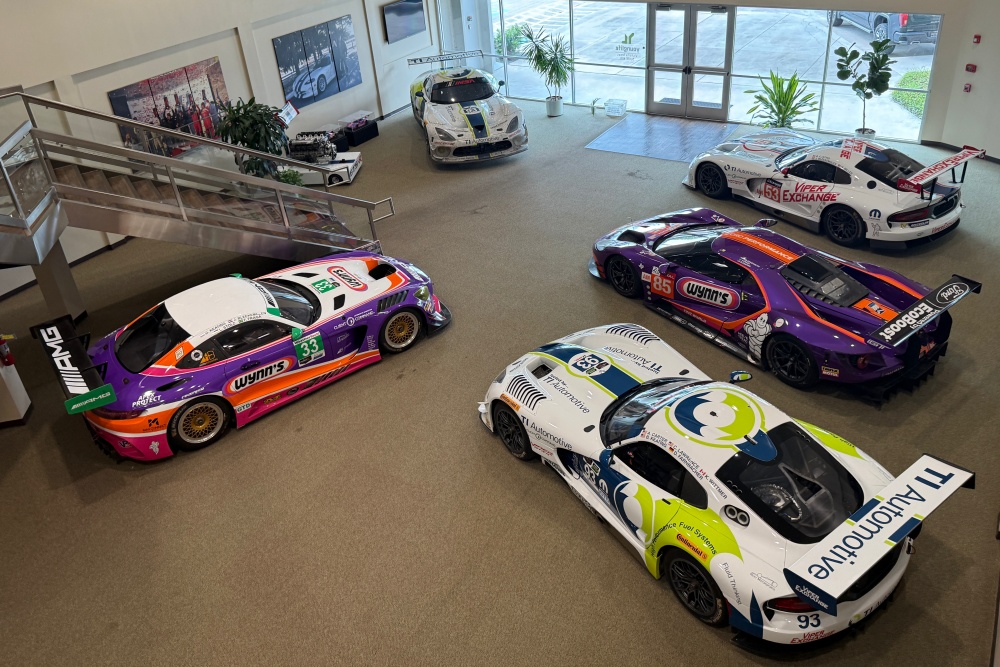
Just to get into the office, you have to walk through a foyer graced by the Wynns Ford GT, two Vipers (one GTLM, one GTD, and a stack of parts from the 2015 Daytona winner bolted together to make a show car) and one of the Wynns liveried Mercedes-AMG GT3s.
He’s a man who essentially lives a double life. On the weekends, Keating –like many other successful businessmen turned racecar drivers – flies around the world, testing and competing at the highest levels of GT racing. Then during the week, he’s manning a tight ship at work, overseeing an organisation in the Keating Auto Group that employs thousands of people.
It’s a truly remarkable existence.
**
Before stopping by his office, we sat down over a coffee that morning in Conroe, Texas, 40 miles north of Houston, where ‘business is a-booming’. He recounted the story of how he first became involved in the car sales business. It was a family affair, though growing up in Tomball, Ben actually grew sick of cars and car dealers by the time he hit college age.
“My grandfather was a Ford dealer; he had five children, and four of them became Ford dealers,” he told me. “Previously, he was an engineer for an oil company in Houston, and with his brother, they bought a Chevrolet dealership, but eventually, his brother – my father’s uncle – kept that store, and my grandfather bought a Ford store. We’re talking 50s.
“So my father ran and owned Tomball Ford, and that’s where I grew up and where I moved to when I was two weeks old. But when I went to Texas A&M, I got an engineering degree because I wanted nothing to do with the business, because from my perspective, all I knew about it was parking cars in a straight line, washing them and picking up trash, as that was my job as a kid. I hated it.”
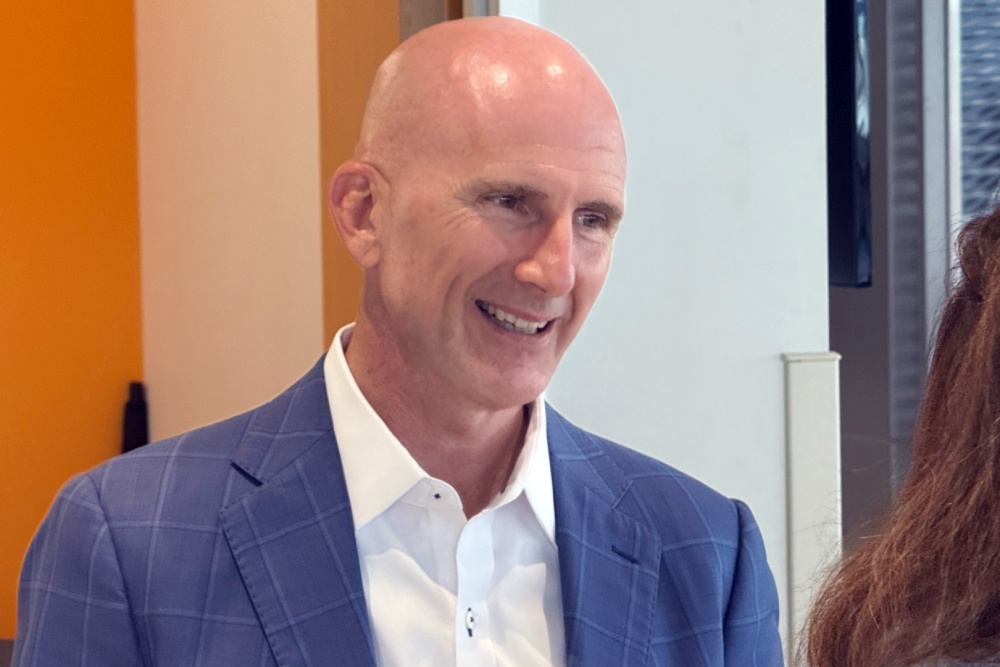
In the end, though, he struggled to find an internship in a different field, and ended up doing training in insurance work for car dealers through a contact his father had. The training saw him tour dealerships week by week and pick up skills.
“I thought I was an expert. I thought I knew way more than I did. But what I found is that a lot of people are making a lot of money, I couldn’t believe it. I had no idea how much money was in the business.
“I also found a lot of people doing a terrible job. I knew I could do better; I knew I could run circles around them. A lot of dealers were treating people poorly and not really managing their business. It just looked like a giant opportunity to me. So I changed my mind.”
With newfound confidence that he could make it work, he began working at Covert Ford when his wife (Kathleen) found employment at Dell in the nearby area. That, though, didn’t last. He grew frustrated very quickly, watching others getting promoted when he felt he was right for the job.
I was close to my father, and I knew he needed a used car manager at Tomball Ford. Mum was against it, but he gave me that job and I was very successful very quickly
“It was wrong of me, because I’d only been there six months,” he continued. “But I was close to my father, and I knew he needed a used car manager at Tomball Ford. Mum was against it, but he gave me that job and I was very successful very quickly.”
It’s where the story takes a more emotional turn, as a breakdown in his relationship with his father ultimately served as the catalyst that led to the founding of the Keating Auto Group.
“In the early days, it was great,” he reflected. “It was a honeymoon. I was doing a really good job, and he was proud. Then we were building a brand new dealership, and my father helped build it; he loved driving heavy equipment.
“So he spent three years doing that, not involved in the business, while I did most of that side. All the money I saved went into buying stock in the business, and I thought it was going ok. But when that work was done and the building was built, and he came back, that’s when we started to have conflict.
“He was super conservative, and I was ‘go, go, go, push, push, push, grow, grow, grow’. Then 9/11 happened, and the car industry started a campaign to keep the American economy going, and it worked because all of a sudden, we were selling so many new cars. But used car values were plummeting. We were making 2,000 dollars on each new car and losing 4,000 on every trade-in. We had a big fight on the showroom floor, and he fired me.
“But I was stubborn,” he explained. “I’m optimistic and I have confidence in myself. I’m also independent, I think, because I went through drug rehab twice in high school. So I went and figured out how to buy a dealership on my own.
“I had no money, like 500 dollars in my account, and my mortgage was 1,200 a month. But I found a small dealership in South Texas that had gone broke twice in seven years. Nobody wanted to touch it, so it was really cheap. That’s when I borrowed 300,000 from my grandfather and bought the Ford Dealership in Port Lavaca.”
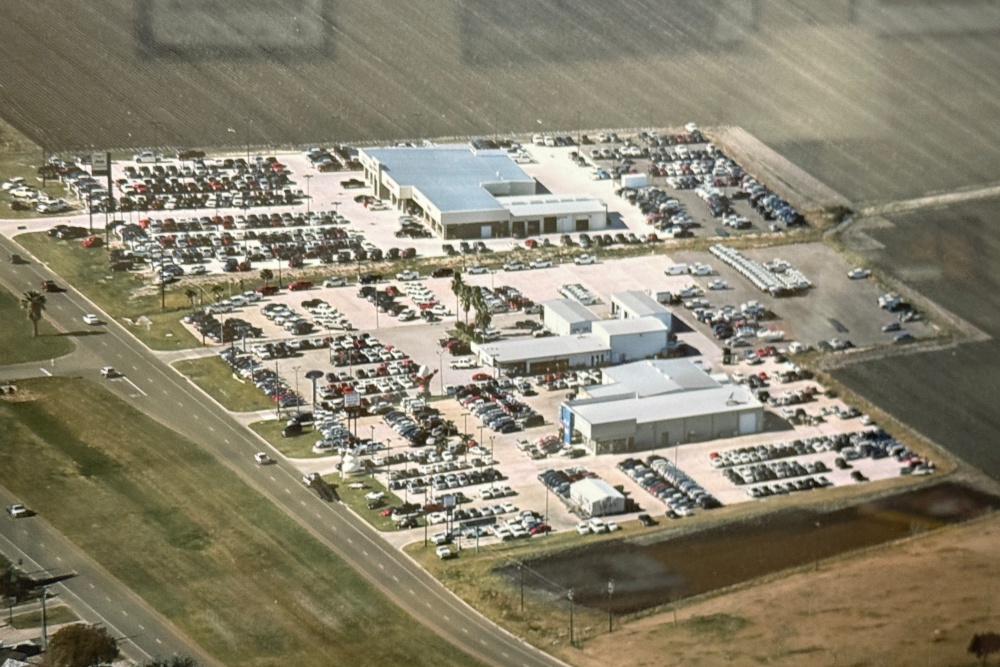
With Keating’s vision and his ‘grow, grow, grow’ mentality, it wasn’t long before he was in charge of a portfolio of sites. This included buying Tomball Ford off his mother in 2005, two years after his father suffered a rapid decline in his mental health that led to him taking his own life. The secret to his success, he feels, was the new approach he took to car sales.
“Right now, the average profit on selling a car is 200 dollars, even on an 80 or 100,000 dollar car,” he continued. “In the US, 98 per cent of people finance their purchase, so we make money, not on the price of the car, but on everything that happens after the customer says yes. Financing, insurance, service, and accessories. We’re in the business of giving away cars at a really competitive price. And 20 years ago, that was a new model due to the introduction of the internet and people searching for the best prices.
“They had no clue about this when I started in South Texas, everyone was trying to make money on the car. So we were selling cars thousands cheaper than everyone else around us, and 70 per cent of our business came from people driving more than 30 miles from the forecourt. I got really successful, really quickly. ”
Then the financial crisis hit. It was a sliding doors moment which, looking back, could easily have prevented him from racing at the level he does now.
I should not have made it through. I had no money, a bunch of loans and everything was leveraged
“I should not have made it through. I had no money, a bunch of loans and everything was leveraged,” he said. “Nobody wanted to give car dealers loans either, as it was bad debt. I had to beg, borrow and steal. I had 18 million dollars worth of loans with Chrysler Financial or GMAC, total. I had to find millions I didn’t have. I thought at one time it was all over, that I was bankrupt. We sold all our used cars to generate cash, and in the end, that’s how we got through.
“Thankfully, with Texas having oil as such a big part of the economy, when that boomed from 2011 to 2015, business was really good, then in Covid things got even better because two-thirds of our expenses (cars in the lot and advertising) went away. Our profits doubled because we didn’t have to spend money on advertising, and we had no inventory. You couldn’t get cars easily, so we sold everything we got.”
***
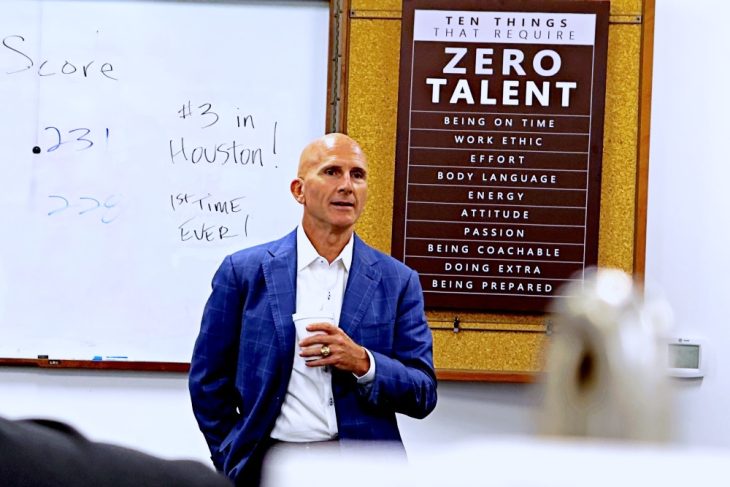
After our first sit-down, we shuffled into a conference room. It was time for Ben to deliver a sales meeting with members of Keating Chevrolet, and the cameras are rolling. DSC wasn’t the only media taking an interest, as WEC TV was in the room too, filming him for a forthcoming documentary.
He’s certainly not camera-shy, though, and went about his business, unfiltered, without any concern for the microphone strapped to his chest.
In the meeting, he revealed that Keating Chevrolet is now “#3 in Houston”; it sold more cars in August than Lone Star for the first time.
“It’s a big, big deal,” he told the room. “It’s a large step to two, and eventually to one. It will take time, but we will get there, and we will continue to grow organically. And we’ll have fun along the way. Why? Because it’s fun to win.”

The strategy for the dealer, overseen by Ben’s operating partner, Chip Watkins, is working. But that doesn’t mean there’s no room for improvement, as the hour-long discussion about sales tactics that follows revealed.
How often does he get the chance to hold meetings like this? “Not as often as I’d like,” he quipped. Naturally, his role in the business has changed as it has grown.
I asked when the last time he sold a car was, though, and the answer was surprising. “I actually sold one yesterday. I don’t sell in dealerships, but I reckon I sell a car a week over text messages to people!
“I still get a buzz from sales, and I still deal with upset customers sometimes, too. And I bring a different perspective because I’m working on the operations side of 32 dealers that employ over 3,000 people. I can solve problems because I’ve done everything before.”
Something I noticed is that everyone on hand was thrilled to meet Ben. For a number of them, it was their first chance. With so many dealers to manage, setting aside one-on-one time for each employee is an impossible task. Nevertheless, he was generous with the time he did have and left the room to a round of applause.
“Now go out there and sell!” he rallied.
****
Just like that, it was lunchtime, which brought with it the chance to get to know Chip, a longstanding Keating Auto Group employee who was tasked with heading up Keating Chevrolet when Ben’s organisation acquired it in November 2024.
Chip is everything you’d expect a successful car dealer in Texas to be, tidy horseshoe moustache included. He’s friendly, sharp-dressed, passionate about his craft and crucially, loyal to Ben and his vision.
“He’s amazing. A genius, a people person, with a unique leadership style. We all feel blessed,” he told me before we drove to a nearby restaurant to grab a bite to eat.
We sat around the table with a band of Ben’s friends, including former teammate Nico Varrone, who stopped by for a catch-up and a chance to step inside the title and Le Mans-winning Corvette C8.R the pair shared in 2023, which is currently on display in the dealership. They both really miss that car…

Over a Tex-Mex sampler, Chip, who drives a truck that’s the size of a small English county, tells me of his aspiration to retire to a peaceful life on a ‘dream ranch’ in rural Texas. “It’s what I want, to be outside more, in nature,” he said. The rapport he has with Ben tells me it’s clear that, in time, he’ll get there.
Upon leaving the lunch table, it was time to head to Victoria. To save time, Ben opted to fly us to Keating Auto Group headquarters, which sits a stone’s throw from his house. “Have you ever flown private before?” He asked. The answer is “no.” “I guess after a while, I take it for granted,” he responded.
One of the four pilots the Keating Group employs helped me store my luggage in the hold, and within 20 minutes of arriving at the regional airport, we were in the air headed southwest.

Even while hitting turbulence as we punched through the clouds, there was no respite for Ben, who spent the duration of the flight tending to the steady stream of emails that landed on his phone.
When we landed, we drove to his office, and it’s on that journey that the conversation turned to another one of Ben’s passions, college sports. Ben is a die-hard ‘Aggie’, even his Palatus PC12 is maroon to match the university colours, with a registration that reads ‘N616 EM’ or ‘Gig Em’, its rally cry.
Since graduating from Texas A&M in 1994, Keating and his family have stayed close to the university. He even teaches regular classes. And by sheer coincidence, when we arrive at his place of work, there’s a stack of copies of the latest Texas A&M Spirit Magazine, which features a front cover shot of Ben the racecar driver, in the cockpit and ready for action.

Beyond simply a place to run the business, Keating Auto Group HQ serves as a multi-purpose building. On the ground floor is a recreational space for kids to use as part of the Younglife non-profit programme he supports, and a skunkworks for his grassroots race projects.
In the back, surrounded by parts spread across the floor, is the car he recently took racing in the Champcar Endurance Series 24 Hours of VIR (low-cost endurance racing). Racing is a bigger part of his life than I first thought.
The extent of his love for racing became even clearer when we later headed to his house for dinner. The multi-story ‘man cave’ dedicated to cars and racing, which he has built up and furnished, is a sight to behold and is littered with cool details.
“That table there, that’s the engine block from Sebring that blew right at the end of the race,” he pointed out on the tour. “That bookcase, that’s a secret door to my sim rig. This glass panel, those fittings are gear cogs from cars I’ve raced.”
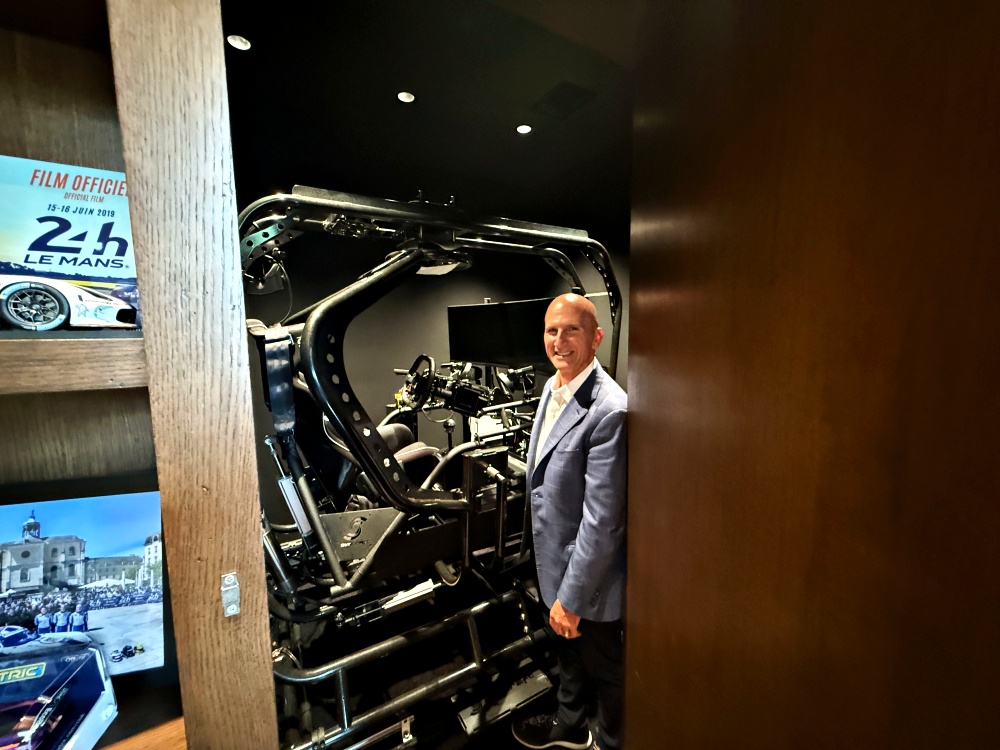
It’s hard to truly convey just how much pride he has in both his achievements on track and the sport he’s a part of. You have to see it with your own eyes.
“Do you smoke cigars?” He asked next. I declined but took it as a sign that I’m very much welcome at his family home. It was time to sit down for a podcast recording before a fabulous home-cooked meal courtesy of his TF Sport teammate Daniel Juncadella and his wife.
And it’s during that meal that I get a first true taste of Ben Keating, the father. Sitting with his daughter and teammates, all sorts of topics come up. Fitness, travel, food and of course, opinions on Silver-graded drivers.
It’s got to be tough to balance family life when you’re a successful business owner on weekdays and a championship-winning driver on the weekends. So, naturally, I asked him about this part of his life and how he manages his time to get everything done.

“Uh, um, I will say that, this sounds like a bad answer, but I don’t really know,” he admitted. “I pack more into a day than what I think is reasonable. I don’t say no very often to opportunities to do things, and I just end up packing my time all the time.
“I drop the ball fairly often in all of those areas. But I will also say that at the end of most days, I look back at the day and go, ‘Wow, I can’t believe I got all that accomplished.’ And so I’ll say I don’t know how I accomplish all of it.
“I’ve got really good people. And the key to that for me is doing those things that give me energy. It’s doing those things that make me excited to do them. I don’t care who you are, what you’re doing. Everyone makes time for the things that are important to them. And so if I’m doing a lot of things that are important to me, I figure out how to make time for them. That’s not to say that I do it all perfectly, because I don’t.
I don’t care who you are, what you’re doing. Everyone makes time for the things that are important to them
“I have conversations with my wife of ‘Hey, you know you’re dropping the ball over here.’ Or I may have conversations with the guys who help me run the dealerships. ‘Hey, you’re dropping the ball over here.’ So, while I’ll say it’s not perfect, I’ll say I do a pretty good job of managing all of it, but to answer the question of how I do it, I don’t know.
“I feel like I have a pretty good balance, which I’m able to do because I have really good people that work with me in the office, in the dealerships, and I have an unbelievably great wife who is gracious enough to allow me to do what I’m passionate about. She enables me to get my fix on the drug of racing.

“There is pride in all of this for me. Pride in doing business in Texas, in building something, in getting involved in the community, in my faith, in my family, in my racing. It’s all special to me, and I’m proud of what I’m doing with the people around me.”
*****
The next morning, it’s time to head to CoTA. It’s a three-hour drive aboard his monstrous Jeep, leaving us plenty of time to chat about his life in racing.
It all started when his wife bought him a track day experience back in 2005, which he completed at the now-defunct Texas World Speedway. And he had no wish to go racing at that point. He knew nothing about the sport outside of the Indy 500, which he attended in 1994, and didn’t know any of the rules. It was a whole new world when he first got behind the wheel.
“It was the most fun I’d ever had,” he recounted. “And I’d say within about 12 to 18 months, I knew I wanted to do it regularly. I promised myself I’d do at least one race a year. But early on, I had no idea what I was doing; ignorance was bliss. I purchased a race car at my second event ever, and in my third event, I entered a race. I had no skill, just courage.
Early on, I had no idea what I was doing; ignorance was bliss
“I ended up doing six races in 2007, and I got involved in six incidents. At the end of the season, the sporting director came over and told me that nobody wanted to drive with me anymore. He put me on probation; I would be kicked out if I crashed again. So I spent time in the off-season learning, I got addicted to it, obsessed. I was reading textbooks and soaked up everything I needed so that in 2008, when I went back, I did eight races and won seven in my GTS Viper.”
From there, he moved up to a class that utilised World Challenge rules, the Dodge Viper Racing League, just at the time that the mortgage crisis happened. But he found a way to fund it by winning prize money.
“If you won, you won 10,000 dollars, second was 5,000, third was 2,500 and with two races per weekend, so I knew I could win 20 grand each weekend if I won both races each time,” he said.
Before he knew it, money was flowing through his business again, and he was racing across America and then later the world in the World Endurance Championship. His career CV is bursting with major honours: IMSA LMP2 titles, GTE Am World Endurance Championship titles, and endurance class wins at Le Mans, Sebring, Daytona and Road Atlanta.

Almost two decades on from his first competitive race, what keeps him coming back for more? “I just feel excitement. It gives me energy, and it really is a drug.”
It’s crunch time for Keating and his teammates Juncadella and Jonny Edgar. We went our separate ways as we approached the paddock at CoTA. Ben headed to the garage to slip on his race suit, and I headed for a desk. It was a whirlwind start to race week for both of us. And unfortunately for Keating, any hopes of using his home race to reboot his season were washed away in the race-day storm.
It’s Fuji next, the penultimate race of the season. Keating and his teammates remain in the title fight, 29 points back from Manthey’s leading trio with 65 on offer. Leapfrogging Ryan Hardwick, Richard Lietz and Riccardo Pera will require two extremely good performances and a dash of good fortune. But Keating and his teammates know that a lot can happen in six or eight hours of racing. It’s not over yet.

“The thing is in the WEC,” he concludes, “the best way to win a championship is to finish third or fourth in every race. We won at Qatar and carried a ton of weight that we couldn’t shake off after that. And we have missed opportunities, like Sao Paulo. Whatever happens, I think this title race is going to go down to Bahrain. And you don’t want a load of ballast for that one.
“There are still chances to make up ground. I just hope we have a really good chance of winning it all in the final race. Winning a championship after a season like this would be really, really special.”