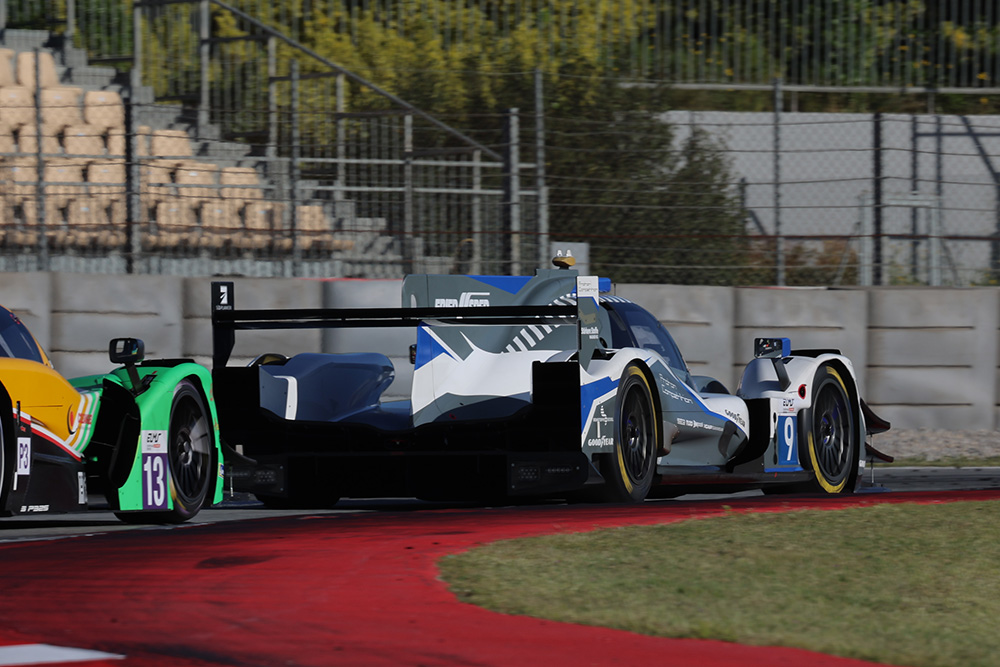
After a debut outing that lasted just two corners last month in Barcelona, will we finally get to see what Proton’s Ford Racing-backed #9 crew is capable of tomorrow at Le Castellet?
Heading into the 2026 ELMS season, arguably the biggest storyline in LMP2 was the arrival of a programme from Ford that mirrors Genesis’s hugely successful Trajectory Programme effort from 2025. As part of the ‘Blue Oval’s ramp up to Hypercar, it has placed two of the three drivers already signed – Seb Priaulx and Mike Rockenfeller – in an ORECA with Jonas Ried, and enlisted the band of Venture Engineering staff bound for the WEC programme in 2027 to operate it.
With so many interesting elements of this to track and seemingly so much potential for the group to unlock, it was hugely disappointing to see the #9 retire amid the chaos on the opening lap of the season in Catalunya. But that’s behind the Dan Sayers-led team now; the focus is firmly set to picking up points for the first time this year in Round 2, and who knows, even a few trophies if it all goes to plan.
In the thick of it is 42-year-old Mike Rockenfeller, energised by his return to the paddock for the first time since the tail end of the Le Mans Series era back in 2011. A lot has changed since his last appearance in an Audi Sport Team Joest R18 TDI at Spa. The class structure, the calendar, the format, and the list of teams and drivers are all different to the point of being unrecognisable in some cases.
“It’s so competitive, to the point where we have to be careful that we don’t expect too much out of the year,” he says. “We still want to do well, but we need to see the big picture. We’re not the first to do this, I remember Penske doing it before they went into Hypercar; it wasn’t easy for them.”
That echoes Ford Racing Hypercar boss Sayers’ messaging ahead of the season. He stressed that the main priority for him and his staff in the ELMS is to prepare for Hypercar, not to achieve big results and get wrapped up in a title battle. He estimates that around 80 per cent of Ford’s Hypercar in-garage personnel will work on the LMP2 programme at some point, making it a useful tool for team building.
“It’s nice for me as well as the Venture guys,” Rockenfeller continues. “I haven’t been in these surroundings for a while, and the ELMS and WEC have similar rulesets and procedures. It’s important to get ready for that next year, and driving a prototype anyway doesn’t hurt! I did a bit of Hypercar with JDC Miller two years ago, so it hasn’t been that long, but it’s always good to develop the muscle memory, and I’m enjoying the car.
“It’s also good to get to know the team and all work together. When you’re testing, you don’t get the adrenaline of being in a race. So together we need to all gel, there are familiar faces, but we need experience as a unit so we’re not learning on the job next year when the car is out racing.”
As the development programme for Ford’s V8-powered Hypercar accelerates this year, Rockenfeller’s diary fills up. Simulator testing is already underway, track testing will follow shortly, and he’ll be juggling both the ELMS and his IMSA Endurance Cup campaign with the factory team in GTD Pro at the same time.
But rather than find the prospect of plate spinning three huge tasks daunting, the 2010 Le Mans winner relishes the challenge. It’s why he grasped the opportunity to join the Ford Hypercar project with both hands when the driver selection process got underway.
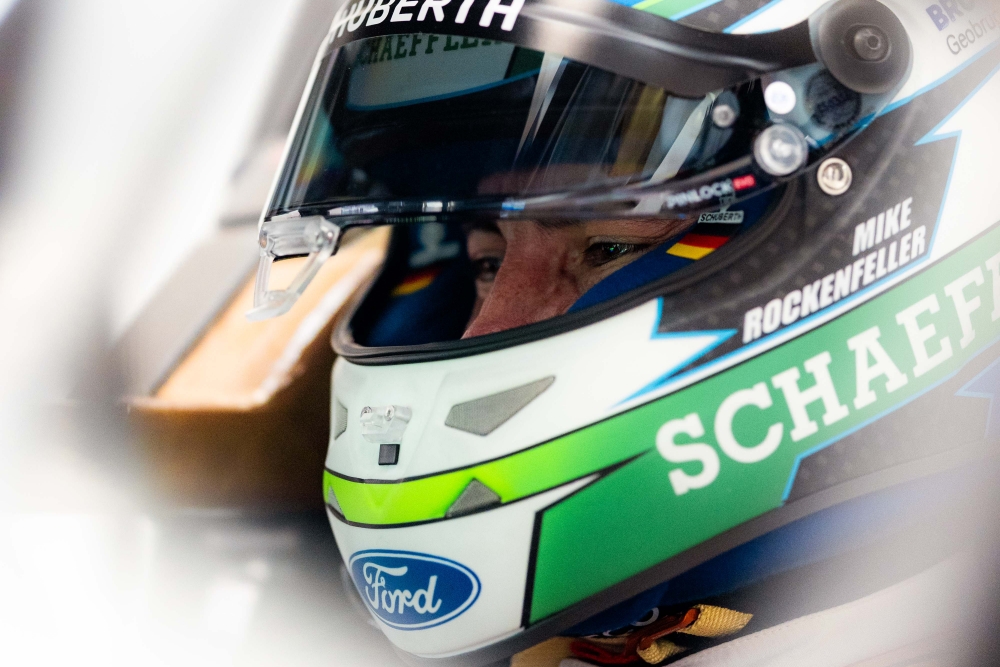
“I really enjoy developing cars,” he concludes. “It’s busy, but for me, the most fascinating part of my career is to be there from day one. I like to see how a car shapes up, from drawings to the real car, the engine, and drivetrain. It’s a journey, and I can’t wait for the first test of it.
“There’s a lot more pressure, though, in this programme. With the Mustang GT3 in IMSA, there’s pressure to win, but this is another level again. I know that, because I’ve been there before, and it’s why I really wanted that again.
“When I heard that Ford was doing a Hypercar, the first talk was at Road America, where Mark Rushbrook sat down and asked me if I was interested. It didn’t take much time to say ‘yes’! I wanted to take the challenge, write some history. To have this opportunity one more time in my life is just so cool.
“But for now, this weekend, I’m looking at this. Once a driver puts his helmet on or engineers see a timing screen, they’re locked in. In Barcelona, we thought we had a good strategy, good race pace, we would have liked a top-five, top-six finish, which would have been fantastic.
“We had an extremely tough race, we started the season at the lowest possible point, but as a team, you create a good atmosphere after bad results and then good ones. You get through the bad times together, you celebrate the good ones, because racing is difficult.
“It was a frustrating start from the sporting side. We definitely were not happy after Barcelona, but the focus is on Hypercar and Le Mans, and the comeback of Ford. So we have to be careful that we don’t overreact, and instead move forward.”
Rockenfeller images courtesy of Paola Depalmas/Proton