

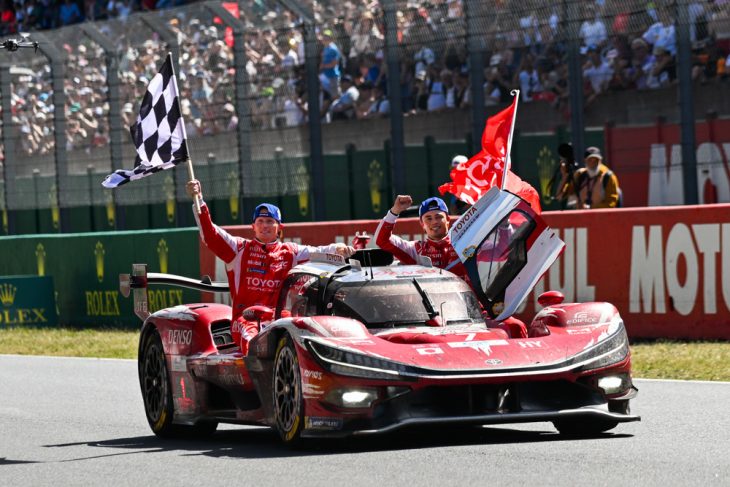
After three years of heartbreak and frustration, Toyota Racing has returned to the top step at the Circuit de la Sarthe, with its #7 TR010 Hybrid of Kamui Kobayashi, Nyck de Vries and Mike Conway winning the 2026 24 Hours of Le Mans.
The #7 Toyota was the less competitive of the Japanese marque’s two cars for the majority of the 94th edition of the FIA World Endurance Championship’s blue-riband event, but, despite a puncture, kept out of trouble and on the lead lap, which allowed it to take full advantage of the opportunity presented by a Safety Car at the beginning of the 19th hour that brought it back into the fight.
Promoted to third overall, the #7 TR010 Hybrid found new speed in the heat of the final hours, joining the lead battle between the sister #8 Toyota, #12 Cadillac Hertz Team JOTA V-Series.R and #20 BMW M Team WRT Hybrid V8, and eventually coming out on top.
The decisive swing came in the 22nd hour, when the deployment of a Full Course Yellow during the frontrunners’ pit cycle enabled de Vries to vault into a comfortable 20-second lead, which Kobayashi then managed to the chequered flag after climbing aboard for the final double stint.
It is a second overall win for both Kobayashi and Conway, whilst de Vries has scored his maiden triumph at the event.
For Toyota, its a sixth victory, and its first since 2022, taking a significant chip off the marque’s shoulder after three consecutive defeats following the Hypercar category bursting into life in 2023.
“We have waited so long for this victory,” said Kobayashi, who is team principal as well as a driver. “We (the #7 crew) have a lot of seconds in Le Mans, now we have two wins! We had a very challenging week; we had a driveshaft sensor issue and a puncture; it was tough. We made it in the end, and everyone did a great job.”
Second overall went to the #20 BMW, after Robin Frijns fought his way past the #8 Toyota in the final hour. The Dutchman then set off in pursuit of Kobayashi, halving his 22-second deficit before the gap stabilised in the final laps, with 10.981 seconds the eventual winning margin after 381 laps.
The #20 BMW was a consistent presence towards the head of the race from the moment René Rast surged to the lead on the opening lap, keeping in contention but lacking the outright pace of the Cadillacs and Toyotas.

After two difficult Le Mans, however, this is a breakthrough result for BMW’s FIA WEC programme, with Frijns, Rast and Sheldon van der Linde delivering the marque its best overall finish since it 1999 triumph.
“We have mixed emotions,” Rast explained post-race. “On one hand, it’s a huge success for the project because previously we hadn’t finished without a technical issue; now we came close to winning the race. But on the other you want to win, and we came close and you don’t know if you will get the chance again.”
The sister #15 BMW, which Dries Vanthoor qualified on pole position, fell back in the opening stint and was unable to match the pace of the sister car. Its chances of a top result ended when Vanthoor picked up a puncture after contact with the #3 DKR Engineering LMP2 of John Farano, before electrical issues forced the car to retire on Sunday morning.
The #8 Toyota crew of Buemi, Ryo Hirakawa and Brendon Hartley rounded out the podium in third, but will be disappointed not to have achieved more after leading Toyota’s attack for the majority of the event.
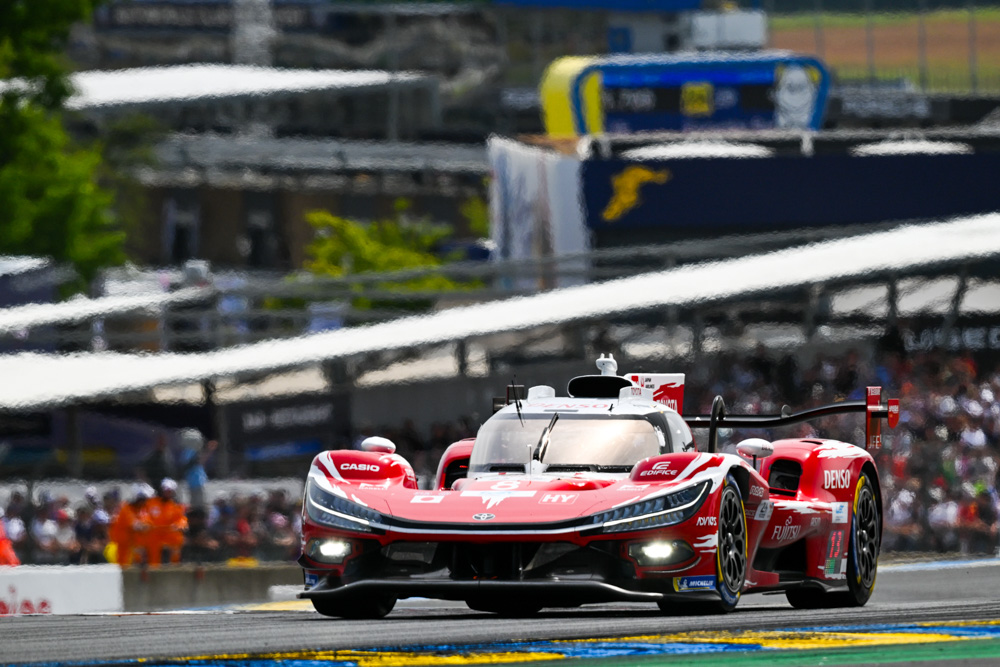
The decision to pit Buemi early at the opening round of pit stops proved critical, with the Swiss driver able to climb into the lead from 15th on the grid, and, with clean air now acquired, unleash a pace Toyota had been unable to deliver in qualifying.
The #8 Toyota, like the #20 BMW, was in the leading group throughout, although it lost ground in the 18th hour when a brake drum mounting needed changing. Thankfully, a Safety Car soon after mitigated the impact of this, and the car was back out front by the end of the 21st hour, before Hartley, who had already pitted before it was deployed, was the main loser of the FCY that played into the sister car’s favour.
From here, at both a tyre and track position disadvantage, there was little Buemi could do to challenge the #7 Toyota.
The #12 Cadillac Hertz Team JOTA V-Series.R finished fourth, with the American marque coming up short of victory after looking so strong for the first 18 hours. The British team’s two cars were the strongest during the night-time running, leading until Louis Delétraz picked up a drive-through penalty for speeding in a slow zone in the 17th hour.
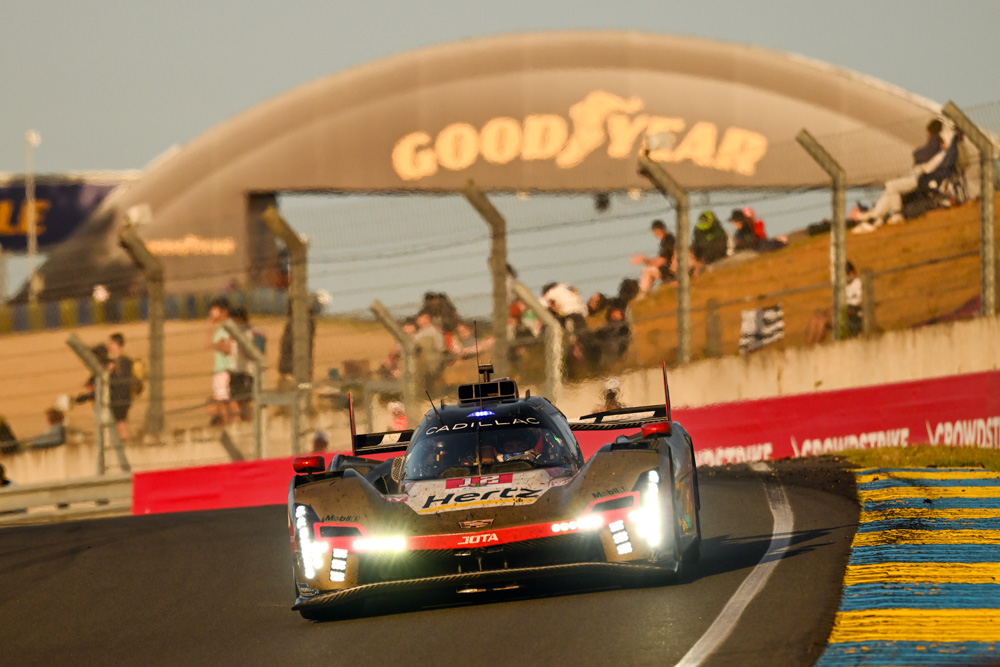
As was the case with the #8 Toyota’s brake issues, this was almost entirely cancelled out by the final Safety Car, but as the temperatures climbed in the final hours the Delétraz, Will Stevens and Norman Nato-crewed machine lacked the outright pace of the Toyotas and BMW, meaning it was unable to make up for some ground lost during the decisive FCY.
The #38 JOTA crew will leave La Sarthe ruing what could have been, with power steering issues in the 13th hour, whilst leading the race, ultimately forcing the car to retire. Jack Aitken in particular impressed, establishing a 20-second lead during his night stint, whilst another golden opportunity for local hero Sebastien Bourdais to claim an outright victory has come and gone without success.
“Overall, this was a very good week for us, even if we did not get the result we ultimately would have liked to get,” said JOTA team principal Dieter Gass.
“We have been showing pace in every session and were close to the winner right up to the chequered flag, but we were just missing that extra little bit. It was very unfortunate that #38 had to retire from the race in a very promising position. With two cars in the mix, we were in a very strong position over a significant part of the race, but only ended up fourth, which felt like a disappointment.”
After struggling on its Le Mans debut last year, and sitting on a poor run of form in the IMSA Sportscar Championship, the pressure was on for Wayne Taylor Racing to perform at Le Mans this week. Its #101 Cadillac was never miles away from the JOTA cars, but multiple penalties overnight cost it the lead lap, and the only wildcard entry in Hypercar finished ninth overall.

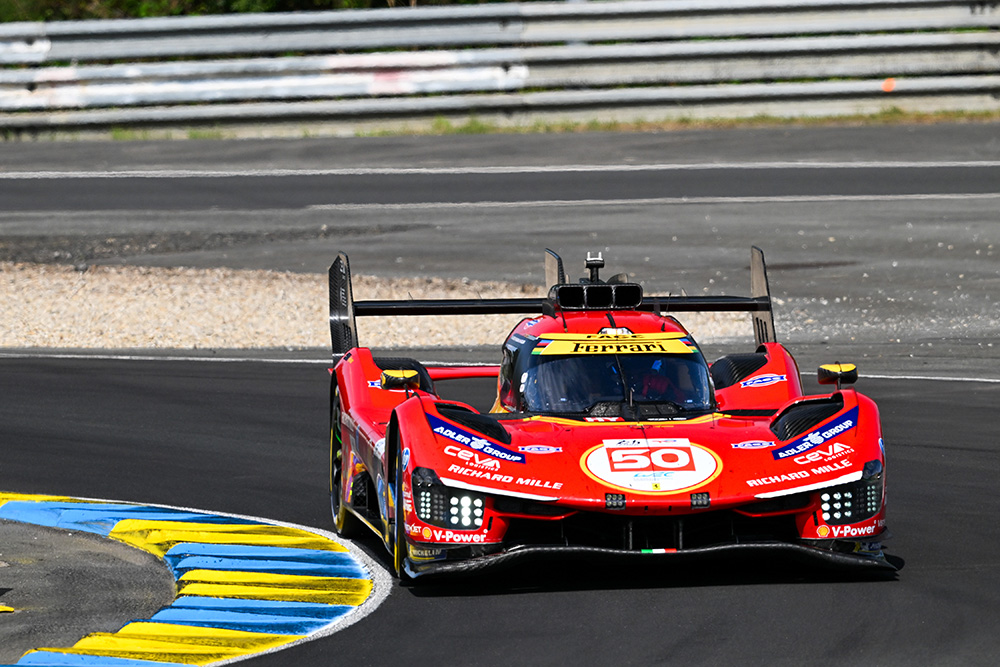
Ferrari’s stranglehold of the 24 Hours of Le Mans since its top category return in 2023 came to an underwhelming end, with none of its trio of 499Ps truly showing the speed to challenge for victory.
The #51 entry of James Calado, Antonio Giovinazzi and Alessandro Pier Guidi was the best-placed amongst them, in fifth overall, with the defending winners aboard the privately-entered #83 499P finishing seventh, and the #50 499P retiring after multiple technical issues.
The early laps, which saw both works cars make progress from their lowly starting positions, offered an ominous comparison to 12 months ago, but both cars settled into the upper midfield instead of transitioning to the lead battle. This wasn’t helped by each of them picking up penalties for contact on Saturday evening, as, unlike last year, Ferrari didn’t have the pace to bail it out from any errors.
The #50 Ferrari was the leading runner for the Prancing Horse, and with it up to fifth by the time of the first Safety Car period, appeared most likely to lead any potential Ferrari comeback in the second half of the event. A fire extinguisher and ECU issue, however, would see Nicklas Nielsen pit before the restart for repairs, with further technical gremlins seeing Miguel Molina grind to a halt and into retirement at Tertre Rouge in the 19th hour.
Alpine Endurance Team finished sixth with its #35 A424, claiming the car’s best Le Mans finish in its farewell appearance. The French marque showed promising pace early on, with Ferdinand Habsburg keeping in touch with the leaders, but gradually fell back on Saturday evening.
A lead lap finish, however, is still a great achievement for the French marque, with the programme continuing to show plenty of potential despite its days being numbered.
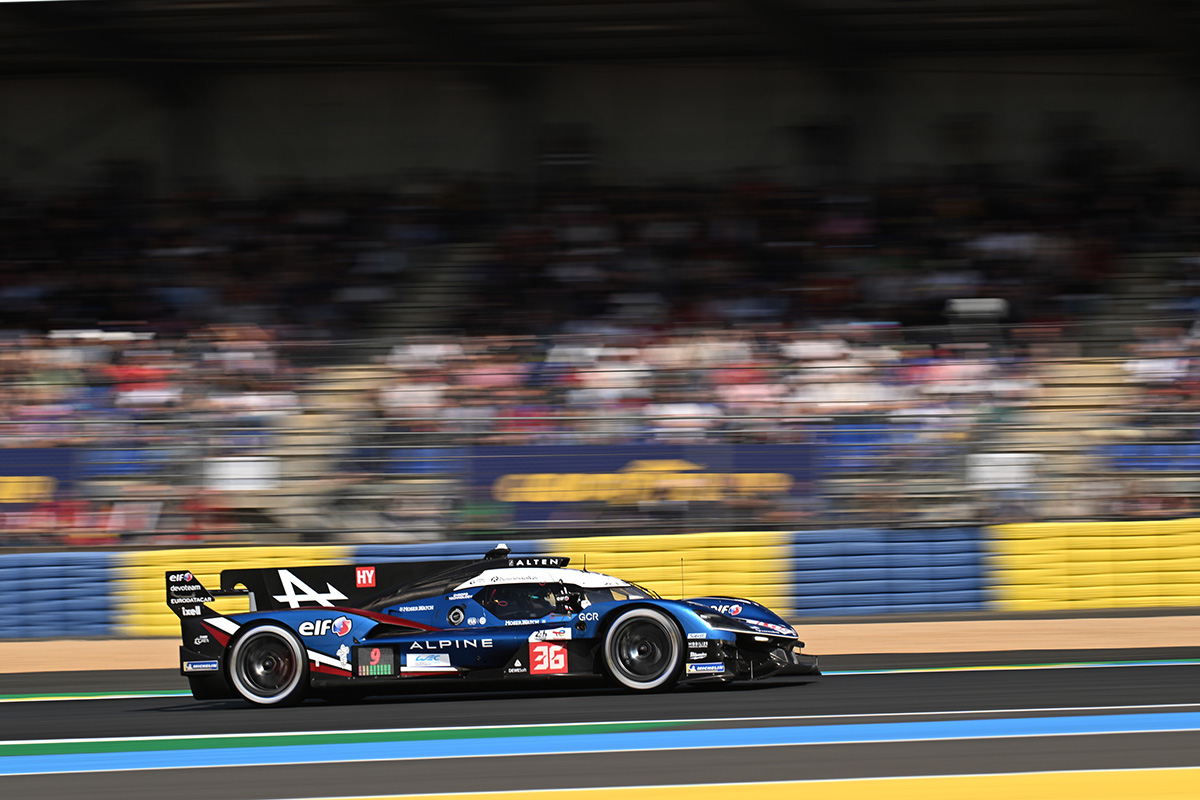
The sister #36 A424 fell back in the early stages, but had recovered into a solid top-10 position when a battery and front anti-roll bar issue struck in the 19th hour, limiting it to 10th overall.
Aston Martin THOR Team had an underwhelming Le Mans, with the team’s conservative pre-race predictions proving to be accurate. The Valkyries lacked the pace to get involved in the midfield battle, but a strong run from the #007 Aston Martin saw it finish eighth, the best car off the lead lap. The sister #009 Valkyrie ended up 14th, after a rear wishbone issue struck late on.
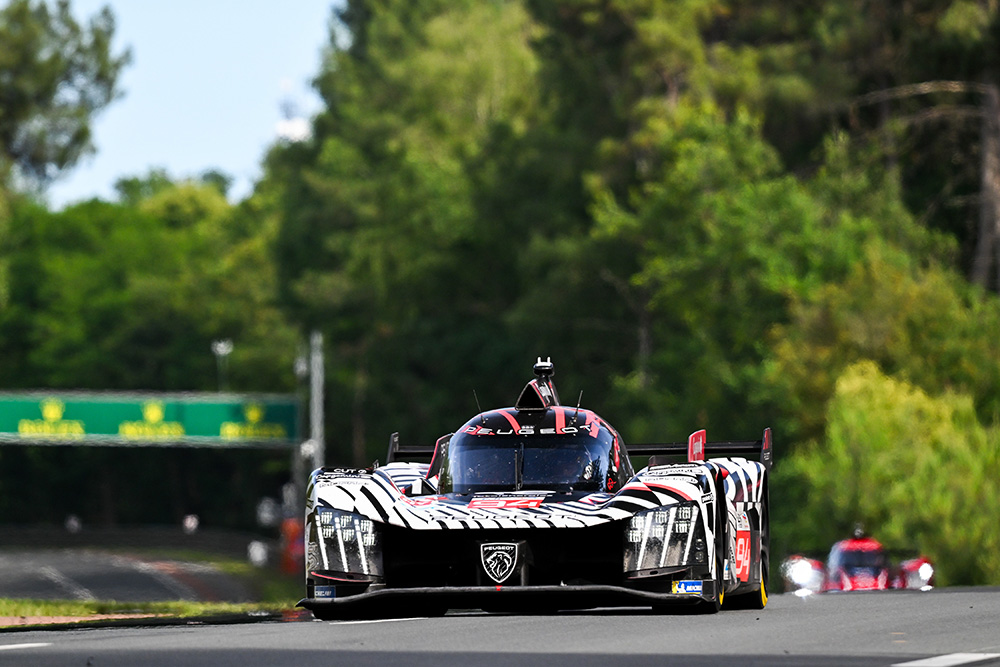
More disappointing, however, was Peugeot TotalEnergies, with the mood in the French marque downbeat from before the beginning of track action, and never particularly improving. Its pair of 9X8s delivered on its goal of running as clean of a race as possible and seeing where it placed them, but this was only good enough for 11th and 12th, with them significantly lacking pace all week.
Genesis Magma Racing, meanwhile, can leave Le Mans proud of its performance, with the car both proving to be a competitive prospect and finishing on debut.
Although not matching their qualifying speed in race trim, both GMR-001s settled into the lower midfield, and as the pit strategies played out the #19 ran as high as fourth overnight.
The #19 eventually fell back after twice stopping out on circuit, but managed to finish 13th, whilst the sister #17 effort retired in the 17th hour with a suspension issue.


