


Some combinations in motorsport simply work. Driver and machine. Team and circuit. Talent and timing.
For Porsche in IMSA’s golden GTP era, few combinations were as formidable as Derek Bell, Al Holbert and the Porsche 962 at Watkins Glen.
During the mid-1980s, when IMSA’s prototype ranks oozed factory-backed stars and technological innovation, the annual visit to Upstate New York became a showcase for one of the category’s defining partnerships. Between 1984 and 1986, Bell and Holbert (featured) claimed three consecutive victories at The Glen, each contributing to a period of dominance that helped establish both the Porsche 962 and Holbert Racing as benchmarks of the era.
For Bell, those successes remain inseparable from the circuit itself, which he frequented during his globe-trotting career.
“It was a wonderful race track,” Bell described during a recent look-back media session with reporters. “The undulations are all very interesting. It was the first track I’d ever raced at in America, in my second Formula One Grand Prix, with Ferrari, replacing Jacky Ickx, who’d broken his ankle the week before. Back then, I didn’t know what I was doing, but I felt at home there. I enjoyed racing there, and of course, I went back many times and won with Alfa Romeo and Porsche and the 962.”
The wins at The Glen for Holbert Racing served as chapters in a wider dominant run for the team, which operated a pair of 962 chassis from 1984 through 1987 and won three IMSA driver championships over that span.

The first came during that first year for the car, with Holbert and Bell joined by Jim Adams in the third seat. It was the most comfortable of the three wins, too, with a margin of three laps over a Bayside Disposal Racing 962 in the final results.
The second triumph was earned after a fight to the front from row two on the grid. Bell brought the car home, describing his stint as a “Sunday afternoon drive” following Holbert’s early performance, even though Jochen Mass and Jim Busby’s BF Goodrich machine remained on the lead lap all the way to the end.
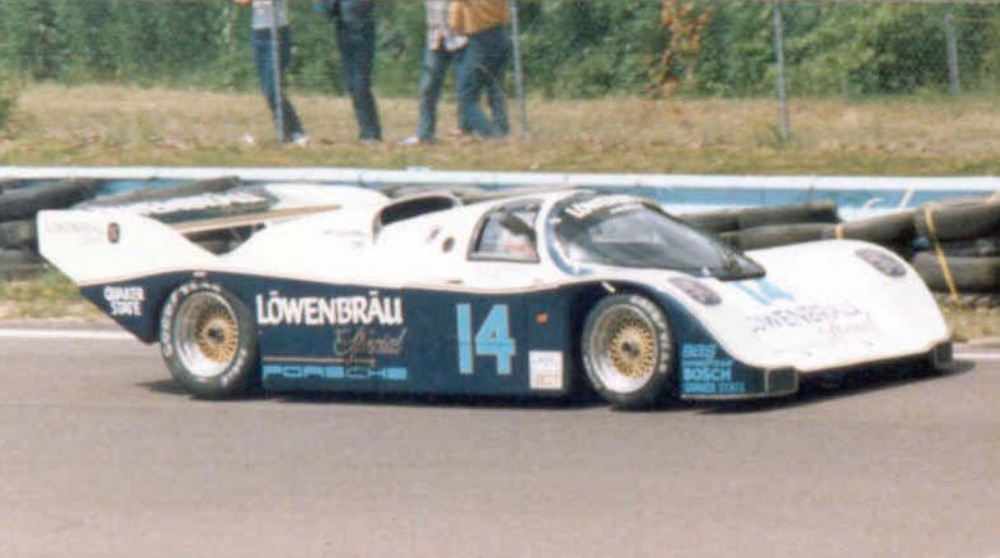
The final visit to the top step came after an opportunistic move for the lead in traffic by Bell on the front-running Hendrick Motorsports Chevrolet Corvette GTP of Doc Bundy midway through the race.
The Holbert team controlled proceedings from there, though Bell was forced to monitor the car’s brakes during his stint. “I didn’t have an issue, but I didn’t want to overdrive and have to change pads,” he said post-race.
As was often the case in that period, even in shorter races, attrition played its part in the running order. Brun Motorsports was the closest challenger by the end, finishing a lap down.
Back then,the Watkins Glen IMSA race also switched formats frequently, in part due to financial difficulties facing the circuit. “They always seemed to be lacking finance,” Bell reflected. “But they eventually got big crowds in for sportscar racing because it’s an amazing facility overall.”
It was the traditional six-hour duration in ’84, though with a break in the action after three hours, before becoming a three-hour contest in ’85 and a 500-miler in ’86.
As a sidebar, it was a six-hour race back in 1975, a decade earlier, when Bell won his first sportscar race at the track in the World Sports Car Championship, paired with Henri Pescarolo. The duo steered an Alfa Romeo 33TT12, entered by the Willi Kauhsen Racing Team, in the rain that day, contributing to the Italian marque’s world title success in fine style.

Nevertheless, the shift in race lengths for the Camel Continental IMSA event didn’t prevent Holbert Racing from winning three years in a row, largely because they had the best equipment.
Porsche’s 962 was the sportscar to have four decades ago, built on the foundations laid by pioneering Porsche engineer Norbert Singer and the 956, another endurance icon.
“In 1983, we sold a lot of cars, I think 12 customer cars, and we had a lot of questions from the Americans, asking for a similar car to the 956 for IMSA. IMSA regulations were a little different, in some places a big difference, but the 956 couldn’t run in IMSA,” Singer recalled to reporters.
“The pedals were ahead of the centre of the front axle, which we did to move the driver as close to the front to get a better weight distribution. But IMSA said no. We had to think about how we could meet their requirements. So we came up with the solutions that became the 962 and did it all in three months. We started in October, finished the 962 in January, and had to run a test to see if it worked at Paul Ricard, then sent the first car back to Weissach and shipped it to Daytona.
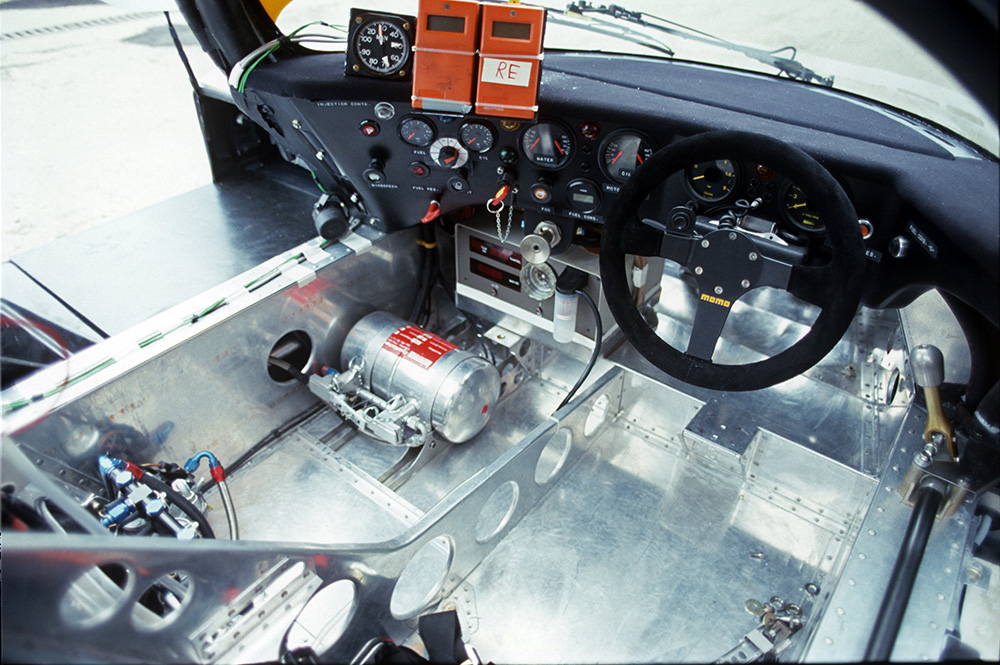
“We saw the potential quickly. And I think we produced 14 cars over the wintertime from October till February. Customers were constantly asking us about cer deliveries.”
For Bell, the car’s greatest strength was not outright performance but the way it delivered it. With ground effect, a new phenomenon at the time for drivers to get to grips with, he described the feeling of the 956 and later the 962 as “unbelievable” in the period.
At Watkins Glen, with its fast, flowing corners and dramatic elevation changes, those qualities were magnified. It’s a track that rewards confidence, balance and commitment, all characteristics that defined the 962.
“The 962 was just a beautiful car to drive; it was so smooth,” Bell said. “And to get it fast and to the limit, you had to understand ground effect. Norbert and the boys did such a wonderful job.
“It was well-balanced, remarkable, and the engine was a further development of what we’d had in the 936, and it was fabulous around the Watkins Glen circuit. Porsche went to race only to win races and titles. We had battles with others, like Jaguar, and they beat us occasionally, but nobody could really compete at the time.”
The 962 at the circuit (and many, many others!) was a nut seemingly too tough to crack, though Holbert Racing’s operation also played a key part in the success.
Al Holbert, the head of Porsche North America’s Motorsports Division during that time, ran a tight ship with his team. And Bell was always thrilled to get the call-up.
“It was just a fabulous combination of everything,” he said of Holbert and his team’s legacy in IMSA. “I think driving on those American tracks that were rougher than the European tracks, we just got the setup well.
“Al was so good, I did a good job, and the team was the best team in IMSA. We didn’t win everything, but Al’s team just operated with full commitment to what they did. Anything new that came out, they worked on it. Al was basically the North American branch of Weissach, and Norbert would listen to what Al proposed.

“They always came up with something, and I was so lucky to drive in that team for so long. We won a lot of races. Unfortunately, I was racing for Norbert’s team for the World Championship in Europe, so I missed out on a few races I would have done with Al, but I couldn’t be greedy.
“The way we drove it, the way we felt the power, it was mighty. Al was such a good setup driver; in the end, I just had to go out and drive it. It was pretty easy work, really!”
Four decades later, Porsche arrives at the circuit chasing more history, this time with the 963 and Porsche Penske Motorsport. Different cars, different people and a different era. But the objective remains unchanged.
Back in the 1980s, it was Holbert Racing that carried the Porsche banner to repeated success at The Glen. Today, Roger Penske’s organisation is attempting to do the same.
This year Porsche Penske Motorsport can secure a record 13th overall win for the German marque in Watkins Glen’s annual endurance race, adding another chapter to a story that Bell, Holbert and the 962 helped write.
Images courtesy of Porsche & Racing Sports Cars


